
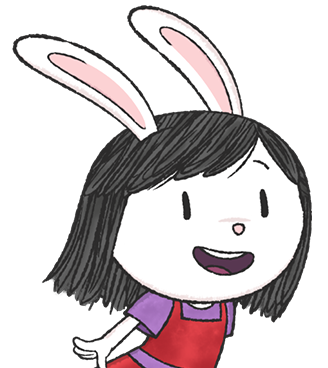
How "Elinor Wonders Why" Introduces Kids to Engineering


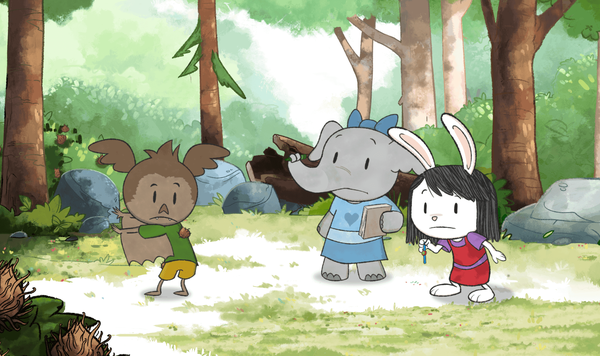
As children spend more time indoors and behind screens, it’s important to remember just how much they can learn from nature. In "Elinor Wonders Why," kids are invited on everyday adventures to learn how the natural world is connected to human-designed environments — and how even the youngest among us can solve real-life problems through natural design!
Natural design is simply how living things in the real world inspire engineering. Natural design is everywhere in a child’s world — the slipperiness of snail slime, the color of flowers, the shape of a cat’s ears, and the arrangement of leaves.
As a curriculum consultant for "Elinor Wonders Why," Dr. Sara Sweetman merges her background in early childhood education with her passion for science and engineering. She says that many problems Elinor and her friends face, like running out of coloring paper or building a block tower that keeps falling down, are inspired by real-life preschoolers.
“As children are living in a more designed world, it’s important for them to understand that our ideas come from nature,” Dr. Sweetman says. “Natural design is the idea that we learn from nature and apply what we learn to creating and designing for a purpose. When we’re designing, we are trying to create something that makes life, work, and play better — and we can learn from our natural environment.”
Inspired by nature
Nature is full of all sorts of inventive ideas! A unique part of the learning behind "Elinor Wonders Why" is exploring how kids can find inspiration in nature’s designs to solve problems. In the episode, "The Seed of an Idea," Elinor becomes fascinated by the Velcro on Ari's new watch and convinces her friends to help her find out how it works.
First, they make a list of what Velcro sticks to and what it doesn’t stick to, but they need more observations, so they head out onto the playground. As they explore the outdoors, Elinor and her friends sing, “When I have a question I don’t know, I look for the answers high and low.” What a great (and catchy) example of incorporating natural design into problem solving!
While outside, they observe that Velcro is very similar to a burr seed that is stuck to Ari’s shirt, which is no coincidence at all! That’s when they learn that the invention of Velcro was based on the burr seed.
“Elinor teaches to observe carefully — just like how engineers will study something in nature — and then apply it to a purpose,” says Dr. Sweetman, who is also an assistant professor at the University of Rhode Island and the director of the Guiding Education in Math and Science Network.
Encourage your child to recognize and observe patterns in both the natural and the human-designed world. Ask questions like: "Who made this? Where did this come from?"
You don’t need all the answers
Tapping into your child’s innate curiosity and teaching them how everyday life is connected to the natural world doesn’t have to be complicated. In fact, not having all the answers is a good thing, according to Dr. Sweetman.
Young children’s ability to ask why makes them great scientists and engineers. By encouraging their inquisitive nature, you’re building your child’s ability to answer their own questions.
“One of the things we know is that parents feel the least prepared to support their children in science,” Dr. Sweetman says. “The best thing parents can do is be curious right along with their children rather than give answers — giving answers stops learning. When they keep asking those why questions to get more details, keep exploring and digging in.”
Another way to respond to why questions? Ask more questions!
“We know young children ask a lot of questions. One of the things parents can do? Be curious with them. Ask questions back,” Dr. Sweetman suggests. “Even if you know the answer, say: “That’s a really great question. What can we do to figure that out together?”
When your child wonders where sheets of drawing paper come from, or asks why their block tower keeps falling down, explore together by researching, talking to someone else, trying an experiment, or observing the outdoors. For example, after observing wide tree trunks on a field trip to the Redwood Forest, Elinor figures out how to build a block tower with a wider base.
Make it a game
When your child asks an especially perplexing question, make it a game!
“Preschoolers ask some really hard questions,” Dr. Sweetman says. “First, congratulate yourself that your child is asking tough questions. Then, make it an investigation game together!”
You don’t have to be a professional engineer to slow down and encourage your child to think like a scientist or engineer. Young children have fresh eyes to see new places and objects, so when they ask challenging questions, take a cue from scientists who observe and describe more than they name. By encouraging more questions and not naming answers immediately, you’re preparing your child to be a life-long observer, learner, and problem-solver.
“One of the great things about children’s questions is that they come out of the blue, and you're not always prepared. Children can ask some deep, interesting questions,” notes Dr. Sweetman.
Begin at home — and start young!
Elinor and her friends can’t let go of a puzzle or mystery until they have unraveled it and they feel satisfied with their understanding. By using good science and engineering practices in an intuitive and age-appropriate way, they provide a model for children at home to emulate.
An easy way to make connections between the designed and natural world? Explore the materials in your home and ask questions about where they come from.
Encourage observational habits early by pointing out similarities and differences between your home and a nearby park. For example, maybe you’ll point out the chairs at your kitchen table. Ask questions like: "Are the chairs smooth? Made of wood? Where does the wood come from? What do chairs and trees in the park have in common? What is different?"
“Looking for similarities and talking about differences is a great jumping off place,” Dr. Sweetman says. “Part of what I love about science and engineering is that there's no height of how deep you can learn with your child through experiments or observations.”
Empowering girls to be engineers
According to the American Association of University Women, women make up only 28 percent of the workforce in science, technology, engineering, and math fields. Elinor’s interest in science and engineering makes her a positive role model for girls and boys alike.
“Engineering crosses through all the sciences, and Elinor is such a great character to project these ideals,” Dr. Sweetman says. “She shows all kids — especially young girls — that they can embody these practices, attitudes, and dispositions.”
By merging natural sciences with engineering in a whimsical, easy-to-understand way, "Elinor Wonders Why" is a show I love watching with my young daughter — and three sons, too.
 Author:
Elinor uses her amazing power of observation to ask questions and investigate nature.