
How Media Can Positively Impact Children's Perceptions of Autism


As a parent of a 2 year old and a 5 year old, I often wonder how I can do my part in raising children that are aware, accepting, and embracing of people with disabilities. We know that it’s really important to talk with our children about our differences and how they make us special and unique. But how do we begin these conversations, and will it even make a difference to talk about these things with young children? These are huge, complex topics — it’s hard to even know where to start!
In the U.S., 1 in 54 children are diagnosed with autism spectrum disorder. That means at least one child in my son’s grade has autism, and it’s likely true in other schools too.
But research shows that young children have not heard of, and don’t really know about, disabilities like autism. As children grow older, they are exposed to negative perceptions around autism and they may also start to form their own negative ideas around others with autism (Greenwood, Carroll, Crowter, et al., 2016).
Media initiatives like “Sesame Street and Autism: See Amazing In All Children,” have paved the way in introducing children to characters with autism, like Julia in “Sesame Street.” But there isn’t a lot of studies with children demonstrating the impact that media could have on changing children’s perceptions. We wondered if an animated television show can expose and educate young children ages 5 to 8 about autism — before they could potentially form negative ideas around autism.
We were excited to find that this was possible! We saw that media has the power to positively change children’s understanding and views about autism.
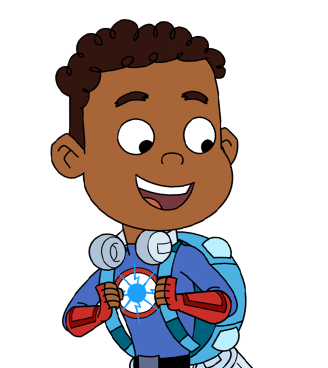
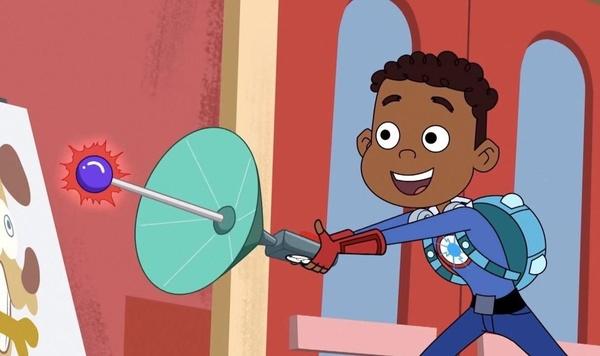
We worked with researcher Eunice Chow at WestEd, an independent, non-profit education research and development agency, who asked 113 children ages 5 to 8 if they knew of anyone with autism or knew what it meant. Researchers then showed a “Hero Elementary” episode called “AJ’s Extra Superpower,” which draws direct attention to AJ Gadgets’s autism. After watching the episode, the researchers asked the children questions about their attitudes and understanding around autism.
And here is what the study revealed: Most children at this age have not heard of autism or they had a misunderstanding of what it really was. But after watching the show, children’s understanding of autism grew, and, most interestingly, their views of autism changed positively. What’s even more exciting is that some kids started listing AJ as their favorite because of his autism. A first-grader in the study said that his favorite character was “AJ because he has the extra autism power!”
As a parent and researcher, I am hopeful to see that a television show such as “Hero Elementary,” has the power to engage even young children to learn about and appreciate people with autism. It’s amazing that children as young as 5 and 6 years old can watch an episode, understand that AJ has autism, and also see his difference as a strength. I’m encouraged, knowing that watching these shows with my kids could actually be making a difference in how they see and interact with the people around them. It supports me in raising my children to be aware, accepting, and compassionate towards people’s differences.
The great thing is, we don’t need to look far to find these shows. PBS KIDS offers many options to expose children to people that look and act differently from themselves. And if you’re not sure where to begin — you can always start with “AJ’s Extra Superpower” on “Hero Elementary.”
 Author: