

How to Connect With Long-Distance Loved Ones


“That’s my grandma!” My daughter likes to proudly proclaim this whenever we visit, call, or even mention one of her grandmas. At 3 years old, she has been realizing her familial ties and feels a strong territorial pull toward each one of her family members. Thankfully, she’s willing to “share” grandma with her brother and cousins.
For my children, their grandparents have lived far away their whole lives. A grandparent study from AARP a few years ago found that 52 percent of grandparents live 200 miles or more away from a grandchild and nearly half of all grandparents feel long distance is a challenge. Long-distance loved ones are not limited to only grandparents though. Some children have long-distance relationships with a parent, sibling, aunt, uncle, cousin, or close family friend. As much as it’s nice to live close or be together, that’s not always possible, so we have to find ways to prioritize these meaningful relationships.
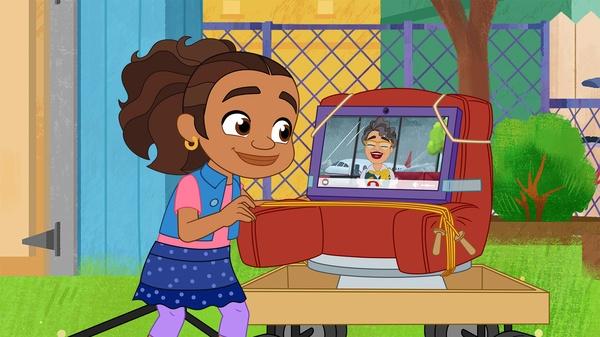
In an episode of “Alma’s Way,” Alma is so excited for her Granny Isa to visit her and has drawn an entire list of activities to do together, including a special waltz. Unfortunately, bad weather and a canceled flight means Granny can’t come. After processing her disappointment, Alma chooses to stop and think about how to make the best of the situation by using the time and resources that she has. Through some ingenuity, Alma and her father create a mobile tablet on wheels, allowing Granny to tag along on all of Alma’s activities for the day via a video call.
With creativity and commitment, there are lots of ways to help your kids connect with far away loved ones. Here are 10 things to try, but make sure to “think through” what works best for you!
- Start a bedtime book club. Have your loved one read picture books or tell stories to your kids on a video call. My young children do this often with their grandparents, pointing out different things in the pictures as they read along. As kids get older and read longer books, instead of reading aloud, select a chapter book to read separately and then discuss what everyone thought about it afterwards.
- Connect through food. While you can’t share a meal in person, you can still bond over food. Whether it’s making a family recipe simultaneously or simply eating the same snack at the same time, it can still feel like a shared experience. My kids like to do this at breakfast on a video call with their grandma as they pretend to share bites of the same cereal despite the miles between them.
- Exchange artwork. Making something special like a card, painting, or even a portrait of everyone together is a great surprise to send in the mail. Particularly before children can read or write, this is a good way to express themselves.
- Bring them along. By sending videos or photos throughout your day and sharing the little things, loved ones can get a better idea of what daily life is like. Alma did this on an ongoing video call with Granny so she could show all her favorite things in the Bronx. Let your children know you’re going to send a picture to a relative so they feel a part of the process.
- Play together. Depending on how old your kids are, there are lots of options for games to play, even from afar. From a young age, this might include peek-a-boo, singing songs and having dance parties. For older children, look for online games or even card games that everyone can play at the same time. Don’t overlook the many ways your children and loved ones can still find ways to play together, even if they aren’t in the same room.
- Make a schedule. Plan ahead with regular weekly video calls or phone calls for consistent conversation. My own grandparents lived far away when I was growing up, back when long-distance phone calls were extra expensive (and texting didn’t even exist). Because we didn’t want to miss their call, we arranged when we would talk next, giving everyone a time to look forward to.
- Find common interests. Maybe your family members cheer for the same professional sports team, enjoy the same type of music, or you invite them to learn about your kids’ favorite show or movie. These connection points give your children something to talk about and bond you together when you participate in them.
- Collaborate on a project. Building on your common interests or skills, explore ways to team up together, just like Alma and Granny did while learning the waltz. For older kids, maybe it’s learning a duet or co-writing a story.
- Tell each other how you feel. Say things like “I love you” or “I miss you” to one another. Hearing these things (repeatedly!) helps reassure you both in your relationship.
- Plan a visit. Start talking about the things you’re excited to do next time you’re with each other in person. Enjoy some of the happy anticipation of planning a visit together. Would you play at the park? Visit a favorite ice cream shop? Go to the zoo? Write or draw a list that can grow over time as you talk about things you look forward to doing together.
The disappointment of plans gone awry can be great for kids and grown-ups. So it’s important to talk about your feelings when that happens, or help your children identify and express those feelings. But by working together, everyone can share ideas and help to figure out things to do together when distance, travel issues, or a change of plans keeps us apart.
 Author:
Think it through with Alma as she explores her vibrant Bronx community with family and friends.