
How to Talk to Your Child About Vaccines


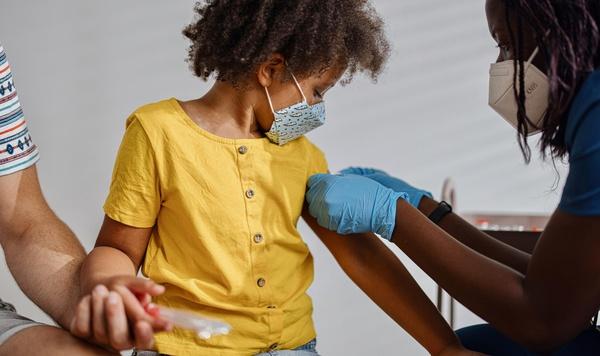
As a mother of three, I have seen the full range of emotions from children facing vaccinations: bravery, bargaining, tantrums, fear, and tears. Shots are tough.
When my children have to get shots, I first consider their unique personalities. What are their fears? What comforts them? How do they see themself as part of their community? I try to use this information to help them understand vaccinations — such as shots for the flu, chicken pox, COVID, etc. — not only to prepare them for an upcoming shot, but also prepare them for taking charge of their own health in the future.
I have spent the past several years writing children’s science books to help other families have these conversations too. Through my experiences, I’ve found that by addressing their fear, acknowledging their feelings, or talking to them about their role in protecting others, children feel less scared about getting a shot.
1 Addressing their fear of the unknown.
Fear of vaccinations stems from fearing the unknown. It helps to discuss the facts for children (and grown-ups!). Luckily, the science behind vaccines is surprisingly easy to explain.
What this discussion might look like:
Child: “What does a vaccine do to me?”
Parent: “Great question! When you normally get sick, your body fights off the germ and then you feel better again. As your body fights the germ, it starts to remember what that germ looks like. If the germ gets in you again, your body can recognize it and get rid of it, often before you even get sick again. But some germs are so bad that we don’t ever want to get sick with them. Vaccines teach our bodies what these really bad germs look like. Then, if we get one of those germs in the future, our bodies can quickly see them and have a big head start at fighting them off.”
2 Acknowledging your child’s feelings.
Let them know that it’s OK to be scared. Talk about your own experience and how you’ve managed your fears. And let them know that you will be there when they need support.
What this discussion might look like:
Child: “I’m scared! I don’t want to get another shot — they hurt so bad.”
Parent: “I know you’re nervous about the shot and that’s completely normal. I was scared before my shot too. I really don’t like how shots feel. Luckily, it stops hurting pretty quickly, right? It helped me to breathe out slowly and squeeze a hand while I got mine. I’ll be there to help you. What do you want to do for yours?”
Helping your child manage emotions is one of the most important aspects of parenthood. I frequently find myself referencing “Daniel Tiger’s Neighborhood” in those times. In the episode “Daniel Gets a Shot,” Daniel needs a vaccine. His mother encourages him to “Close your eyes and think of something happy.” Watching this episode could be a starting point to discuss other ways to handle fears with your child.
Watch here for a video clip of a parent and child talking about getting a shot, from "Daniel Tiger's Neighborhood."
3 Protecting others.
A vaccinated person has a lower chance of becoming infected. And if they do become infected, they usually have a more mild case. This decreases the chance of the vaccinated individual passing the germ on to other people. By explaining to your child that they are doing their part to keep their community safe, and that they are part of something bigger, it may make it easier for them to be brave.
What this discussion might look like:
Child: “Why do I have to do this?”
Parent: “A vaccine doesn’t only protect you, but it also protects others because you won’t be as likely to spread the germ. Lots of people can get very sick from certain germs, so as part of a community we all have a responsibility to do our best to keep others safe.”
Try watching the "Xavier Riddle and the Secret Museum” episode, “I am Florence Nightingale,” to help children learn about taking care of others and being contagious. Use the episode to inspire pretend play with dolls or stuffed animals to practice taking care of others.
The anticipation of getting a shot can be overwhelming to kids (and grown-ups!). By talking to your kids ahead of time, you can help them feel a little less scared and, hopefully, more prepared.
 Author: