
“Rosie’s Rules” Celebrates Mexican Family Traditions


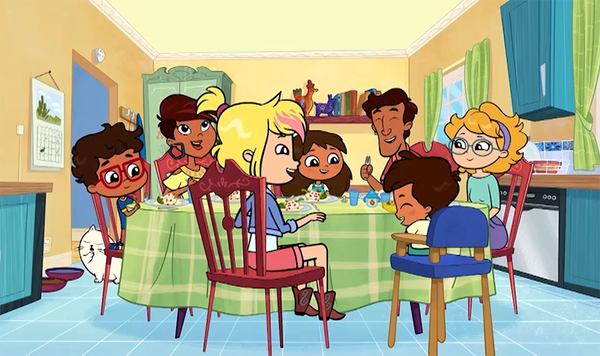
In “Rosie’s Rules,” Mexican American culture comes to life through the eyes of a curious and full-of-life six-year-old girl. Rosie’s family celebrates their heritage through food, special days, music, and language. The Fuentes family is multicultural and celebrates their differences in ways that brings the family together. Rosie's parents grew up in different places — Papa is from Mexico City, and Mom is from the United States. Rosie has two siblings: her older sister, Crystal (12), who is Mom's daughter from her first marriage, and her younger brother, Iggy (2). The Fuentes family resides in Texas, but they have extended family throughout the United States and Mexico, much like many other families in the United States — and my own.
The first time I watched "Rosie's Rules," I saw part of myself in Rosie’s parents. I was born and raised in Mexico City, and my husband is from California. When I moved to the United States as an adult, most of my family stayed in Mexico. My husband and I had to figure out together how to keep our traditions alive while navigating two different cultures and languages. It was challenging, but with lots of patience and a sense of humor, we created new traditions that blended our Mexican and American backgrounds. “Rosie’s Rules” shows us how parents can work together to celebrate their diversity and share their blended heritage with their children.
Since my family was so far away, I started making video calls to keep connected with friends and loved ones — just like Rosie does with her abuela. During these calls, I sometimes ask for recipes to prepare my favorite dishes on special days that I wanted to continue celebrating with my new family. In the process, I discovered that cooking is a fun activity and a great way to bond with the little ones around me and create lasting memories. They always are curious about the flavors, and ask a lot of questions about the celebrations. I am happy to share what I know!
We started marking the calendar and preparing special meals together because Mexican culture has so many amazing (and delicious!) dishes that are usually served on important days. Here are just a few of the dishes we've tried:
- Starting on January 6, we celebrate Día de Reyes with a traditional bread called Rosca de Reyes, shaped like a wreath with a tiny hidden baby doll representing the baby Jesus inside. As a kid I loved participating in this playful and enjoyable tradition. And now I get to bring the Rosca! The person who finds the baby is said to have good luck and must bring Tamales on February 2. These celebrations are linked to Catholicism but they are embedded in Mexican culture beyond their origins.
- September 16 is Mexican Independence Day. Many families celebrate by serving with tricolor meals such as Chiles en Nogada or Pozole representing the green, white, and red of the Mexican flag. The Chiles en Nogada are made with a green chili pepper stuffed with meat and fruit, then covered in a white creamy walnut sauce and the red pomegranate seeds. The Pozole is a Mexican soup with meat, corn, and toppings like lettuce, radish, and lime.
- Another tasty food we eat only during Día de Muertos on November 2 is a bread called Pan de Muerto, an essential part of the altar offering to friends and family who have died. It’s a sweet bread topped with a tasty glaze. Some of the go-to plates, like Pan de Muerto, Tamales, and Pozole share really great stories behind them. For example, the Pan de Muerto is a representation of the bones of the people that passed away and that is why we put it in our altars.
Invite your family to share any fun facts that they know about the dishes you shared together, it can inspire great moments of connection with your kids.
Around the world, traditions are tied to food, family, and our communities. In "Rosie's Rules," we see how the tradition of Chiles en Nogada Day provides Rosie's family with the perfect opportunity to celebrate and honor their heritage. For me, nostalgia for my godmother's Esquites (a Mexican snack made of corn kernels mixed with cheese, lime juice, chili powder, and mayonnaise, all combined in a cup), Picadillo tostadas (crunchy tortillas topped with seasoned meat, lettuce, tomato, cheese, and sour cream), and Flan Napolitano (a creamy and sweet dessert similar to custard, often served with caramel sauce on top) inspired me to establish my own traditions in the kitchen, cooking and making memories with the kids around me.
The search for the right ingredients can be a fun way to explore colors and shapes with children. In my case the market and the kitchen has become a space where I can share my traditions and tell stories as we enjoy a meal with them. Each dish represents a new opportunity for a story to share, just as Rosie learns as she celebrates Chiles en Nogada Day with her family!
As a multicultural family, we experiment with new traditions and flavors from both my culture (Mexican) and my husband’s family (Irish American). For example, we celebrate St. Patrick's Day and prepare delicious corned beef and cabbage in the spring. We exchange recipes with friends and neighbors and discover dishes to enjoy, such as pumpkin pie in the fall, mooncakes to celebrate Lunar New Year with my friends, or just eggs with bacon or chilaquiles for breakfast. I love seeing how traditions around the table can be shared, expanded, and tweaked to fit different families. (Try one of these recipes inspired by “Alma’s Way,” “Daniel Tiger’s Neighborhood,” “Let’s Go Luna,” and “Rosie’s Rules” to explore Puerto Rican and Mexican favorites.
"Rosie's Rules" celebrates Mexican American culture, traditions, recipes, and language in a fun and relatable way. When I see my little nephews and nieces, or my friends' children watch Rosie’s adventures, I’m grateful for the invitation to our families to embrace and honor our different cultures while appreciating others’ traditions, too.
 Author: