
Talking to Kids: Families Come In All Shapes and Sizes


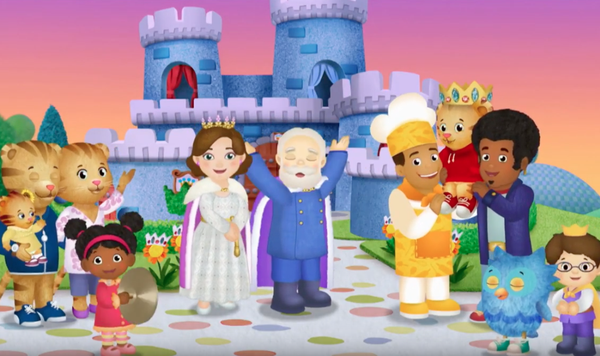
“Why does O the Owl live with his Uncle? Where are his mom and dad?” asked my daughter while watching Daniel Tiger’s Neighborhood.
She was about five at the time — an age where kids become increasingly aware of people’s similarities and differences. “I don’t know,” I said, “but he’s really lucky to live with someone who takes such good care of him.”
She soon began to pose similar questions. She knew her cousin was adopted by my sister, a single mom. What did that mean? She wondered why a friend lived with her mom during the week and with her dad on weekends. And when a friend’s mom passed away, she had lots of questions about who would take care of her if anything happened to me or her dad.
It’s normal for young kids to be curious about families. Usually, they don’t need much explanation — rather, just the positive acknowledgment that families come in all different shapes and sizes. When I talk to kids about families, I sometimes use this song from Daniel Tiger, “In some ways we are different. In so many ways, we are the same.” What do families have in common? They love each other. They take care of each other. Our kids need reassurance, first and foremost, that they are safe and loved in their own family. They need to know that caring adults — whether it's a parent, grandparent, aunt, or uncle — will be there to take care of them.
PBS KIDS offers a lot of anchoring examples that have helped me talk to my kids about all the beautiful ways people can form a family. In "Daniel Tiger's Neighborhood," Katerina Kittycat is being raised by a single mom; Miss Elaina’s parents are an interracial couple; Jodi and her twin brothers live with their mother and grandmother; Daniel lives with his mom, dad and baby sister; and Prince Wednesday — whose parents had him later in life — enjoys spending time with his much-older brother. In "Dinosaur Train," Buddy the T-Rex was adopted by a family of Pteranodons. In "Arthur," LaDonna has a military family, Buster’s parents are divorced, and Mr. Ratburn marries an aardvark named Patrick. In "Work It Out Wombats!", Malik, Zadie, and Zeke live with their grandmother, Super, and Sammy lives with his dad. In other words, these television families look a lot like the families that are in our neighborhoods.
Recently, my 4-year-old asked me why one of his best buddies lives with his grandparents. He was content to hear that sometimes moms or dads take care of kids — and sometimes grandparents, aunts, or uncles do.
His older sister happened to be in the car when he asked this question, so we began to think about our friends and family. How many different types of families did we know? We talked about families with lots of kids and families with one child; families where parents live in the same home and families where parents live in different homes. We talked about families that found each other through adoption or that grew bigger when moms or dads got remarried. We talked about my cousin, a foster mom, who takes in kids who need love and a place to stay for a while. My son added this important observation: some families have dogs and some families do NOT have dogs. Sadly, for him, he lives in a non-dog family.
I can’t think about my own family without also feeling immense gratitude for neighbors, babysitters, and teachers who surround my kids with love and belonging. This extended village provides our little family with vital support and community. They help my husband and I communicate this foundational message: You are safe, you are loved, you belong. Or, as Mister Rogers liked to say, “You've made this day a special day, by just your being you. There's no person in the whole world like you, and I like you just the way you are.”
Watch together:
The theme song for "Dinosaur Train" is a great sing along to celebrate how members of a family can look different, and that’s okay.
In "Peg + Cat," Jesse’s parents get divorced. Learn more about his story in this clip, where Jesse meets his mom’s new beau and learns that, even though she is getting remarried, she still has infinite love for her son.
PBS KIDS’ “You, Me & Community” features different kinds of families, including children who live with a mom and dad, a mom who is a Marine, grandparents who care for their grandchild, a family with two dads, multiracial and blended families, among others.
 Author: