
Ways Children Learn Through Storytelling Traditions


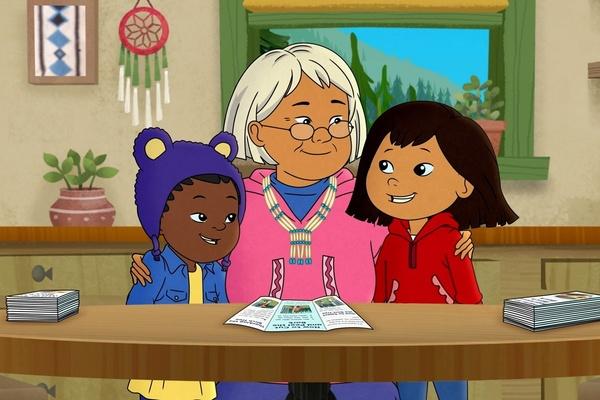
For thousands of years, Alaskan elders have shared their knowledge through oral storytelling tradition. In “Molly of Denali,” Grandpa Nat and Auntie Midge are elders who share their knowledge with Molly and all her friends in Qyah.
In Alaska Native culture, elders are a living library of ancestral knowledge collected and passed down through countless generations. They can captivate young children with clever anecdotes — often with animal characters — that relate to difficult situations, inspire problem-solving, and share practical knowledge.
Oral storytelling helps all children develop their imagination, language and creates human connection. The stories told often have life lessons and values that a child can remember because they are actively using their minds to process the information in another way than a visual story does. In Alaska, there are some stories that can take days to tell and have many valuable lessons to share.
Stories in the “Molly of Denali” series share Alaska Native values such as respecting all things, seeing connections, and living carefully. For instance, Molly learns from her Uncle Cliff in “Molly and the Yukon” that when you take care of the land, the land will take care of you.
Why Storytelling is Important from Generation to Generation:
- Elders often use oral storytelling to coach kids through challenging situations in which kids find themselves. For example, in the “Molly of Denali” story "Molly and Elizabeth," Molly and Tooey are excited to give two visitors a tour of the village. They experience discrimination when the visitors don’t think they are Native enough for the job. Grandpa Nat shares a true story with the kids about someone else who also faced discrimination for being Alaska Native, Elizabeth Peratrovich. Inspired by the teaching from Grandpa Nat, Molly and Tooey share with the tourists what it really means to be Alaska Native. By sharing this story, Grandpa Nat helped Molly and Tooey navigate a very difficult situation and inspired them to grow from the experience.
- Oral storytelling also has the power to inspire kids to solve problems or try again. Community members want children to succeed, learn, and grow in their knowledge of how the land and nature can help them. For example, in the story “Nature's Medicine,” Molly’s scout troop, the the Negoo Tsal (pronounced nihgoh-tsuhl) which means “Little Foxes” in the Gwich'in language, is determined to earn their Big Steppin’ hiking badge. But when Trini falls, the hike is on hold until Atsaq uses her traditional knowledge of plants as medicine to treat Trini and help her on her way. By sharing their knowledge, elders can support younger generations in facing problems and learning from them. Use storytelling stick puppets to explore different topics with your child and encourage them to consider new ways to solve problems that come up in the stories you create.
- Stories are how elders shared practical knowledge, such as how to build a fire or cut up a fish, but their stories also taught values such as sharing, having compassion, and treating others — and nature — with respect. Today, elders share stories that help kids reflect on their relationships with nature — and each other. Stories often have different animals as characters, and they are great teachers. In our Gwich’in belief, the animals give themselves to the people. We say “gwintł’eedaachii”, which can be broken down linguistically… gwintł’ee- (to give) -adaa (his/her/itself) -chii (the classifier for body). Animals have superior senses to humans. You cannot sneak up on them without them hearing, seeing, or smelling your approach from far away. We believe that if you treat animals with the respect they deserve, they will continue to help us in return.
- From our stories, we learn lessons such as how to respect the animals and other resources we receive from the land. For example, we often say, “Take only what you need, use everything you take, and share with others.” But if you break that trust by being selfish and not sharing with others, or wasteful by letting the meat rot or not using the hides for clothing, or the bones for tools, then that animal will not give themselves to you in the future. Try reading a story with your child, and then make an animal journal so they can practice identifying different creatures in the wild and telling their stories.
- Winter is the traditional time for storytelling. People were too busy in the summer to have time for storytelling; they had to work hard all summer preparing for the long winter months ahead. Winter lasts 6 to 8 months in Alaska! In the winter, stories are a way of passing the time — but they can also be a source of entertainment. A good storyteller engages their listeners through humor, suspense, and excitement, keeping them hanging on the edge of their seats and wanting to know what happens next. Traditionally, when an elder finishes a story, they’ll say, “And now I have bitten off part of the winter.” Spend time with your child and share stories about your family and traditions.
What kind of stories can you share with your child when you have time together? Do you tell different kinds of stories throughout the year? Think about ways to share stories highlighting special values and helpful skills for your child — and then ask them to share stories as well! Watch “The Big Gathering” together to learn how Molly and her friends engage with elders and oral storytelling in the community.
 Author:
Join Molly, an Alaska Native girl, and friends on their adventures in beautiful Alaska.