As Trump Pardons the Hammonds, Look Back on the Role Their Case Played in the Malheur Occupation
July 10, 2018
Share
Today, President Trump pardoned Dwight Hammond, Jr. and Steven Hammond — Oregon ranchers who repeatedly clashed with federal officers over the use of public lands, and whose imprisonment motivated fellow rancher Ammon Bundy to lead an armed occupation of the Malheur National Wildlife Preserve in 2016. In a White House statement, the press secretary said that the Hammonds’ five-year prison sentences had been “unjust.”
In 2012, the Hammonds were prosecuted for setting fires in 2001 and 2006 that destroyed portions of federal land to which they had leased grazing rights, and endangered people’s lives. They claimed the fires were to maintain their grazing land and had simply spread out of control. They were found guilty by a jury and faced mandatory sentences of five years. But the judge, citing their respect in the community, reduced their sentences: Dwight initially received a sentence of three months; his son, Steven, a year and a day.
The prosecutors appealed, arguing the mandatory minimum sentences had to hold. “The law wasn’t followed,” Bill Williams, Oregon’s U.S. attorney, told FRONTLINE. In 2015, the Hammonds were re-sentenced and ordered back to prison.
In the May 2017 documentary, American Patriot: Inside the Armed Uprising Against the Federal Government, FRONTLINE investigated how the story of the Hammonds inspired Ammon Bundy to lead a month-long takeover of a federal wildlife preserve that divided the local community, and would ultimately end with one occupier being killed by law enforcement.
“We hear about the Hammonds. This urge just filled my whole body. I felt a divine drive, an urge that said you have to get involved,” Bundy, who believes public land should be managed locally rather than by the federal government, told FRONTLINE.
In the below clip from American Patriot: Inside the Armed Uprising Against the Federal Government, revisit how Bundy — whose own family had been involved in a standoff over land with federal authorities in Nevada — rallied armed militias and opponents of perceived federal overreach to the Hammonds’ cause.
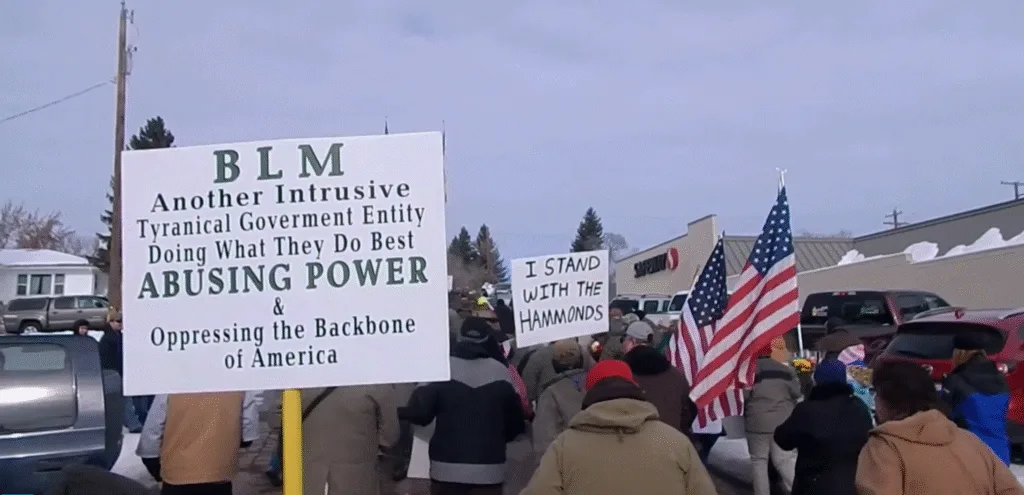
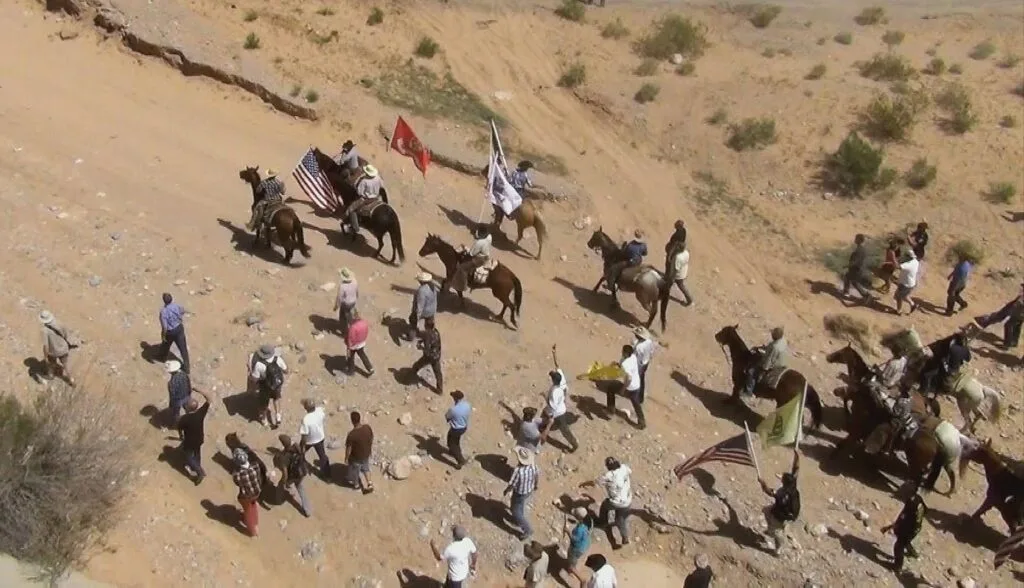
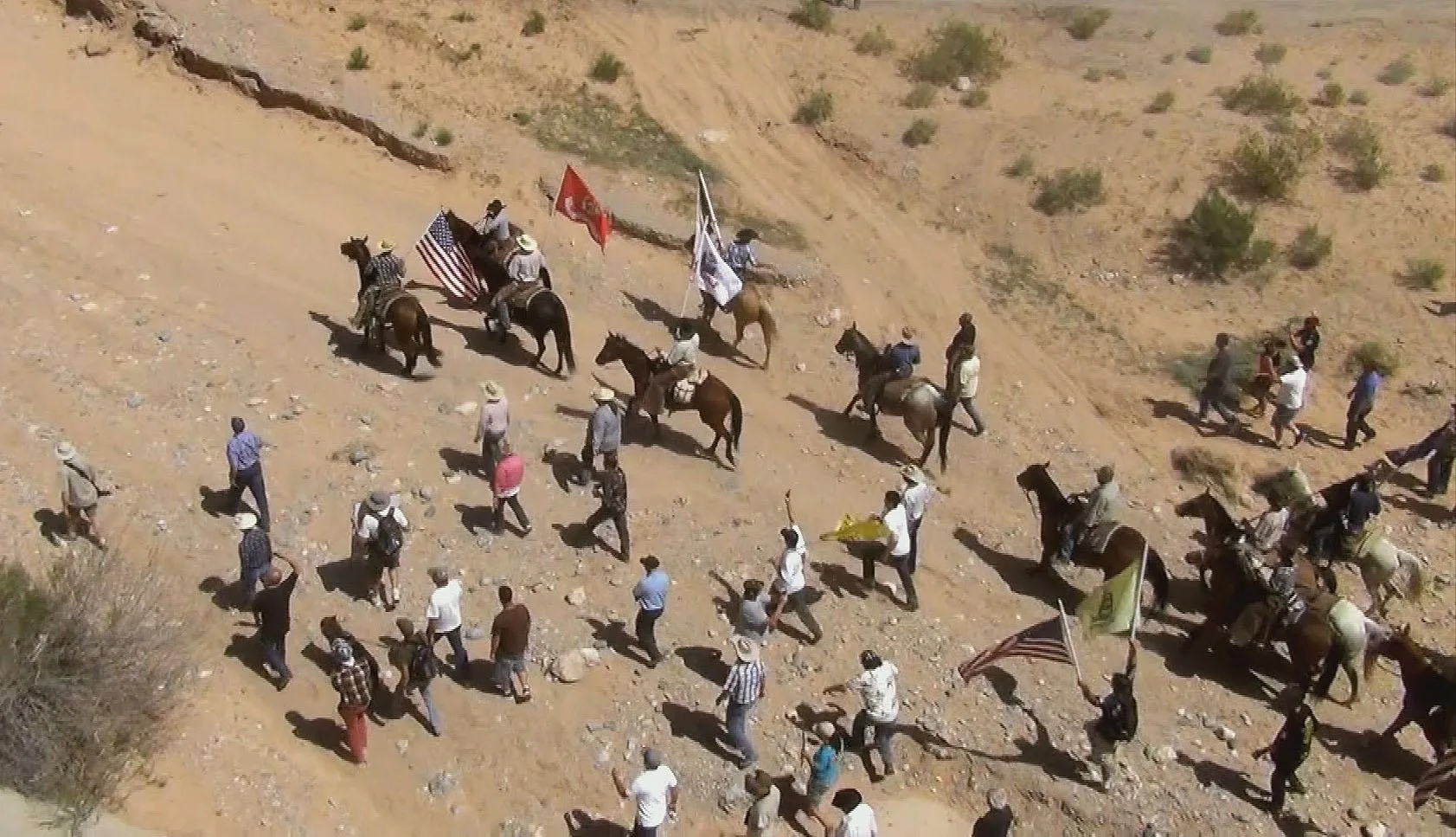
Bundy argued that the Hammonds’ re-sentencing was the latest act by an out-of-control federal government, which had infringed on the rights of its citizens. Rallying his followers in a YouTube video, Bundy planned a protest march through the small town of Burns, Oregon, the Hammonds’ home town, as the two men prepared to return to prison.
The march was peaceful, and ended in a Safeway parking lot. But Bundy didn’t stop there. He urged his followers to continue on to a federal wildlife refuge adjacent to the Hammonds’ land, and take it over. A number of them followed. Some were armed. The occupation would last for over a month, and end in the fatal shooting of one occupier, LaVoy Finicum, by police.
Stream the complete documentary here for the full story on the Bundys, the Hammonds, the armed groups that rallied to their cause, and the Malheur standoff.
Senior Digital Writer, FRONTLINE
Support provided by:
Learn More
Related Documentaries
Latest Documentaries



Related Stories
Related Stories
Explore
Policies
Teacher Center

Jon and Jo Ann Hagler on behalf of the Jon L. Hagler Foundation
Corey David Sauer
Koo and Patricia Yuen
FRONTLINE is a registered trademark of WGBH Educational Foundation. Web Site Copyright ©1995-2025 WGBH Educational Foundation. PBS is a 501(c)(3) not-for-profit organization.
Funding for FRONTLINE is provided through the support of PBS viewers and by the Corporation for Public Broadcasting, with major support from Ford Foundation, and Fialkow Family Foundation. Additional funding is provided the Abrams Foundation, John D. and Catherine T. MacArthur Foundation, Park Foundation, Heising-Simons Foundation, and the FRONTLINE Trust, with major support from Jon and Jo Ann Hagler on behalf of the Jon L. Hagler Foundation, and Corey David Sauer, and additional support from Koo and Patricia Yuen. FRONTLINE is a registered trademark of WGBH Educational Foundation. Web Site Copyright ©1995-2026 WGBH Educational Foundation. PBS is a 501(c)(3) not-for-profit organization.