Colorado Faces Millions More in Fines As Jail Mental Health Evaluations Stall Amid Pandemic
May 29, 2020
Share
In partnership with:

This week, the Insight with John Ferrugia team has new information on our January investigation, Breakdown, which examined Colorado’s mental health system. Our investigation found that untreated mental illness is overwhelming the state’s criminal justice system, and leaving many in a position where getting arrested is the only way to access mental health treatment.
Our documentary ended with the promise of reform from government leaders. But like many aspects of American life during this pandemic, these existing problems are getting worse because of the COVID-19 outbreak and the associated economic fallout.
State of Colorado officials were optimistic they would be paying millions less in fines this year for violating the civil rights of inmates who are awaiting mental health evaluations. Then, COVID-19 changed everything.
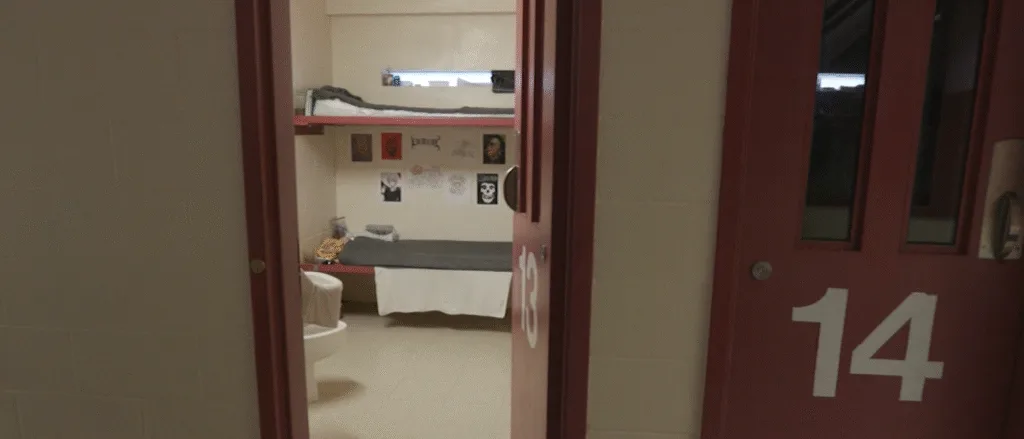
The state has been ordered to pay up to $10 million in fines annually as part of a legal judgment that found the state is taking too long to evaluate criminal defendants to determine if they are mentally stable enough to stand trial, and is also taking too long to provide treatment to those who are deemed incompetent to stand trial. That left people languishing in jail without ever being convicted of a crime.
“Every month we were reducing our fines by about $100,000 per month. So we were on really good track,” state Office of Behavioral Health (OBH) director Robert Werthwein said.
But when COVID-19 hit, the department had to dramatically reduce the number of people getting treatment at the state mental hospital in Pueblo. State data shows inpatient admissions shrunk from 71 to 10 by the end of April.
“We had to slow down admissions, following some health guidance around bringing in new people into a hospital of 500 people, and make sure that we didn’t have COVID spread throughout the hospital. So we had to admit folks in smaller groups, which really is slowing down that effort,” Werthwein said.
State data from mid-May showed more than 500 people on a waiting list to receive mental health competency evaluations. Of those, about 400 were out of jail on bond. About 60 more have apparently violated their bond agreements and are facing new arrest warrants. 48 defendants remained in jail, waiting to be evaluated.
“It really threw off the progress we were making, unfortunately. And it’s really unfortunate for the folks that were waiting in jail,” Werthwein said.
Before coronavirus, OBH expected to reduce its fines to about $2.5 million for next year’s budget. Now, the state is on pace to spend the full $10 million in fines once again unless a court-appointed special master agrees to modifications in the agreement.
“Luckily, all the parties agree that COVID has had some impact and are willing to sit down and have a conversation about it,” Werthwein said.
The state fines are paying for supportive housing for some defendants to reduce the jail population, including the conversion of a former hotel building in Stapleton into temporary housing. But there are still about 50 people who are waiting in jail despite being eligible for release to supportive housing.
“We are trying to increase those supportive housing options so we can get those folks out of jail, and they’re not waiting in jail for their services,” Werthwein said.
This story is part of a collaboration with Rocky Mountain PBS through FRONTLINE’s Local Journalism Initiative, which is funded by the John S. and James L. Knight Foundation and the Corporation for Public Broadcasting.
Rocky Mountain PBS
Support provided by:
Learn More
Latest Documentaries







Explore
Policies
Teacher Center

Jon and Jo Ann Hagler on behalf of the Jon L. Hagler Foundation
Corey David Sauer
Koo and Patricia Yuen
FRONTLINE is a registered trademark of WGBH Educational Foundation. Web Site Copyright ©1995-2025 WGBH Educational Foundation. PBS is a 501(c)(3) not-for-profit organization.
Funding for FRONTLINE is provided through the support of PBS viewers and by the Corporation for Public Broadcasting, with major support from Ford Foundation, and Fialkow Family Foundation. Additional funding is provided the Abrams Foundation, John D. and Catherine T. MacArthur Foundation, Park Foundation, Heising-Simons Foundation, and the FRONTLINE Trust, with major support from Jon and Jo Ann Hagler on behalf of the Jon L. Hagler Foundation, and Corey David Sauer, and additional support from Koo and Patricia Yuen. FRONTLINE is a registered trademark of WGBH Educational Foundation. Web Site Copyright ©1995-2026 WGBH Educational Foundation. PBS is a 501(c)(3) not-for-profit organization.