This Yemeni Doctor Has Treated COVID Patients for Months Without Pay While Living in the Hospital
February 9, 2021
Share
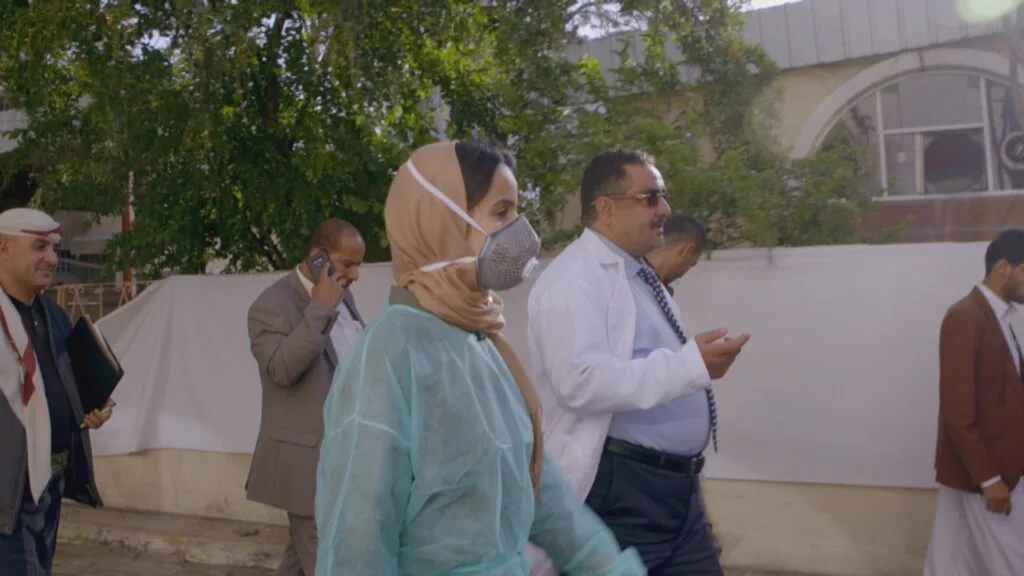
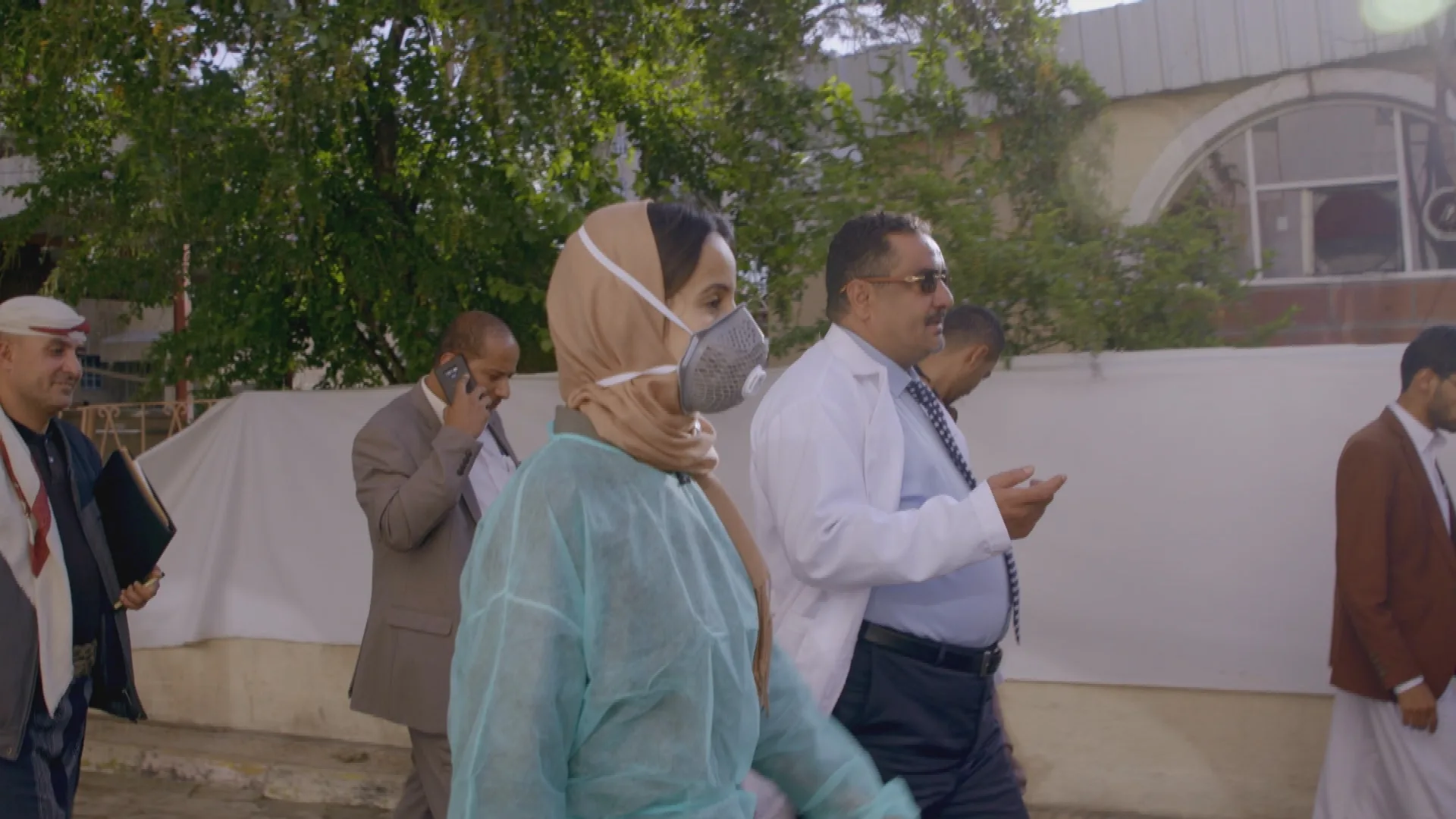
Since March 2020, Dr. Tariq Qassem has been living at the hospital in Yemen where he works.
It’s not because he’s sick — although at one point, lacking proper protective gear while treating patients in the COVID isolation ward, he caught the virus himself.
It’s because he can’t afford to live anywhere else.
As the new FRONTLINE documentary Yemen’s COVID Cover-Up explores, like many other government doctors in Yemen’s Houthi-controlled north, Qassem hasn’t been paid a regular salary since 2016. He has received no payment at all since March, when the World Health Organization ended supplemental pay for Yemeni doctors, citing funding cuts.
But Qassem and a number of other doctors at the main hospital in Amran, Yemen, have kept on working.
“We swore a medical oath: If we could help anyone in need, we’d do so,” Qassem tells correspondent Nawal al-Maghafi in the above excerpt from the film. “Yes, I’m struggling financially, but it won’t stop me working. It doesn’t matter that I’m exhausted. What’s important are the people of my country.”
Even before COVID hit, the situation in Yemen had been described as the worst humanitarian crisis in the world by the UN and others. Following six years of war between the Houthis, a rebel group backed by Iran, and a Saudi-led coalition, an estimated 2 million children in Yemen are suffering from starvation, and 3.5 million people have been internally displaced. Saudi airstrikes have increased throughout the pandemic. Estimates put the number in 2020 at nearly twice the year before, many involving U.S.-made bombs.
As President Joe Biden commits to ending U.S. support for Saudi offensives in Yemen, the documentary presents a rare and powerful look at the situation on the ground. The Saudi-led coalition has imposed a blockade on ports in Yemen for the last five years, in an effort to stop the Houthis from bringing in arms; as a consequence, supplies of medicine, food and fuel are largely cut off, and it can take months for aid to reach people.
Additionally, as Yemen’s COVID Cover-Up reports, just before COVID hit, the Houthis did something that made matters worse: They threatened to tax foreign aid. The U.S. responded by suspending $73 million from programs it supports in the country. Other countries and aid groups also cut funding around this time.
The lack of supplies has had a dire impact on Yemeni health care workers’ ability to treat COVID patients, the film reports: “Lack of oxygen caused most of the deaths,” Qassem tells al-Maghafi. “If we’d had more oxygen, there’d have been fewer deaths.”
Al-Maghafi, a Yemen-born reporter for BBC News Arabic, returned to her home country in July 2020 to investigate how the coronavirus pandemic was impacting the country. The first journalist from an international broadcaster to be allowed into Yemen since the pandemic began, al-Maghafi uncovered evidence of a far higher death toll than Houthi authorities were admitting. Her findings unfold in full in Yemen’s COVID Cover-Up, premiering Tuesday, Feb. 9.
In the above excerpt, she asks the Houthi health minister, Dr. Taha al-Mutawakkil, why the government has failed to pay doctors while continuing to pay its fighters on the front lines.
“The Saudi-led coalition controls our land borders, ports and airports,” al-Mutawakkil argues, claiming: “We are under siege. We don’t have any resources.”
FRONTLINE’s hour-long broadcast on Tuesday, Feb. 9 features two segments: Iraq’s Assassins and Yemen’s COVID Cover-Up. Both segments will be available to watch in full at pbs.org/frontline and in the PBS Video App starting that night at 7/6c. The two-part hour will premiere on PBS stations (check local listings) and on YouTube at 10/9c.
Senior Digital Writer, FRONTLINE
Support provided by:
Learn More
Related Documentaries

Latest Documentaries


Related Stories
Yemen’s COVID Cover-Up
Related Stories
Yemen’s COVID Cover-Up
Explore
Policies
Teacher Center

Jon and Jo Ann Hagler on behalf of the Jon L. Hagler Foundation
Corey David Sauer
Koo and Patricia Yuen
FRONTLINE is a registered trademark of WGBH Educational Foundation. Web Site Copyright ©1995-2025 WGBH Educational Foundation. PBS is a 501(c)(3) not-for-profit organization.
Funding for FRONTLINE is provided through the support of PBS viewers and by the Corporation for Public Broadcasting, with major support from Ford Foundation, and Fialkow Family Foundation. Additional funding is provided the Abrams Foundation, John D. and Catherine T. MacArthur Foundation, Park Foundation, Heising-Simons Foundation, and the FRONTLINE Trust, with major support from Jon and Jo Ann Hagler on behalf of the Jon L. Hagler Foundation, and Corey David Sauer, and additional support from Koo and Patricia Yuen. FRONTLINE is a registered trademark of WGBH Educational Foundation. Web Site Copyright ©1995-2026 WGBH Educational Foundation. PBS is a 501(c)(3) not-for-profit organization.