How Federal Reserve Governor Lisa Cook Became a Trump Target
“We didn't have to look far for his motive,” Cook’s lawyer told FRONTLINE. “He said it out loud.”
June 29, 2026
Share
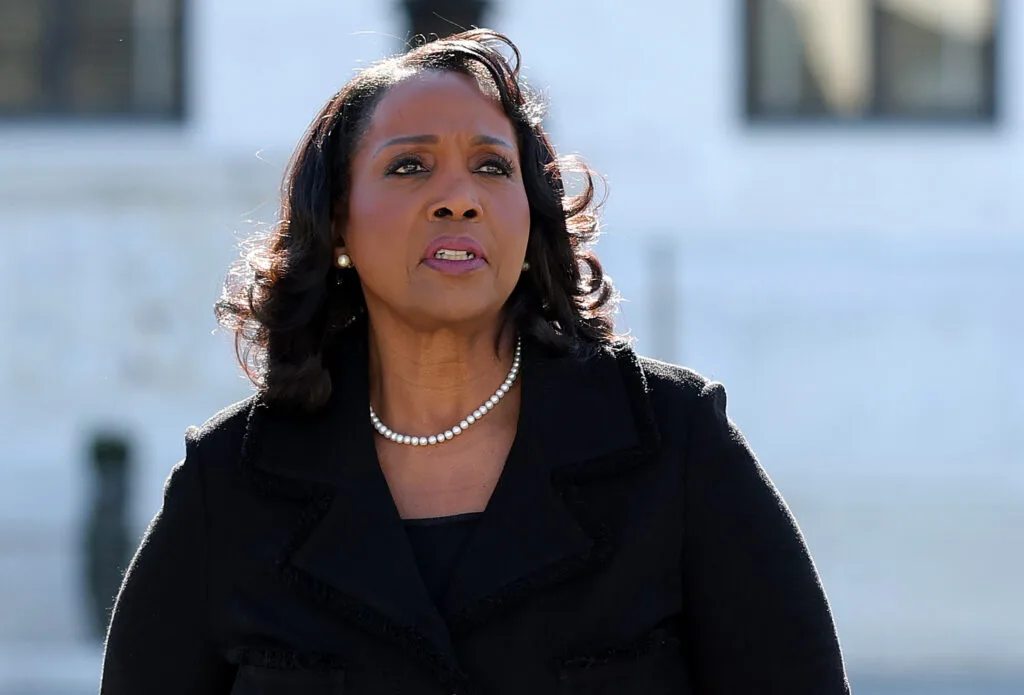
The Supreme Court has blocked President Donald Trump’s attempt to fire Federal Reserve Governor Lisa Cook for now, distinguishing the Federal Reserve as unique among independent federal agencies and also finding that the administration did not afford Cook due process.
The 5-4 decision on June 29 is a victory for advocates of the continued independence of the country’s central bank, the most powerful institution in the U.S. economy, though experts say the battle is far from over, and another Supreme Court decision the same day expanded the president’s power to fire regulators at other government agencies.
A recent FRONTLINE documentary, The President vs. the Fed, examined the highly public clash between Trump and the Fed over its autonomy and policy decisions — including how Cook became a target of Trump’s unprecedented efforts to exert control over the Fed, which sets interest rates.
“We didn’t have to look far for his motive,” Cook’s lawyer, Abbe Lowell, told FRONTLINE in the documentary. “He said it out loud.”
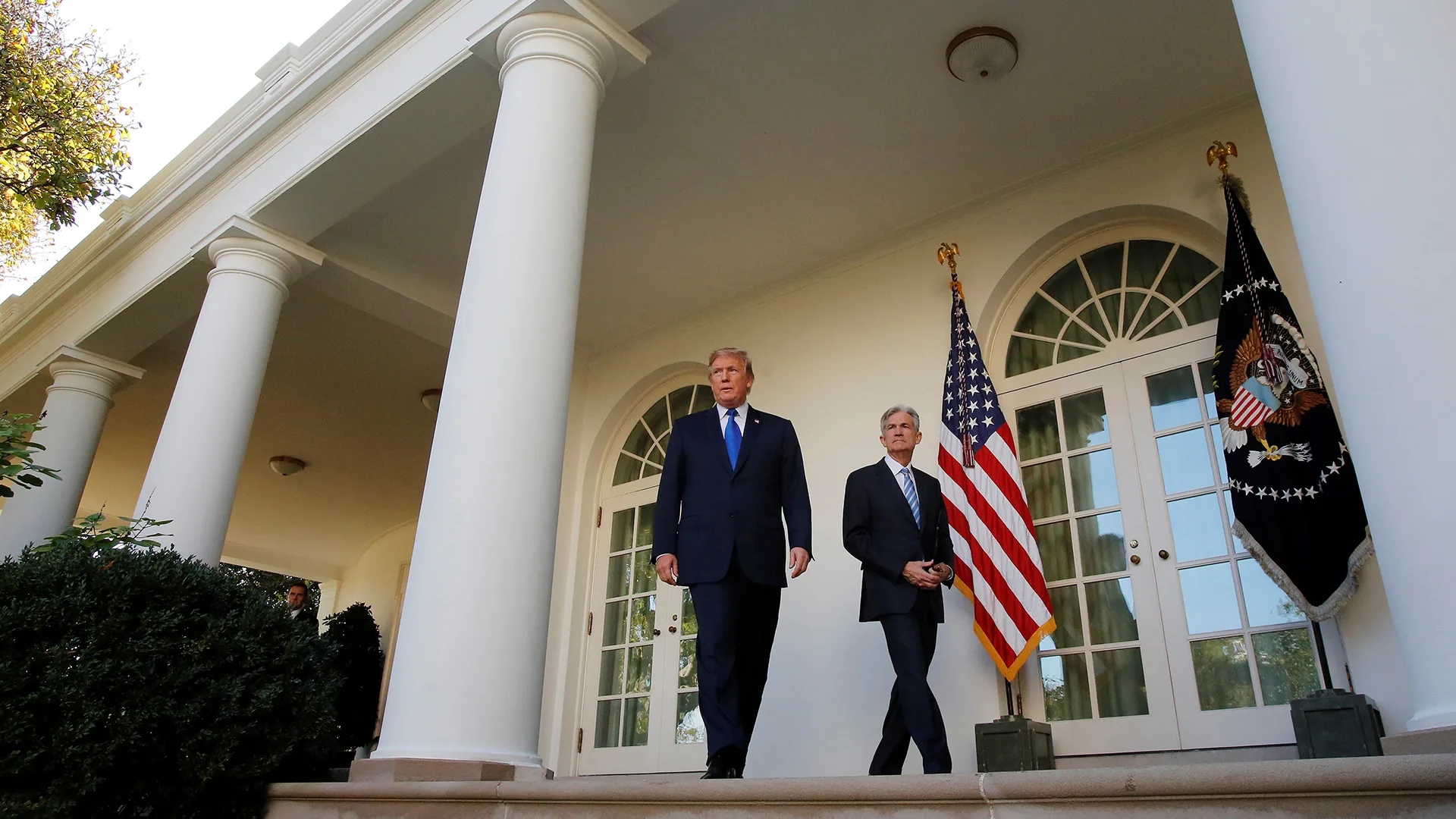
No president has ever attempted to fire a Fed governor, and back when he was still the Fed chair, Jerome Powell had described the Supreme Court case involving Cook as “perhaps the most important legal case in the Fed’s 113-year history.”
In The President vs. the Fed, FRONTLINE looked at how Trump’s second-term pressure campaign on the Fed to lower interest rates — which had already zeroed in on Powell — came to involve Cook as well.
It happened in August 2025. As Cook and other Fed officials headed to Jackson Hole, Wyoming, for the central bank’s annual conference, news broke that the Trump administration was accusing Cook of mortgage fraud and referring the case to federal prosecutors. Making the administration’s public case against Cook was Bill Pulte, the head of the Federal Housing Finance Agency, and now also Trump’s acting director of national intelligence. The president himself followed up soon after, calling on Cook, one of seven Fed officials who vote on interest rates, to resign.
The administration’s allegation was that Cook had simultaneously claimed two homes as her primary residence — something ProPublica later reported Trump himself had done.
According to laws protecting the Fed’s independence, presidents cannot fire Fed governors over policy frustrations, only “for cause” — and that’s what the administration said it had found.
“I think it’s a big issue. I don’t think it’s going away. I think she will have to resign, or I think she will be fired,” Pulte said, adding about the alleged mortgage fraud, “You cannot do that in America.”
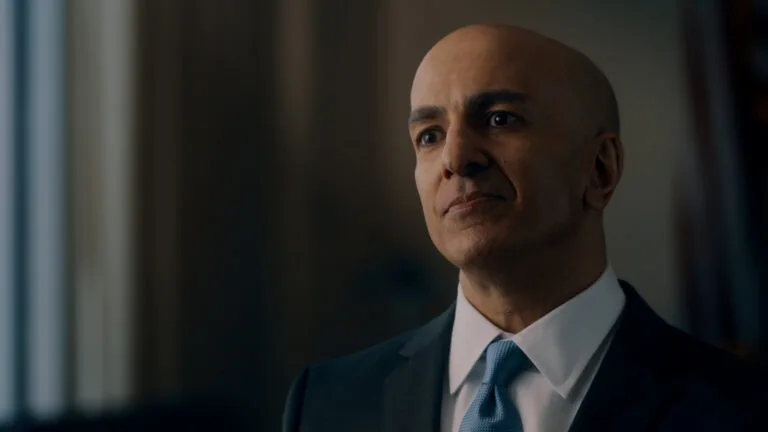
“It was so surprising to me,” Neel Kashkari, the president and CEO of the Federal Reserve Bank of Minneapolis, said in the documentary of the claim against Cook. “It was so out of left field that somebody is now going to try to dig up something so innocuous and say, ‘Well, this is now grounds to fire someone.’ So it was a shock.”
Cook said that the allegations were unfounded, and that she could provide documentation showing that she didn’t intentionally mislead lenders. Then, Trump posted to Truth Social that he was firing her — but Cook remained in her post, saying the president didn’t have the authority to oust her. In a Cabinet meeting after that, Trump said “we’ll have a majority very shortly” on the Fed Board and implied that interest rates would go down. The Fed had been holding rates steady throughout Trump’s second term in an effort to combat continued inflation.
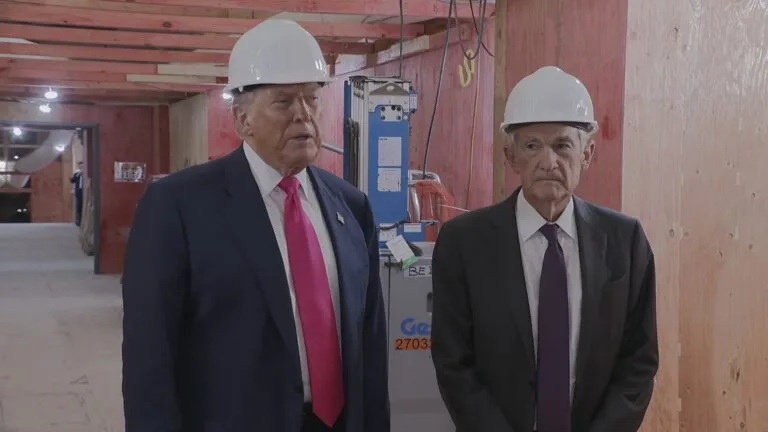
As The President vs. the Fed reported, Cook was never charged with a crime. She and Lowell sued the president, saying the allegations didn’t legally constitute cause and her right to due process was violated. She’s submitted evidence to the Department of Justice to show that any discrepancy on her mortgage application was an inadvertent mistake.
In the documentary, correspondent James Jacoby asked Cook’s lawyer about the accusations against her.
“If there is a discrepancy on someone’s mortgage application, an official who has tremendous power and responsibility in this country, isn’t that a legitimate inquiry as to what actually happened here?” Jacoby asked.
“The short answer to your question is yes. But where is that inquiry? When is it done? What is the opportunity for the person being accused to respond to it?” Lowell responded. “This is a political weaponization for a goal in which there are no boundaries.”
When it ruled in Trump v. Cook, the Supreme Court agreed that Cook had not received due process, with Supreme Court Chief Justice John Roberts writing for the majority that “the President failed to afford Cook the procedural protections to which she was entitled by statute.”
In addition, the court pointed to the statute established by Congress that a Fed governor can only be removed for cause.
Accepting the Trump administration’s arguments “would in effect transform the Federal Reserve’s for-cause protection into at-will employment,” Roberts wrote. Such a leap, he added, would be “out of step with the statute Congress enacted and our Nation’s tradition of central banking protected from political interference.”
The decision prevents Trump from dismissing Cook while her legal case plays out in lower courts.
“To be clear,” Roberts wrote, “the ultimate question of whether the President can remove Cook for cause will depend in part on the underlying facts.”
In addition to the Cook case, the documentary examined the roots and stakes of Trump’s battle with the Fed over its autonomy. Congress designed the Fed to be insulated from political interference so it would be free to act in the long-term interest of the economy, the film reported, including by making at-times politically unpopular monetary policy decisions. But Trump allies argue that the Fed’s independence has shielded it from accountability for its mistakes.
“The Fed has gotten too big for its britches,” Judy Shelton, a former Trump economic adviser, said in the documentary. “This agency feels it is not under any obligation to be accountable.”
In the film, Jacoby asked Kashkari if he thought Cook’s targeting was “all part of an effort by the president and this administration to get his hands on this powerful economic lever.”
“I think he’s been very clear about that,” Kashkari responded.
In May, Powell was succeeded as Fed chair by Trump’s new pick, Kevin Warsh, a former Fed governor himself. During his confirmation hearings, Warsh declined to defend Cook, saying it wouldn’t be appropriate to weigh in while the Supreme Court case was pending.
Watch the Full Documentary
The President vs. the Fed
FRONTLINE examines President Donald Trump’s unprecedented attempts to assert control over the most powerful institution in the U.S. economy: the Federal Reserve
Journalism powered by your support — and accessible to all.
Watching our “Scammed” documentary revealing how the global scam industry operates? Exposing the truth is where accountability begins. Help keep reporting like this paywall-free for everyone with a gift of $5 or $10 today.
Senior Digital Writer, FRONTLINE
Support provided by:
Learn More
Related Documentaries




Latest Documentaries


Related Stories
The President vs. the Fed
Related Stories
The President vs. the Fed
Explore
Policies
Teacher Center

Jon and Jo Ann Hagler on behalf of the Jon L. Hagler Foundation
Corey David Sauer
Koo and Patricia Yuen
FRONTLINE is a registered trademark of WGBH Educational Foundation. Web Site Copyright ©1995-2025 WGBH Educational Foundation. PBS is a 501(c)(3) not-for-profit organization.
Funding for FRONTLINE is provided through the support of PBS viewers and by the Corporation for Public Broadcasting, with major support from Ford Foundation, and Fialkow Family Foundation. Additional funding is provided the Abrams Foundation, Park Foundation, John D. and Catherine T. MacArthur Foundation, Heising-Simons Foundation, and the FRONTLINE Trust, with major support from Jon and Jo Ann Hagler on behalf of the Jon L. Hagler Foundation, and Corey David Sauer, and additional support from Koo and Patricia Yuen. FRONTLINE is a registered trademark of WGBH Educational Foundation. Web Site Copyright ©1995-2026 WGBH Educational Foundation. PBS is a 501(c)(3) not-for-profit organization.