‘Nobody Has Safety’: What a Gang Attack Reveals About Life in Haiti Today
The Trump administration ended Temporary Protected Status for Haitians in the U.S., saying their home country was now safe enough to return to. A FRONTLINE documentary reveals new details about the reality on the ground.
October 20, 2026
Share
In late June of this year, the U.S. Supreme Court issued a ruling that sparked fear and uncertainty among hundreds of thousands of Haitians who had fled violence and upheaval for the United States.
The ruling allowed the Trump administration to end temporary protections that had enabled those Haitians to live in the U.S. legally.
As part of its rationale for terminating Temporary Protected Status (TPS) for Haitians in its immigration crackdown, the administration said the Caribbean nation was now safe enough for Haitians in the U.S. to return to.
But for many of them, the prospect of being deported to Haiti was frightening.
“It’s like being put on a death row,” one man told FRONTLINE.
What is the reality on the ground in Haiti? And how is the TPS termination playing out both there and in large Haitian communities in the U.S.?
Those questions are at the heart of Haiti Deportation Crisis, a new documentary premiering Tues., Oct. 20, on PBS and online. From filmmakers Adam Desiderio and Sebastian Walker, the documentary is a rare, up-close look at the extent and impact of gang violence in Haiti, the efforts to combat it, and the growing concerns among Haitians in the U.S. that if they’re sent back, they’ll be kidnapped, ransomed or killed.
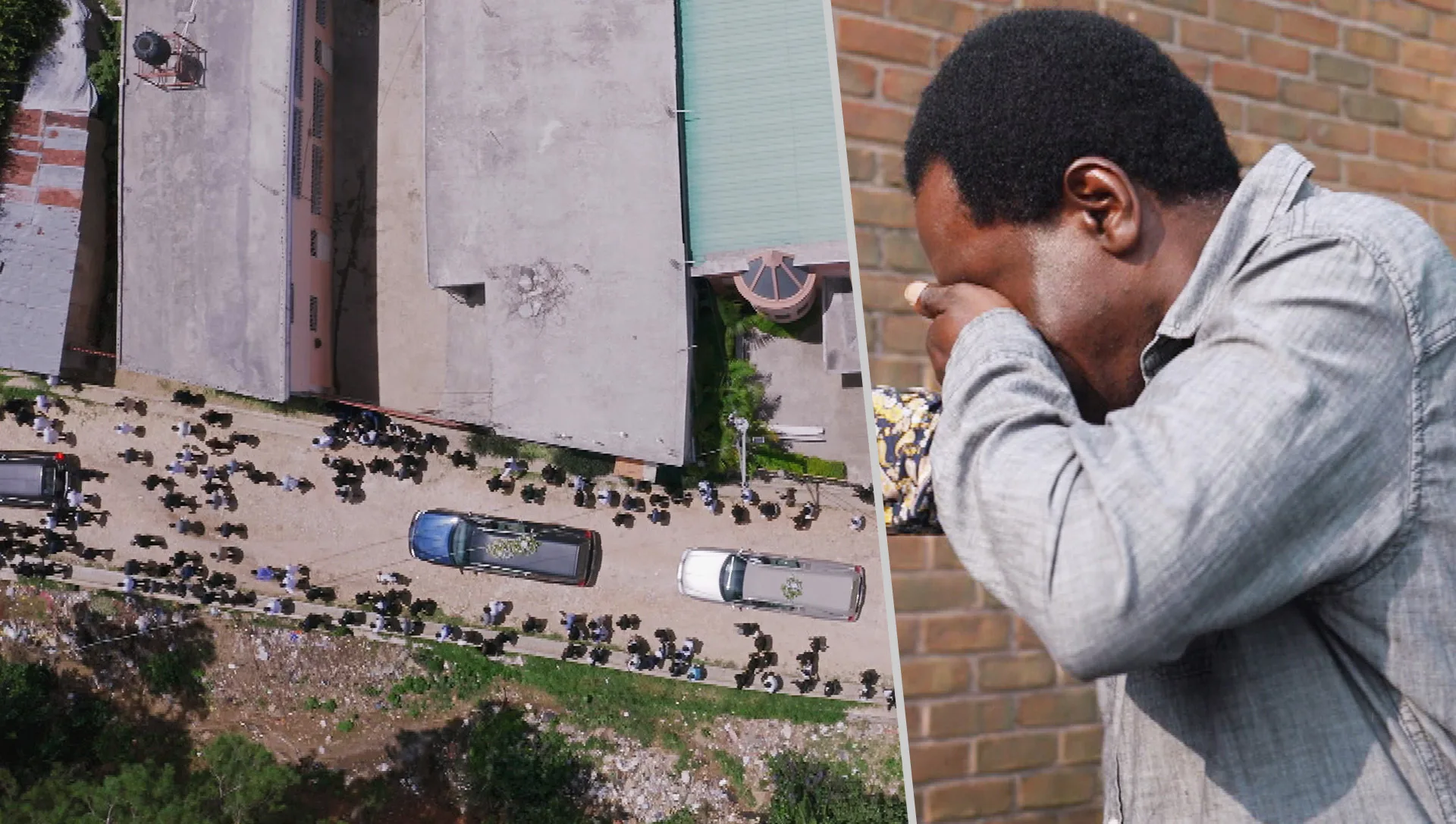
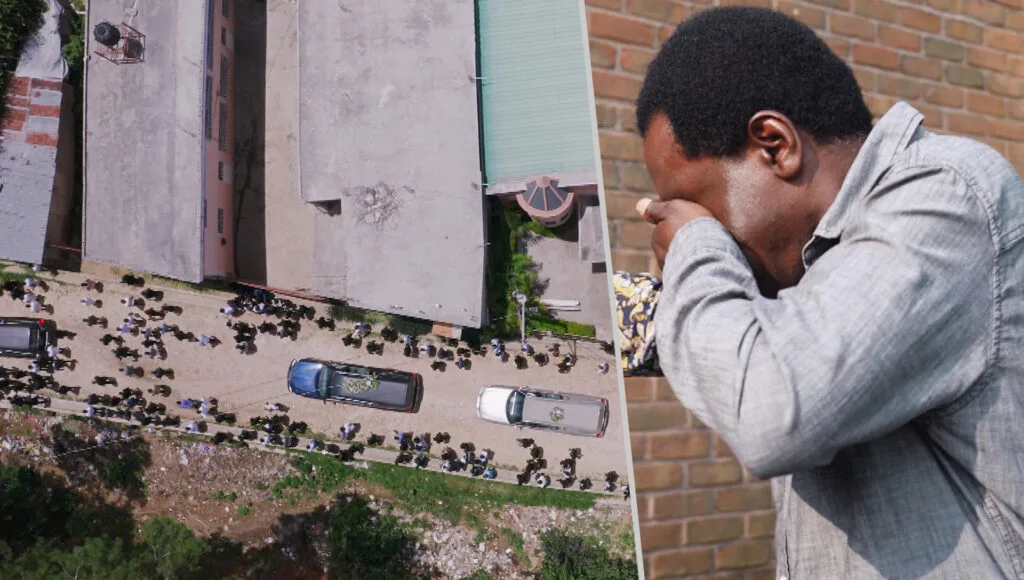
The film team’s reporting is a visceral documentation of how armed gangs now control large parts of Haiti, how massacres and mass kidnappings are devastating families, and how nearly 1.5 million people are estimated to have been displaced inside the country amid continuing instability.
In the above video drawn from the film, Desiderio and Walker document the aftermath of one particularly devastating incident near Haiti’s capital city, Port-au-Prince. It happened in August 2026, two months after the end of TPS for Haitians.
In the community of Kenscoff, a powerful coalition of gangs trying to expand its control took more than 50 hostages and killed at least 47 people, including children and others who sought safety in a church.
Walker and Desiderio were the first foreign journalists on the scene after the attack.
“Nobody has safety,” the son of one man killed in the church told Walker. “Nobody has safety in this country, nobody.”
“We don’t have any hope.”
In the above video, walking with Walker on a bloodstained path, a local militia leader described seven young people being shot in the head, execution-style, as they left a pool party.
Another man told of how, after his daughter was taken hostage, gang members shared videos of her being beaten.
And finally, one woman who survived the attack described gang members beating and tying her up, and kicking her five-month-old child “back and forth” on the floor.
Another woman told Walker, “We don’t have any hope.”
As Haiti Deportation Crisis explores, the U.S. government first granted TPS to Haitians in 2010 after a devastating earthquake destroyed much of the country’s infrastructure. Since then, successive U.S. administrations have renewed it, as Haiti faced widespread hunger, the assassination of its president, and escalating gang violence.
In ending TPS for Haitians, the Trump administration has said the protections have gone on too long and are no longer justified.
“If you want to rebuild your country, go back and rebuild it,” U.S. Secretary of Homeland Security Markwayne Mullin said.
At the same time, the documentary reports, the U.S. has acknowledged the current enormity of the gang violence problem in Haiti. Walker and Desiderio were the first foreign journalists to film with the Gang Suppression Force, a newly-established international military mission backed by the U.N. and countries including the U.S. aimed at combatting the violence and bringing security to Haiti after years of instability and political chaos.
The Kenscoff massacre illustrated the scale of the challenge they face. And recent events have underscored ongoing concerns that in Haiti, “nobody has safety”: Just this past Sunday, multiple soldiers within the Gang Suppression Force reportedly went missing in an ambush in gang-controlled territory.
For the full story, watch Haiti Deportation Crisis starting Oct. 20, 2026, at 10/9c on PBS stations (check local listings) and on FRONTLINE’s YouTube channel, and at 7/6c at pbs.org/frontline and in the PBS App. Haiti Deportation Crisis will also be available on PBS Documentaries on Prime Video. The documentary is a FRONTLINE production with Mongoose Pictures. It is written, produced and directed by Adam Desiderio and Sebastian Walker. The correspondent is Sebastian Walker. The senior producer is Dan Edge. The managing editor of FRONTLINE is Andrew Metz. The editor-in-chief and executive producer of FRONTLINE is Raney Aronson-Rath.
Journalism powered by your support — and accessible to all.
Watching our “Scammed” documentary revealing how the global scam industry operates? Exposing the truth is where accountability begins. Help keep reporting like this paywall-free for everyone with a gift of $5 or $10 today.

Senior Digital Writer, FRONTLINE
Support provided by:
Learn More
Related Documentaries



Latest Documentaries
Related Stories
Haiti Deportation Crisis
Related Stories
Haiti Deportation Crisis
Explore
Policies
Teacher Center

Jon and Jo Ann Hagler on behalf of the Jon L. Hagler Foundation
Corey David Sauer
Koo and Patricia Yuen
FRONTLINE is a registered trademark of WGBH Educational Foundation. Web Site Copyright ©1995-2025 WGBH Educational Foundation. PBS is a 501(c)(3) not-for-profit organization.
Funding for FRONTLINE is provided through the support of PBS viewers and by the Corporation for Public Broadcasting, with major support from Ford Foundation, and Fialkow Family Foundation. Additional funding is provided the Abrams Foundation, John D. and Catherine T. MacArthur Foundation, Park Foundation, Heising-Simons Foundation, and the FRONTLINE Trust, with major support from Jon and Jo Ann Hagler on behalf of the Jon L. Hagler Foundation, and Corey David Sauer, and additional support from Koo and Patricia Yuen. FRONTLINE is a registered trademark of WGBH Educational Foundation. Web Site Copyright ©1995-2026 WGBH Educational Foundation. PBS is a 501(c)(3) not-for-profit organization.