When It Comes to Land Mines, ‘the Rats Are Rarely Wrong’
Go inside a program that trains giant ‘hero rats’ to sniff out deadly explosives in a newly streaming documentary from FRONTLINE’s archives.
July 29, 2026
Share
Every year, thousands of people around the world are injured or killed by land mines and other explosives buried underground, many of them placed during conflicts that happened years earlier.
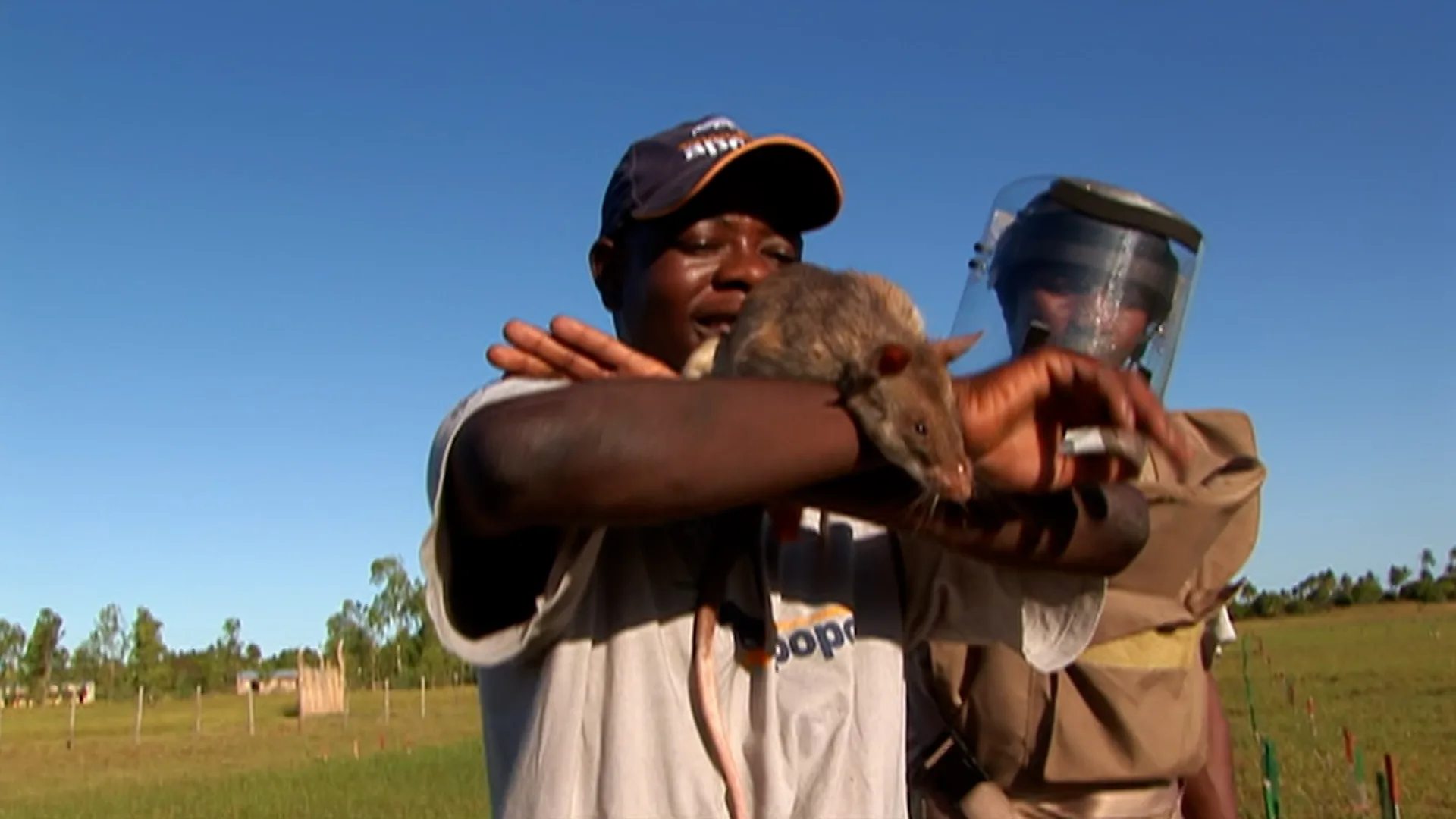
An effort to reduce those casualties has been underway for years, and it hinges on some unlikely protagonists: giant rats.
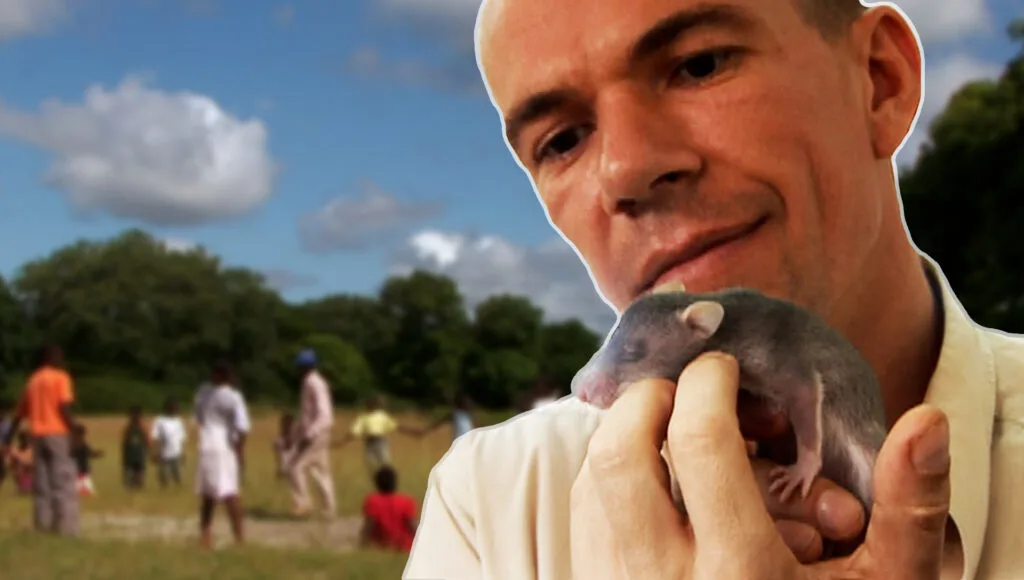
“They save human lives, and yes, they are heroes, actually,” social entrepreneur Bart Weetjens told FRONTLINE in Tanzania: Hero Rats.
The short documentary originally aired in 2007 as part of FRONTLINE/World, a special FRONTLINE series that ran from 2002-2010 and was developed in partnership with GBH in Boston and KQED in San Francisco. Hero Rats is now streaming on FRONTLINE’s YouTube channel for the first time as part of an effort to make the series’ archive widely accessible.
When Hero Rats was filmed, Weetjens, who had felt a lifelong connection with rodents, had been running a unique lab in the East African country of Tanzania for seven years. Demining is a costly and extremely dangerous process, and traditionally, people relied on dogs to detect mines. But Weetjens realized that African giant pouched rats were lighter, highly social and trainable, less expensive to maintain, and less susceptible to tropical disease.
So he and his team got to work caring for the rats, bonding with them, and training them to sniff out deadly unexploded landmines that could then be safely defused.
"As long as these mines are there, people just cannot build a normal life."
The effort faced initial skepticism.
“In the beginning it was really tough,” Weetjens told reporter Alexis Bloom in the documentary. “Everywhere I went to apply for funding we were just laughed at.”
But Weetjens persevered: “I dreamt of a better world. As long as these mines are there, people just cannot build a normal life,” he told Bloom.
A radio operator on Weetjens’ team, Ramos, knew that firsthand. The only survivor of a land mine encounter in neighboring Mozambique that killed twelve people, he lost both of his legs below the knee. When he first heard about Weetjens’ “hero rat” program, Ramos was confused: “I didn’t think it was to clear mines,” he told Bloom. “I thought it was to clear rats from people’s houses.”
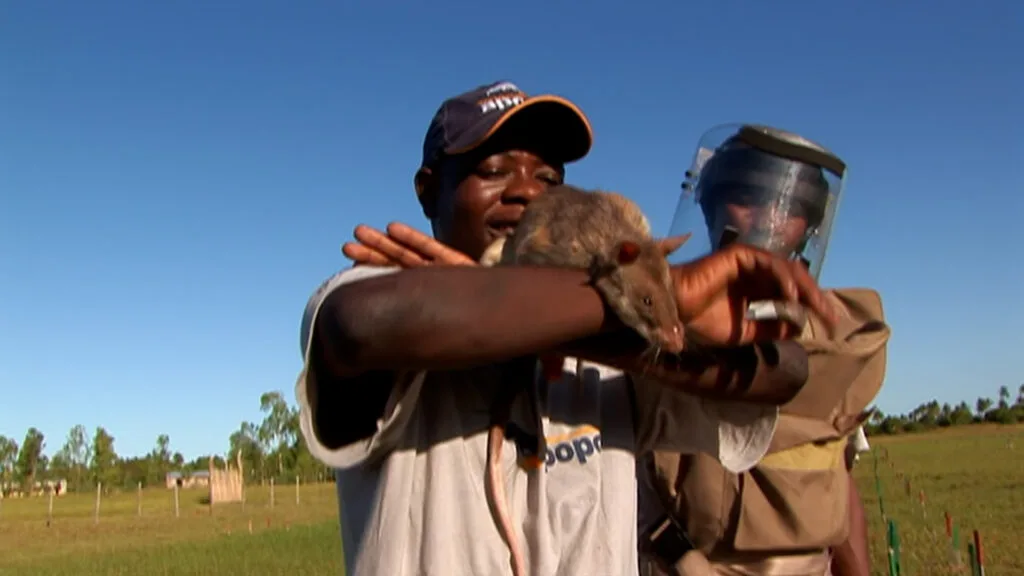
But Ramos changed his mind about the trained rats after seeing them in action: finding explosive scents with lightning speed, and indicating the locations by scratching.
In Hero Rats, Bloom and producer Cassandra Herrman accompanied Weetjens and his team of rodents and humans to Mozambique, a country marked by decades of conflict, and watched them get to work. What unfolded was remarkable, with the rats zeroing in on a land mine that a human deminer then successfully defused. As Bloom observed in the documentary’s narration, “the rats are rarely wrong.”
Bloom also visited a local school in Mozambique that had been cleared of land mines with the help of the rats, allowing children to resume their education and play without fear of stepping on a mine.
Weetjens’ hopes for his beloved rats didn’t end there. Back at his lab, he explained to Bloom that the same process used to train the rats to sniff out explosives could potentially be applied to help them detect another deadly threat — tuberculosis — more efficiently than lab technicians.
“In the end, the animals are trained to pinpoint a specific target scent,” he told Bloom. “What that target scent is … can be anything.”
Mozambique was declared “free of all known land mines” in 2015, thanks to demining efforts by organizations including the one Weetjens founded, APOPO. APOPO continues to train rats to sniff out both land mines and tuberculosis to this day.
Watch the Full Documentary | Tanzania: Hero Rats
Journalism powered by your support — and accessible to all.
Watching our “Scammed” documentary revealing how the global scam industry operates? Exposing the truth is where accountability begins. Help keep reporting like this paywall-free for everyone with a gift of $5 or $10 today.

Senior Digital Writer, FRONTLINE
Support provided by:
Learn More
Related Documentaries



Latest Documentaries


Related Stories
Tanzania: Hero Rats
Related Stories
Tanzania: Hero Rats
Explore
Policies
Teacher Center

Jon and Jo Ann Hagler on behalf of the Jon L. Hagler Foundation
Corey David Sauer
Koo and Patricia Yuen
FRONTLINE is a registered trademark of WGBH Educational Foundation. Web Site Copyright ©1995-2025 WGBH Educational Foundation. PBS is a 501(c)(3) not-for-profit organization.
Funding for FRONTLINE is provided through the support of PBS viewers and by the Corporation for Public Broadcasting, with major support from Ford Foundation, and Fialkow Family Foundation. Additional funding is provided the Abrams Foundation, John D. and Catherine T. MacArthur Foundation, Park Foundation, Heising-Simons Foundation, and the FRONTLINE Trust, with major support from Jon and Jo Ann Hagler on behalf of the Jon L. Hagler Foundation, and Corey David Sauer, and additional support from Koo and Patricia Yuen. FRONTLINE is a registered trademark of WGBH Educational Foundation. Web Site Copyright ©1995-2026 WGBH Educational Foundation. PBS is a 501(c)(3) not-for-profit organization.