How U.S. Prisons in Iraq Became “Jihadi Universities” for ISIS
May 17, 2016
Share
Shortly after his inauguration in 2009, President Barack Obama announced his intention to remove all U.S. troops from Iraq by the end of 2011.
Now, ISIS has taken hold inside the country, as well as in neighboring Syria, and the U.S. is sending more troops back to Iraq, with the goal of helping government forces recapture the strategic city of Mosul from the group’s grip.
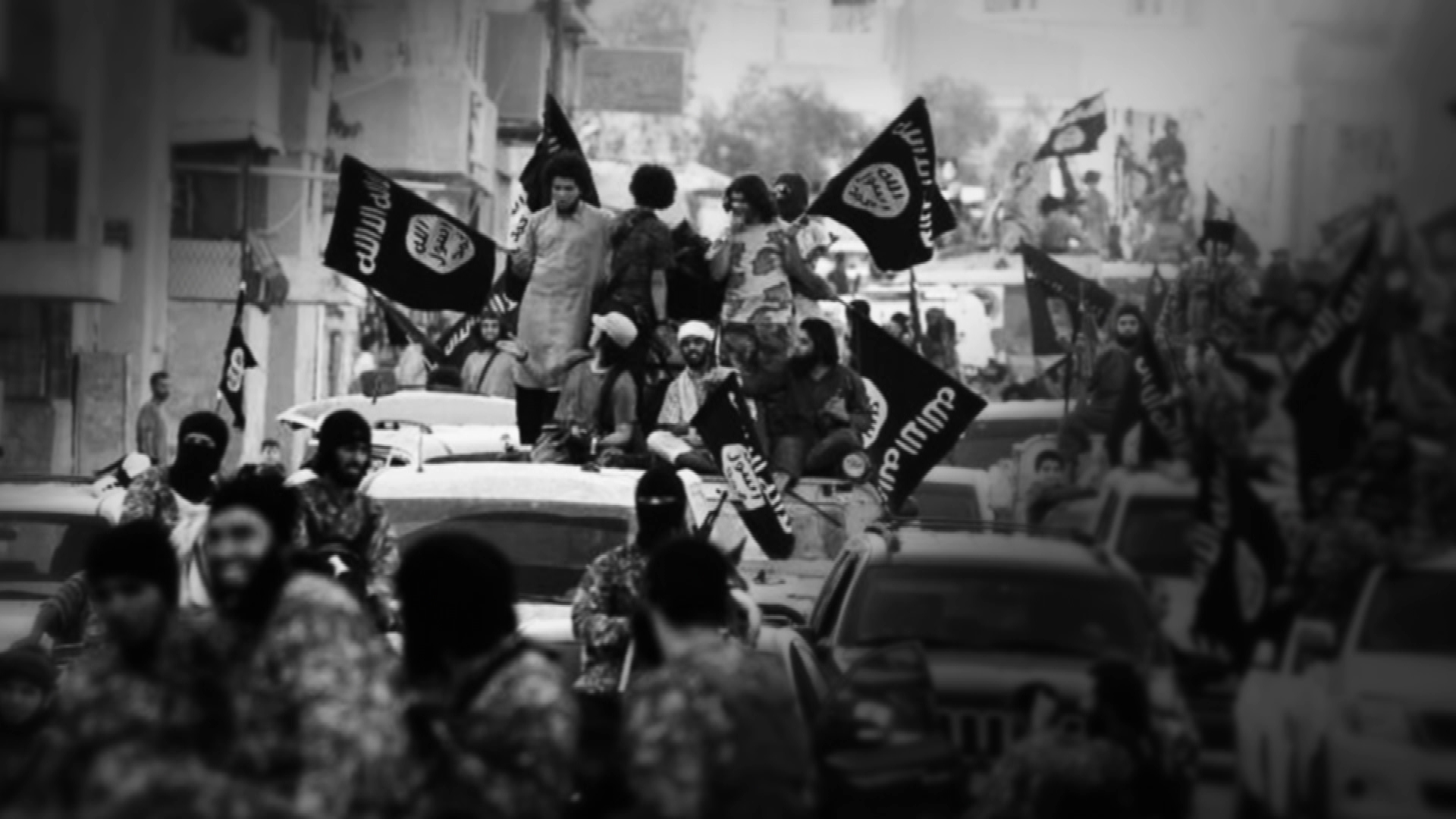
Tonight, a new FRONTLINE documentary, The Secret History of ISIS, examines the role that America’s invasion of Iraq — and its eventual withdrawal from the country — have played in the terror group’s brutal rise.
“We disengaged not only militarily at the end of 2011, we disengaged politically,” former U.S. Ambassador to Iraq Ryan Crocker tells FRONTLINE in the below excerpt from the film. “Well, I don’t think we thought through exactly how many chips were going to fall and what the consequences of that would be.”
The documentary, from veteran FRONTLINE filmmaker Michael Kirk, is a deep look at how a petty criminal-turned-jihadist firebrand, Abu Musab al-Zarqawi, capitalized on the American invasion to develop what would become the ISIS playbook — fomenting sectarian violence among Muslims, stepping in to take advantage of power vacuums, and broadcasting brutality far and wide on the Internet — and how his eventual successor, Abu Bakr al-Baghdadi, followed Zarqawi’s method and created a self-proclaimed Islamic state founded on deadly violence and fear.
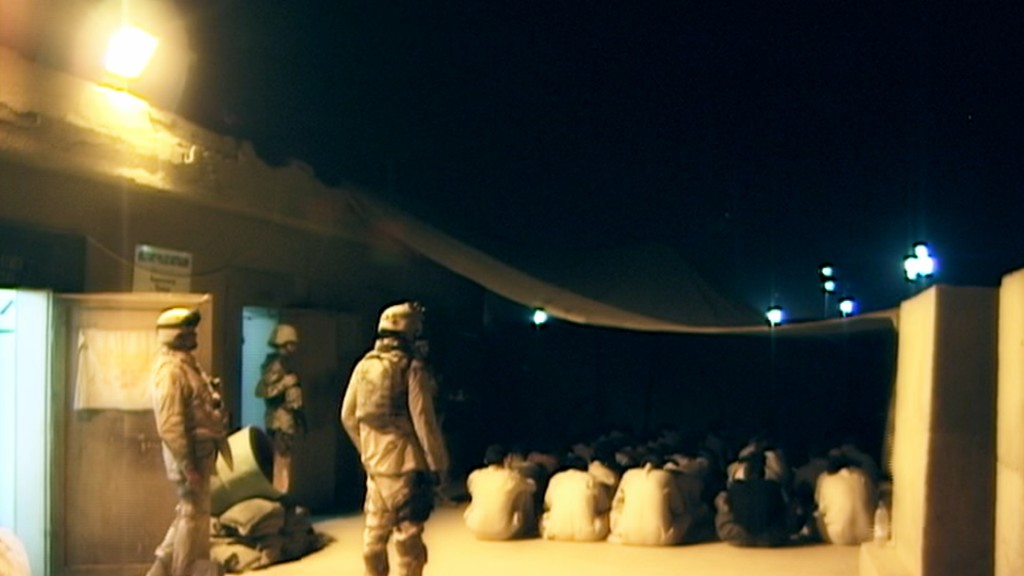
As the film details, it was inside a U.S. prison in Iraq that Baghdadi made the transition from religious scholar and soccer player to terrorist leader. These prisons housed Iraqis swept up by U.S. forces during the early days of the invasion, and would come to be known as “jihadi universities.”
“For a number of people who had spent time in these jails, they spoke about them as jihadi training camps,” Emma Sky, formerly of the Iraq coalition authority, tells FRONTLINE in the below scene from The Secret History of ISIS. “Through being in jail together, people created new networks.”
In prison, Baghdadi was “able to network with other committed jihadists, capable jihadists that were attached to major organizations like Al Qaeda in Iraq, and he begins to network with these men, many of whom he would rise with through the ranks of Al Qaeda in Iraq, later the Islamic State,” Will McCants, author of The ISIS Apocalypse, tells FRONTLINE.
After his release, Baghdadi moved up inside Zarqawi’s organization, drawing on what he had learned in prison. Once American forces left Iraq in late 2011, what was left of Zarqawi’s group — then isolated in northern Iraq — began to rebuild under Baghdadi’s leadership.They soon expanded into Syria, and in the two years since ISIS declared its own caliphate, it has formally recognized nearly 20 affiliates in nine countries.
For more on how the U.S. invasion of Iraq and the decisions of two presidents laid the groundwork for the rise of ISIS, watch The Secret History of ISIS on May 17, 2016, at 10 p.m. EST on PBS stations and online.

Senior Digital Writer, FRONTLINE
Support provided by:
Learn More
Related Documentaries


Latest Documentaries




Related Stories
The Secret History of ISIS
Related Stories
The Secret History of ISIS
Explore
Policies
Teacher Center

Jon and Jo Ann Hagler on behalf of the Jon L. Hagler Foundation
Corey David Sauer
Koo and Patricia Yuen
FRONTLINE is a registered trademark of WGBH Educational Foundation. Web Site Copyright ©1995-2025 WGBH Educational Foundation. PBS is a 501(c)(3) not-for-profit organization.
Funding for FRONTLINE is provided through the support of PBS viewers and by the Corporation for Public Broadcasting, with major support from Ford Foundation, and Fialkow Family Foundation. Additional funding is provided the Abrams Foundation, John D. and Catherine T. MacArthur Foundation, Park Foundation, Heising-Simons Foundation, and the FRONTLINE Trust, with major support from Jon and Jo Ann Hagler on behalf of the Jon L. Hagler Foundation, and Corey David Sauer, and additional support from Koo and Patricia Yuen. FRONTLINE is a registered trademark of WGBH Educational Foundation. Web Site Copyright ©1995-2026 WGBH Educational Foundation. PBS is a 501(c)(3) not-for-profit organization.