For Years, John O’Neill Warned of Al Qaeda’s Threat. Then He Died on 9/11.
When the twin towers fell on Sept. 11, 2001, among the thousands killed was the one man who may have known more about Osama bin Laden and Al Qaeda than any other person in America: former FBI agent John O’Neill.
September 8, 2026
Share
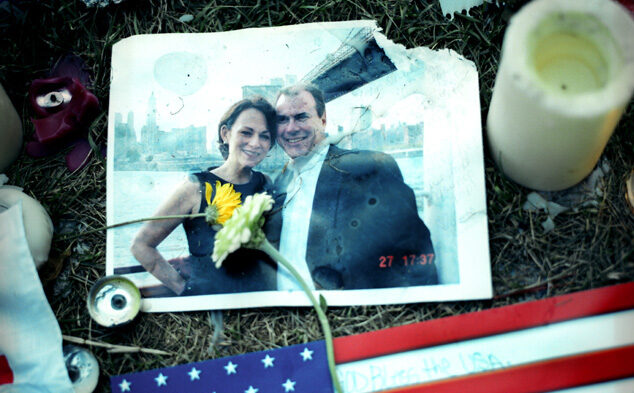
When the twin towers fell on Sept. 11, 2001, among the thousands killed was the one man who may have known more about Osama bin Laden and Al Qaeda than any other person in America.
His name was John O’Neill, and as an FBI special agent focused on Al Qaeda, he had sounded the alarm about the group’s threat to the United States long before 9/11.
O’Neill’s story is at the heart of the classic 2002 FRONTLINE documentary The Man Who Knew, which re-airs on PBS stations across the country Sept. 8, 2026, as the U.S. prepares to observe the 25th anniversary of the worst terror attack in the nation’s history.
The documentary, which is also available to stream, raises haunting questions about the FBI’s approach to counterterrorism in the lead-up to 9/11, about O’Neill’s warnings on Al Qaeda — and about why the bureau stopped listening.
“The night before he died, he had said to me, ‘We’re due, and we’re due for something big,’” O’Neill’s friend Jerry Hauer, a former director of emergency management for New York City who died in 2023, told FRONTLINE in the documentary.
Drawing on interviews with many of O’Neill’s closest friends and associates, The Man Who Knew filmmakers Michael Kirk and Jim Gilmore tell the story of a controversial figure within the U.S. intelligence community — a man who was obsessed with Osama bin Laden long before most people had ever heard of him, but whose polarizing style made him too much of a maverick for some at FBI headquarters.
“You could be flagged as a problem, and your career could pretty much be over,” Joe Cantamessa, a former FBI special agent, told FRONTLINE.
O’Neill had investigated the bombing of the U.S. embassies in Kenya and Tanzania, the USS Cole in Yemen, the Khobar Towers in Saudi Arabia and an earlier attack on the World Trade Center in 1993. He became increasingly convinced that another attack on U.S. soil was imminent — and the film traces his growing frustration with Washington, D.C.’s lax attitude toward the possibility that Al Qaeda sleeper cells were operating in the U.S.
“What John O’Neill was trying to do was get a momentum going in the FBI to look seriously for those cells,” said Richard Clarke, the nation’s former counterterrorism czar, in the documentary.
O’Neill pushed for the bureau to reorganize itself to take on terrorism, advocating a plan that would emphasize new ways of gathering and passing on information about groups like Al Qaeda: “From his point of view, it was very clear what had to be done,” said former FBI deputy director Robert “Bear” Bryant, an O’Neill supporter.
But O’Neill’s brash approach, his obsession with bin Laden, and questions about his personal life created friction with FBI leadership. So did his temporary loss of a briefcase containing a classified report (an incident one superior at the FBI called “a big deal”), and allegations that he used an FBI car to give a ride to his girlfriend.
Amid the resulting investigations, O’Neill left the job he loved and entered the private sector in the summer of 2001 — as director of security for the World Trade Center.
Just days later, the terrorists O’Neill had long pursued struck his new workplace.
His body was found in the debris of the South Tower.
Watch the Full Documentary | The Man Who Knew
Journalism powered by your support — and accessible to all.
Watching our “Scammed” documentary revealing how the global scam industry operates? Exposing the truth is where accountability begins. Help keep reporting like this paywall-free for everyone with a gift of $5 or $10 today.
Senior Digital Writer, FRONTLINE
Support provided by:
Learn More
Related Documentaries


Latest Documentaries



Related Stories
The Man Who Knew
Related Stories
The Man Who Knew
Explore
Policies
Teacher Center

Jon and Jo Ann Hagler on behalf of the Jon L. Hagler Foundation
Corey David Sauer
Koo and Patricia Yuen
FRONTLINE is a registered trademark of WGBH Educational Foundation. Web Site Copyright ©1995-2025 WGBH Educational Foundation. PBS is a 501(c)(3) not-for-profit organization.
Funding for FRONTLINE is provided through the support of PBS viewers and by the Corporation for Public Broadcasting, with major support from Ford Foundation, and Fialkow Family Foundation. Additional funding is provided the Abrams Foundation, John D. and Catherine T. MacArthur Foundation, Park Foundation, Heising-Simons Foundation, and the FRONTLINE Trust, with major support from Jon and Jo Ann Hagler on behalf of the Jon L. Hagler Foundation, and Corey David Sauer, and additional support from Koo and Patricia Yuen. FRONTLINE is a registered trademark of WGBH Educational Foundation. Web Site Copyright ©1995-2026 WGBH Educational Foundation. PBS is a 501(c)(3) not-for-profit organization.