Searching for ‘Emilie’ — and Uncovering a Romance Scam Playbook
‘Emilie’ stole $812,000 from a widower in the U.S. Reporters traced the fake persona to a scam compound in Myanmar: ‘There was a five-step plan for how to manipulate people psychologically.’
September 29, 2026
Share
In partnership with:

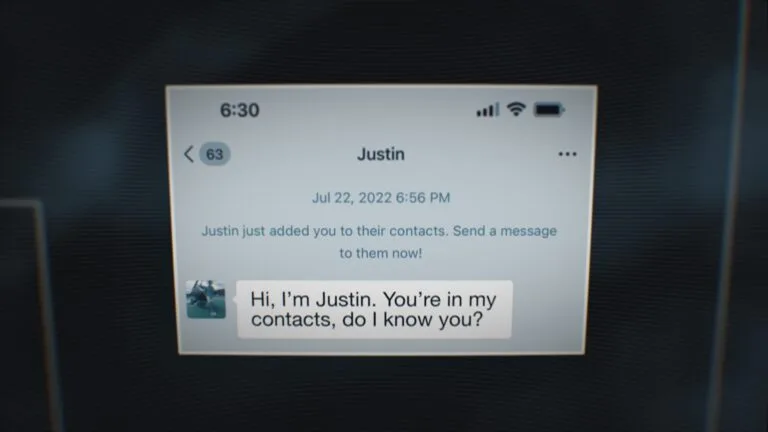
Before “Emilie” stole $812,000 from a widower, she gained his trust.
Her boyfriend had cheated on her, “Emilie” said. She claimed to share many of the widower’s interests. And after living all around the world, she described settling in Florida, where she said she enjoyed a luxurious lifestyle thanks to successful crypto investments.
“I just thought I was talking to a wonderful girl,” the widower, Simon, tells reporter Juliet Linderman in the above video. He had met “Emilie” on a dating app, seeking companionship after the death of his wife of more than 40 years.
But “Emilie” wasn’t who she claimed to be.
She was a fake persona run from a scam compound in Myanmar. And documents leaked to reporter Martha Mendoza revealed the compound’s inner workings — including what Mendoza describes as “a five-step plan for how to manipulate people psychologically.”
“I felt like I had just gotten the playbook,” Mendoza says.
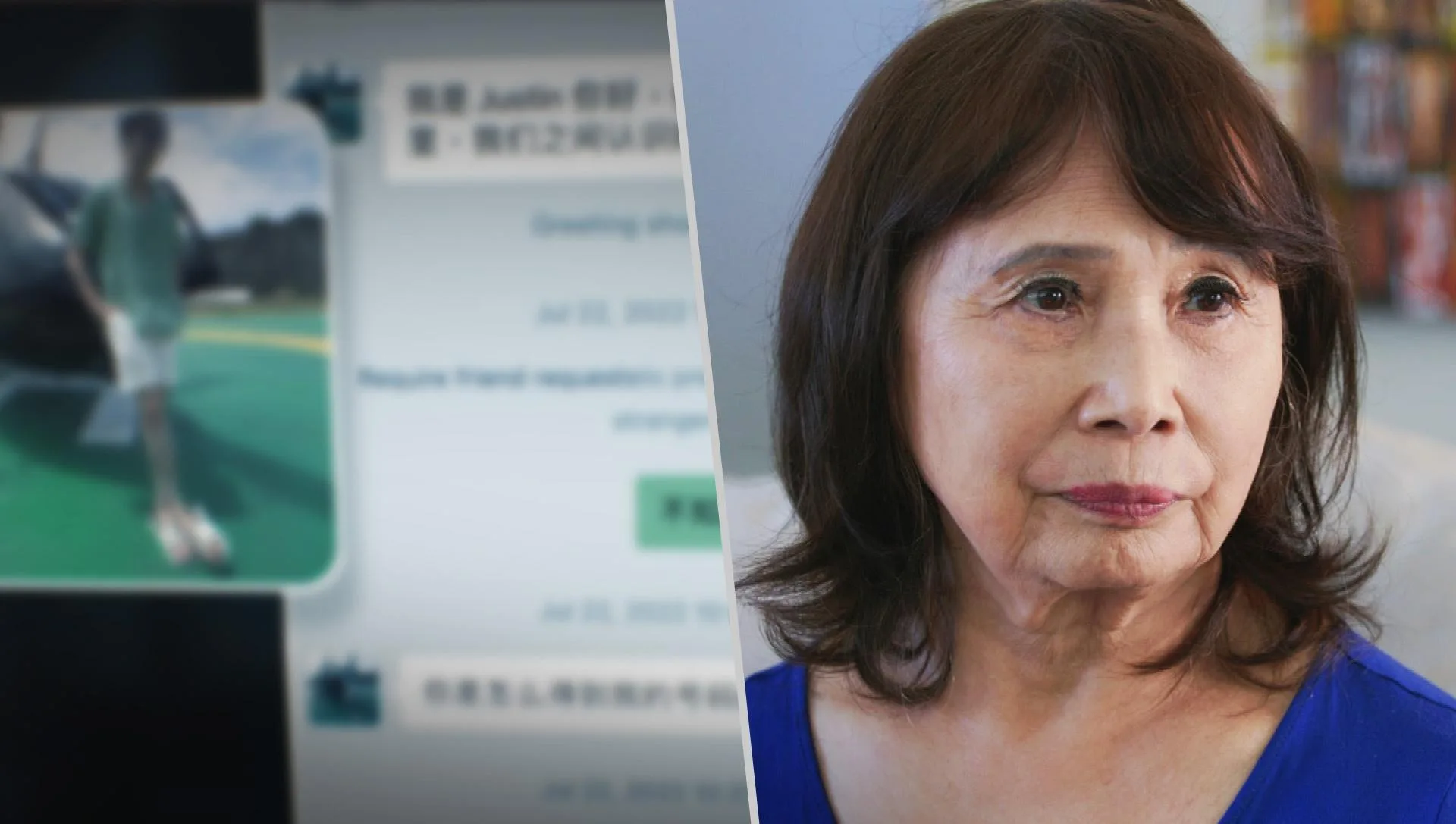
Mendoza’s reporting on how workers at the scam compound meticulously maintained and calibrated fake personas like “Emilie” — including blood types and hobbies — and took shifts pretending to be them unfolds in the above video. So does how “Emilie” scammed Simon out of hundreds of thousands of dollars he thought he was investing in cryptocurrency.
Simon was far from alone. The video is drawn from Scammed, a new 90-minute documentary from FRONTLINE and The Associated Press that investigates the shadowy world of online scams, and exposes how this global criminal industry is stealing billions of dollars from millions of people each year.
“Every single person is vulnerable to scams in a different way,” Linderman says in the video. “I spoke with people with advanced degrees, doctors, lawyers, IT professionals, people who work with computers and work with the internet. And they were scammed.”
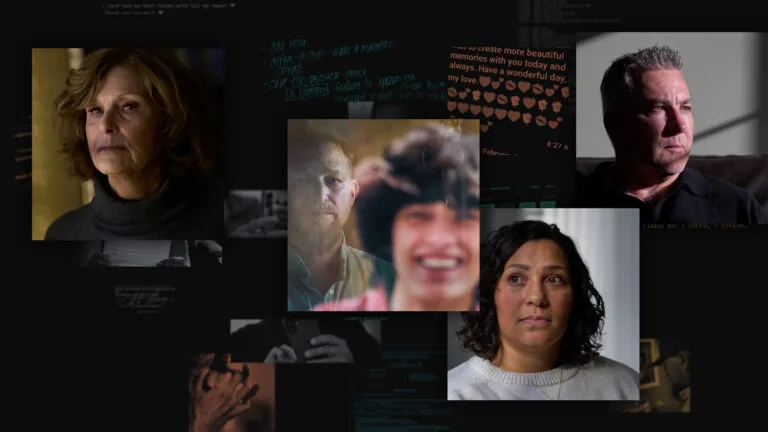
Inside the Scam
From an award-winning team that includes director Peter Klein and reporters Linderman, Mendoza and AP’s Erika Kinetz, the documentary goes inside the explosive growth of an industry powered in many cases by organized crime, trafficked labor, American technology, and, increasingly, AI — and looks at how governments and law enforcement have tried to keep pace.
“It’s being done at a scale that we have never seen and never even anticipated,” Erin West, a former U.S. prosecutor who worked on a special unit with the FBI and Secret Service focused on cybercrime, says in the documentary.
Most victims never get their money back. And for many of them, financial losses are compounded by shame they feel after being scammed.
That’s the case for Simon, who asked not to be identified by his full name, and who has never told most of his family what happened to him.
“I cannot, I don’t even want to think about it,” he says. “I can’t explain — you know, I could cry. It’s bad.”
Three years later, his stolen money has not been returned.
For the full story, watch Scammed starting Sept. 29, 2026, at 9/8c on PBS stations (check local listings) and on FRONTLINE’s YouTube channel, and at 7/6c at pbs.org/frontline and in the PBS App. The documentary will also be available on PBS Documentaries on Prime Video. Scammed is a FRONTLINE Production with Peter Klein Productions in association with The Associated Press. The writer, producer and director is Peter Klein. The co-producers are Megan Robinson and Boris Ivanov. The reporters are Erika Kinetz, Juliet Linderman and Martha Mendoza. The senior producers are Frank Koughan and Eamonn Matthews. The managing editor of FRONTLINE is Andrew Metz. The editor-in-chief and executive producer of FRONTLINE is Raney Aronson-Rath.
Journalism powered by your support — and accessible to all.
Watching our “Scammed” documentary revealing how the global scam industry operates? Exposing the truth is where accountability begins. Help keep reporting like this paywall-free for everyone with a gift of $5 or $10 today.

Senior Digital Writer, FRONTLINE
Support provided by:
Learn More
Related Documentaries









Latest Documentaries



Related Stories
Inside the Global Scam Industry
Scammed
Inside the Scam
Related Stories
Inside the Global Scam Industry
Scammed
Inside the Scam
Explore
Policies
Teacher Center

Jon and Jo Ann Hagler on behalf of the Jon L. Hagler Foundation
Corey David Sauer
Koo and Patricia Yuen
FRONTLINE is a registered trademark of WGBH Educational Foundation. Web Site Copyright ©1995-2025 WGBH Educational Foundation. PBS is a 501(c)(3) not-for-profit organization.
Funding for FRONTLINE is provided through the support of PBS viewers and by the Corporation for Public Broadcasting, with major support from Ford Foundation, and Fialkow Family Foundation. Additional funding is provided the Abrams Foundation, John D. and Catherine T. MacArthur Foundation, Park Foundation, Heising-Simons Foundation, and the FRONTLINE Trust, with major support from Jon and Jo Ann Hagler on behalf of the Jon L. Hagler Foundation, and Corey David Sauer, and additional support from Koo and Patricia Yuen. FRONTLINE is a registered trademark of WGBH Educational Foundation. Web Site Copyright ©1995-2026 WGBH Educational Foundation. PBS is a 501(c)(3) not-for-profit organization.