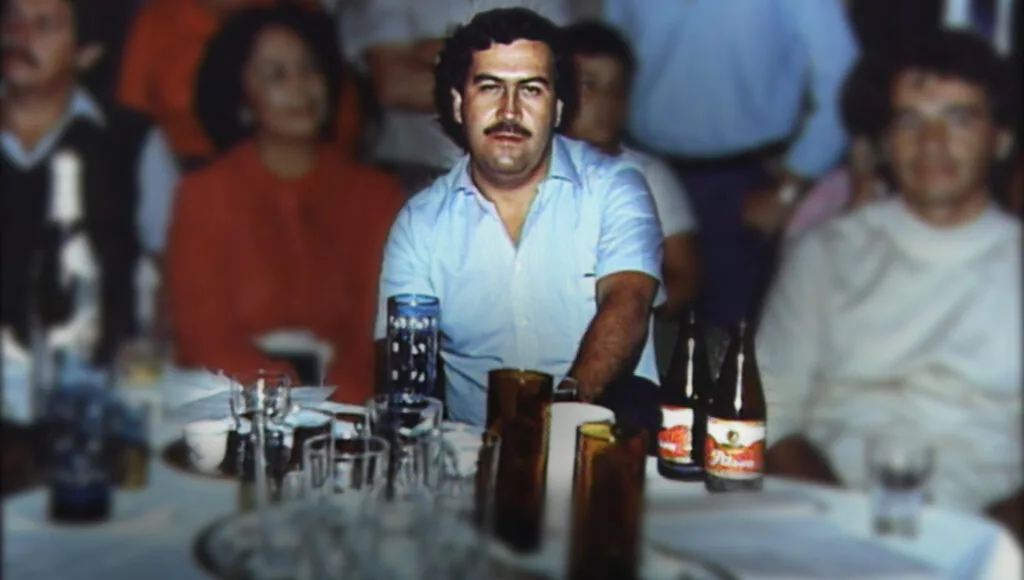
How Pablo Escobar Became the ‘Godfather of Cocaine’
And how the empire he built set the stage for the modern narco-trafficking industry. An archival FRONTLINE documentary investigating Escobar's bloody rise and fall is now available to watch on YouTube for the first time.
April 22, 2026
Share
In his second term, President Donald Trump has repeatedly vowed to stem the flow of illegal drugs into the United States.
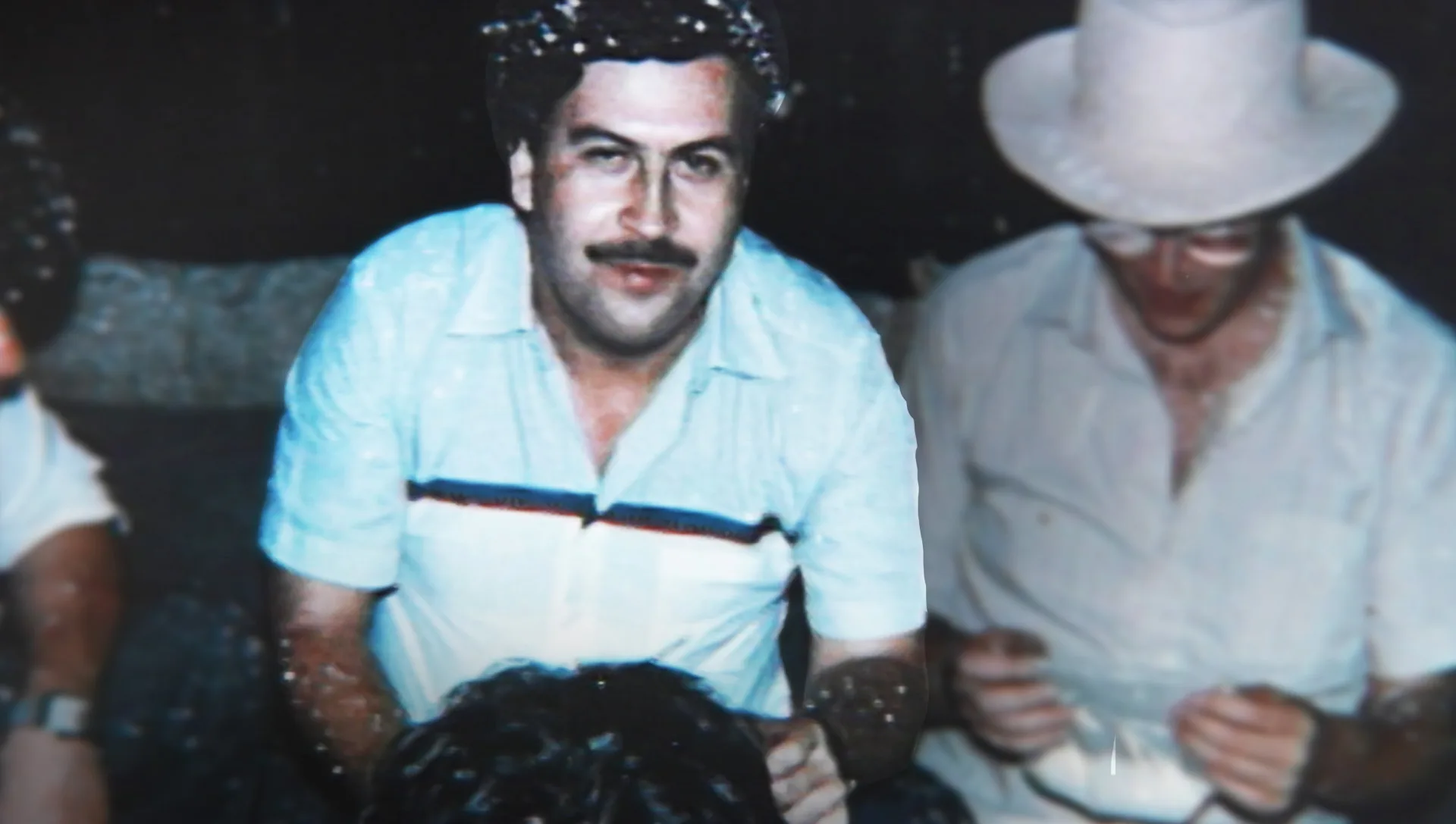
An archival FRONTLINE documentary examines how one drug, cocaine, began flowing into the U.S. at an industrial scale in the 1970s and 1980s — and the pivotal role of the notorious Colombian drug lord Pablo Escobar, the boss of the Medellín cocaine cartel.
“Escobar was to cocaine what Ford was to automobiles,” Thomas Cash, a U.S. Drug Enforcement Agency leader in Miami who helped bring Escobar down, said in The Godfather of Cocaine.
“He organized the drug industry to a point where it was an equal of some of our leading legitimate corporations anywhere in the world,” added Richard Gregorie of the U.S. Attorney’s Office in Miami, who prosecuted the Medellín cartel.
Originally released in 1995, The Godfather of Cocaine investigates Escobar’s bloody rise and fall — and how the empire he built set the stage for the modern narco-trafficking industry. Directed by the late William Cran and produced by Cran and Stephanie Tepper with associate producers Christopher Buchanan and Marcela Gaviria, the documentary is now available on YouTube for the first time as part of an ongoing effort to make FRONTLINE’s multi-decade film archive widely available for streaming.
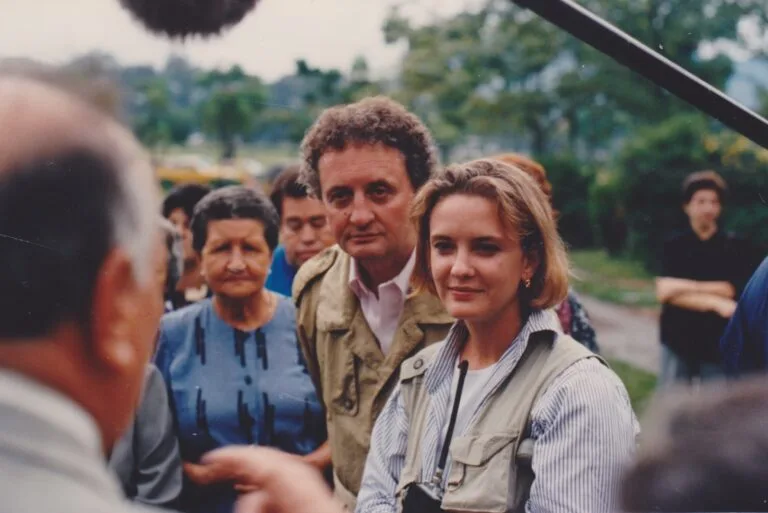
When Escobar’s operation was taking off, cocaine was widely (and mistakenly) believed to be non-addictive, and demand in the U.S. was vast. With remarkable access to Escobar’s family, relatives of his victims, and both Colombian and U.S. officials, The Godfather of Cocaine traces how Escobar built a multi-billion-dollar fortune through international cocaine smuggling alliances and a sophisticated operation to traffic cocaine into the U.S., with Miami as an entry point. Planes smuggled in about 400 kilos a trip, and one flight could net $10 million. The bales of cocaine were off-loaded at remote airstrips or dropped into the water. High-speed motor boats made the final run.
“Miami was kind of [the] Wild West because it was the point of entry for so much of the cocaine, so you’d have great chases across Biscayne Bay in cigarette boats with Customs right behind them,” Senate investigator Jack Blum said in the documentary.
"Escobar was to cocaine what Ford was to automobiles.”
To some in his hometown, Escobar was a modern-day Robin Hood: “They call him El Patrón, ‘the boss,’ because in Colombia, people who own a company are called patrónes,” Escobar’s brother Roberto told FRONTLINE from prison. “And the poor people began to call him El Patrón because he would bring two or three trucks to the poor barrios and he’d distribute food to people who didn’t have any.”
But violent repression and extreme brutality were how Escobar maintained his dominance, with his cartel funneling drug profits into attacks and killings that brought Colombia to a state of near-civil war.
“To Escobar, it didn’t matter whether you were a man, woman or a child. If you were going to die, you were going to die,” said Max Mermelstein, a former coordinator of Escobar’s drug-smuggling flights who became a U.S. government informant. “If he had to kill the father, he’d kill the whole family.”
Colombian police and the U.S. DEA hunted Escobar down and assassinated him in 1993. It didn’t end the narco-trafficking model he built.
“The death of Escobar was a landmark in the history of an industry, but it wasn’t a victory, in the sense that it didn’t put anything out of business,” Blum said in the documentary. “It didn’t change the pace of trafficking. It didn’t raise or lower the price of cocaine.”
Stream The Godfather of Cocaine on FRONTLINE’s YouTube channel now:
Watch the Documentary
The Godfather of Cocaine
FRONTLINE travels to Colombia for an investigative biography of the rise and fall of the richest and most violent cocaine drug lord, Pablo Escobar
Journalism powered by your support — and accessible to all.
Watching our “Scammed” documentary revealing how the global scam industry operates? Exposing the truth is where accountability begins. Help keep reporting like this paywall-free for everyone with a gift of $5 or $10 today.
Senior Digital Writer, FRONTLINE
Support provided by:
Learn More
Related Documentaries


Latest Documentaries

Related Stories
The Godfather of Cocaine
Related Stories
The Godfather of Cocaine
Explore
Policies
Teacher Center

Jon and Jo Ann Hagler on behalf of the Jon L. Hagler Foundation
Corey David Sauer
Koo and Patricia Yuen
FRONTLINE is a registered trademark of WGBH Educational Foundation. Web Site Copyright ©1995-2025 WGBH Educational Foundation. PBS is a 501(c)(3) not-for-profit organization.
Funding for FRONTLINE is provided through the support of PBS viewers and by the Corporation for Public Broadcasting, with major support from Ford Foundation, and Fialkow Family Foundation. Additional funding is provided the Abrams Foundation, John D. and Catherine T. MacArthur Foundation, Park Foundation, Heising-Simons Foundation, and the FRONTLINE Trust, with major support from Jon and Jo Ann Hagler on behalf of the Jon L. Hagler Foundation, and Corey David Sauer, and additional support from Koo and Patricia Yuen. FRONTLINE is a registered trademark of WGBH Educational Foundation. Web Site Copyright ©1995-2026 WGBH Educational Foundation. PBS is a 501(c)(3) not-for-profit organization.