‘It’s a Very Tough Job’: In Rural Wisconsin, a Struggle to Save Family Farms and a Way of Life
January 25, 2021
Share
In partnership with:

Can family dairy farms survive? Over three recent conversations, 18 residents of Clark County, Wisconsin, talked about life on the farm and in rural communities dependent on farming. The recorded sessions were hosted by the Local Voices Network. This story is based on those discussions. Click below to hear and read highlighted excerpts.
When Maria Bendixen was 16 years old, the barn on her family’s dairy farm caught fire. She was showing cattle at the county fair when the news reached her. As she raced home, the farm in flames, she saw behind her a caravan of trucks and trailers from the fairgrounds, neighbors and strangers coming to help.
Here’s the way she told it:
Today, Bendixen runs a company in Clark County, Wisconsin, called Cowculations Consulting, helping farms become more profitable. Meanwhile, bankruptcies and financial ruin have burned through the dairy industry, driving thousands of families off their farms.
Across Wisconsin, economics and demographics paint a discouraging portrait of the future of family dairy farming. Farms are going under at an alarming rate; nearly half have disappeared in the last 15 years. And younger people are simply going away, leaving rural communities and shrinking towns. The average age of farmers in the state is 58.
Spend a few hours listening to people who live in Clark County and you hear a lot about what’s ailing small farms: falling prices, overseas or industrial scale domestic operations, reduced consumer demand, punishing hours and labor shortages, an eroding cultural connection to the land, the allure for grown children of better opportunities in urban areas.
But you also get a more nuanced picture from younger farmers and their families. They talk about the community ties and independence that keep them in farming, their ideas of how to bridge a widening generation gap and their hopes to sustain a rural way of life, even as agriculture undergoes a radical transformation.
Eliza Ruzic is a dairy nutritionist who owns a 65-cow farm in Clark County with her husband. She says raising children on a farm balances the hardships and uncertainties of the work. She “can’t imagine raising them any other way.”
But, echoing others, Ruzic’s not sure that she’d want her children to remain in farming once they grow up. “It’s just so hard,” she said.
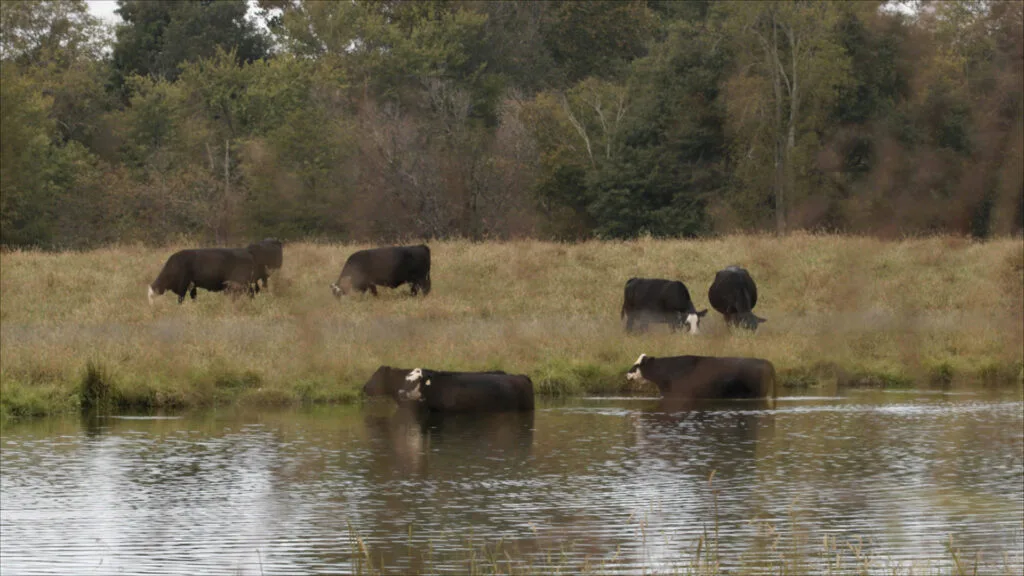
According to reporter Rick Barrett of the Milwaukee Journal Sentinel, about 360 dairy farms went out of business in Wisconsin in 2020, a trend that has accelerated in the last decade. Clark County sits in the middle of the state and at the epicenter of the crisis. Cows outnumber people, and there are more dairy farms than in any other county in the state. Hundreds of millions of dollars flow into the local economy from those farms.
In conversations, farmers and family members talked about the conflicting emotions that come from having deep, personal connections to a precarious business and the pressures to preserve a way of life. Fatalism and humor mixed with resilience and determination.
Melissa Kono is an associate professor at the University of Wisconsin-Madison who works in community development and is raising a family on a farm. “Work-life balance,” she said, is not a farming staple.
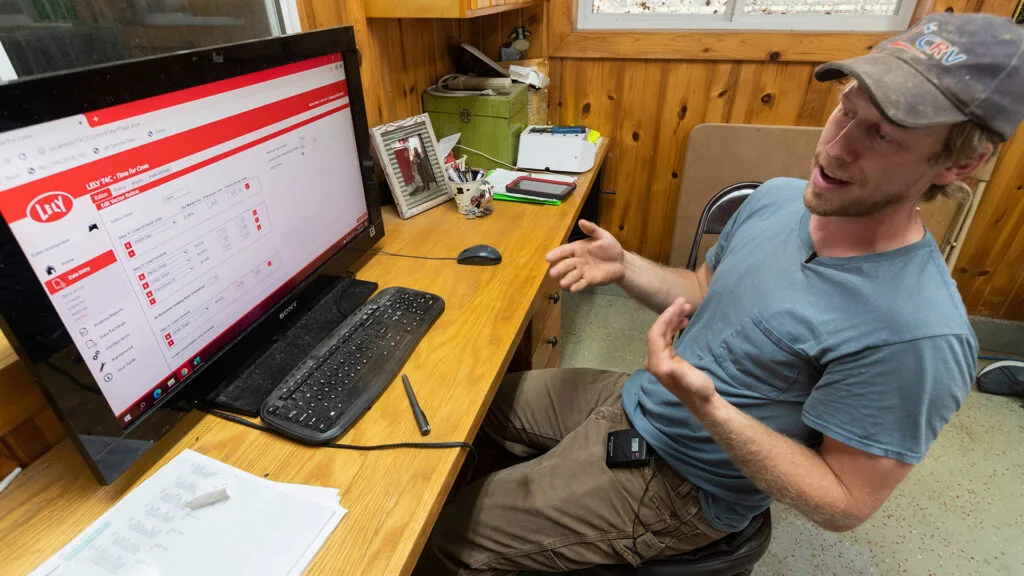
For some, becoming a dairy farmer meant deciding to return home after leaving the area for school or work. Matthew Tyler earned an associate’s degree before moving back to his family farm to work with his father, drawn by a sense of obligation and opportunity. Knowing he’ll one day run the farm “scares the crap out of me every single day.”
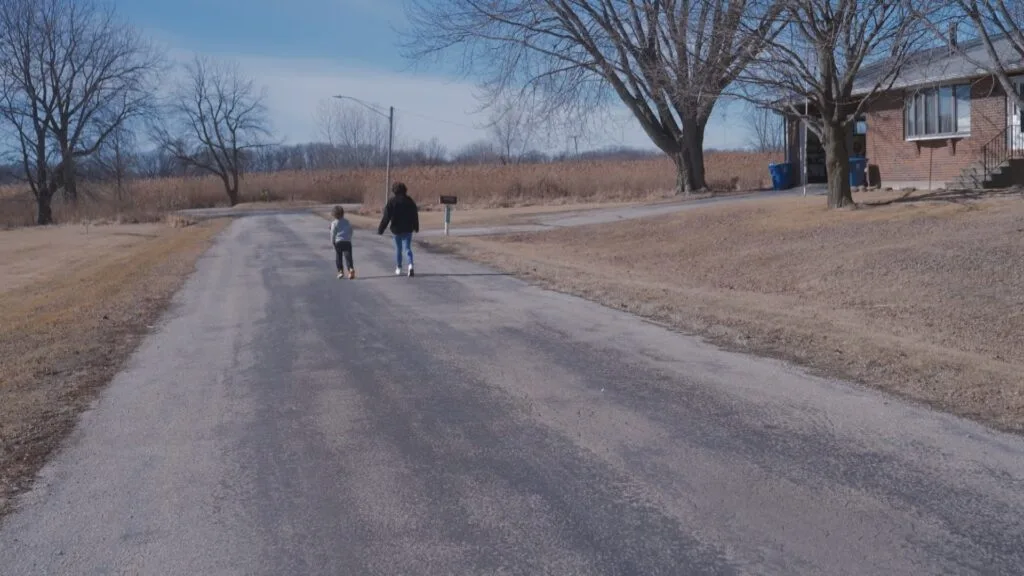
Ericka Rossani, the head of human resources for a food production company, said the drain of younger people to cities and suburbs is hollowing out rural communities. According to Barrett of the Journal Sentinel, nearly half of Wisconsin’s counties are losing population.
Amy Gerhardt, whose parents are dairy farmers, teaches agriculture at Neillsville High School. Given the demands of farming and its economic challenges, she struggles with whether to encourage students who live on farms to follow the family tradition. “But we need farmers, and we need good farmers,” she said.
Teachers and parents said they notice that even in rural Clark County, a generation is growing up with spotty understanding of farming, animals or where food comes from. Jessica Schier is an elementary school teacher who moved back to Clark County after college because she wanted to live in a rural community and help it move forward.
Watch: America’s Dairyland: The Next Generation
“It does worry me that there are so many young people that are becoming so far removed from agriculture that they don’t know what goes on or where anything comes from,” she said.
On many family farms, thinking about survival means considering big changes: getting bigger, diversifying products or the use of the land, automating. For Maria Bendixen, who runs Cowculations Consulting, the surest path to sustainability is growing. Across the state, small farms are becoming larger or selling to operations that already are.
When she thinks about why her job is important, “it’s more about the people than the farms.”
But there are other paths, too, Bendixen said, from growing non-traditional crops like hemp to going organic to experimenting with direct marketing. “The real driver of profitability is to find the one that you’re not optimizing,” she said.
It’s not just farm prices that hold back the local economy. Residents cited poor infrastructure, as well as shortages of affordable housing, health care and workers. Rural areas are more often cut off from the digital networks that connects workers to jobs and businesses to markets.
Skye Goode works in community services in Clark County and is a hunter. She talked about numerous “dead zones” across the county. “I can’t fathom how that’s possible in 2020.”
Asked what they would say to politicians or public officials about the future of dairy farming, residents had similar responses: come spend 24 hours working on a farm. “And basically in this economy do it for nothing,” said Matthew Tyler. “I think it would really be eyeopening.”
These discussions were part of a project by Milwaukee PBS and the Milwaukee Journal Sentinel in collaboration with FRONTLINE’s Local Journalism Initiative. They were hosted by the Local Voices Network, a non-profit that facilitates community conversations nationwide. Listen to the complete conversations.

Former Special Projects Editor, FRONTLINE
Support provided by:
Learn More
Related Documentaries






Latest Documentaries




Explore
Policies
Teacher Center

Jon and Jo Ann Hagler on behalf of the Jon L. Hagler Foundation
Corey David Sauer
Koo and Patricia Yuen
FRONTLINE is a registered trademark of WGBH Educational Foundation. Web Site Copyright ©1995-2025 WGBH Educational Foundation. PBS is a 501(c)(3) not-for-profit organization.
Funding for FRONTLINE is provided through the support of PBS viewers and by the Corporation for Public Broadcasting, with major support from Ford Foundation, and Fialkow Family Foundation. Additional funding is provided the Abrams Foundation, John D. and Catherine T. MacArthur Foundation, Park Foundation, Heising-Simons Foundation, and the FRONTLINE Trust, with major support from Jon and Jo Ann Hagler on behalf of the Jon L. Hagler Foundation, and Corey David Sauer, and additional support from Koo and Patricia Yuen. FRONTLINE is a registered trademark of WGBH Educational Foundation. Web Site Copyright ©1995-2026 WGBH Educational Foundation. PBS is a 501(c)(3) not-for-profit organization.