How the U.S. Government Built a Massive — and Hidden — Anti-Terror Apparatus After 9/11
‘The public didn’t know. The media didn’t know. And it would take us years to find out,’ Pulitzer Prize-winning reporter Dana Priest said in the 2011 FRONTLINE documentary ‘Top Secret America,’ now streaming on YouTube for the first time.
August 26, 2026
Share
On Sept. 11, 2001, Al Qaeda operatives carried out the deadliest terror attacks on the U.S. in the country’s history, killing nearly 3,000 people and injuring thousands more.
President George W. Bush vowed that the U.S. would “hunt down and punish those responsible.” His administration immediately began developing a covert anti-terror apparatus that was huge — and that would long remain hidden.
“The public didn’t know. The media didn’t know. And it would take us years to find out,” Pulitzer Prize-winning Washington Post reporter Dana Priest said in the 2011 documentary Top Secret America.
From a covert international war waged by the CIA that included drone strikes, black site prisons, and “enhanced interrogation techniques” widely criticized as torture, to a domestic surveillance program that secretly authorized the National Security Agency to intercept certain telephone calls and emails of American citizens without a warrant, Top Secret America shed new light on the nature, scale and scope of the government’s counter-terror operations after 9/11.
“Nobody was in a mood to say, ‘Well, wait a minute. Are you infringing on privacy?’ You know, privacy versus another 9/11 attack ─ there was no real question about what was going to win over that,” Priest said in the documentary, which is now available to stream on YouTube for the first time.
From veteran FRONTLINE filmmaker Michael Kirk and his team, Top Secret America chronicled what Priest and her colleague William Arkin uncovered about the post-9/11 development of a massive maze of clandestine government and private agencies aimed at fighting terrorism in new and secret ways.
“In a post-9/11 world, we weren’t going to be so prissy,” former White House terrorism adviser Fran Townsend said in the documentary. “No matter how difficult or undesirable it was, we were going to do what we needed to do to get the information we needed to protect the American people.”
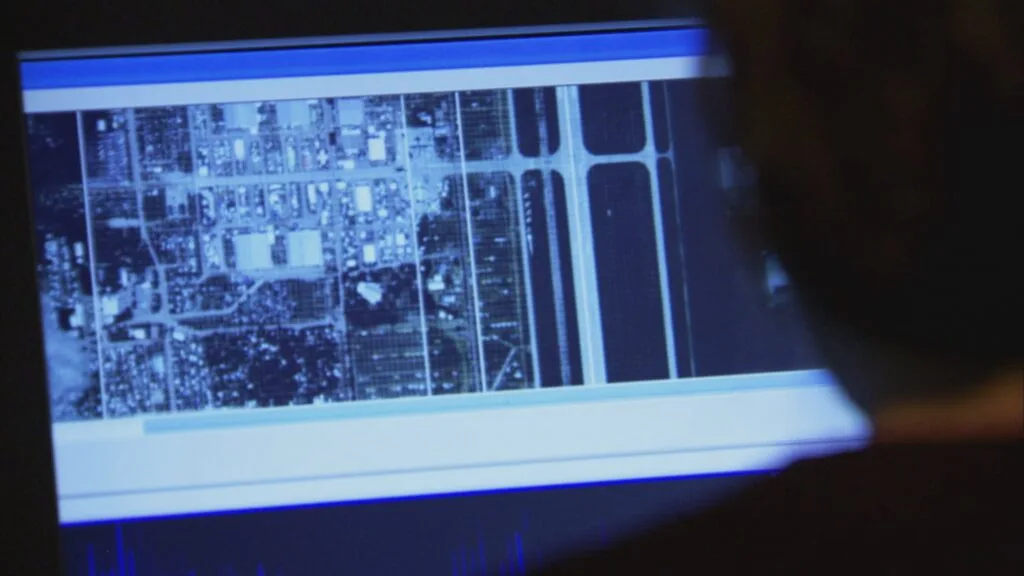
Priest’s team examined growing controversy over the government’s covert anti-terror programs. The team also mapped the geography of this “top secret America,” identifying subterranean facilities beneath what appeared to be ordinary office park buildings. From spaces like these, the government — with the support of a growing network of contractors — launched drone strikes, gathered and spread secret information, and engaged in cyber-conflict, the team reported.
These buildings “might only be four stories high, but they go down ten stories,” Priest’s colleague Michael Williamson said in the documentary. “And there’s a whole world down there, like shops and places to eat, that you don’t know about that’s just for them.”
In the film, Priest reported on how the Obama administration continued many of the programs that made up “top secret America” — and how questions about those programs’ effectiveness were mounting.
“We’re all very glad that [Osama] bin Laden has finally been caught, but it was a handful of people. It wasn’t this enormous, bloated, tens-of-thousands-of people apparatus that we’ve set up,” Richard Clarke, a former counterterrorism official under both Bill Clinton and George W. Bush, said in the film of what led to the Al Qaeda leader’s killing earlier in 2011. “It was a small, highly-skilled, highly dedicated group of intelligence analysts. That’s who found him, not all of these contractors, not these giant agencies and giant centers.”
Two years after the documentary’s release, the Boston marathon bombing raised new concerns about “top secret America.” Then, the biggest leak of U.S. government secrets in history yielded further insights into the government’s post-9/11 domestic mass surveillance program — and the lengths to which officials went to keep it from the public.
Those revelations showed the prescience of Priest’s reporting and observations in Top Secret America.
“The amount of secrecy is phenomenal,” she said in the documentary.
Watch the Full Documentary | Top Secret America
Additional documentaries from FRONTLINE’s archives will be released on YouTube in the coming weeks. Subscribe now so you don’t miss an episode.
Senior Digital Writer, FRONTLINE
Support provided by:
Learn More
Related Documentaries
Latest Documentaries
Related Stories

Top Secret America
Related Stories
Top Secret America
Explore
Policies
Teacher Center

Jon and Jo Ann Hagler on behalf of the Jon L. Hagler Foundation
Corey David Sauer
Koo and Patricia Yuen
FRONTLINE is a registered trademark of WGBH Educational Foundation. Web Site Copyright ©1995-2025 WGBH Educational Foundation. PBS is a 501(c)(3) not-for-profit organization.
Funding for FRONTLINE is provided through the support of PBS viewers and by the Corporation for Public Broadcasting, with major support from Ford Foundation, and Fialkow Family Foundation. Additional funding is provided the Abrams Foundation, John D. and Catherine T. MacArthur Foundation, Park Foundation, Heising-Simons Foundation, and the FRONTLINE Trust, with major support from Jon and Jo Ann Hagler on behalf of the Jon L. Hagler Foundation, and Corey David Sauer, and additional support from Koo and Patricia Yuen. FRONTLINE is a registered trademark of WGBH Educational Foundation. Web Site Copyright ©1995-2026 WGBH Educational Foundation. PBS is a 501(c)(3) not-for-profit organization.