Flashback: How Baghdadi Came to Lead ISIS
October 27, 2019
Share
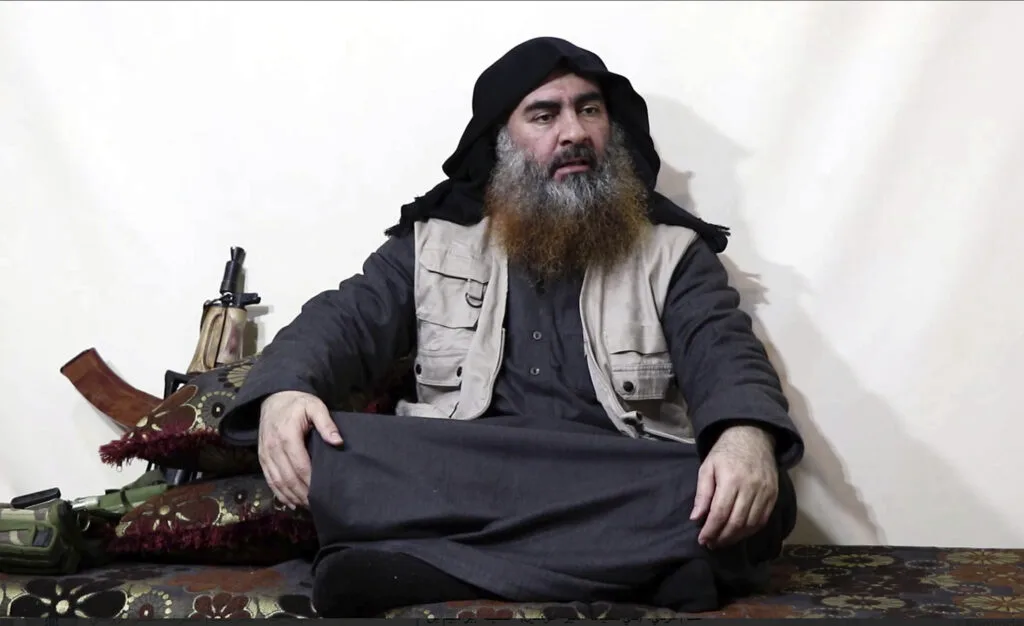
Abu Bakr al-Baghdadi, the elusive leader of the brutal Islamic State of Iraq and Syria (ISIS) terror group, has been killed in a raid by U.S. Special Forces, President Trump said on Sunday.
The terror leader detonated a suicide vest after he was cornered in a dead-end tunnel in northwestern Syria, killing three children along with him, he said. “The thug who tried so hard to intimidate others spent his last moments in utter fear, panic and dread — terrified of the American Forces bearing down,” Trump said.
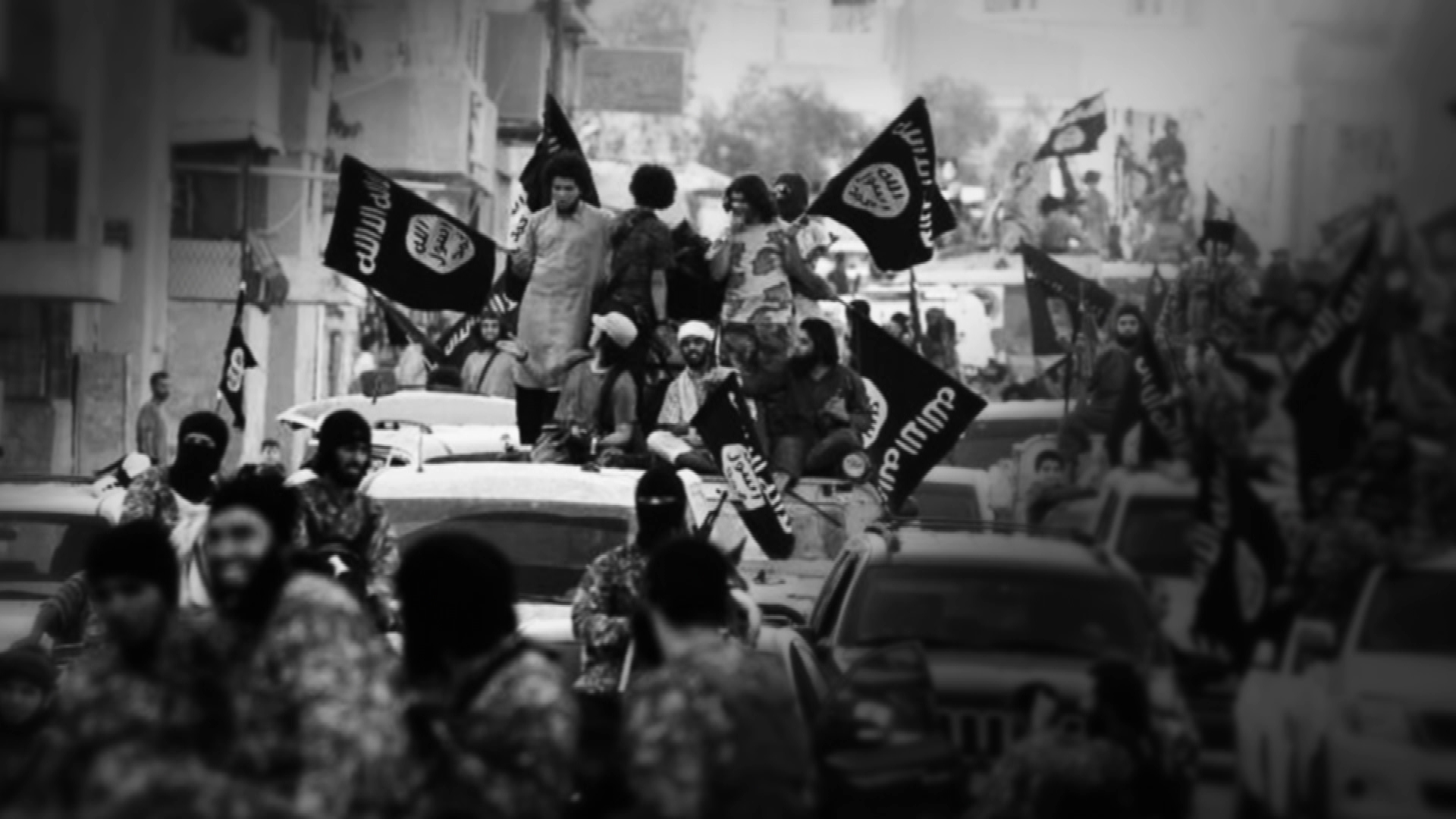
The story of how Baghdadi, a onetime religious scholar and soccer player, came to rule a terror group that seized and governed a swath of territory across Iraq and Syria and declared a “capliphate,” is recounted in the 2016 FRONTLINE documentary, The Secret History of ISIS, a documentary from veteran FRONTLINE filmmaker Michael Kirk and his team.
The film details how Baghdadi built on the methods developed by his predecessor, Abu Musab al-Zarqawi, who capitalized on the American invasion of Iraq to develop what would become the ISIS playbook: fomenting sectarian violence among Muslims, stepping in to take advantage of power vacuums, and broadcasting brutality far and wide on the Internet.
“Abu Bakr al Baghdadi was much more assertive, and much cleverer and much more ruthless than anyone had thought, and so was able to eliminate rivals, was able to get success, and success of course is a great attracter of support,” counterterrorism expert Richard Barrett said in the film.
As the documentary recounts, it was inside a U.S. prison in Iraq during the early days of the American occupation that Baghdadi began to shape himself into a terrorist leader. These prisons housed Iraqis swept up by U.S. forces during the start of the invasion, and would come to be known as “jihadi universities.”
In prison, Baghdadi was “able to network with other committed jihadists, capable jihadists that were attached to major organizations like Al Qaeda in Iraq, and he begins to network with these men, many of whom he would rise with through the ranks of Al Qaeda in Iraq, later the Islamic State,” Will McCants, author of The ISIS Apocalypse, told FRONTLINE in the film.
After his release, Baghdadi moved up inside Zarqawi’s organization, drawing on what he had learned in prison. Once American forces left Iraq in late 2011, what was left of Zarqawi’s group — then isolated in northern Iraq — began to rebuild under Baghdadi’s leadership. And soon, as the film traces, Baghdadi secretly sent agents into Syria to help fuel civil war, carrying out a wave of bloody car bombings that announced the insurgent group’s presence.
“He wanted to establish the caliphate now. He wanted to take over towns, villages, and then cities. The border between Iraq and Syria could disappear if his organization controlled both sides of the border,” Richard Clarke, author of Against All Enemies, told FRONTLINE. Baghdadi succeeded, taking the unprecedented step of declaring this new territory a caliphate — with himself at the helm.

Senior Digital Writer, FRONTLINE
Support provided by:
Learn More
Related Documentaries



Latest Documentaries






Related Stories
The Secret History of ISIS
Related Stories
The Secret History of ISIS
Explore
Policies
Teacher Center

Jon and Jo Ann Hagler on behalf of the Jon L. Hagler Foundation
Corey David Sauer
Koo and Patricia Yuen
FRONTLINE is a registered trademark of WGBH Educational Foundation. Web Site Copyright ©1995-2025 WGBH Educational Foundation. PBS is a 501(c)(3) not-for-profit organization.
Funding for FRONTLINE is provided through the support of PBS viewers and by the Corporation for Public Broadcasting, with major support from Ford Foundation, and Fialkow Family Foundation. Additional funding is provided the Abrams Foundation, John D. and Catherine T. MacArthur Foundation, Park Foundation, Heising-Simons Foundation, and the FRONTLINE Trust, with major support from Jon and Jo Ann Hagler on behalf of the Jon L. Hagler Foundation, and Corey David Sauer, and additional support from Koo and Patricia Yuen. FRONTLINE is a registered trademark of WGBH Educational Foundation. Web Site Copyright ©1995-2026 WGBH Educational Foundation. PBS is a 501(c)(3) not-for-profit organization.