‘A Country That Insists on Staying Hopeful’: Journeying to Vietnam After a Childhood Shattered by War
The war in Vietnam fractured Nguyen Qui Duc's childhood. Thirty-five years later, he documented a visit to his homeland for FRONTLINE, looking, he said, ‘for home, for a bit of myself, for a country that always exists in my memory.’

July 15, 2026
Share
In partnership with:

In January 1968, when Nguyen Qui Duc was 10 years old, the war between communist-run North Vietnam and non-communist South Vietnam was in full cry, with China and the Soviet Union backing the ultimately victorious North, and the U.S. and allies supporting the South.
On Tet, a Vietnamese holiday marking Lunar New Year, Communist troops launched a surprise offensive that proved to be a key turning point in the war. Among the South Vietnamese cities and towns attacked was Hue, where Nguyen lived. South Vietnamese and American troops fought for a month to retake the city, thousands of civilians were killed, and the Viet Cong took Nguyen’s father, a regional governor, to North Vietnam as a political prisoner.
Nguyen, who eventually came to the U.S. as a refugee, would not see his father again for 16 years.
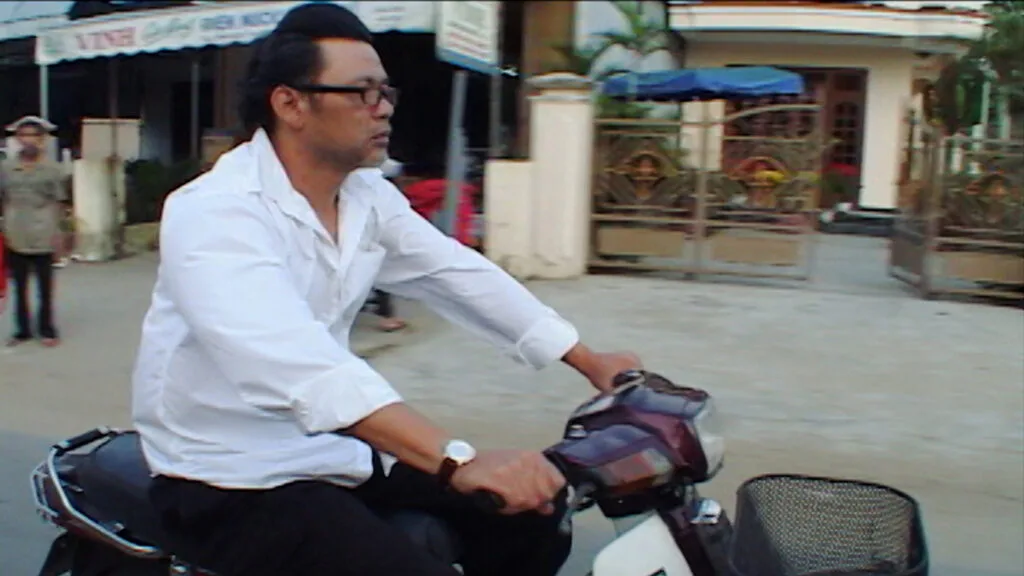
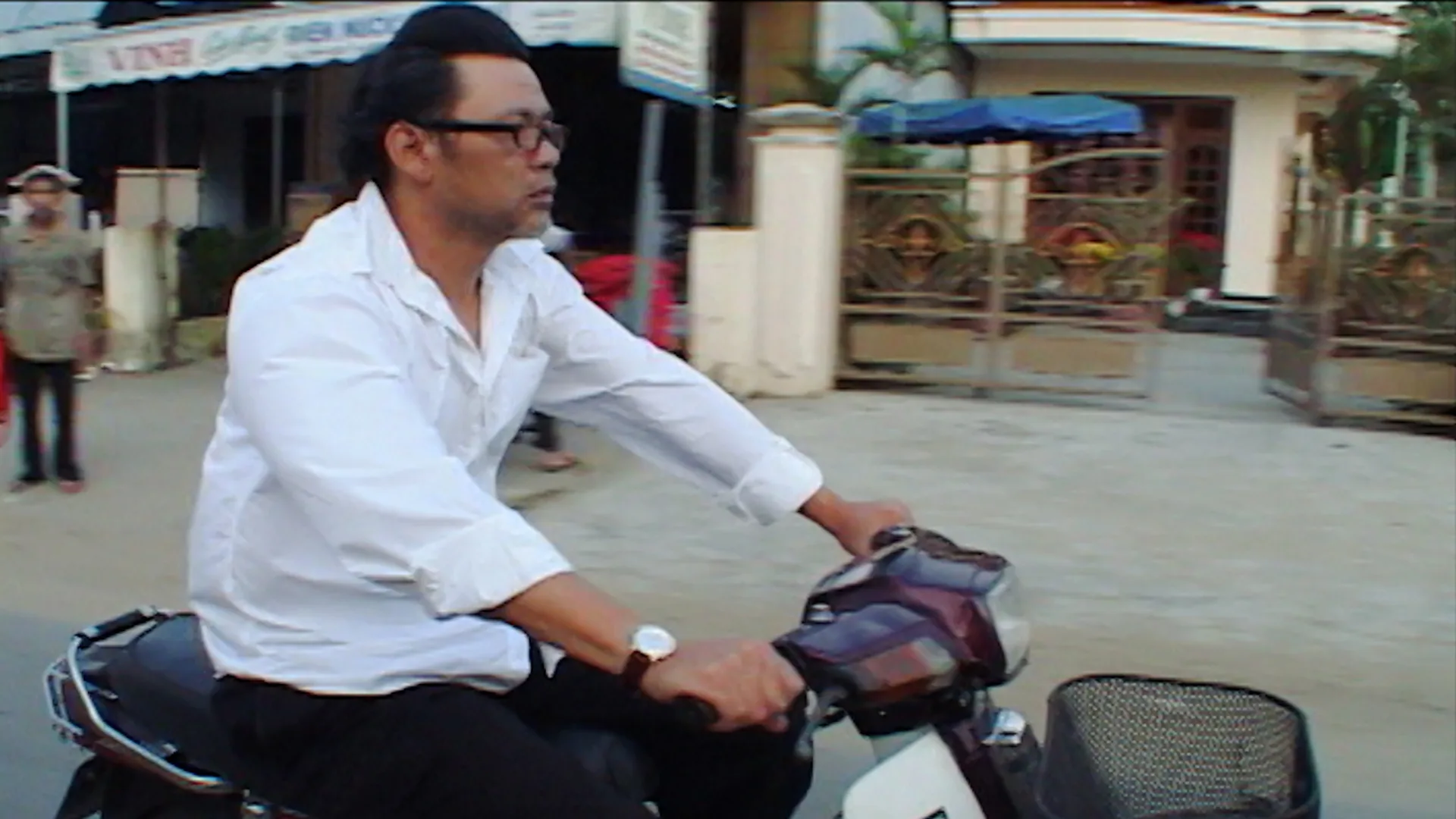
Thirty-five years after the Tet Offensive, Nguyen, by then a writer and journalist, documented a visit to his home country for FRONTLINE, reporting on Vietnam’s evolving cultural scene, its politics and economy, and the war and its aftermath.
“Relatives have all left, but still I come back, looking for home, for a bit of myself, for a country that exists always in my memory,” he said in Vietnam: Looking for Home, the resulting short documentary.
Vietnam: Looking for Home originally aired in 2003 as part of FRONTLINE/World, a special FRONTLINE series that ran from 2002-2010 and was developed in partnership with GBH in Boston and KQED in San Francisco. The documentary is now streaming on FRONTLINE’s YouTube channel for the first time as part of an effort to make the series’ archive widely accessible.
In Vietnam: Looking for Home, Nguyen, then a host of the KQED radio program Pacific Time, traveled across the country where he was born. When he talked about the war, he found that many people preferred to try to leave it in the past.
“They were born long after the war ended, and that’s why even the parents don’t want to tell them much about the war,” a high school teacher told Nguyen of her students. “Because now we live in peace. We should forget about the past — we should know, we should learn, but we should forget.”
Nguyen was surprised to see how quickly parts of the communist country were coming to resemble the fast-paced capitalist world, with millions of people jostling to carve out a living in Saigon (officially Ho Chi Minh City), tourism to Vietnam from other countries on the upswing, and even some refugees returning from the U.S. to set up shop.
But in other areas of the country, he found, transformation was slow — and traditions endured.
“Vietnam has a habit of adopting and resisting changes. The culture, the people will survive,” Nguyen observed in the film.
In a particularly personal part of the documentary, Nguyen visited Hanoi, the northern city where his father was imprisoned decades earlier.
“I think of my father inside a prison cell somewhere here 35 years ago,” Nguyen said of his dad, who joined him in the U.S. after his eventual release. “What I wouldn’t give to be able to walk these streets with him now, to share a Tet in our homeland at peace. Three years ago, he died in San Francisco, not having been back.”
Yet in both his father’s and his country’s story, Nguyen saw a commitment to hope.
“My father never spoke with rancor. Life had not been fair to him, but bitterness can’t change anything,” Nguyen said. “That, too, is the history of this nation. Vietnam is a country that insists on staying hopeful.”
Several years after Vietnam: Looking for Home aired, Nguyen returned to Hanoi, this time for good. He filed occasional dispatches with FRONTLINE and FRONTLINE/World, and opened an influential arts and culture salon that pushed the boundaries of Vietnam’s communist government. Nguyen described the salon as “a gallery, an event space, a meeting point for creative and unorthodox people and a comfort space for expats.” He ran it until his death in 2023.
Watch the Full Documentary | Vietnam: Looking for Home
Additional FRONTLINE/World documentaries will be released on FRONTLINE’s YouTube channel throughout the summer. Subscribe now so you don’t miss an episode.
Journalism powered by your support — and accessible to all.
Watching our “Scammed” documentary revealing how the global scam industry operates? Exposing the truth is where accountability begins. Help keep reporting like this paywall-free for everyone with a gift of $5 or $10 today.

Senior Digital Writer, FRONTLINE
Support provided by:
Learn More
Related Documentaries


Latest Documentaries

Related Stories
Vietnam: Looking for Home
Related Stories
Vietnam: Looking for Home
Explore
Policies
Teacher Center

Jon and Jo Ann Hagler on behalf of the Jon L. Hagler Foundation
Corey David Sauer
Koo and Patricia Yuen
FRONTLINE is a registered trademark of WGBH Educational Foundation. Web Site Copyright ©1995-2025 WGBH Educational Foundation. PBS is a 501(c)(3) not-for-profit organization.
Funding for FRONTLINE is provided through the support of PBS viewers and by the Corporation for Public Broadcasting, with major support from Ford Foundation, and Fialkow Family Foundation. Additional funding is provided the Abrams Foundation, John D. and Catherine T. MacArthur Foundation, Park Foundation, Heising-Simons Foundation, and the FRONTLINE Trust, with major support from Jon and Jo Ann Hagler on behalf of the Jon L. Hagler Foundation, and Corey David Sauer, and additional support from Koo and Patricia Yuen. FRONTLINE is a registered trademark of WGBH Educational Foundation. Web Site Copyright ©1995-2026 WGBH Educational Foundation. PBS is a 501(c)(3) not-for-profit organization.