WATCH: Why Iran Backed Assad in Syria
February 27, 2018
Share
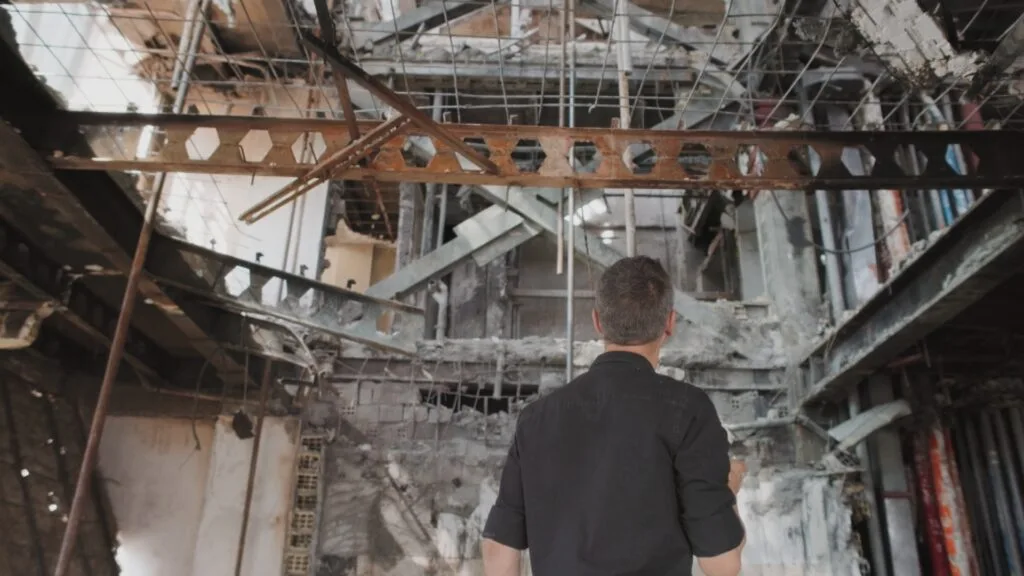
In recent days, Syria’s devastating, seven-year war has reached new levels of brutality, due to a continuing bombardment campaign by forces supporting Bashar al-Assad’s government targeting eastern Ghouta – one of the few remaining rebel-held suburbs of Damascus.
According to the Syrian Observatory for Human Rights, more than 250 people were killed over a two-day period last week. The war monitoring group said it was the largest death toll in a single 48-hour span since a 2013 chemical weapons attack on eastern Ghouta, an attack the White House blamed on the Assad regime.
Defying a United Nations cease-fire resolution that was reached on Saturday, the regime’s bombardment of the suburb has persisted, with airstrikes continuing and reports of a chlorine gas attack on Sunday.
It’s only the latest chapter in a conflict that has left an estimated half million people dead and displaced millions more. In part two of the FRONTLINE series, Bitter Rivals: Iran and Saudi Arabia, airing tonight, correspondent Martin Smith reports from inside regime-held areas in Syria on the conflict’s roots — and explores how Iran’s support for the Assad regime has helped fuel one of the most brutal wars in modern times.
“Syria has really been Iran’s only continuous ally since the 1979 revolution,” Karim Sadjadpour of the Carnegie Endowment for International Peace tells Smith in the above excerpt from Bitter Rivals. “And when the uprisings began, the Iranian regime was determined to do all in their power, both financially and militarily, to prevent the Assad regime from collapsing.”
When violence first broke out in Syria, Iran sent in money, weapons and military advisers to help Assad crush the protests. And to this day, Smith reports, the official line in both Tehran and within the Syrian government is that the 2011 uprising that led to the regime’s crackdown was a foreign plot.
Faisal Mekdad, second in command at Syria’s foreign ministry, denies that there was ever a popular revolution: “It was a prepared, pre-fabricated scenario of what would happen“ he tells Smith. “Since the beginning, we have said that this is a war against Muslim fanatics.”
Iran insists that it doesn’t have a military presence in Syria, and says it only provides advisers at the request of the Syrian government.
That’s done little to keep Iran’s main rival in the region, Saudi Arabia, from getting involved in Syria. The kingdom has supported at least two hardline Sunni Islamist groups in Syria — Ahrar al-Sham and Jaysh al-Islam — support that the kingdom’s former director of intelligence said is meant to defend the Syrian people from Iranian-backed forces.
“Who are Ahrar al-Sham? And who is Jaysh al-Islam?,” Prince Turki al-Faisal tells Smith. “They’re Syrians. They’re Syrians being killed by whom? They are being killed by Iranians. So we’re giving them the means to defend themselves. We support the Syrian people. The Iranians are killing the Syrian people. That’s the difference between us.”
Learn more about both Iran and Saudi Arabia’s clashing regional ambitions, and how their proxy battles are playing out in Syria, Yemen and Iraq, in part two of Bitter Rivals: Iran and Saudi Arabia, premiering tonight on PBS (check local listings) and online.
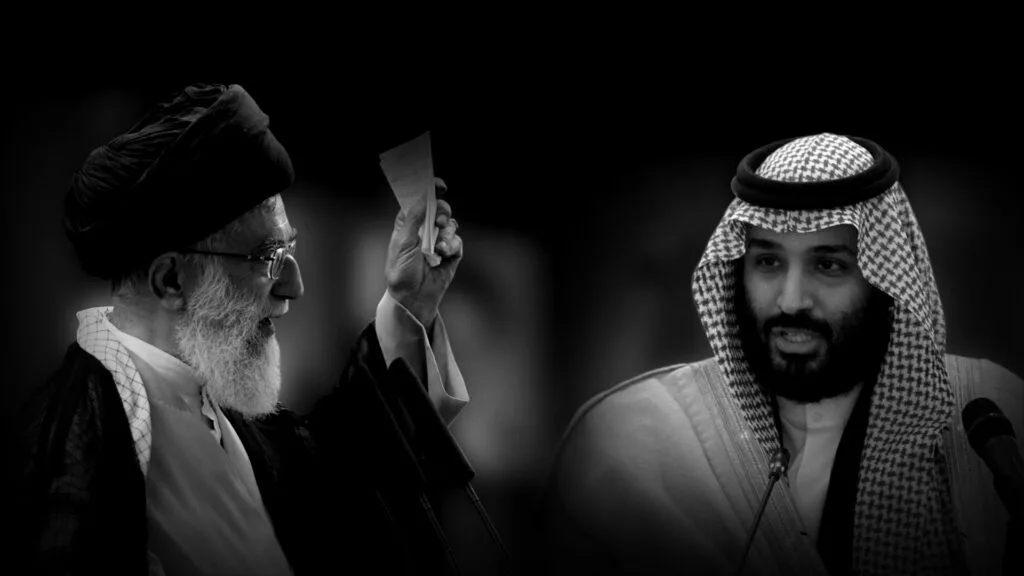
From Smith, FRONTLINE founder and executive producer at large David Fanning and producer Linda Hirsch, this concluding hour of the Bitter Rivals series is an on-the-ground look at how the two countries’ intense, 40-year political rivalry for control of the Middle East has wreaked havoc across the region.
“When elephants fight, it’s the grass that suffers,” Sadjadpour says in the film. “And in today’s Middle East, the two elephants are Iran and Saudi Arabia. There’s been over a million casualties in the Middle East over the last decade. But they’ve been Syrian. They’ve been Yemeni. They’ve been Iraqi … Iranian and Saudi citizens aren’t the ones that are suffering.”
Senior Digital Writer, FRONTLINE
Support provided by:
Learn More
Related Documentaries
Latest Documentaries


Explore
Policies
Teacher Center

Jon and Jo Ann Hagler on behalf of the Jon L. Hagler Foundation
Corey David Sauer
Koo and Patricia Yuen
FRONTLINE is a registered trademark of WGBH Educational Foundation. Web Site Copyright ©1995-2025 WGBH Educational Foundation. PBS is a 501(c)(3) not-for-profit organization.
Funding for FRONTLINE is provided through the support of PBS viewers and by the Corporation for Public Broadcasting, with major support from Ford Foundation, and Fialkow Family Foundation. Additional funding is provided the Abrams Foundation, John D. and Catherine T. MacArthur Foundation, Park Foundation, Heising-Simons Foundation, and the FRONTLINE Trust, with major support from Jon and Jo Ann Hagler on behalf of the Jon L. Hagler Foundation, and Corey David Sauer, and additional support from Koo and Patricia Yuen. FRONTLINE is a registered trademark of WGBH Educational Foundation. Web Site Copyright ©1995-2026 WGBH Educational Foundation. PBS is a 501(c)(3) not-for-profit organization.