Daisy Coulam, Grantchester, Season 11
Released June 14, 2026 27:31
WARNING: This episode contains spoilers for Episode One of Grantchester Season 11.
Grantchester head writer and executive producer Daisy Coulam has spent over a decade working on this beloved mystery drama creatively exploring murders, developing long life arcs for her characters, and navigating three vicar transitions, all while managing to deliver a sense of joy, belonging, and found family. Today, Daisy returns to the podcast to dissect the first episode of Season 11 — the beginning of the end of Grantchester.
This script has been lightly edited for clarity.
Jace Lacob: I’m Jace Lacob and you’re listening to MASTERPIECE Studio.
It’s that time of year again: yes, beloved listeners, it is time for another gorgeous season of Grantchester. But this isn’t just any season of Grantchester. It is, in fact, the final season. But before we get too sentimental and say goodbye, we have eight glorious episodes in which to indulge. So, let’s jump into our first episode…
Spring offers new beginnings and new opportunities, the English countryside bursting into bloom. Reverend Alphy Kottaram and Detective Inspector Geordie Keating make the most of the sunshine, soaring down country roads in Alphy's cherry red Triumph convertible. But the sunshine is no antidote for Alphy's anxiety, and he shares a strange, recurring dream with Geordie. Perhaps, Geordie suggests, it has something to do with Alphy's recent union with his birth mother, Mira. After all, Alphy will soon be introducing Mira to his Grantchester family.
CLIP
Geordie: You have a big day coming up.
Alphy: It’s not that big.
Geordie: You must be nervous.
Alphy: I’m excited. I am. We’ve met a few times already and we’re getting on really well. Perfectly, in fact. I can’t wait for her to meet you all.
Meanwhile, Leonard and Daniel, and Jennifer and Larry form an unexpected double date at an American-style drive-in. While Leonard and Jennifer get on like old friends, Larry and Daniel struggle to find common ground… until Larry takes a risk.
CLIP
Larry: I like boardgames.
Daniel: Boardgames?
Larry: Yeah. Never mind.
Daniel: Do you play Risk?
Larry: Do I play Risk? Bloody love it.
Together: The game of global domination!
Larry: Daniel likes Risk!
Daniel: I love it.
Jennifer: I hate it.
Leonard: Me too. With all my heart.
Later, Alphy anxiously waits for Mira, who said she was going to attend his Sunday service. Moments pass, and she’s nowhere to be found. Shortly after Alphy begins the service, Mira enters the church in her Sunday best. Following the service, lunch at the vicarage gets off to a rocky start. While everyone means well, it soon becomes clear that Mira and Alphy are from two very different worlds. Despite their differences, they do their best to make it work. But if they’re ever going to be close, Alphy needs some answers.
CLIP
Alphy: Mira, you waited.
Mira: Thank you for a wonderful lunch.
Alphy: Shame it was entirely potatoes.
Mira: No, I loved it. I did. We’ll do it again soon, shall we? Maybe we can go for a walk along the river next time?
Alphy: Why didn’t you want me?
Today, we’re joined by Grantchester head writer and executive producer Daisy Coulam to dissect the first episode of the season — the beginning of the end of Grantchester.
Jace Lacob: And this week we are joined by Grantchester head writer and executive producer Daisy Coulam. Welcome.
Daisy Coulam: Thank you. Good afternoon.
Jace Lacob: Good morning for me.
Daisy Coulam: Oh, it's good morning. Sorry.
Jace Lacob: Bright and early. Good afternoon for you. Thanks to the magic of Zoom, we are in different time zones. I want to talk about Episode One. Grantchester isn't known for its dream sequences. So beginning Series 11 with a dream immediately sets up that this will be, and I'm using all caps here, VERY IMPORTANT. Alphy dreams that he is delivering the last rites for someone. “We love you” he says. “You can go now.” What made you decide to begin with this ominous imagery hanging over the season?
Daisy Coulam: Do you know, it didn't exist partway through. We started writing the series, I think, and I just had this feeling that because it was the last series, it needed some kind of framing device and it needed something that kind of said, oh, something big is building here and something, I don't know. My scalp just went all tingly then thinking about it. Something almost religious and bigger than these characters that something was building, essentially, was how we felt about it. And I came up with the dream sequence idea, and I was slightly obsessed with, I don't know why, with duvets. And I was like, and you have this nice duvet and you recognize the duvet all the way through. And then we went with it, and then it kind of gained a life of its own across the series. And yeah, we keep returning to it, you'll see. Keep returning.
Jace Lacob: I love that though, because it is a mystery drama, but this is sort of a “Mystery”, like as you say, it's a religious mystery tying in with something perhaps divine and unknowable. A dream is just a dream until it's auspicious, and it definitely feels auspicious here. Did you then look to lay down breadcrumbs throughout this season? Is this—
Daisy Coulam: Yes!
Jace Lacob: Yeah.
Daisy Coulam: Yes we did. Sorry, that was an emphatic yes. We did, and we thought the dream should… as dreams do, you think you've got the meaning of it and then and then the meaning shifts. And so throughout Alphy's going, I think I figured this out. This is about my mum or this is about my love life or this is about work. And it all comes together in that last episode and he really realises what it's about. And it's about something so much more profound, was the idea. We got very excited when we stumbled across this idea.
Jace Lacob: He says that the feeling he awakens with every time he has the dream is dread. How does this connect to Alphy's nascent relationship with his birth mother, Mira? Is it a sense of waiting for the other shoe to drop, or is this dream then provoking a deeper, more troubling sense of dread?
Daisy Coulam: I think it is that. I think he's in a sort of transitional phase, isn't he? Alphy's met his mother, Mira, and it's going well, but I think it is that he's waiting for the other shoe to drop. He's waiting for something to go wrong. And I think he's fearing that there is something that could go wrong in the future. It's like, what is the thing that's going to… where's it going to fall apart? Where's this kind of perfection going to start crumbling? And I love that about Alphy that he's just constantly sort of waiting. I think he spent his whole life going, it's not going to work out. So on some level, yeah, he thinks it's to do with his mum. But it's not really, I don't think. It's bigger than that.
Jace Lacob: The game that Leonard, Daniel, Jennifer and Larry play is Risk. While the stakes are not geopolitical here, is this your clever way of signaling that there is significant risk this series for our beloved characters?
Daisy Coulam: Yes, and we also wanted — we got excited about the idea that Daniel and Larry have absolutely nothing in common but board games. And we just thought this is the best way to show that actually, they're kind of geeky and cute together, and that sort of a weird friendship forms from this. So yeah, it was about risk and about life and about how you never know what's around the corner, and board games and your partner hating you because you're four hours into Risk.
Jace Lacob: To dive into that more, Larry's dialogue feels almost meta in that respect, given the door opening for Alphy at the end of Series 10. Larry says,
CLIP
Larry: Life is one big risk. With every risk you take, good things can happen. Doors can open. But if you take no risks, you get nowhere. You’re stuck. You’re lost.
Jace Lacob: Does this connect to the sense of optimism that Grantchester as a show has always embraced, the notion to take a risk and try to open that door?
Daisy Coulam: Yeah, maybe it was really meta and I was just thinking, I've got to go off and find a new job after this. Maybe it's about that. I think it is. It's the last series, you've got to keep moving forward, haven't you? You've got to just keep on keeping on even if you don't know what's about to happen. And I suppose I was sort of thinking about myself and thinking about the characters. Yeah, it is there. And it's about Alphy's journey through, what will the future hold for him?
Jace Lacob: Do you feel like the show has inspired you to take more risk to open those doors when they show up?
Daisy Coulam: Oh, God, I'd love to say that it had. Let's say it has. I think so. I always say I feel like I've grown up on this show, and I'm a slightly different person now than I was at the start. And I think that's because all the people I've met along the way have given me… yeah, have opened doors for me emotionally and in real life. God, oh no, we're already getting deep, aren't we?
Jace Lacob: We are. With every risk you take, good things can happen.
Daisy Coulam: Yes.
Jace Lacob: Larry said it.
Daisy Coulam: Yeah, if Larry said it, it must be true.
Jace Lacob: It must be true. Grantchester, despite its murder plots, feels like an antidote to challenging times, we'll say. How much of that optimism is baked into the DNA of the show and how much comes from its head writer?
Daisy Coulam: It's very interesting because I think at first, this show was quite dark, and the more… Maybe it is sort of baked into our heads and where we're at. And I think Series 11 is quite, despite that framework of slight dread and slight something big is going to happen, I think there's quite a lot of optimism in it. I keep thinking in times like these, it's about the small community around you, isn't it? It's about how you treat those around you. That's all you can control, is your family, your made family. And I think that's what Grantchester always gives me is that sense of, there's optimism to be found in the smallest levels. And I think that's what we tried to get from this series because it is bleak out there. And I'm not sure we can hang about in bleak too much because it just wears you down.
Jace Lacob: So instead, embrace the community and focus on the microcosm?
Daisy Coulam: Yes exactly, the microcosm. Focus small and be joyful and kind on a small level.
Jace Lacob: I like that. This first episode back has everything. It's got drive-ins, hot dogs, vampire bites, dead men who aren't actually dead who then are dead, Cadillacs, murderous roller skating waitresses. What inspired you to do an episode set at an American-style drive-in where multiple people confessed to a murder?
Daisy Coulam: Okay, this is a good answer I have for this because as you know, this show can be very collaborative with the cast and with the crew. And Bradley, who plays Larry, sent me and Emma an email and he said, I've got some ideas, and he wrote down a list. And we'd been at a wedding with him actually, Melissa's wedding, Melissa who plays Miss Scott's wedding and he said, I've got some ideas, can I send you some ideas? And the first one was an American drive-in. And we were like, yes please. Because it's just so visual and fun and sort of says, the world is changing, and yeah, Mrs. C gets to eat her first hot dog. It just opened up. I love that. I love that about this show, that everyone joins in. And Bradley ended up directing a few — he ended up doing second unit directing, so he got more involved. He just wanted to be more involved and I love that.
Jace Lacob: I love that. I had no idea.
Daisy Coulam: Yeah.
Jace Lacob: That's great. That's great. You mentioned this earlier, I do love the pairing of Leonard and Daniel and Jennifer and Larry, which is a very unexpected Grantchester quartet. Larry muses that they don't have anything in common other than cinema, he says, “They're fellas who like fellas”. But they do end up finding connection and camaraderie. And I'm just curious at this point in the show, what made you decide to bring this foursome together here?
Daisy Coulam: I think what happens is, when you know that the series is ending, all the little ideas that you've gathered in your heads along the way, you think, well, we've got nowhere else to… let's use it now. And I really liked the idea. Our idea for Larry all the way along was that, the first time that Larry meets Leonard, he's basically arresting him and calling him a pansy. And it's really horrible. And I like that characters go on journeys, and I like that Larry is now — he's happy to chat to a fellow who likes fellas. And I think that's a lovely thing. So yeah, that was the idea. And we just thought it'd be really fun to put that in the first episode; the worst double date in history that actually turns out all right.
Jace Lacob: I think it does demonstrate just how much Larry has matured. And as you say, considering that very complicated history he has with Leonard over the years, this is a huge leap forward for him. And I love the fact that there is an awkwardness between Larry and Daniel, that they have to kind of thaw around each other until they discover Risk. What is it about this very ultra competitive and very lengthy game that finally unites these two seemingly very geeky boys?
Daisy Coulam: Do you know, it started off as toy soldiers that we were going to make them do little battles. And then we thought Risk actually is funnier because it kind of says something about the times. And also just the idea, I didn't realize this, that the games can go on for days. And just the idea of poor old Leonard who's given up drinking and Miss Scott having to sit on the sidelines as their boys geek out I just thought it was quite funny.
MIDROLL
Jace Lacob: And we’re back with Daisy Coulam. The appearance of Daniel Lapaine’s accountant, Mr. Switch, comes at the right time for CeCe’s, which has been having some teething trouble or electrical trouble anyway, as Cath forgot to pay the bill and forgot to have them reconnected. Is Mr. Switch just what Sylvia and Cath need, or is he trouble in a well-cut suit?
Daisy Coulam: I was just so starstruck, really, because Muriel's Wedding is one of my favorite films. So you've suddenly got this guy from all those years back. And he is charming and delightful in real life. And he had a really lovely time. So yeah, perhaps we could just say he isn't what he seems, Mr. Switch, and that he will have his role to play, and yeah, I like that where his journey goes. He has some interesting angles to unfold.
Jace Lacob: It is Series 11. It's 1963, which is a significant year. There's the assassination of JFK, Martin Luther King Jr's “I Have a Dream” speech, Beatlemania, the Great Train Robbery, the Profumo affair, etc. And Grantchester reflects a changing Britain. Did you look to draw upon any of those real world events, either in terms of plotting or informing Series 11?
Daisy Coulam: We did. You know, at one point we actually put the JFK assassination in.
Jace Lacob: Really?
Daisy Coulam: Yeah. Do you remember, was it in Mad Men where they did?
Jace Lacob: Yes.
Daisy Coulam: And it was a really brilliant moment in that show where you just felt like the times had changed. And I was really keen on it because I'm slightly obsessed with JFK. But Emma was like, sort of in a weird way… it's almost like Grantchester had to end before that happens because the world went to such a dark place, and I don't think… in a way it sort of twists Grantchester into something slightly heavier. And so we didn't get that far. So we thought, that's off. That's Episode Nine if there was one, is JFK dying. But we don't get there. So we're still in this sort of slightly heady ‘50s, ‘60s kind of happy place, I suppose.
Jace Lacob: Camelot still stands.
Daisy Coulam: Camelot still stands, yeah. And there's just still hope, I suppose. Whereas I feel like that was sort of the death of hope really, wasn't it, that moment?
Jace Lacob: It was. I think it would be very difficult, especially for, say, at the end of this series, to have JFK get assassinated and then feel like I'm tying everything up and audiences are going to be happy with the ending.
Daisy Coulam: Yeah, full of joy.
Jace Lacob: Full of joy.
Daisy Coulam: Emma was right. Emma was like, no, we're not doing that. And I was like, okay.
Jace Lacob: Alphy's identity as an Asian foundling brought up in the Church of England, has been at the heart of these past few series. He's been the subject of racist remarks and microaggressions, assumptions, even attacks that continue this season. How were you looking to use intersectionality to look at how Alphy's identities overlap in Series 11?
Daisy Coulam: I think this series is about identity. I think it's always about identity, but I think for Alphy, his reunion with his mother is going to open a lot of questions and a lot of… how to say it without giving it all away. But it does make him question who he is and it makes him question his faith. Who am I? It’s the big question, isn't it really? That's what we wanted for Alphy in the last series. Who am I and who am I in relation to God? And almost in a way, was I supposed to be a man of God? It's big questions for Alphy. And it all stems from his mother, which I suppose it always does for all of us, really, doesn't it?
Jace Lacob: Paging Doctor Freud.
Daisy Coulam: Yes, exactly. Sorry, mum if you're listening to this. Nothing wrong with you. Yeah, it's that, I think. It’s big questions.
Jace Lacob: So the first meeting between Alphy's found family and Mira is awkward. She's late. She's put on the spot to say Grace. She's a vegetarian. She's found herself in a world that she doesn't really understand and which doesn't really understand her. Does the uneasiness here mirror the instability in this new dynamic between Mira and Alphy? Are they just pretending that everything is “happy families” to conceal their very real uncertainties?
Daisy Coulam: Yes, I think that's exactly it. And I think for me, it was all about, you know when you want something to go really perfectly, you just want it to go exactly? You almost get frozen in perfection because there's only one way it can go and if it doesn't go that way, then it's… It's just that control that he's trying to maintain in an uncontrollable situation, I think. And for both of them, they're both reaching for perfection when they just need to relax a bit. And it must be… it’s such a big moment, isn't it, when you haven't seen somebody for 30 odd years and you… I know from my friends' experiences that in those moments when you come together, you know, adopted or whatever, it doesn't always go well. There isn't perfection. There are hard things to work through. And they need to accept that, that there are bigger questions here to work through.
Jace Lacob: Mira asks Alphy if he's happy and he says that it's all he's ever wanted, but Mira can't wrap her head around it.
CLIP
Alphy: I wasn’t at first, but God brought me here for a reason. It was his will that brought me here. Does that sound crazy?
Mira: No. Well, a little, yes. It’s not what I’m used to I suppose, saying grace, singing hymns. It’s all so very…
Alphy: British?
Mira: White.
Jace Lacob: She hates wearing that hat. And there is an element of play acting here, of trying to pass. How much does Alphy truly see the worlds he's attempting to blend?
Daisy Coulam: I think he has no idea about — he’s sort of blithely gone into this thinking that he can slip into her world and she can slip into his. And it's that meeting actually, and that moment on the bench where she says, “It's all so very white” that you suddenly realize, oh my God, he's not part of her world and she's not part of his. And it starts the question of, whose world am I supposed to be in? Where do I fit in? I really love that moment on the bench. And she's so brilliant, just kind of really undercutting everything that Alphy's built up around him, really. His persona suddenly is called into question.
Jace Lacob: Was this too much too quickly? What does he risk by inviting her not to neutral ground, but to Grantchester, to his home, to meet the people he considers his family?
Daisy Coulam: Yeah, you're voicing Geordie's concern there. Geordie wants him to slow down. And I think Geordie's concern is that he can see it from the outside and thinks this is all going to come off the rails at some point, so just tread carefully, tread carefully, don't go too fast. And of course, as Geordie often is, he's right.
Jace Lacob: Aw, unfortunately. Alphy asks Mira, his voice cracking, “Why didn't you want me?” And the scene in the church where he hears his history for the first time is heartbreaking.
CLIP
Mira: I was fifteen. The boy was sixteen.
Alphy: What was his name?
Mira: That’s not important.
Alphy: It is. It is to me.
Mira: Jai. I never knew his last name.
Alphy: Did you love him?
Mira: …we were kids, Alphy. We didn’t know what love was.
Alphy: Do you know where he is now?
Mira: No.
Alphy: So there’s no way I can find him?
Mira: When he found out about you... I never saw him again.
Jace Lacob: Does the narrative that Mira gives Alphy about Jai where she says, “We were kids, Alphy. We didn't know what love was”, and the sense of shame she felt, as well as the secrecy of her labor, did that match your initial ideas for this backstory?
Daisy Coulam: Yes, although as storylining meetings often do, they meander off and you have ideas like perhaps she's lying, perhaps she's conning him. You've got all these slightly bigger ideas. And actually, the most interesting idea was a very simple story of a woman who couldn't, well, a child who couldn't keep her child, having to give it up. And the pain of that and the pain of that for both of them, that they can't change that situation. I love that scene with those two. It's so moving. I find it really moving.
Jace Lacob: She says, “It was the loneliest moment of my life.” And watching the scene back again for I think probably the 11th time, Rishi and Nimmi Harasgama are both so fantastic here. There's so much just tremulous emotion hanging in the air between them. What did you make of Rishi and Nimmi's understated but poignant performance in this scene?
Daisy Coulam: Incredible. And it started from there, they did an audition together. When Nimmi came in, they did a read, a chemistry read they call it. And you could see it on that tape. You could see it. And Rishi said, she makes me feel like a little boy. When he met her, he kind of became this kind of slightly awkward little boy. And I think that's exactly the kind of feeling we wanted to get. They were so great together and she is such a good actress. In a way, I wish we could have used her more, there's about 400 stories to tell. In her scenes, every time she really nails it.
Jace Lacob: She does, she does. Alphy seems to have believed that she took him to the foundling home with intentionality, but there was no meaning, really, to where he was left. She says, “It was the closest doorstep on a cold night.” How does this completely shake up Alphy's entire sense of identity or his sense of providence? Was it all just random?
Daisy Coulam: Yeah, and I think there's something… when you have that moment where you think there has to be some meaning and the meaning is stripped away, what the hell do you do with that? It's like, what do you do with the knowledge that you weren't left on a church doorstep to become a vicar? It didn't have that kind of import. It had no meaning whatsoever. It is quite a big thing to get your head around. And we really liked that idea that the big moment for him was, oh God, it was just a doorstep. I wasn't meant to be… my whole life is built on a lie, really. That was sort of the feeling. And I'm so glad we didn’t go down the route of she's an evil mother, because actually that's way more interesting for Alphy and his story to — yeah.
Jace Lacob: Breaking news, she's not a con artist. She's not a con artist at all. She's not an evil woman. I do think she didn't choose the foundling home intentionally, but is it still possible for Alphy to believe that that's what God chose for him anyway? Or is this the beginning of a crisis of faith for him?
Daisy Coulam: I think we can safely say it's the beginning of a crisis of faith. But I also think, and this is where the dream comes in, I think you can regain that faith again. You can regain that feeling of there is meaning. And this series is all about Alphy going on a path to thinking I have no meaning, to really finding it. And that's what we wanted to do with him, was take him on a big old journey with some murder along the way.
Jace Lacob: With some murder along the way, because it's Grantchester. “To live, you have to be foolhardy,” says Larry. “You have to be bold.” “The game is a metaphor, you see,” says Daniel of Risk, “for life.” Alphy rolled the dice on Mira and that door opened, but maybe he doesn't like what he's discovering about himself. How does that uncertainty continue to play out in this final season?
Daisy Coulam: It really does. And it really pulls — as always, it's really about Geordie and Alphy. It's about their friendship. And it really, because Geordie is seeing it from the outside going, oh God. He's watching a very slow-motion car crash. And he's seen it before with his vicars, they always go off the rails. So yeah, that moment in the church is kind of where everything stems from. And there's some fun places that it goes.
Jace Lacob: I can't wait to see. Daisy Coulam, thank you so very much.
Daisy Coulam: Thank you.
Next time, Alphy continues to let Mira into his world, a world she struggles to wrap her head around.
CLIP
Alphy: That’s a lot for her to take in.
Geordie: No kidding. I don’t think she had Christian Vicar on her Bingo card.
Alphy: No, but lots of families have different beliefs.
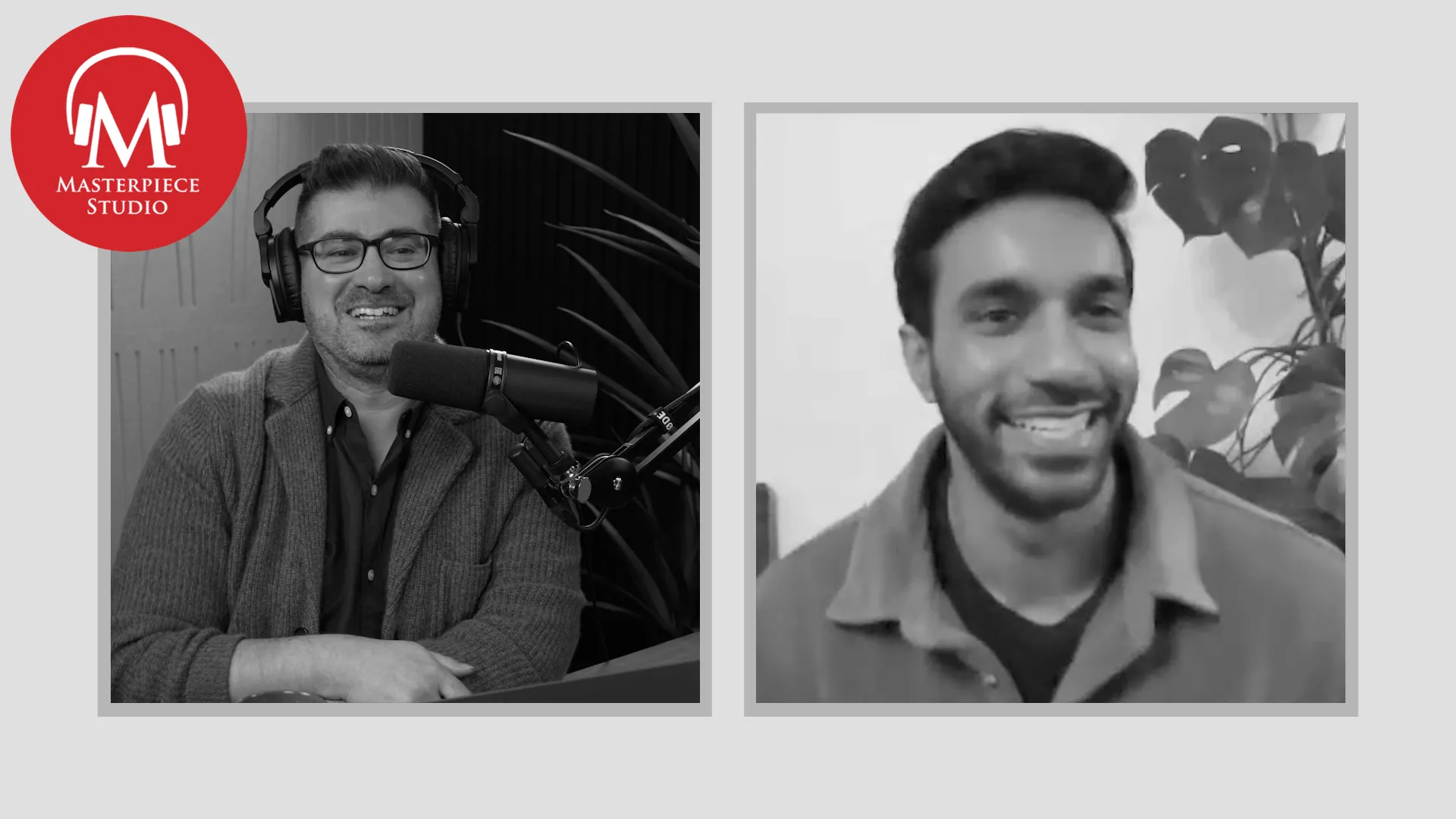
Join us next week as we talk with actor Rishi Nair about how his character, Alphy Kottaram, attempts to bring his past and present together, and understand how it informs his future.
Grantchester Podcasts
10 More Podcasts

MASTERPIECE Newsletter
Sign up to get the latest news on your favorite dramas and mysteries, as well as exclusive content, video, sweepstakes and more.