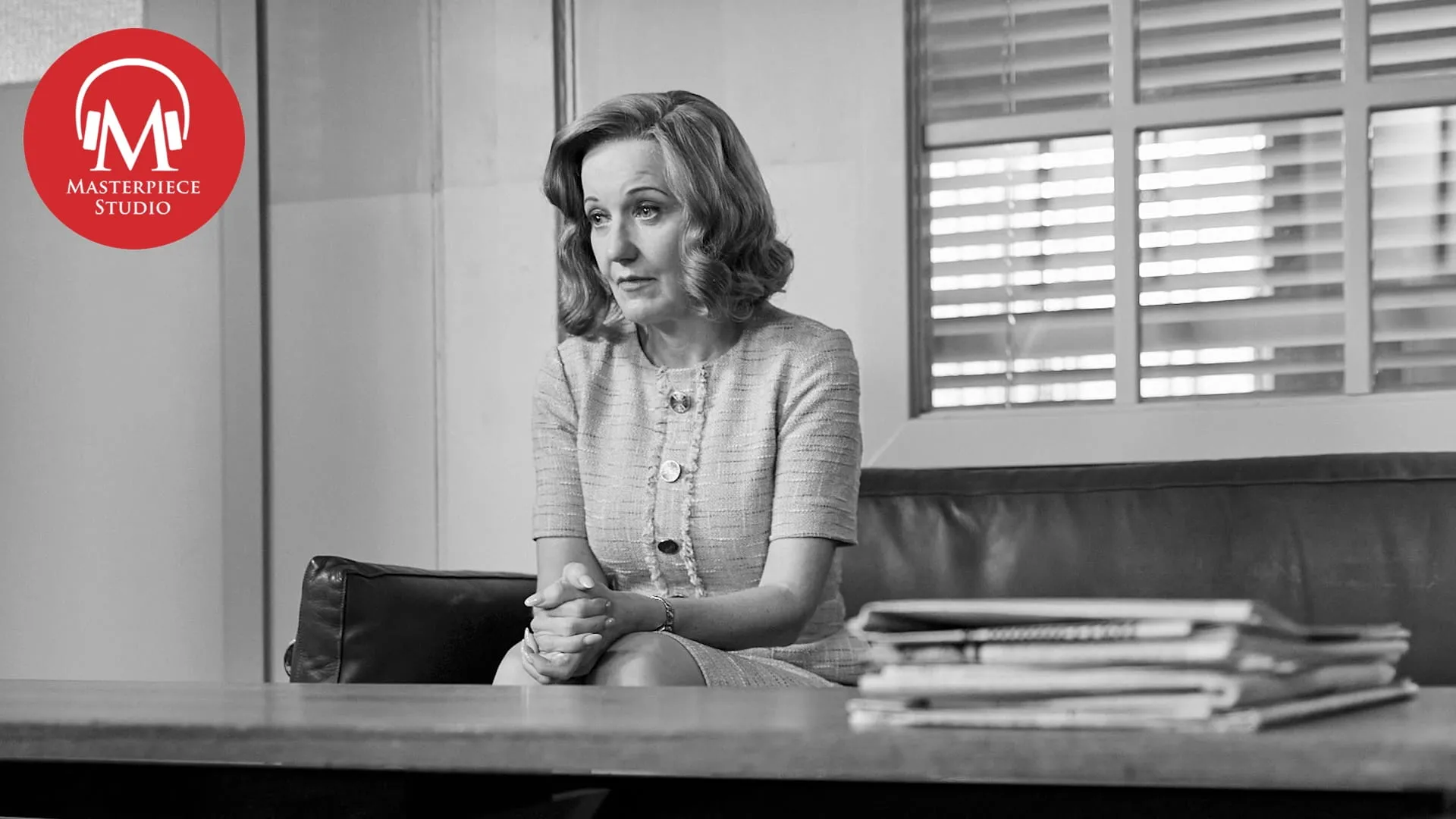
Kacey Ainsworth, Grantchester, Season 11
33:02
WARNING: This episode contains spoilers for Episode Three of Grantchester Season 11.
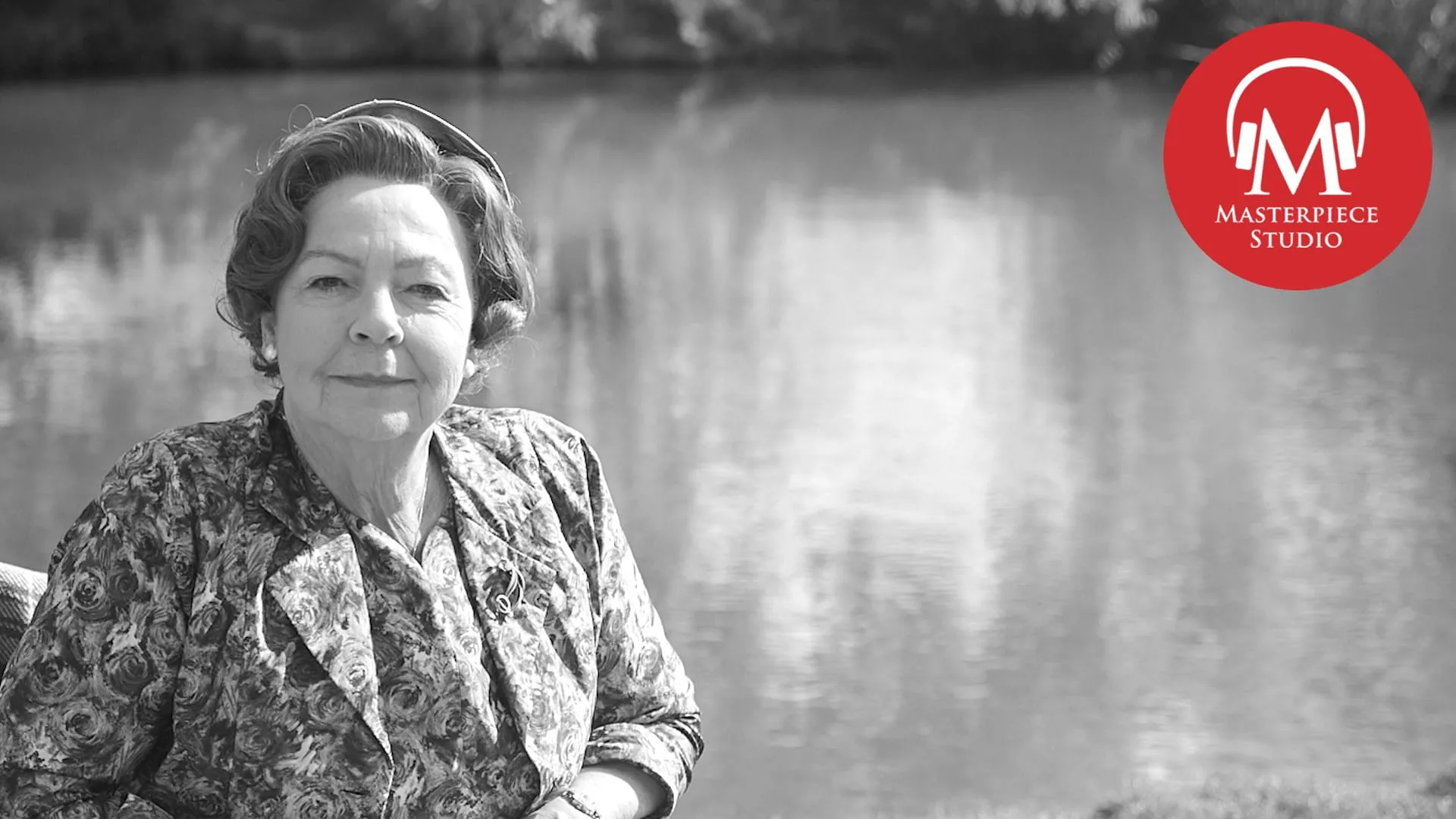
Actor Kacey Ainsworth has been with Grantchester from the very beginning, first appearing on screen in Episode One. Since then, her character Cathy Keating has had quite the transformation, engineered through her own ingenuity and determination. In this conversation, Kacey discusses Cathy’s metamorphosis from homemaker to businesswoman, and how she navigates her personal and professional relationships.
This script has been lightly edited for clarity.
Jace Lacob: I’m Jace Lacob and you’re listening to MASTERPIECE Studio.
Over the past 10 seasons, Cathy Keating has had quite the transformation, engineered through her own ingenuity and determination. In the early days of Grantchester, Cathy was known to us as Geordie’s wife, preoccupied with one of life’s hardest roles, raising four children full-time. She later entered the workforce as a saleswoman at a local department store, where she discovered a knack for fashion, unionizing, and business. More recently, Cathy and Sylvia Chapman united forces and took a leap of faith by opening their very own fashion boutique, CeCe’s. While their business has been successful, the pair’s private tiffs have become more public, and more frequent.
CLIP
Cathy: “Where have you been all this time?”
Sylvia: I didn’t mean it like that!
Cathy: We’re working on her manners.
Mira: Oh, I don’t mind.
Sylvia: When have my manners been anything but impeccable?
Cathy: At CeCe’s when I’m trying to do the accounts.
Sylvia: “Trying” being the operative word.
Alphy: Lamb, Mira?
While investigating a murder at the drive-in, Geordie meets a man named Mr. Switch who just might be the answer to CeCe’s latest challenges.
CLIP
Geordie: Ladies, your new accountant.
Mr. Switch: How do you do?
Cathy: How do you do?
Mr. Switch soon settles in and helps CeCe’s get back on track. And Cathy delights in having a new face, particularly a handsome one, in the business to bounce ideas off of.
CLIP
Cathy: Yes, they are expensive. But they’re hand stitched. They’re Italian. And I figure if we invest in something more up market, then we get a more up market customer.
Mr. Switch: What’s your instinct telling you?
Cathy: We do it.
Mr. Switch: Well, there you go then.
But is this arrangement truly as good as it seems? Today, we’re joined by actor Kacey Ainsworth to discuss Cathy’s transformation from domestic goddess to fashion entrepreneur, and how she navigates her personal and professional relationships.
Jace Lacob: This week, we are joined by Grantchester star Kacey Ainsworth. Welcome.
Kacey Ainsworth: Oh, how lovely to be here!
Jace Lacob: So before we dive into Series 11, I want to take a trip down memory lane and look back at the very beginning of Grantchester. Thinking back at that first episode you filmed way back when, did you have any inkling that you’d be sat here more than a decade later talking about Cathy Keating?
Kacey Ainsworth: Absolutely no idea that we would be running this long. I thought if we were lucky we’d probably get three series out of it, maybe. But I had no idea what would happen to Cathy throughout this decade, and how things would change, and also how much we’d bring the present moment in time, the years, into focus for what was going on with her and how as a character she’d kind of bloom and grow, really. I had no idea that would happen at the beginning.
Jace Lacob: I think what is really apparent with Cathy is when you look at Episode 1 of Grantchester, she’s a pregnant housewife. She’s responsible for the washing up and the care of an ever-increasing brood of kids while Geordie is sort of swanning off solving murders. And she’s a far cry from the businesswoman we see in Series 11 running her own boutique with Sylvia Chapman. What has surprised you the most about Cathy’s trajectory?
Kacey Ainsworth: Well, the lovely thing was that we could always have an open dialogue with the producers of Grantchester around about our characters and what was happening with them. And certainly for me, I looked at my own family, my own life, and the women in my life. And I found that a lot of the time they weren’t being depicted in period dramas, I thought, in a way that showed rounded characters and individuals and people with dreams and aspirations. And so when we first started, yes, that was her place, and also we were just after the war, they were still rationing, there were a lot of things that were keeping women in certain places where they possibly didn't want to be or hadn't been during the war, but that had to return to.
And so we’ve actually really followed a true version of what happened to women in the 1950s and through to ’63, and the opportunities that did become available to them. And so, yes, firstly I didn't know that was going to happen at the beginning of the series, but it’s lovely that we can have a collaboration and talk about our grandmothers and what they did. And that’s how we got to Cathy working, was because we realized that, the executive producer Emma Kingsman-Lloyd, Daisy Coulam, myself, and Tessa, who plays Mrs. Chapman, we all had grandmothers who worked. And so we went, "Well, maybe Cathy should get a job." And so that’s how it began.
Jace Lacob: I love that. And drawing on all of your familial experiences to inform the show. It feels so real, I think, because of that. If we’re staying on memory lane here, casting your mind back, what do you remember about your initial audition for Grantchester?
Kacey Ainsworth: I just had my second child, and I really wasn't looking for something that I had a lot of commitment to do, so a lot of filming days, because I had a two-year-old and a four-year-old. Filming can be incredibly long, long hours, and I really didn't want to commit to something that was going to take up a huge amount of my time. So when I realized that Cathy was a regular but wasn't going to have too many filming days, I thought this is a great opportunity. And I’d been in something before in England that was a huge, huge commitment, and so I was really shy of wanting to do that.
But I remember going in and meeting Harry Bradbeer, who was the first director on Grantchester, and he’d directed me in something else years and years previously and I’d absolutely adored him. And I thought I’d really like to work with him again, and he was just wonderful in the audition and said to me, "Look, how are you? You’ve literally just had a baby. This wouldn't be a huge commitment for you, but I think it’d be a really good move and I really love this series." So, the combination of Harry giving me that confidence to come back into the workplace, because I had stopped for seven years. So it’s quite scary to go back in because you think to yourself, "Oh my god, can I still do it? Can I still do this job? Do I know what to do?" And it was really lovely to come back into something gently like that. So obviously as Cathy’s character has evolved, I’m in more often, but obviously my children are now 18 and 21, so need mommy much less.
Jace Lacob: Obviously the big thing that you did would be playing Little Mo on EastEnders for 522 episodes across six years, which is staggering! But at the same time, what has it been like playing Cathy on Grantchester for over a decade and living with this woman for as long as you have?
Kacey Ainsworth: Honestly, it’s been such a joy. And I know people say that about working on shows, but it is such a joy to work on it with all the other people, everybody from the executive producers all the way through cast, the crew. And the testament of this program is that people come back. They consistently come back—cast, crew members, production team. Everybody comes back to this show because it’s such a beautiful piece. And that’s always because of who is leading your show. From an actor’s point of view, whoever’s your number one and your number two on the call sheet are the people who set the tone amongst the actors and people who are coming on to do the creatives.
But then you have your producers who also set the tone for how the whole piece is going to be, and because they are so responsive and because they genuinely care about the product, there is never a day where someone says "that’ll do" on our show. And the standard is so high from everybody that we all put a shift in. And to have Robson and the three vicars that we’ve had who also follow Robson’s lead, really, in the way he leads the show means that everybody who comes on our show loves it and nobody has a bad word to say about it.
Jace Lacob: I do want to talk about Robson. So one of the things I love most about Cathy and Geordie’s marriage is that it’s not perfect. They have their ups and downs, their trials, their losses, and their moments of joy, all played out against a decade of the two of them changing in their own ways. What has it been like depicting the nuances of marriage with Robson Green?
Kacey Ainsworth: Well, it was one of the things that both of us said that we really wanted it to be. We didn't want it to be a picture-perfect relationship; we wanted to see those trials and tribulations of people who were trying to work, trying to bring up children in ever-changing circumstances. It’s such a fantastically changeable decade, the 50s through to the 60s, so there was a lot that we could mine together through that. But that was the thing we wanted it to be. There’s been so many lovely lines that Daisy Coulam’s wrote about our marriage, and I think it really has been truthful, and I think that’s why people have liked it. She’s not always been responsive, he’s not always been responsive, it’s been really truthful.
And one of the things that stuck with me way back in probably maybe Series Four, Three or Four, was when Geordie talks about getting together with Cathy and the fact that it wasn't love at first sight, but when she turned away from him to leave when they decided they weren't going to be together, he wished with all his might that she would turn back, and in that moment he realized that he didn't want to let her go. And so it wasn't all tied up and neat in a bow; it was a kind of messy bow, but it was their messy bow. And that’s what we both really wanted to show, to depict.
Jace Lacob: Their messy bow, I love that. Geordie and Cath have to be believable because they anchor the foundation of the show in a dynamic that’s rooted in life rather than in death or murder. What was your first impression of Robson when you met him?
Kacey Ainsworth: Well, I don't know anybody who meets Robson and doesn't instantly warm to him because he is one of the most open and generous actors I’ve ever worked with. Anybody who comes into the makeup room, he will say hello to every single person who is sitting in that makeup room. And he will never imagine that they know who he is—he introduces himself, he says, "I don't know what you’re doing on the show," and they will say, "I’m playing so and so," and he goes, "Oh yes, we’ve got a lot of stuff together, if you want to run lines then that’s great.". He’s so open, and then that means that that person who’s coming on to play a guest role, and sometimes they’re the most frightening because you don't know anybody, you don't know the crew, and he puts those people at their ease.
And it means that we all do the same. So we do the same. Whether I’m working with the crime people or not working with the crime people, I always go up and say, “Hello, I don’t think we’re going to get to work together, but I hope you have a lovely time on it.” And that’s one of the things that gets said to me outside in other jobs, you know, "I came on to do so and so and everybody was just so welcoming and lovely," and that’s how he was with me straight away. And I had said to him, "God, I’m a bit nervous. It’s really weird, I haven't done it for seven years." And he said, "All you need to remember is don't go until they say action." And he was great, he was really great. And he is so easy to be around, but also has really high standards. I think in 11 years of working with Robson, he’s never dropped a line with any scenes that we’ve done.
Jace Lacob: That’s incredible.
Kacey Ainsworth: I have, but he hasn’t. I honestly don't remember a time where he’s gone, "I’m sorry, I’ve forgotten what I’m doing." Never. Never, never, never. Amazing, isn't it?
Jace Lacob: Unheard of.
Kacey Ainsworth: Exactly. You hear about people who’ve got lines written on the floor and people holding up cards with their lines. He just doesn't do that. He just waits until it arrives, and so he’s never gone blind or asked for a line or anything like that. I just think he’s some kind of superhuman creature.
Jace Lacob: Grantchester’s female characters hold up a mirror to a changing Britain in the 1950s and 60s. And Cathy in particular is fascinating to watch because she mirrors that change, her world transforming from the domestic to the professional over 10 years with many speed bumps, albeit, along the way. What do you make of Cathy’s tenacity?
Kacey Ainsworth: Well, I think that lots of working-class women of that time had those skills and that skill set, and it’s lovely that she gets to show it during all of the changes like you say during that decade of change that we had going from the 50s to the 60s. And I love the fact that she’s tenacious and I love the fact that she has such drive and ambition for herself. Because like I’ve said, in some dramas you don't see that for working-class women or women who worked. You don't see it very often and it’s lovely to see a female entrepreneur, because they were there.
And so for me it was really important that they made sure that Cathy had, like I say, this fully rounded character and that she had ambition and drive. And that’s the other thing about their relationship as well, because she’s so up and always got something new and always wanting to talk about something new, she takes Geordie out of the grimness that he deals with every single day. When he comes back home, he doesn't need to hash that over, she doesn't say to him, "Let’s sit and talk about it," or they have a row about it. She goes, "Oh, just have a drink and let’s do this." And she’s off talking about something else and it brightens his world because she is so up and so at life. And I think that’s what he needs because he’s dealing with murder and death all day, so he needs someone who’s so vibrant. And I think that is what Cathy has become in the show. And that’s the other reason their messy bow works, is because she adds this color to quite dark days.
Jace Lacob: Can we say she’s the heartbeat of the show?
Kacey Ainsworth: Well, I don't know. I don't think she’s the heartbeat of the show, we have so many heartbeats of the show. My goodness, I mean, Mrs. C, Leonard, Dickens, we’ve got so many hearts of the show. And that’s the wonderful thing about this show is the fact that you can focus in and put a light on any one of the characters and we will all have some kind of involvement within that character and within that character’s story and we’ll all have a different take on it. So we merge so well together, and I think that’s happened over the course of the years how things have grown amongst us all. And people who’ve come in later series like Larry and Miss Scott, Melissa and Bradley, have again the same, have grown, integrated themselves, and now we are a big family. And I think that is one of the really huge successes of this show.
Jace Lacob: You’re going to make me cry, Kacey.
Kacey Ainsworth: Oh, I know, we were all in bits. We’ve all been in bits for the whole of, I think when the first day we started shooting, the last day was absolutely terrible, we were all in floods of tears, because again it’s a rare thing and a beautiful thing. But we’re so glad to have had it. To have had that is wonderful. To have had that for over a decade is really brilliant.
MIDROLL
Jace Lacob: And we’re back with actor Kacey Ainsworth. Over 11 series, we’ve seen Cathy grapple with pregnancy, menopause, infidelity, launching a business, caring for aging parents. And a Series 5 storyline introduced Cathy’s mom Diana, played by the brilliant Paula Wilcox, who is revealed to be suffering with what appears to be bipolar disorder. And until that point, I felt like I had a read on Cathy Keating and who she was, but the Diana storyline and the trauma of Cathy’s childhood that it kicks up reveals so much about her. And there is this corrosive dynamic with her mother that she’s concealed even from her detective husband.
Turning a little bit ahead of that, One of my favorite Grantchester episodes of all time is from Series 9, which you wrote with Daisy Coulam and revolves around a murder at Esme’s office. And it’s told almost entirely from the perspective of four women. What was it like getting the opportunity as an actor to write an episode like this one?
Kacey Ainsworth: Well, like I say, the production company is really encouraging and I had for years suggested storylines. In fact, the bipolar storyline, I had suggested that and said we need to talk about what happened with mental health issues for women in the 1950s. So that’s just an example of a storyline I suggested and talked about. And I then went to see Tessa and said to her at the end of Series 8, "I’ve got an idea for an episode and I’d really like to write it, what do you think?" And of course because Tessa is so wonderful, she said, "Do it, and then send it to me and then we’ll see what I think."
So that’s exactly what I did. I wrote an episode from the female perspective just because there were huge changes that happened, like we said before, during the 50s and the 60s, huge changes in the opportunities for women and women’s status in the world. And so I just wanted to write an episode that featured Miss Scott and Mrs. C and Cathy and Esme and see if we could make an episode out of that. And it’s the strength of the other characters that is the reason why we can. And so I got up early, it was Christmas, I got up early before the kids were awake, wrote every morning and then sent it to Tessa who said, "You need to send this in." So I sent it to Emma and Daisy and then they beautifully got back to me and said, "We absolutely love this idea, we absolutely adore it. Would you like to come on board and Daisy will mentor you and we will show you how we do the whole process and what happens?"
So it gave me a complete insight into A, the huge amount of work that it takes to produce an amazing script, but also the care, the attention to detail. So, I had an amazing experience and I am forever grateful that they allowed me to do that because in quite a lot of times when I was younger as an actor you would not be allowed to do that in England. I find that the American shows that I work on are completely different. They seem to be, in those days when I was younger, much more collaborative, much more happy to have an actor’s opinion on things, whereas it was very different in England. There were definitely stratas. You didn't go to the writer and speak about the lines you were doing, you just did them.
And so there was a lot of that, and so I was very grateful and because I’d been brought up through that system, I was quite afraid to even mention that I wanted to write something. What an upstart I felt when you’re getting all of these brilliant scripts. But that wasn't the feeling that I got from the producers—it was one of "This is great, we absolutely love this and let’s talk about it." And we did, and bingo, there it was.
Jace Lacob: There it was. You mentioned the dialogue, and Series 9 is powered by the struggle between Cathy and Esme, played since the beginning of Grantchester by Skye Degruttola. And the fact that you’ve been by Skye’s side informs that scene with Mrs. C so beautifully.
CLIP
Cathy: I feel like I can’t win. Give her her freedom, they say. Cut the apron strings. Don’t cling on. But as soon as it goes wrong it’s...
Mrs. C: The mother who’s to blame.
Cathy: So what do I do? Do I let her go out there, this small girl who I taught to read, taught to swim, with my hand under her belly?
Mrs. C: Yes. That’s exactly what you do.
Cathy: I want to be with her every step of the way. But I can’t, can I?
Mrs. C: No one can. And if you try, you’ll drive yourself round the twist.
Cathy: Maybe I’m already round it.
Jace Lacob: What is contained within that speech and what inspired you to write that?
Kacey Ainsworth: Well, again it’s real experience. That is my daughter, I have a daughter who is exactly the same age as Skye. And that was my feeling even at that moment in time. And so therefore if something comes from a real experience, that feeling of letting your child, your daughter, your son, go out into the world and knowing yourself the dangers that could be out there, they might not be, but they could be out there, that you’ve seen and that you’ve experienced, and how hard that is for a mother, and a father too, a parent, to experience those things. And again, when you write, you want to resonate with as many people as possible so they all feel that.
But I do remember writing it and crying at my own writing and thinking that’s ridiculous. And I do remember sitting up in bed and crying at that speech and thinking, "I’ve written it, what am I crying for? This is insane!" but I knew it would resonate with people because it affected me even though I wrote it.
Jace Lacob: If it’s hitting you, yeah.
Kacey Ainsworth: It’s going to hit other people the same way, right? Well, that’s what you hope. It could be being indulgent. So you have all of these worries around things. But yeah definitely, it came from a place of absolute truth and a want to, like I say, resonate with as many people as possible who have been in that situation. Whether they’re 21 or whether they’re four and going into school, you place your trust in the people outside of your home, and that’s a big thing.
Jace Lacob: In Series 11, Cathy and Sylvia are growing their business. CeCe’s is off to a bit of a rocky start, but Cathy has an eye for fashion, balancing Sylvia’s more traditional tastes and experience from working at Swinnerton’s. What do you make of Cath’s aspirations? Is she ahead of the curve in terms of fashion exploding in the 1960s?
Kacey Ainsworth: I think she probably gets carried away with herself. I think it’s one of those things where you want it so badly and now it’s happening and you’re kind of tripping over yourself to have the best experience in every single day that you’re doing it. And I think she needs the anchor that is Mrs. Chapman because she would just run away with herself and within no period of time get into huge amounts of debt because her creative self is finally, at her mid-life age she’s creatively finally doing something, and something that she’s always wanted to do.
And I think actually in fashion this is something that you see a lot of times. I know that Vera Wang didn't have her first collection until she was 40, and there’s lots of people who have come through the fashion industry and have had very checkered ways to be a fashion designer. And Cathy’s just, it’s literally like she’s taken the stabilizers off of her bike and she’s flying down the hill, but she hasn't worked out where the brakes are. So, she needs Mrs. C to put those brakes on, because otherwise, yeah, she’d just run away with herself. She’s so excited by the whole prospect. And I understand that. It's like when you begin anything that you’ve wanted to do for such a long time, your beginner’s energy is sometimes overflowing and you do have to rein it in sometimes a little bit.
Jace Lacob: So Cath and Sylvia clearly need help on some of the organizational issues at CeCe’s, and Geordie finds them an accountant, Peter Switch. Does Switch seem like the answer to their prayers, particularly since he and Cathy seem to be of a similar mind when it comes to, say, hand-stitched Italian dresses?
Kacey Ainsworth: Yeah, Mr. Switch seems like he’s got an eye for and a flare for what’s going to be fashionable, what’s going to be in, he has all the right words. Whereas I suppose when Cathy looks at Mrs. C, she doesn't see someone who’s wearing the latest cutting-edge fashion. She sees someone who’s going, "Well, how much is that going to cost, and can't we use this?" So she sees someone who’s putting out the flames, whereas he is literally lighting the match and saying, "Get the fire burning, let it roar high!" So, of course that’s a wonderful thing, someone who is as enthusiastic about things as you are and sees potential.
I mean obviously Geordie is very proud of her, but he doesn't know anything about fashion and doesn't want to know either. He’s worn the same suit since Series 1. She can't really speak to him about fashion. But when she’s got someone who says, "Yeah, wow, that’s a great idea" or "That’s beautiful" or "That feels amazing," you feel like you’ve got a partner in crime. And obviously with Sylvia it was partners in crime but not someone who was saying "yes, yes, yes, yes, yes." It was someone who was going "yes, but, yes, but." And of course Mr. Switch doesn't do the "but."
Jace Lacob: No. So, Cathy and Switch, played by Daniel Lapaine, they hit it off immediately. And there is a frisson between them, a tension that maybe borders on the romantic or sexual.
CLIP
Cathy: Crikey. Sends me quite giddy making decisions.
Mr. Switch: Shouldn’t do. You’re bloody good at it.
Cathy: Am I?
Mr. Switch: A bone fide woman of business. Glamorous too.
Cathy: Tell that to my kids.
Phone rings
Cathy: Hello, CeCe’s boutique.
Geordie: Are you still at it?
Cathy: Busy day.
Geordie: It’s like the Mary Celeste here.
Cathy: Oh, the kids are at Esme’s.
Geordie: Thought we were having a family dinner.
Cathy: They are, just not with you.
Geordie: Get some chips on your way home would you love? I’ll need more sustenance than cream of tomato.
Cathy: Will do.
Geordie: So how was your—
Cathy: See you later, bye.
Jace Lacob: It’s hard not to watch this scene in Episode 3 without thinking back to Geordie and Margaret. But here it’s Cathy who’s at late work with someone and Geordie’s at home with a tin of tomato soup. But even as she tries to talk to Geordie about Italian couture, he makes it all about him and his upcoming decision. Do you feel like there’s a sense here that Cathy longs to be the main character in her own story?
Kacey Ainsworth: Yeah, I think she has, like many women, they put themselves in the backstory while they’re bringing up the children, and then they get to a point where their children don't need them so much anymore and then who are they? Where are they? So, finding her identity outside of that, not just going to work, but having a vision and a passion for something. And I feel like the tables turn and then she has to understand how easily that can happen and how quickly that can happen where you know yourself that what you’re doing isn't right, but you do it anyway. And it’s quite difficult for Cathy to accept that what she’s doing isn't right. And Mrs. C pulls her on it and she brushes it off. And so I think that it’s always good when you have parts of your character where they’re fallible, where they’re not perfect, where they don't do the right thing when they know they should. And so I like that as a part of the character development that we had with Cathy and Geordie there as well.
Jace Lacob: The episode ends with Cathy closing up CeCe’s for the night with Mr. Switch, who asks her to the pub.
CLIP
Mr. Switch: Pub?
Cathy: Go on then, Mr. Switch. Why not?
Mr. Switch: Peter, please.
Jace Lacob: What compels Cathy to go out with Peter Switch rather than go home that night, and what’s at risk here?
Kacey Ainsworth: I think it’s as she discovered, Geordie doesn't want to talk about the shop or fashion, whereas Mr. Switch is an extremely good listener. And I think when she has spoken about things at home, she feels like there’s a bit of a glazed look in Geordie’s eye when she talks about the shop and what’s going on. And to have somebody who listens is huge for her because that’s not happened. She’s always had to bow to the pressures of his job, and the shoe’s never been on the other foot. So I think she goes, just in that little phrase "why not." She knows why not. She knows why she shouldn't do it, but she says "why not" like it’s free, easy, yeah, I can do this. But she doesn't say "yes, that would be great." She says "why not" because she knows herself that she shouldn't be doing that, she should be going home and getting his chips on the way home. Because there’s a frisson, she should step away from it and she doesn't.
Jace Lacob: Kacey Ainsworth, thank you so very much.
Kacey Ainsworth: Thank you, I’ve really enjoyed talking to you.
Next time, as Alphy plans to visit Mira in Romford, Mrs. C makes sure he’s absolutely prepared for this long, arduous journey.
CLIP
Mrs. C: Wallet?
Alphy: Yes.
Mrs. C: Coat?
Alphy: Not in this weather.
Mrs. C: Flask and sandwiches?
Alphy: It’s 90 minutes away, It’s not Scotland.
Mrs. C: Those for your mum?
Alphy: I didn’t want to turn up empty handed.
Join us next week as we talk with actor Tessa Peake-Jones, about how the tireless Mrs. C manages to keep the vicarage, and her vicars, in tiptop shape.
Grantchester Podcasts
10 More Podcasts


MASTERPIECE Newsletter
Sign up to get the latest news on your favorite dramas and mysteries, as well as exclusive content, video, sweepstakes and more.