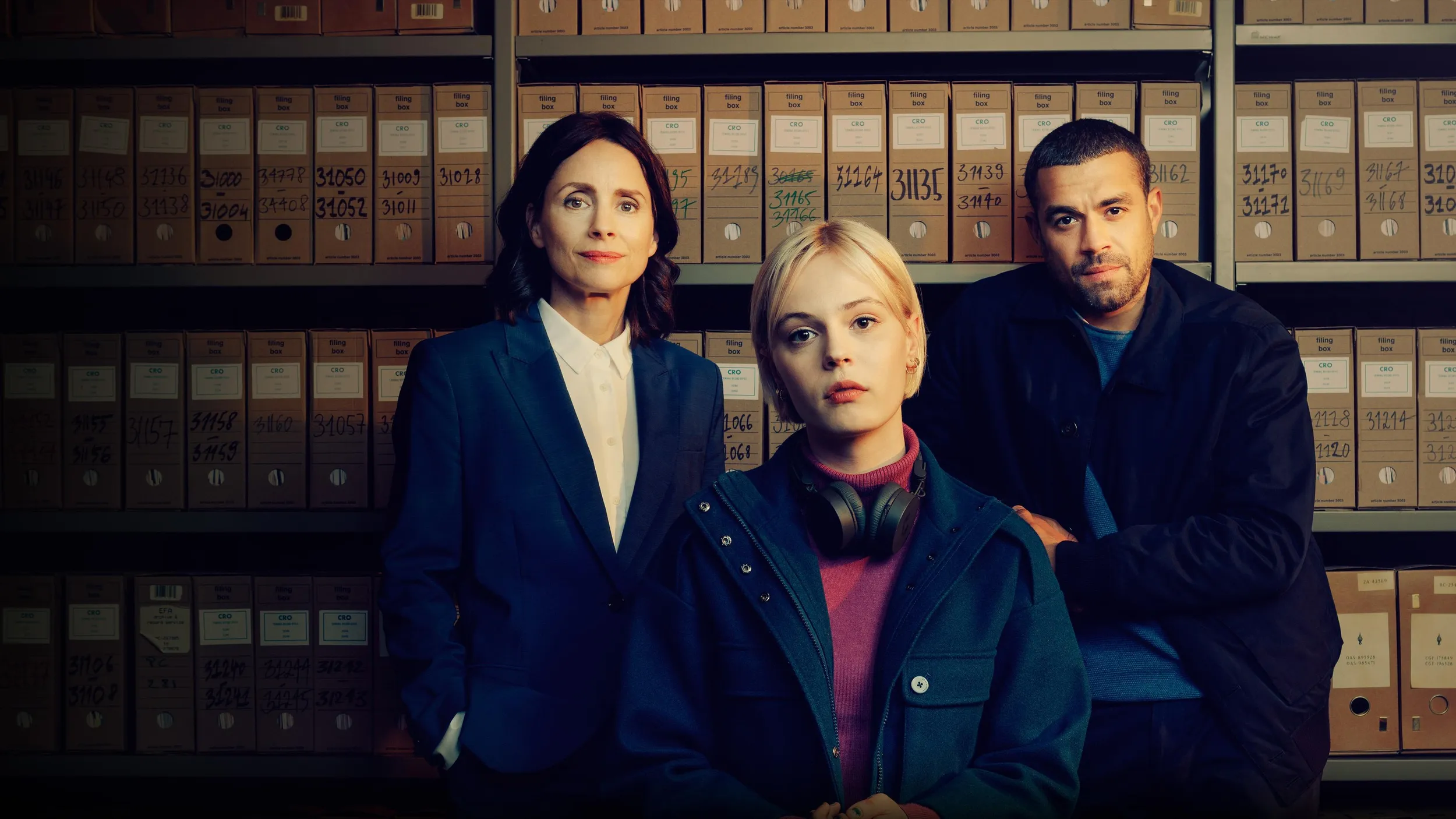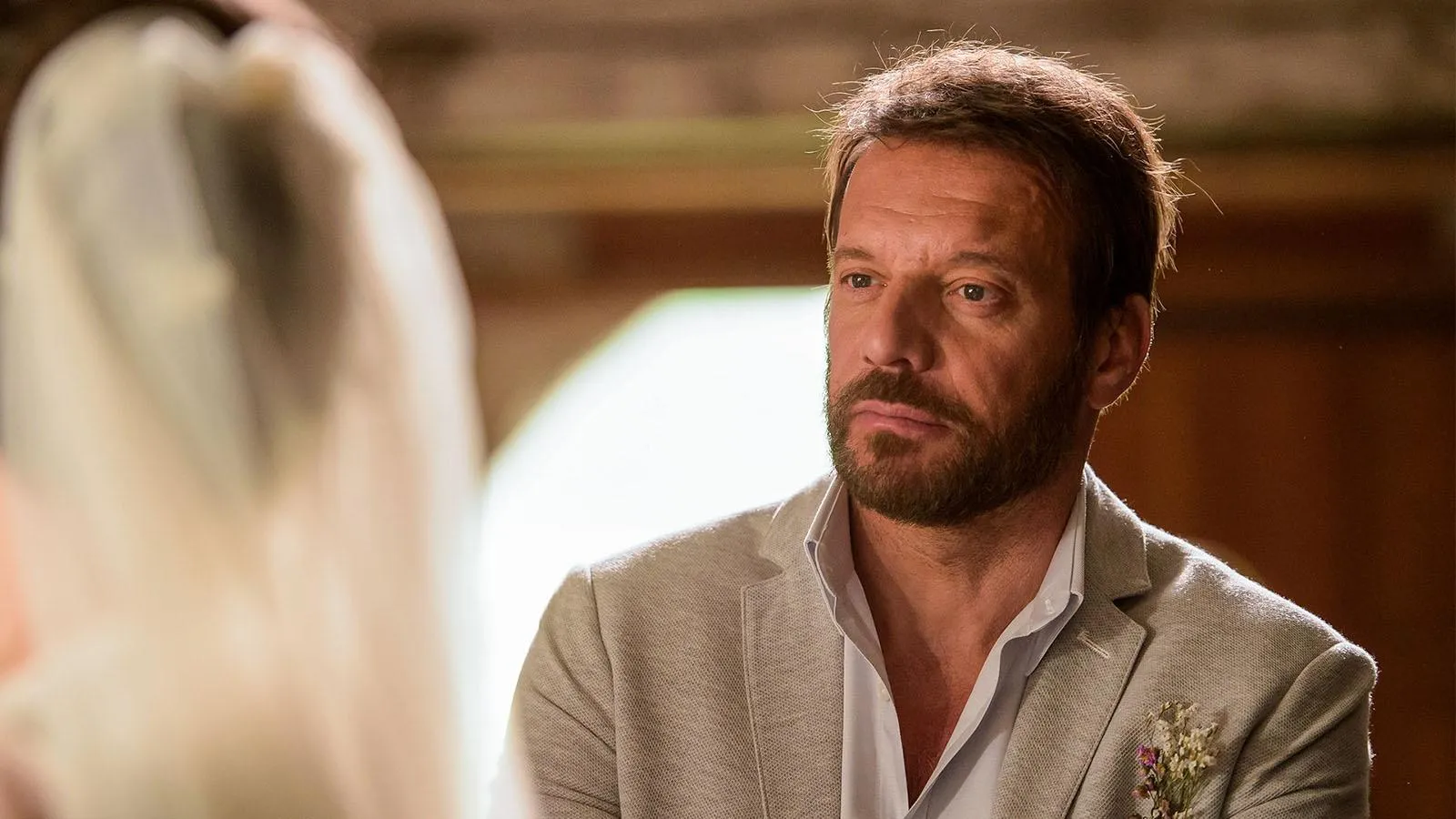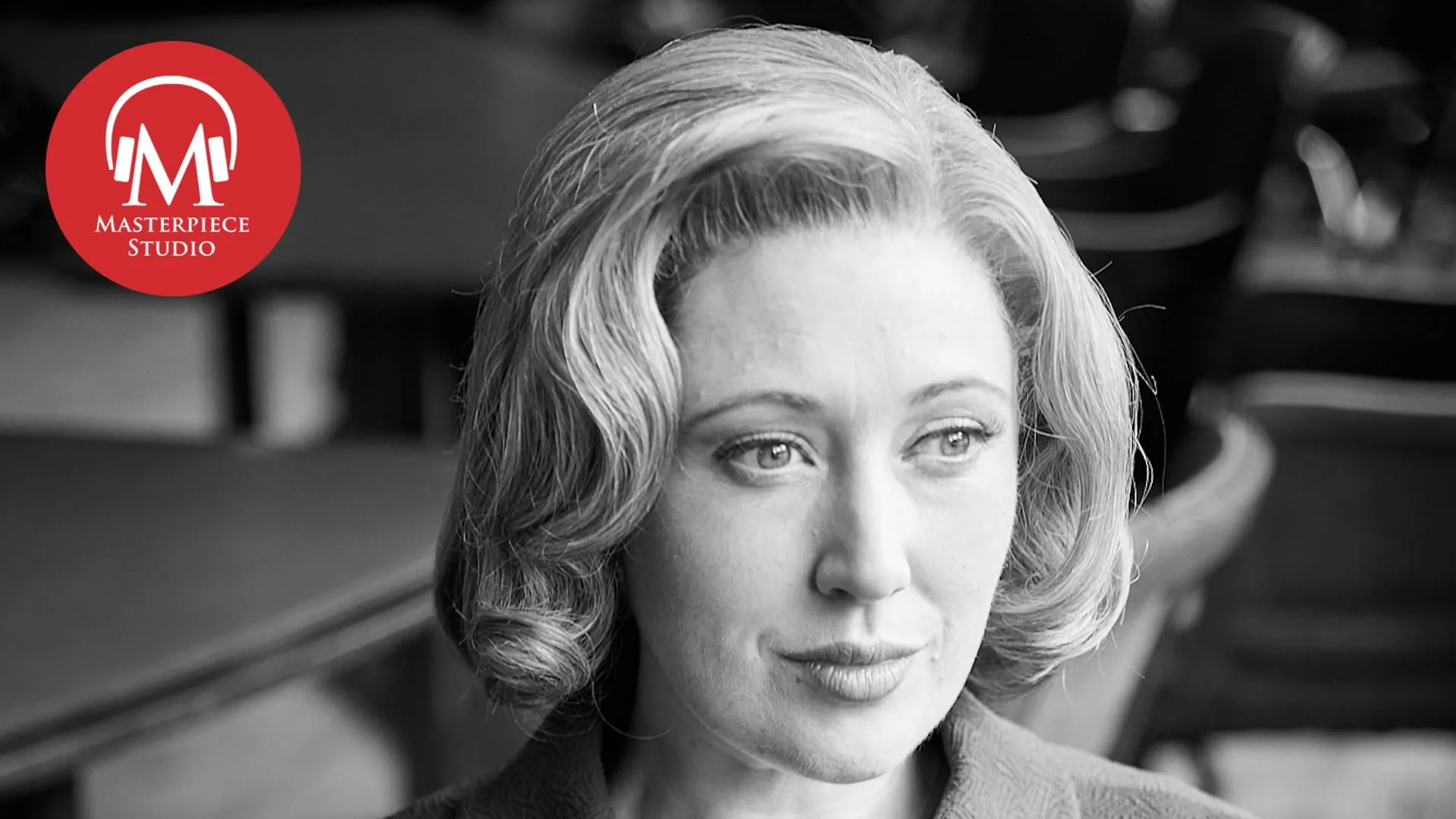
Melissa Johns, Grantchester, Season 11
Released July 19, 2026 34:17
WARNING: This episode contains spoilers for Episode Six of Grantchester Season 11.
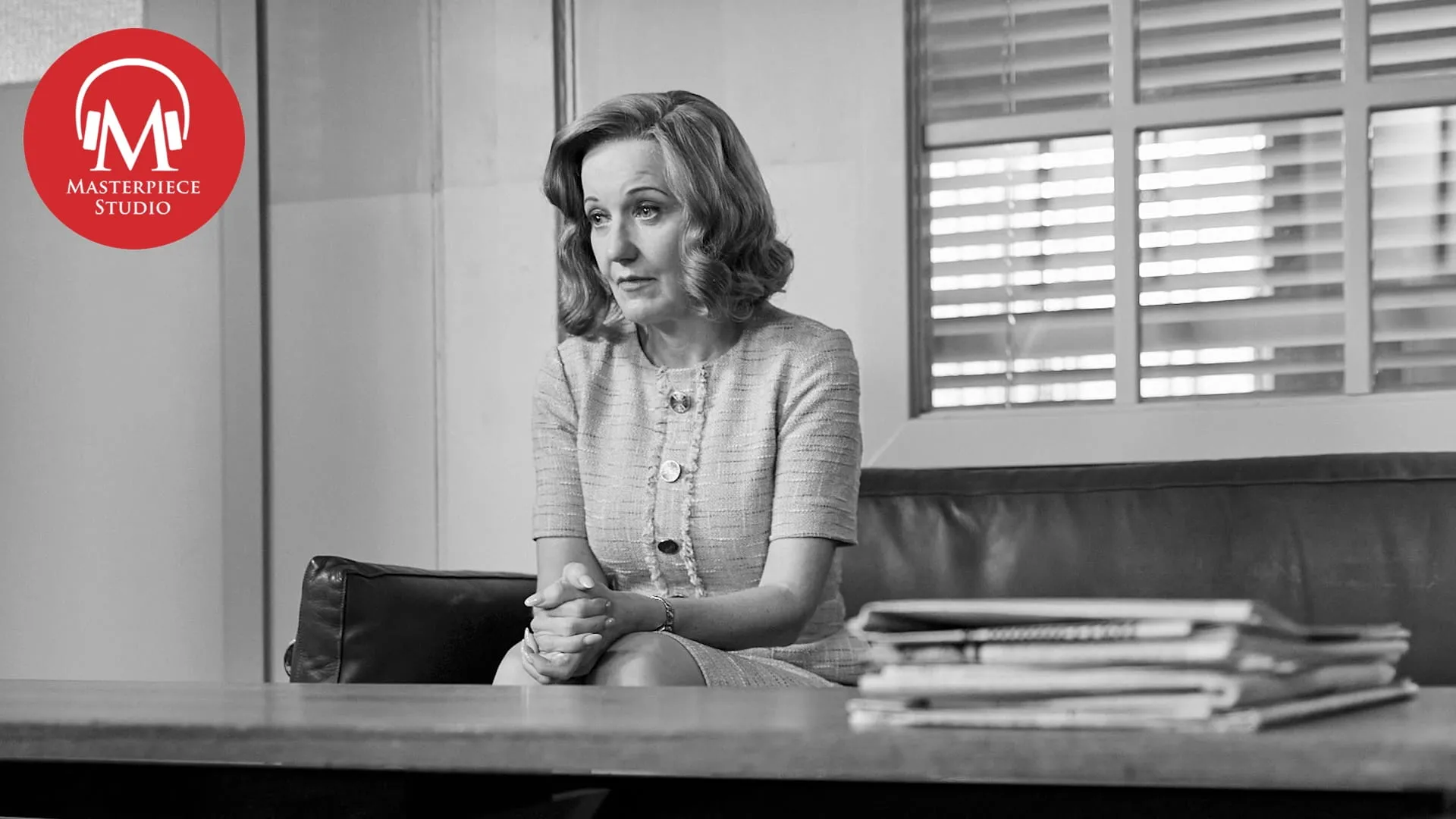
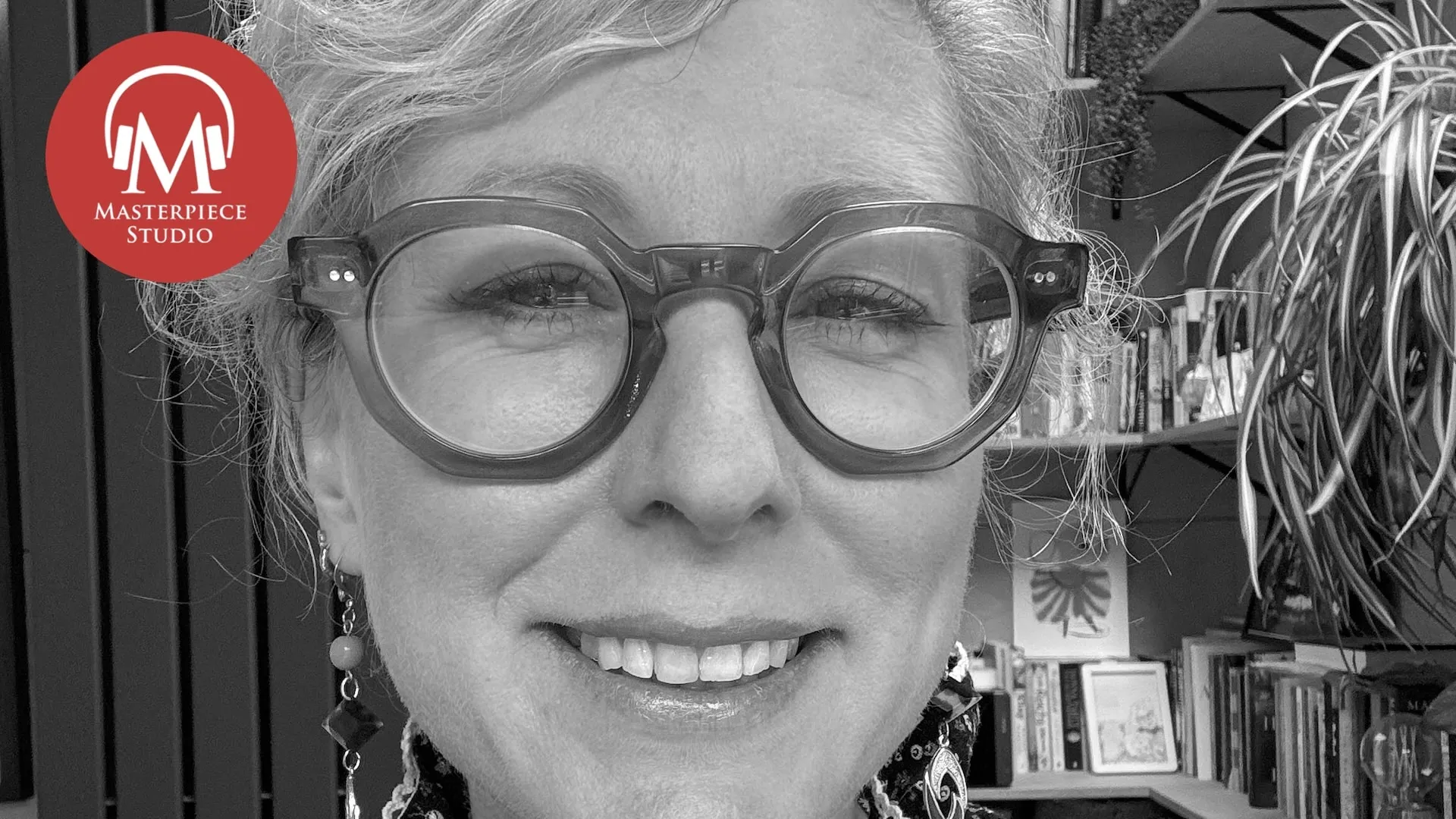
In several ways, actor Melissa Johns’ real life has paralleled her character’s, Jennifer Peters, née Miss Scott. Over the past few years, they’ve both shared significant life milestones. In fact, Melissa has yet to know her 30s without Miss Scott. In this episode, Melissa talks about how her character has made herself invaluable to the police station, as well as acting alongside Bradley Hall, Al Weaver, Robson Green, and finally, what Grantchester has meant to her.
This script has been lightly edited for clarity.
Jace Lacob: I’m Jace Lacob and you’re listening to MASTERPIECE Studio.
Jennifer Peters, née Miss Scott, might serve as the police station clerk and secretary, but her abilities far outweigh the duties of her position. Yes, she's always there with the cup of tea Geordie didn't know he needed, but Jennifer often assists on cases by tracking down information and offering Geordie an alternative perspective, as well as some sharp-eyed observations about the case at hand. This season, her involvement and dedication to the station extends beyond the building itself, as she teams up with Leonard, Alphy, and Geordie to challenge a local university’s quiz team in an effort to unmask a murderer.
CLIP
Alphy: Ah, professor. Here we are, just a vicar with a theological diploma, two grammar school educations and, uh…
Geordie: School of hard knocks. Distinction.
Professor: You can’t have a mixed sex team. That’s absurd.
Alphy: Why not? It’s a friendly game.
Professor: I’m sorry, but she’s a distraction.
Alphy: And for who? Yourself?
Jennifer: Too late, I’m already spoken for.
Professor: I…I didn’t mean…
In addition to being a team player… literally… Jennifer has eyes everywhere. Nothing gets past her, not even the superintendent’s confidential promotion offer to Geordie. But it’s what she does with this information that makes her not only an invaluable colleague, but also a friend.
CLIP
Geordie: What’s this?
Jennifer: A little bedtime read, The Power of Positive Thinking.
Geordie: Huh?
Jennifer: I know you’ve got a big decision to make. Chapter 6.
Geordie: How do you know that?
Jennifer: I know everything.
Geordie: What if I make the wrong decision?
Jennifer: Chapter 7.
Geordie isn’t the only one facing a big change in the near future. Jennifer’s morning sickness and off tastes are pointing only in one direction.
CLIP
Geordie: Where have the Garibaldis gone?
Jennifer: They started tasting funny.
Geordie: Funny how?
Jennifer: Sort of metallic.
Geordie: Miss Scott? Please, take a seat. How long have you been in the family way?
Jennifer: Why would you think that? Has someone said something?
Geordie: Just hazarding a guess. Four kids.
Jennifer: My test results are due any day.
Keeping Jennifer and Larry’s marriage a secret at work is one thing, but a baby is a whole different kettle of fish. Today, we’re joined by actor Melissa Johns to talk about what Jennifer Peters’ pregnancy means for her future at the station, and how, as a woman in the 1960s, she feels about closing this one large and meaningful chapter of her life in exchange for the promise of motherhood.
Jace Lacob: And this week, we are joined by Grantchester star, Melissa Johns. Welcome.
Melissa Johns: Hello.
Jace Lacob: So, before we get into Series 11, I want to look back at where Jennifer Peters, or Miss Scott, as she was then, started off. Jennifer wasn't written as a disabled character, but her limb difference isn't the focus of a storyline or used as a plot point at all. It's just part of who she is, and it doesn't comprise her sole identity. How do you feel about the trajectory Jennifer has taken over these past few seasons?
Melissa Johns: It's just been amazing to, one, play a character that I had fallen in love with so much anyway. But, two, to play a character where the writers and producers made the decision to just shine a massive light on her and let her live her life on the camera, which I wasn't expecting when I first got the part. I say this every time, but I was shocked when I did get the part. We don't see enough disabled actors on our screens anyway, let alone in period dramas. Still not quite sure why. I was born in 1990, and I know that people with a limb difference didn't just come about in 1990. We've been around for a while. But for some reason, there has historically been an even bigger barrier into period dramas.
So I just really wasn't expecting to get the role at all. I actually even said to my agent at one point, "Do you think they're just auditioning me as a bit of a tick-box exercise?” I had never worked with the company before. Now I do work with them, I know that that absolutely wasn't something that they did, but at the time, I was just trying to, I guess, understand it, because I couldn't understand why they might want me. And then when I got the part, it was just such a shock and of course, an honor, because it turned out to be one of the most wonderful roles that I've played in my career yet.
What's always been exciting to me is that never once has my arm, my disability, my body difference had to come into it. We've lightly touched on certain things. We very lightly touched on it when Miss Scott finally accepted Larry's proposal. I think the third proposal or something like that. She talks about how her parents weren't very nice and that maybe she wasn't the little girl that they thought that they might have. And it was really important to me that we did just put a little something in there, because actually, this is the 1960s, and at that time, being a woman was one thing, being a woman working in a male-dominated police station was another, being a disabled woman was something else. So actually, I do think that whilst that would have clearly never stopped Miss Scott, it would have made up the person that she is, similar to how it's made up the person that I am. It's always been a wonderful thing for me to play something that is as much of the story as I want it to be.
I have found myself defending it at times. There's been the odd comment about, "My gosh, what next? It's political correctness gone mad having a disabled woman in a police station in the '60s." But I always say, "It's really funny that you don't comment on how many murders take place in a small place." Somehow that seems to be absolutely fine, but the fact that there could be a disabled woman working, "My gosh, no, not at all!"
Jace Lacob: But just don't look into the death count in this tiny little English village.
Melissa Johns: Absolutely, yeah. Yeah, just don't look into the death count.
Jace Lacob: You mentioned Jennifer living her life, and she has. In between making endless cups of tea, Jennifer has solved crimes, fallen in love, become a mother, all while wearing heels as a woman in the late 1950s and early 1960s. Can we call her a feminist icon now?
Melissa Johns: I absolutely think we can. I think we could at the moment that she was probably, late 20s, early 30s, didn't want to get married until she found the person she wanted to marry, was very happy to just date lots of different people because that made her feel good, and why should anybody judge? So, I think that it's bubbled under the surface since I joined in Season Six. But when you put it like that, yeah, what a woman. She's great. I love her.
Jace Lacob: We all love her. Let's be honest, we all love her. I remember our interview back in Series Six, where you spoke candidly about growing up as a disabled girl. And now I see headlines about you that read, "Pregnancy has made me love my body." What role has Grantchester, and playing Jen, had in that journey for you?
Melissa Johns: I have played Jennifer Peters, as she now is, or Miss Scott, I have played her during some of the most formative years of my life, really. When we finished filming Grantchester in November of 2025, I was about to enter 2026 with that being the first year of not having Miss Scott in my life in my 30s. I actually haven't known my 30s without this character walking alongside me. And, I think there is something about playing a character that is so confident, and whether she had to fake it till she made it, that may have been the case. But, however she got there, she dominated the space that she was in.
And I think that going through from 30 to 35, and the changes that I'd gone through in my life, I had left a partner after 8 years, I'd sold my first house, I had to sadly give up my dog, who was my first sort of baby. I had to then navigate dating in my 30s. I hadn't actually dated since I was 23. I then met my now-husband, during those 5 years of filming. We got married, we bought a house, we got our dog, Nancy, I got pregnant. And, I actually finished filming 2 weeks before I had my baby daughter, Ottilie.
So, my life has changed a considerable amount over the last 2020 to 2025, and Miss Scott has remained my constant throughout all of that life change. And as I said, I haven't yet known my 30s without her. She's walked alongside me. And this summer will feel very strange, not getting to step back into her shoes, because maybe that's when I'll really realize everything she has done to me and and for me as a character.
Jace Lacob: Oh, Melissa, you're making me tear up. You're making me tear up. It's amazing to hear you say this. We're catching up with you about 2 weeks before you speak at the Love Lectures, and your topic is about “where love, lust, and self-worth sit as a disabled person in a world that questions if they are worthy of those things.” How does it feel post-Grantchester and post-baby to have the opportunity to talk about that publicly?
Melissa Johns: Yeah, it's exciting. This is something I've been talking about for a while. In 2018, my iPhone my iCloud was hacked, and I had intimate images released, and the papers picked up on it and ran stories with it, and it made national and international news, not because I'm anything special, but because sadly this happens to women on a regular basis, but very rarely does it happen to disabled women or women with a body difference.
And so I was fetishized, I was told that my body should only exist for the pleasure of others. People were shocked that I even had a boyfriend, that somebody could even love someone with a body like me. My eyes were completely opened to the reality of—and I'd already had a pretty good idea of what people thought about disabled people and their bodies and how that might link to love and lust and desire and all those things. But my gosh, I didn't think I quite knew the extremity of it, and that happening was a really big turning point for me. And since then, I have dedicated quite a lot of my life to talking, and advocating for just championing women's bodies, particularly disabled women's bodies.
I talk a lot about this idea of self-love and how I get so fed up with people saying to me, and people have said it to me for years, "Oh, you just have to learn to love yourself. Don't be silly. You know, don't wear a cardigan. Don't cover yourself up. Don't do this. Don't do that." And all the pressure has been put on me for years, and I don't think that's fair that the pressure is on me, because people saying to me, "Just learn to love yourself," I wasn't the one who hated myself in the beginning. That seems like a lot of extra pressure to put on somebody who wasn't born hating the way they looked. The world told them that the way they looked wasn't right.
And getting the opportunity to talk about that will always be a real privilege for me, because I hope—I don't think I'm coming up with anything new and revolutionary by saying it, but I think the opportunity to have a space where I can talk about that and say actually, this whole thing at the moment of learn to love yourself, what we need to look around at is, why is the responsibility just on us when a lot of us didn't learn to hate ourselves in the beginning. We were sort of told to.
So, I think having characters like Miss Scott under my belt just strengthen the opportunity to be able to go and have those conversations, because I got to play a character in her that totally aligns with the person that I am and the messages that I hope to be able to champion, because I like to think that the things that I say when I'm on stage and I'm giving talks are 100% the things that Miss Scott would also say. So, I just think that's a real honor to have been able to play somebody who aligns so strongly with the woman that I hope I am.
Jace Lacob: Looking back at Grantchester, in the hands of Daisy Coulam, Grantchester, which is on the surface, a show about a vicar and a detective solving murders in Cambridge, is to me, a stealth feminist drama about changing roles for women in 1950s and 1960s Britain. And Daisy injects so much vibrancy and life into the show's female characters. What has it been like working with Daisy these past six series?
Melissa Johns: I'm so glad that you speak about Daisy, because so often we don't talk enough about the people that make these shows. And what you've just said there about Daisy injecting so much life and color into Grantchester, I genuinely, hand on my heart, think that Daisy does that in life. She is one of the most magical people that I've ever met. You can't help but gravitate towards her when you see her. She gives something off that's just sparkly and gentle and kind and safe, yet colorful and vibrant at the same time. I think that's a really weird mix to be able to get actually, somebody where you feel so safe and so like you can say anything that you need and you can feel her warmth and her gentleness. But also, she makes you feel very alive. And I think, as I say, that's a really hard mix to be able to get in a person.
Working with Daisy has, without a shadow of a doubt, changed my life. I have continued to work with Daisy outside of Grantchester, which has just been wonderful. So, I have the privilege of knowing Daisy fairly well. We meet up every—usually on Zoom because we live in two different parts of the UK, but through other work, meeting up fairly often. And I just thank my lucky stars that I got to be in this show for so many reasons, but one of those very special reasons are, my relationship with Daisy and also brilliant Emma Kingsman-Lloyd, who is exec producer. Just two incredible women who have changed my life for the better.
Jace Lacob: Aw. So, looking at Series 11, in Episode One, we get the Grantchester quartet that I always hoped we would: Jennifer, Larry, Leonard, and Daniel. And Larry has to overcome his aversion to "fellas who like fellas," only to end up bonding with Daniel over their shared love of the endless board game, Risk. And I love that Jen and Leonard are kindred spirits, and their exchange on the picnic blanket is just so genuine and sweet.
CLIP
Leonard: It’s been a bit quiet at the halfway house recently. But we’ve a new chap arriving tomorrow.
Jennifer: Well, I think it’s wonderful what you’ve done with that place. I admire you so much.
Leonard: I admire you. You’re wonderful. And I’m not even drunk.
Jennifer: Well, I am drunk, and I think I love you a little bit.
Jace Lacob: What is it about these two that they settle into such a lovely friendship together?
Melissa Johns: I think they have probably both faced adversity and judgment and fighting to be themselves in a world that doesn't want them to be themselves. Although we don't necessarily see that on camera for both of them, there's always going to be an understanding that they both come from underrepresented groups that they don't see or aren't allowed to see very often. And so, I think that natural connection comes out in the two of them, and it's just such an obvious relationship, such an obvious link, I think.
I loved both Bradley, Bradley who plays brilliant Larry, he's without a shadow of a doubt, I know I've said this in most interviews I've done, he's one of my best mates, and I don't quite know how I'm going to cope this summer without him. But when we read the script and saw that we had some stuff this season with Daniel and Leonard, we were both just so excited about it because it just, it was like it had never necessarily been really obvious to us before and then suddenly became really obvious that actually, of course Jen and Leonard would lead the way in making this little foursome, a wonderful group of people to be around. And of course, filming it was just delightful. I think that's probably the first thing we thought was, we saw these scenes we had together and thought, "Wow, we've got a lot of fun coming up in filming this."
But I keep thinking if Grantchester continued, I just think they'd get even closer, and I think that their families would grow together, is how I feel. And I wish that's something that we could go on to see. I think that would be really lovely.
Jace Lacob: The Jen and Len show.
Melissa Johns: The Jen and Len show, exactly. Exactly that.
MIDROLL
Jace Lacob: And we’re back with actor Melissa Johns. Jen says in Episode Three, "I know everything." And it does seem that way. She always has the answers, always has the right file, always anticipates what's coming next. But then suddenly by Episode Four, the Garibaldis start tasting funny, and she's in the family way. How surprised is Jen by this turn, and how does this pregnancy shatter her plans?
Melissa Johns: This is a really tricky one, because Miss Scott, Jen, is not stupid. She knows how babies work, and she knows how you get there. I think that the thing with Jen is that she loves control, and she's so good at it that I think she thinks she can overpower nature, even though she knows, of course, she's not silly enough to know that that's not how it works. I just think that there is something in her that would have thought, "It's fine because my time isn't yet, so I can do what I want and it will happen when I want it to, because that's what happens in my life. I work hard and I get what I want when I want it."
And, that's why I think this completely—she's just completely blindsided by it, because she's like, "The control I thought I had has disappeared. I thought that I was in control of everything, and I'm not. And it's not that I don't want this, but I also don't know if I do want this." I think that's it, it's all about control. It's not even necessarily about the baby or Larry or work. It's about somebody who has made sure they have pulled their own strings their entire life, and suddenly those strings are being pulled by something that in her opinion come out of nowhere. So I think the terrifying thing for Jen is control. This was not something she has had control over.
Jace Lacob: And I think we see that, her fears about not having control over this, her fears about motherhood in general in that scene with Raymond. She asks this young child,
CLIP
Jennifer: Can I get you a drink, a tea, a coffee? No? I suppose not. Would you like to read? I have the new Burgess. This really shouldn’t be so difficult. Do you need a tinkle, poppet?
Jace Lacob: How does this scene with Raymond express that very real fear she has about motherhood?
Melissa Johns: I think that Jen has not been around children very often. And I think she's probably not put herself in a position to be around them. I'm sure she has got friends that have them because of her age, she would absolutely have friends that have already had them. But she's not going to waste her time spending time with lots of children when she's got adult work to do. And that's not because she's not kindhearted or doesn't have a soft spot for it, it's just that there's only so many hours in the day and this woman has got a job to do. In her opinion, she's got a police station to run. And I think engaging with Raymond really really shows that.
I think it's so different to babies, too. We've had storylines before where there have been babies around, but actually, a child where you're trying to navigate, "Do I talk to you like an adult or do I talk to you like a toddler, or how do I talk to you?" And I love that scene that she is just so confused by how she's meant to engage with someone of that age.
Jace Lacob: But she is really deeply affected by him and his case. And it leads to one of my favorite scenes, which is this very emotional moment between Jen and Geordie in the interview room.
CLIP
Geordie: Tough day, right?
Jennifer: That poor child.
Geordie: Not all kids are like that.
Jennifer: They could be though. That’s the risk, isn’t it? If you get it wrong…
Geordie: You get everything wrong. No matter how hard you try. You’ll worry about it for the rest of your days.
Jennifer: Brilliant pep talk, thanks.
Geordie: My dad wasn’t much cop. And Alphy was raised by the state. Sometimes kids get by despite their parents. Maybe this is just a scare. A chance to think about what you want.
Jace Lacob: What was it like filming this scene with Robson, particularly as I believe you were at this point pregnant yourself in real life?
Melissa Johns: I think when we filmed the scene with me saying how hard it was to see Raymond in that way, I think I was probably 7 months pregnant at this point, 6, 7 months pregnant. It's amazing how Miss Scott's life and my life have paralleled each other for 5 years. The fact that I was pregnant as Melissa, and about to have a child and have got my own worries about, how do I parent in a way that means that my child gets the best in life and hopefully doesn't feel like they have to struggle and doesn't have to face ridiculously strong emotions all the time? That's one part of doing this scene.
Then you've got the next layer of Miss Scott knowing that she is about to have a child and is going to be bringing that child up a lot on her own because Larry will be going back to work and she won't be. So, how much can she change the way that this child is going to live its life. But the fact that it's with Geordie, I think, is the thing that makes it really special. Because for the last 5 years, we've just had such precious nuggets of Geordie and Miss Scott's relationship that this is another one. It's not, "Where's the file?" It's not, "I've already gone and got this for you." It's not, "Have we got any information on this person?" It's once again the two of them showing that they are so either end of the spectrum in terms of their life experience, who they are, their genders, disabilities, all of those things they're the complete opposite, but once again they just connect in such a beautiful way, because they they both have such big hearts.
Jace Lacob: By the end of the episode, Miss Scott gets her test results, she is pregnant, which she learns just as Larry comes running in, having learned that he's passed his sergeant's exams. By episode five, Jen still hasn't told Larry about the baby, which Geordie urges her to do. We get a gorgeous scene between Jen and Leonard in the church where she shares her fears for the future.
CLIP
Leonard: How are you, Jen?
Jennifer: Pregnant.
Leonard: Oh. Larry must be over the moon. Someone to play Risk with finally.
Jennifer: I haven’t told him yet.
Leonard: Why not?
Jennifer: I want him to be over the moon. I want to be over the moon for myself, I really do. A baby will end my career, Leonard. The truth will have to come out about mine and Larry’s marriage. It’s the end of my life as I know it.
Leonard: I can’t pretend to know the first thing about being a parent. I do know a little about losing a career. Perhaps try and think of it not as what you’ll lose, but what you’ll gain. It’s a gift, Jen. Enjoy it. And perhaps let Larry enjoy it too.
Jace Lacob: What does Jen make of this moment, being in the church with former curate Leonard finally unburdening herself?
Melissa Johns: I think it shows, again, this relationship between Jen and Len how there's a reason she's choosing to speak to him in that moment. She could just walk back out, she doesn't. And, I think that she knows how many challenges Leonard has faced and is going to continue to face in his life. And so the advice that he's going to give, I think that she knows that whilst she doesn't necessarily think it's going to solve everything, there is a reason that it's Leonard telling her that, because actually, hearing it from somebody who you know is facing so many challenges that are just so difficult and quite often caused by the world that we live in, then that advice is going to hit her in a much different way.
And, again, filming those scenes were just wonderful. I'm loving talking about it now because I think in the moment, I was so wrapped up in the pregnancy, my own pregnancy, and I did keep saying to Bradley, I kept saying, "Bradley, I'm I'm worried I'm not in the moment enough. I'm worried I'm not in the moment enough. I'm just thinking about the baby and I'm thinking about this." And he said, "You can't help that. That's completely normal. You're about to have a baby." These moments, they will store themselves and they will be sat there and they absolutely are, because as I'm talking about it now, it may not have felt like I was completely savoring every moment whilst we were filming it, but I can still remember the temperature of the church and Al and I sat there, and the jokes that we had in between, and my cup of tea in the pew in front of me. So, I'm really happy actually being able to talk about this and remind myself that I still really can remember every part of our last sort of filming.
Jace Lacob: Love that. Jen's story is one of a woman navigating her own path in a patriarchal structure. She can't be married, she can't be pregnant or a mother and keep her job. She's forced to resign and hands Geordie her resignation letter.
CLIP
Geordie: Is this what I think it is? I wish I didn’t have to lose my best member of staff, no offense to your old man.
Jennifer: And I wish you were chief inspector now.
Geordie: Even then, I wouldn’t be able to change the policy. A married woman cannot work in the force. You knew that. Hey, it’ll be alright. Parenting, it’s the best job in the world. So you should grab it. Just drink it in. Because as quick as a flash it’s over and they don’t need you anymore. I have missed so many precious moments, and I’ll never get them back, because I put work first.
Jennifer: The difference is, Geordie, you had a choice.
Jace Lacob: How does that single line of dialogue cut at the heart of the issue, the choices as a man that he made versus what's being forced upon her as a woman?
Melissa Johns: Yeah, absolutely. She once again with her incredible one-liners just hits the nail on the head. And again, what she's saying as a woman in the early 1960s reflects exactly how I can feel as somebody in 2026, it's exactly that. That even if there were rules put in place that actually, you do get the choice, or of course, even now in 2026, of course the mom has the choice, but you sort of never really have the choice, do you? You never really do. Practically, you might, but when you are a mom, and you are bringing up a baby, it doesn't really matter what practical things are put in place, you suddenly give birth to a heart that lives outside of your body, and you can't—even if you decide that you can make it work and you can try and work a little bit, what's the guilt that's going to come with that? You are forever going to be torn.
And for some people, they won't be. For some people it will literally be, "I'm having a baby and I absolutely do not want to have to go to work. This baby is everything to me and work has never had a place in my heart, and this baby does." But actually, for me and for Miss Scott, this baby has the biggest space in our hearts, and at the same time, we know that we're about to lose a part of us, and that there is no choice in the matter. And that's not to say that dads don't have that. I can't speak from the perspective of a dad, I can only speak from the perspective of a mom. But we know how difficult that is for any mom that is trying to live the life that she's worked really hard for, and also give everything that she has to the baby that she loves and adores, and there is no choice in that. That is just how it is.
Jace Lacob: Melissa Johns, thank you so very much.
Melissa Johns: Thank you.
Next time, the ripples from Alphy’s loss of faith begin to harm those near and dear to him.
CLIP
Mrs. C: Where is Alphy?
Leonard: Don’t know, don’t care. I’ve had quite enough of his selfish strop.
Mrs. C: He walked out of the mid-week service this morning.
Leonard: And he’ll not be long for the parish once the Bishop gets wind.
Join us next week to hear from actor Al Weaver who shares how his character, Leonard Finch, balances love, support, and trying times for those in his community, and for himself.
Grantchester Podcasts
10 More Podcasts




MASTERPIECE Newsletter
Sign up to get the latest news on your favorite dramas and mysteries, as well as exclusive content, video, sweepstakes and more.