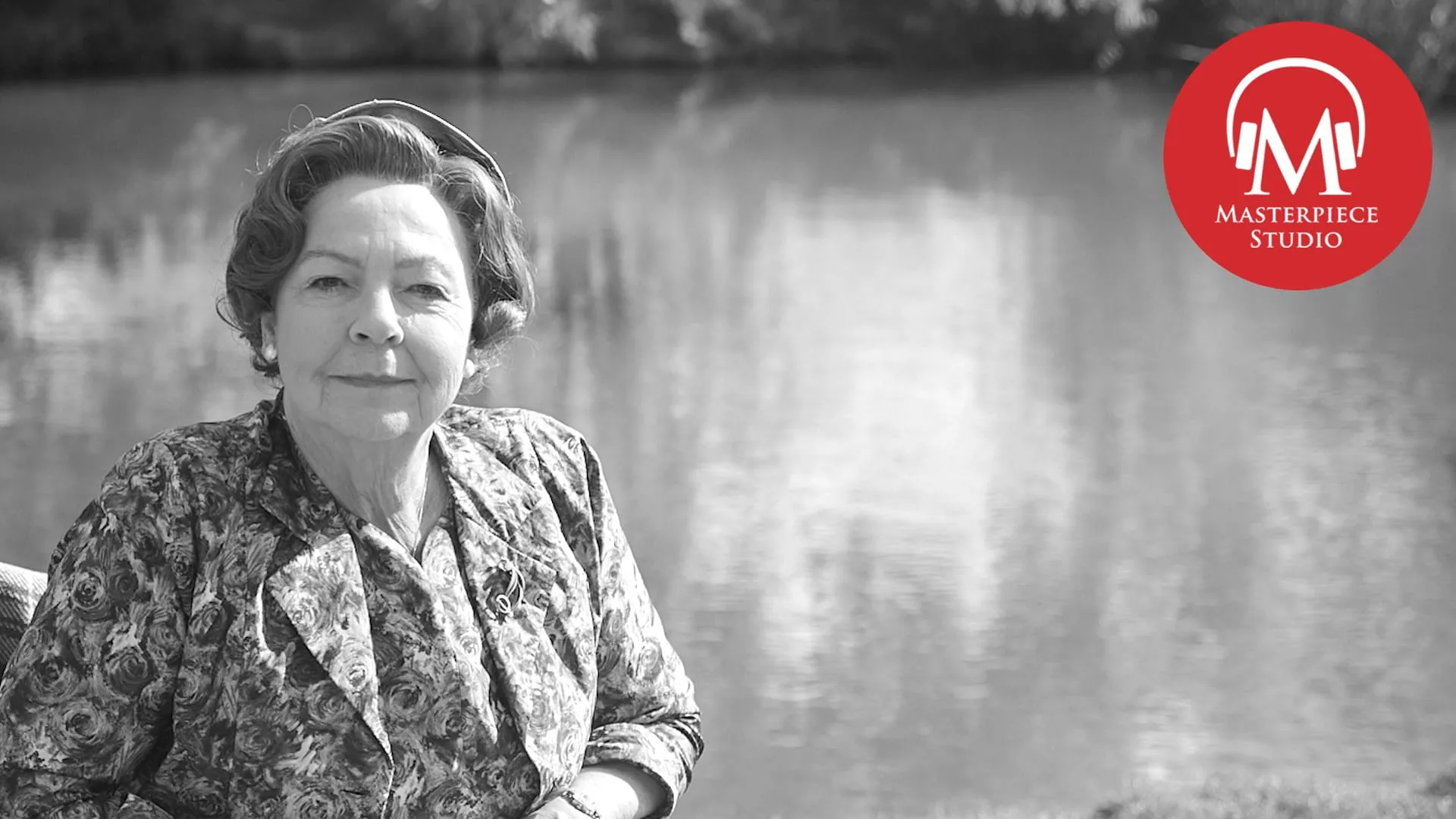
Tessa Peake-Jones, Grantchester, Season 11
Released July 5, 2026 29:52
WARNING: This episode contains spoilers for Episode Four of Grantchester Season 11.
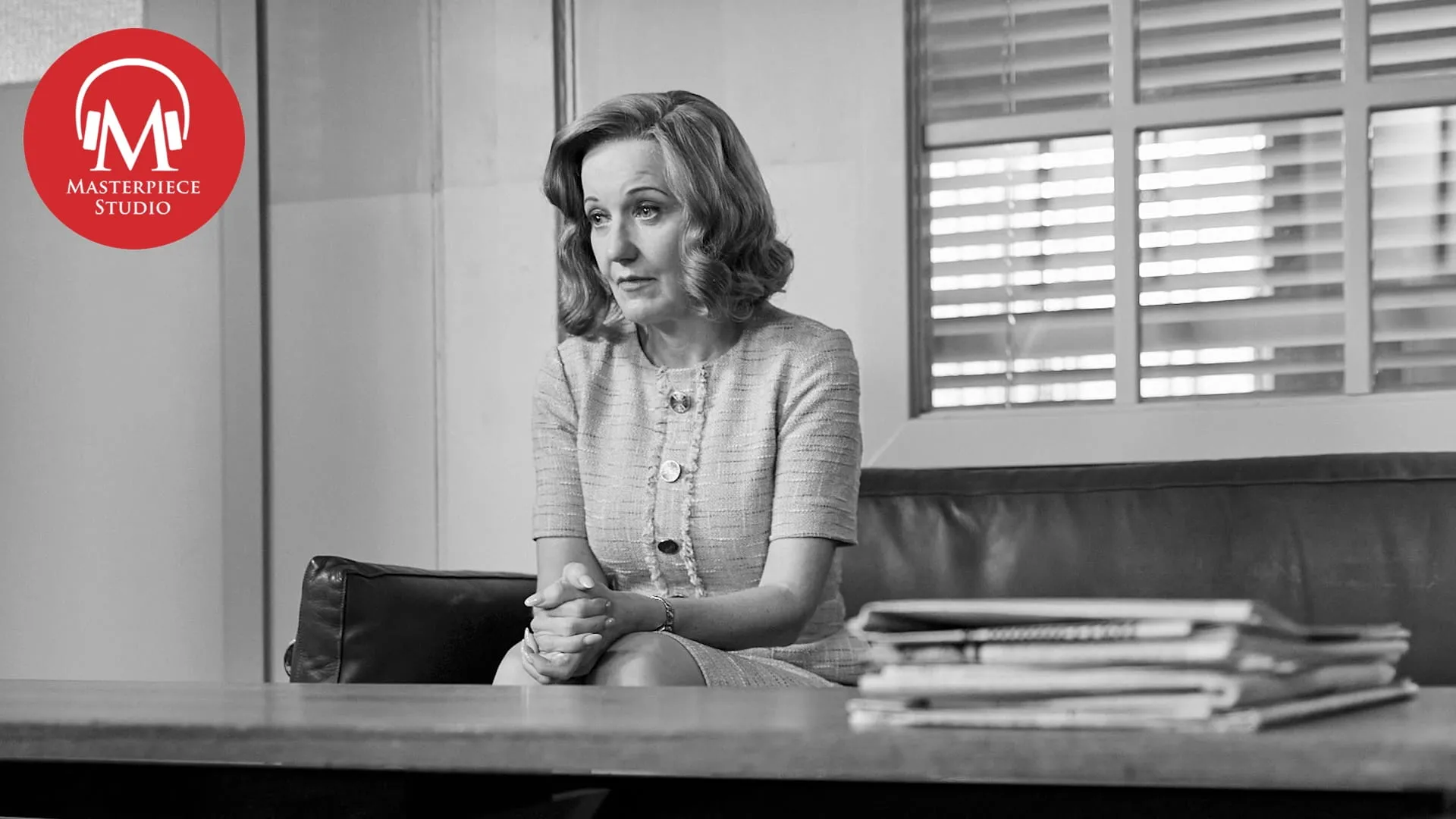
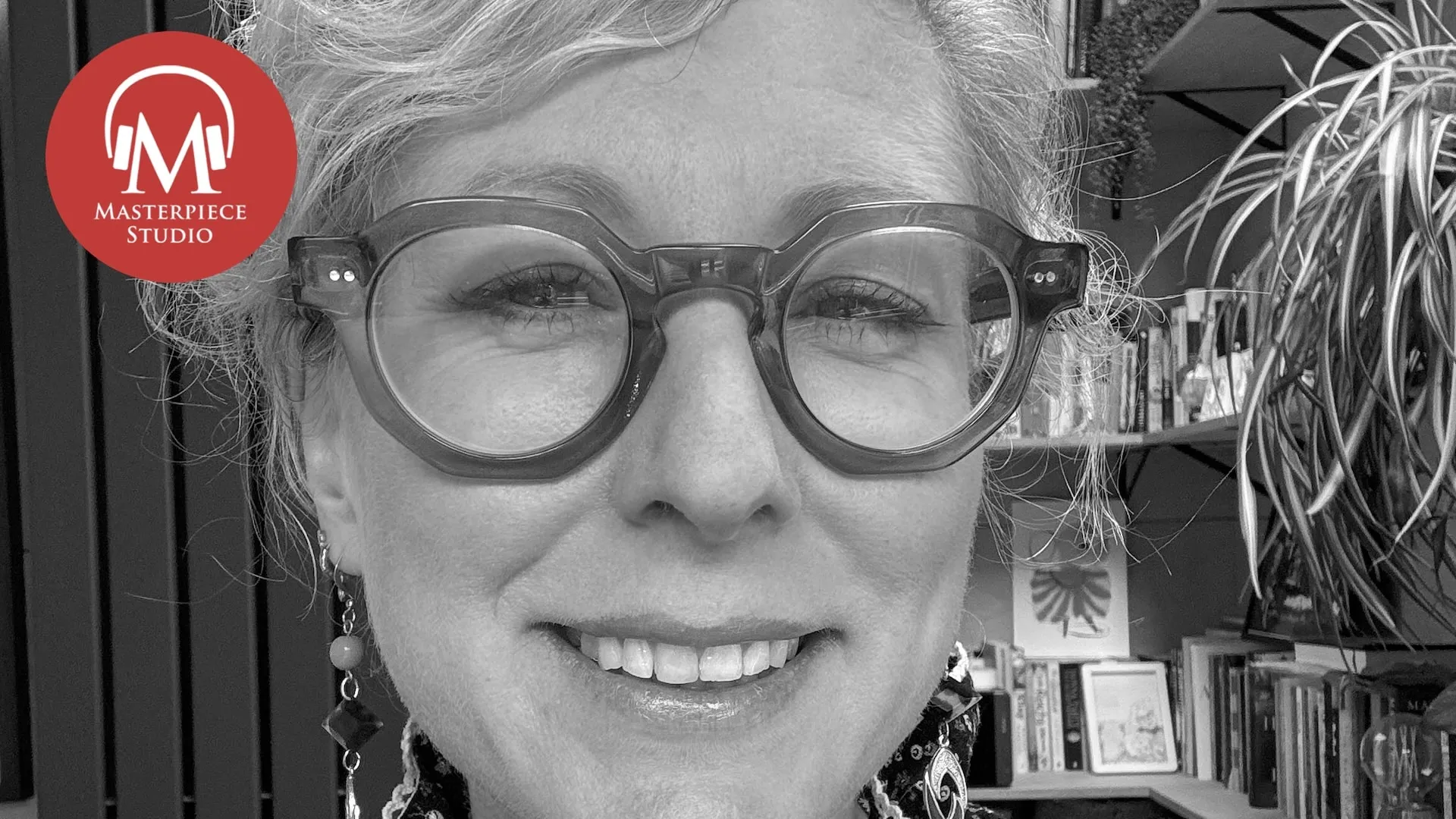
In real life, actor Tessa Peake-Jones couldn’t be further from the dour and opinionated vicarage housekeeper Sylvia Chapman. Tessa is jolly, gentle, and loves to smile—but these differences are exactly why playing Mrs. C is such a joy for her. In this conversation, we talk with Tessa about the early days of Grantchester, what drives Mrs. C, and how her character has opened up through experience over the past 11 seasons.
This script has been lightly edited for clarity.
Jace Lacob: I’m Jace Lacob and you’re listening to MASTERPIECE Studio.
One always knows where they stand with vicarage housekeeper, Sylvia Chapman. She never conceals her true feelings, as her heart has made a permanent residence on her sleeve. But make no mistake, Mrs. C loves her found family and will do just about anything for them. When Alphy’s birth mother Mira comes to the vicarage for a Sunday meal, Mrs. C does her best to engage Mira in light conversation without realizing Alphy and Mira’s past is anything but light.
CLIP
Sylvia: What about his father, what did he do?
Alphy: Mrs. C!
Mira: Sorry, do you mind? I…
Alphy: No, no of course not.
Mira: Excuse me. I just need some air.
Sylvia: I didn’t mean to pry.
But prying is what Mrs. C does best. When a string of petty crimes catches her attention, she can’t help but investigate.
CLIP
Sylvia: A crime wave is sweeping Grantchester.
Leonard: What is it? Barbarity? Bigamy?
Sylvia: Milk.
Leonard: Milk?
Sylvia: Three bottles, and a loaf of granary bread pinched right from the doorstep.
Leonard: This shall not stand, Mrs. C.
Beneath Mrs. C’s rough exterior and bluntness lies a big heart, a heart that wants the best for her little village, and of course, her vicars. As Alphy prepares to pay Mira a surprise visit, Mrs. C makes sure he knows what he’s getting into.
CLIP
Sylvia: She ran out on you. Again.
Alphy: The point is listen and not to shout, or judge.
Sylvia: Be careful. London is full of sinners and squalor.
Alphy: I grew up there. Romford is no more rife with crime than Grantchester.
Today, we’re joined by actor Tessa Peake-Jones to discuss the world according to Sylvia Chapman, and how hard it is to say goodbye to this pillar of Grantchester after over a decade.
Jace Lacob: And this week we are joined by Grantchester star, Tessa Peake-Jones. Welcome.
Tessa Peake-Jones: Thank you. Hello, how are you?
Jace Lacob: I'm good. How are you?
Tessa Peake-Jones: Yes, very, very good, thank you.
Jace Lacob: So, before we dive into Series 11, I want to take a look back at how all of this began. What do you remember of your audition process for Grantchester?
Tessa Peake-Jones: Well, do you know what, I didn't have an audition process, I'm very lucky and happy to say. I was offered the part. It was under very strange circumstances actually, because my mom was very, very ill, she was in a residential home, they'd told me that she probably had about 24 hours to live. She had dementia, she was in her 90s, it wasn't a great surprise. But at the time that happened, I remember I got home from visiting her, and my phone rang and it was my agent, and she said, "Oh, you sound you sound a bit low, are you okay?" And I said what was happening. And she said, "Well look, this isn't going to make up for that at all, but I just want you to know you've been offered a series, a drama series called Grantchester. It'll start in about a month's time." Which of course actually, as it turned out, mom did die the next day, and it was all worked out rather well actually, because I had time to sort of get my act together, get through the funeral, start thinking about the future.
I felt it was like my mom's parting gift to me. It felt like, in some weird way, she'd sort of engineered it so that I would be offered this job. It came completely out of the blue. And my agent said at the time, "We think it might only be one series, we're not sure. It's based on a book, and you'll be the housekeeper. It's about a vicar and a detective." And that's sort of all we knew. I think they did take out a three-year option, but I don't think any of us quite—they do that a lot, and you never quite believe it. So I didn't read the book because I feel once I'm offered a part, if it is based on a book, unless it's particularly famous like a Jane Austen, I quite like not to know what the book's about, and to just view the writing of the tele-series in its own right, as it were.
Jace Lacob: Given that, you're saying you thought this would possibly be one series, maybe an option for three. You are no stranger to long-running and beloved shows. But did you ever think that you might be sitting here more than a decade later still talking about Grantchester and Sylvia Chapman? Was there any inkling at the time that Grantchester would have the legs that it’s had?
Tessa Peake-Jones: No. I think even if I'd deep down hoped for that, which in our business, you learn very early from the minute you leave drama school that you can't really rely on anything in our job. So, you never assume it might. Even when you're doing theater, you don't think, "Oh, well this might go on for a year." You just never know. So, I suppose it's built into all of us to not hope that it might. But when we did our first day's filming, I remember Robson, we were in the garden at the vicarage, and I remember him saying, "It seems a really good show, this. Wouldn't it be amazing if this ran and ran, and that we were all old and gray and limping with walking sticks still doing it?"
And we all roared with laughter, little knowing that actually, it would go on. Certainly we're not perhaps with our walking sticks and zimmer frames and wheelchairs. But you know, here we are 11 years later. And I think he was jesting, but I don't think any of us quite thought it would go on that long. I felt while we did the first series that it had something about it. So, I felt it possibly would do maybe the three years that they'd optioned. But I think now looking back, it's extraordinary the way the writers and the producers have taken this series in ways that I don't think any of us thought our characters would go on, which has been great. It's been very exciting.
Jace Lacob: You have said in the past that Sylvia rarely ever smiles on Grantchester, which is the opposite of you in real life, and that over the years you began to count her smiles per series, which has definitely increased as time has gone on. What did you initially make of the dour and devout vicarage housekeeper when you first started playing her in Series One?
Tessa Peake-Jones: Well, I loved her. And I loved her because she puts her foot— used to, well still probably does, but then she really put her foot in it a lot. She was so opinionated, and so narrow-minded, and so grumpy. She would not budge an inch if she felt she was right. And I loved that because I'd never played that character before. As I say, I'm normally the smiley sort of jolly, gentle one. So to be given that opportunity, and of course that some of it was comedic, but it also always had strands of this woman being quite lonely, never knowing where the first husband had gone, he disappeared in the war, never come back. So, there was a strain of loneliness that I felt was probably informing why she was the way she was, and why she was very stiff and had clung to religion as a form of defense, in a way.
So, it was joyful. And I think they explored from quite early on actually, the deep-down maternal, unfulfilled feelings that she had through the various vicars that entered her life and, of course, through Leonard. And I think that was something that originally, I think it was there, but it was delved into much more over the future series, I think.
Jace Lacob: It's funny you mention that. One of the scenes that I think back on most fondly is the moment in Series Seven where Sylvia lets the doctor believe that Leonard is her son, and neither Sylvia nor Leonard correct him. And I think that the evolution of that relationship between Sylvia and Leonard as they become this surrogate mother-son pair is such a beautiful part of this show. How would you describe those characters' rapport?
Tessa Peake-Jones: Yeah, I agree with you entirely. I think that again is something that the writers delved into more and more each series. They watched, I think, the way Leonard and Mrs. Maguire early on, then Chapman, was and the way Al and I, Al Weaver and I, worked together, which is a very easy, lighthearted and yet serious when we have to be, relationship as actors. So, I think they tapped into that.
And I love the fact that he didn't seem to have family, Leonard. And Mrs. Maguire/Chapman, I think, would love to have had children, but it didn't go that way. Her husband disappeared. It was too late by the second marriage to Jack. So, there was that part of her that had never really been explored, and suddenly here was a vulnerable young man. But what was lovely was the journey from her first rather judgmental feelings about him in Series One and her certainly, can we say, nearly homophobic views. The fact that that was then brought to the fore, and through her love of him and his education of her, she was able to alter those narrow-minded views and actually to open up. And I again, I think when you see a character change for the better because of experiences that she doesn't know about before, it's A, it's fascinating to play, and B, it's very rewarding, I think, to watch.
Jace Lacob: It is. I think, too, the fact that those two characters in particular are linked in a way by this shared isolation and sense of loneliness, this lack of family and connection. And I love the fact that they do find each other. And then Sylvia finds Jack, which is a further transformative relationship for her. And she goes from this very stern housekeeper to ultimately a fashion entrepreneur. But she lets people in, she lets her armor down. How do you feel meeting and falling in love with Jack opened Sylvia up to possibilities in life?
Tessa Peake-Jones: Yes, I absolutely agree with you. I think that's exactly what happened. I think she was on a trajectory at the beginning of perhaps the first two series, maybe three, of loneliness, even though she had the church, she had her vicar to clock around, she had the relationship with Leonard developing. But I think there was, of course, a lot missing. And once the Ronnie Maguire storyline had resolved itself for her, it allowed her to be freer. And I think, yes, I think Jack Chapman is so incredibly understanding and patient, and sees the good in her even when other people don't. I think that did allow her to have a confidence and also a standing in life.
I think you get the feeling, she's been quite poor, and that part of the reason she'd been the housekeeper is she needed to earn money. And suddenly, Jack Chapman has that and offers her—she can buy a new dress if she wants. She's not the sort of extravagant person that would do that, but that is there if she wanted it. And I think his gentleness opens up another side of her. She tends to be opened up by other people's experiences having an impact on her. And that's that's always very interesting as a character, and it's also very interesting as an actress to play.
Jace Lacob: You and Nick Brimble have a softness with each other that is so beautiful to see on screen. What has it been like having Nick as a scene partner?
Tessa Peake-Jones: He's been joyful. He's been joyful. I'm called the second wife, and I often message his first wife in real life. And we have chats and she'll say, "Hello, it's first wife here." And I say, "Oh, hello. Second wife here." I mean, everybody on that show has been a joy to work with, and Nick and I have a very easy relationship. He's a joy to work with, he's intelligent, he knows his stuff, he's been doing it for so long, he's so experienced as a film actor. It's been lovely. And I think they've written more and more for us as they've seen our relationship develop, which has been lovely.
Jace Lacob: In Series 11, Leonard remarks to Sylvia that he is lacking purpose in life.
CLIP
Leonard: I miss this. Being here.
Mrs. C: You’re here all the time.
Leonard: Not like when I was a curate. Do you ever feel lacking in purpose?
Mrs. C: I’m a woman. All we have is purpose whether we like it or not.
Jace Lacob: What does work mean to Mrs. C, and what purpose does she derive from work?
Tessa Peake-Jones: I think actually early on when she needed money, work was both practical, but I think she also needed a sense of being useful to people. And she had the church as her faith, but I think the fact that she could organize things, become the center of things in the vicarage under the guise of work, meant that she was in very close communication with the vicar, with the things that went on at church, and the curate, in this case Leonard. So, I think it meant quite a lot to her, more than just the earning of the money.
But I think as the series develops, and particularly when she gets together with Cathy and they start their dress business, I think it becomes a choice. Because actually, as they say to her many times when she's still insisting on doing the housekeeping, "You don't need to. You are now married to Jack Chapman. You don't need to work." But she still does it because she wants that sense of a purpose of a fulfillment. And I think Cathy, again, has an impact on her and teaches her that there's more to life than just being a wife or being practical and adding up your money each week to make sure your budget's right. It can be about artistry, about looking at materials, about fabrics, about fashion, about younger people. And she opens that world up to Sylvia, and I think work then takes on an even greater significance to Sylvia, in a way she probably never thought would happen, actually.
MIDROLL
Jace Lacob: And we’re back with actor Tessa Peake-Jones. Mrs. C, like Geordie, has been in the unique position of forging a slightly different bond with each of the successive vicars. Looking back, how would you describe the way that she connects with Sidney, Will, and Alphy?
Tessa Peake-Jones: Well, the lovely thing is, it's been different in every case, which again, I put down mainly to Daisy Coulam and to the other writers. So, I think the relationship with Sidney was very much, this young man needs to be kept an eye on. He liked jazz, he liked whiskey. And in those days, Mrs. Chapman was even stricter about that stuff, and I think just thought he's got to be reined in. But of course by the end, became so attached, he was yet another son to her. And I think she was very upset when he left.
But I think when Tom Brittney, Will, came into it, he was slightly more on top of things. He introduced her to a new world of modernization, which again for her was something, well, I think in the old days she'd have said this was the enemy of the people. He introduced her to television, he introduced her to a coffee making machine. I mean, these things were unheard of for her in the '50s. So, I think he had a modernism about him that opened up. And also she, again, took him on as a son. She felt, I think, that he needed a wife and children. He needed grounding.
And then of course, the wonderful Rishi coming in playing Alphy, completely different yet again, opens up for her through lack of knowledge, I would say, and ignorance, not racism, but she wasn't understanding of a world that that Alphy brings with him, because she she was unaware of it, she'd never known it. And what could have become judgmental through the delightful Alphy, opens her up. Again, her mind is opened, and she realizes he's a very good vicar. I think again she adopts him as a son, she wants him to find somebody that he can be happy with. That's always quite important to her, that the vicars aren't lonely. And I think eventually that's why she actually gives into her beliefs about Leonard, because she sees that he will not be lonely if he's with Daniel. And although that goes against perhaps her beliefs early on, I think she realizes that the comfort of a fellow partner is more important than living a life alone.
Jace Lacob: She has softened over time, our Mrs. C. I think her cancer scare, her marriage to Jack. But she's still Sylvia, she cares, and she'll show you that she cares by not taking no for an answer. Do you think Mrs. C, if she were forced to choose, has a favorite from among those three vicars?
Tessa Peake-Jones: No, and you're not going to get me to say so! No as Mrs. C, and no as Tessa! No, I loved them all. I was so amazed because we knew after James, bless him, chose to leave at the end of Series Three, beginning of Four, we did think, well, these are shoes that are quite difficult to step into, another vicar. And we hoped it would work, but none of us were sure. And of course, Tom came in and completely took it in a different direction and did fill those shoes. And then when Tom left however many years later, many series later, we all thought, "Oh, but who will now? Another vicar." And then in came the wonderful Rishi Nair. So, it is quite extraordinary, isn't it, that if you get the right actor in each time, because the rest of it, the foundations of the series are so strong, it will take and adapt like us as characters do, it will take a newcomer coming in who, before long, becomes part of the furniture, just like the one before. It's amazing, really.
Jace Lacob: In Series 11, Mrs. C and Alphy's birth mother, Mira, get off to a rocky start with Sylvia peppering her with questions about where she's been or reacting to her vegetarianism. And it's awkward, it's even a bit painful, even if Sylvia means well. What does she think of Mira, and how concerned is she for Alphy's well-being at the start of Series 11?
Tessa Peake-Jones: I think although it comes over that she's quite tough with her, I think actually it only comes from a place of protection of him. She has a feeling from the word go that something's not quite right. And I think her defense of him and her worry that he will be hurt, overrules even, in her case, her politeness sometimes, with Mira. And of course, we're going to see, but perhaps Sylvia is right. I think she's wary. But I don't think it's out of a jealousy. I think it is that she's deeply concerned that he might get hurt, and she really doesn't want to see that.
Jace Lacob: By Episode Two, she is gently trying to get Alphy to adjust his expectations about this relationship with Mira, and she tells him about Ronnie.
CLIP
Mrs. C: My first husband, Ronnie, disappeared during the War. For ten years, I thought he was dead. And then, out of the blue, he came back.
Alphy: What happened?
Mrs. C: I hoped for the best and got the worst. I’ve come to think it’s better to do the opposite of that.
Jace Lacob: What did you make of that exchange about hoping for the best and getting the worst, and instead hoping for the worst and getting the best? What does that mean for Sylvia?
Tessa Peake-Jones: Well, I think for Mrs. C, that's quite astute, actually, isn't it? And I think it is founded on the heartbreak she went through with Ronnie, finding out that he'd lived this bigamous life and had another wife and children, all the things she'd hoped to have. So, I think it's perhaps a bit strong, but again it's her way of saying, isn't it better to be forewarned and forearmed than to go into something very open and then get hurt?
Those words aren't that silly really, are they? The advice she gives him about perhaps, not necessarily the worst, but I think she's trying to say don't just fall for this, wait and see, work out how it is, just be forearmed. And I think it comes, again, just from a place of care of him as the maternal side that she's probably not even weighing up compared to Mira. But subconsciously probably she feels that that maternal side is something she has earned with him over the years of knowing him, and this Mira has not.
Jace Lacob: My favorite line in Episode Three is courtesy of Mrs. C.
CLIP
Sylvia: A crime wave is sweeping Grantchester.
Leonard: What is it? Barbarity? Bigamy?
Sylvia: Milk.
Leonard: Milk?
Sylvia: Three bottles, and a loaf of granary bread pinched right from the doorstep.
Leonard: This shall not stand, Mrs. C.
Jace Lacob: And she and Leonard begin to plan a sting operation to catch the thief red-handed. How much do you enjoy the interplay between comedy and emotion in Grantchester?
Tessa Peake-Jones: I just love it. It's every actor's dream. I've done my fair share of comedy programs in the past, and that is lovely, but you only get that one layer, and it's great, and to hear the laugh is wonderful. But actually, to be given a choice where you can play the comedy sometimes, but also within a flip of a coin, you can be sad or or upset or something, angry. To turn that quickly from one to the other, it's a joy. It's a dream for an actor, that. And I think Grantchester actually, again, all praise to the writers, I think they do it very, very well for all the characters.
Jace Lacob: It's revealed that the thief is local village boy, Raymond, whom Sylvia and Leonard catch in the act of stealing some rather crumbly biscuits. Sylvia says indignantly to that, "They were meant to be crumbly” of course. And Raymond kicks Leonard and runs off, and it's then that they discover Raymond's father, Marcus, is ill. Does this change Mrs. C's perspective on the boy at all?
Tessa Peake-Jones: Yes, I think it does. But I think more importantly, she sees what it does for Leonard. And Mrs. C is somebody who views life through the people she's close to, and she's very protective of that, rather than of herself. And I think, as will be revealed in the future of this series, the discovery of Raymond and his father is going to have a very, very large impact on Leonard. And she, again like Alphy, is part understanding but part concerned that Leonard will get hurt.
Jace Lacob: On that note, she can see that Leonard is struggling, but she can't quite articulate why. He's helping people get a second chance in life through his work, even if that work isn't in the church. "You have worth, Leonard." She says, "Silly boy." Does she see what Leonard is missing in his life, or that he might be the one needing a second chance?
Tessa Peake-Jones: It's interesting, because we don't touch on this in the series, a scene between Leonard and Mrs. C, but I think what she notices in him is how much impact it's had that he had to give up being a curate and give up the church. And for all that it took him in a different direction and he's discovered things about himself and helping the community, all things she would approve of, I think because of her faith, and because of how much she knew his faith meant to him, I think she is conscious of something lacking in him, which is connected with God, and with his now inability to put that into practice by the job he loved before.
Jace Lacob: She sends Alphy on his way to Romford to see Mira, saying, "London's full of sinners and squalor," but they learn his tires have been slashed, which Sylvia bemoans as the village, "falling into wrack and ruin." Geordie admits maybe he shouldn't have found Mira after all. Mrs. C says, "Alphy deserved to know her." Does she see trouble ahead?
Tessa Peake-Jones: I think she does see trouble ahead, but I think she has, as we talked about a little earlier actually, she has confliction about this, because I think she is worried for Alphy and for what might happen discovering his birth mother. But at the same time, I think she does feel, having watched him and spoken to him, that he has a right to know and to know a little more of his story. And the only person that can fill him in on that is Mira. I think there's trepidation there, but I think she feels she hopes he will be strong enough to cope with it.
Jace Lacob: At the same time, CeCe's is having some teething problems. Cathy might have an eye for fashion, but she is most definitely not an accountant. The power gets switched off, there are squabbles. And then this woman-run business gets a male employee, Mr. Switch, their new accountant who is handpicked by Geordie. What does Sylvia make of Switch?
Tessa Peake-Jones: Well, for all dear Sylvia has many faults, one thing she does have is a sense of instinct about people. She has it with Mira, she's had it in the past with other vicars actually. There was the vicar that came in, Reverend David, was it?
Jace Lacob: Yes.
Tessa Peake-Jones: Who she didn't like. She felt there was something difficult about him. And I think she picks up from this man, for no reason, he's charm itself, but there's something that she picks up that's not sitting right, and she doesn't know what it is. So, she is slightly reserved with him. And I think it's interpreted that it's because he's been brought in without consulting her. I don't think it is that. I think she senses something in this man's personality. She can't put her finger on it, but she feels something isn't quite right.
Jace Lacob: She is very intuitive, I will say, Mrs. C.
Tessa Peake-Jones: She really is, yeah.
Jace Lacob: And maybe that's because of her experiences with Ronnie, that he pulled the wool over her eyes. But she is very quick to read people and to intuit people's emotions, people's desires. I think it's a very unique quality and very unexpected for this character. What do you make of her intuition?
Tessa Peake-Jones: I think that's absolutely right. I think it's something that is quite surprising in the person that you see in Series One who is judgmental and rather opinionated and quite grumpy, you wouldn't think, but she's had it all along. She's had it through various stages of each series. She does have a sort of instinct about things, and she can't put her finger usually on why, or what she's feeling. She just has these intuitions about people. And it is surprising, but that's the joy about playing characters because when they surprise you, that's part of the fun, but it's also very, very lovely as an actor to play around with that, because it means it's unexpected.
Jace Lacob: Looking ahead, what can you tease about what lies ahead for Sylvia Chapman in the rest of Series 11?
Tessa Peake-Jones: Well, things are going to happen at the dress shop, which are going to surprise everybody. So yeah, that's going to be intriguing, I think, to see that. She and Cathy are going to have a few rows along the way, some of them justified, some of them because of Sylvia's instincts, some of them not justified. And I think she is watching very carefully to the development of the Alphy and his birth mother Mira's storyline. I'm sure it's not spoiling anything to say that by the end of this series, things become incredibly dramatic, and things hang in a balance, shall we say?
Jace Lacob: Tessa Peake-Jones Peake-Jones, thank you so very much.
Tessa Peake-Jones: It's a pleasure.
Next time, a dead man found next to a pond leads Larry, Geordie, and Alphy to Bishop Aubrey Gray’s estate, where he’s holding a retreat for the local vicars.
CLIP
Larry: I’ve never seen so many.
Geordie: Not all in one place.
Alphy: Well, it looks like the Bishop’s invited everyone.
Geordie: Except you, Alphy.
Join us next week as we talk with actor Bradley Hall about how his character, Larry Peters, takes on more responsibilities at work and at home.
Grantchester Podcasts
10 More Podcasts




MASTERPIECE Newsletter
Sign up to get the latest news on your favorite dramas and mysteries, as well as exclusive content, video, sweepstakes and more.