The views and opinions expressed in this article are those of the writer.
The Godfather of Afrofuturism, Sun Ra was deeply committed to inspiring and sustaining the spiritual resilience of Black people through wonder and discombobulation.
He saw his music as a portal, with the hope of bringing communication from the ancestors through his sounds. As Sun Ra tells one of his young listeners in the 1974 film, “Space is the Place” (directed by John Coney), “I’m actually a presence sent to you by your ancestors.”
What is Afrofuturism?
Afrofuturism is a way to think about the future, while insisting on the presence of Black people in that future. This itself goes against the grain of the ways that past science fictional speculations about the future left out Black people and other people of color, replicating either the invisibility of Black people as citizens, instead using Black and other people of color as figures of exoticism and other forms of objectification. As Ytasha Womack L. writes,
“Whether through literature, visual arts, music, or grassroots organizing, Afrofuturists redefine culture and notions of blackness or today and the future. Both an artistic aesthetic and a framework for critical theory, Afrofuturism combines elements of science fiction, historical fiction, speculative fiction, fantasy, Afrocentricity, and magic realism with non-Western belies. In some cases, it’s a total re-envisioning of the past and speculation about the future life with cultural critiques.” (Womack, 9).
As Afrofuturism has grown in reach and influence, Afrofuturist thought has expanded to include metaphysics, ethics, digital hermeneutics and spirituality. While focusing on the future, Afrofuturism best embodies the West African notion of Sankofa, moving forward while also reaching to the past. This necessarily means thinking through histories of race and racism. Afrofuturism is a meditation on the spatial and temporal dislocation of the experiences of the African Diaspora, responding to the Trans-Atlantic Slave Trade, colonialism, and continuing anti-Blackness.
Afrofuturism also asks us to think about whose culture is remembered and archived, and uses speculation, and imagination in the face of Black cultural and historical negation, erasure and minimization. Bringing together old and new technologies, from computer sampling and vocoders to the drum, Afrocentric music sounds out the ways that Black creatives have survived and communicated with one another and the ancestors across the African Diaspora and across time. For example, in the film The Last Angel of History, John Akomfrah meditates on the drum as an Afrofuturistic technology, in its power to communicate across time, and across the African Diaspora.
Sun Ra: Remixing Myth and History
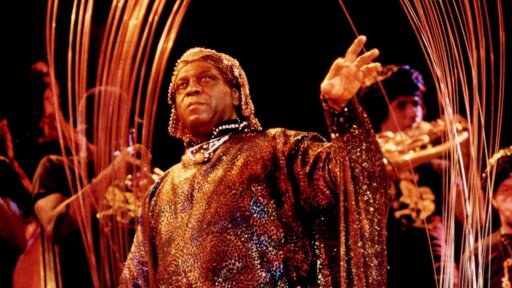
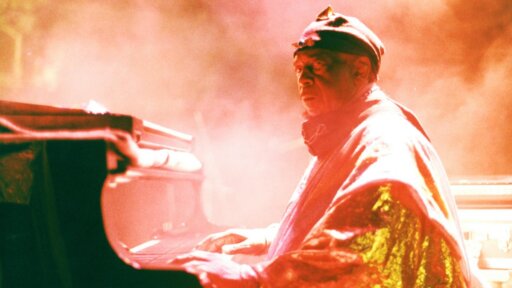
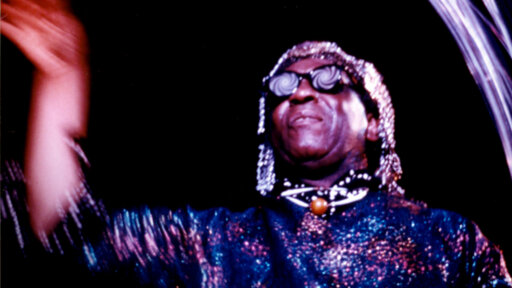
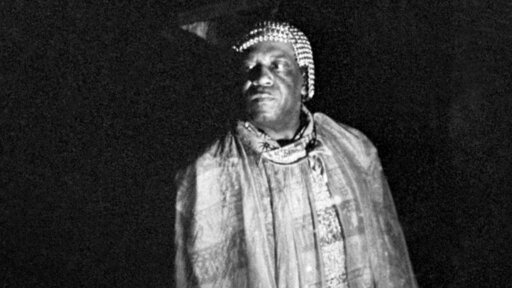
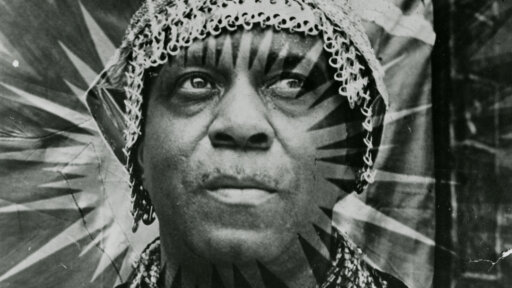
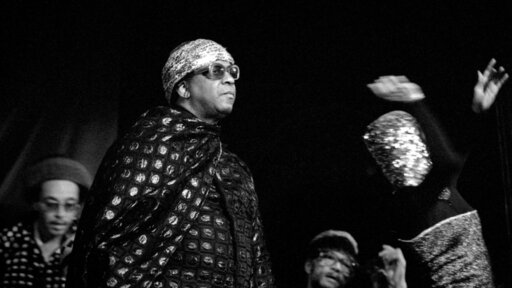
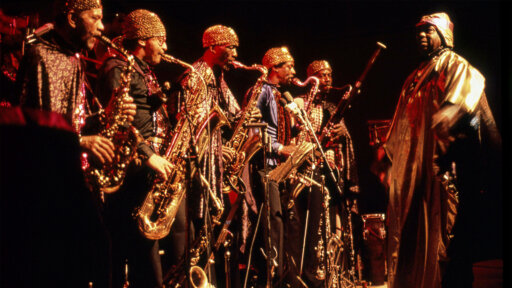
In Sun Ra’s physical presence on and off stage, we see a combination of old and new, earthly and cosmic: headpieces, necklaces, rings, and turbans that evoke ancient Egypt; glittery, body-skimming boubous and African walking sticks; hand-knit caps in psychedelic colors that might not have been out of place on the streets of Oakland or Chicago in the 1960’s and 1970’s. His goal sartorially, as well as sonically, was to create a space of fantasy and mythos that centered African and Black American culture and also re-imagined it.
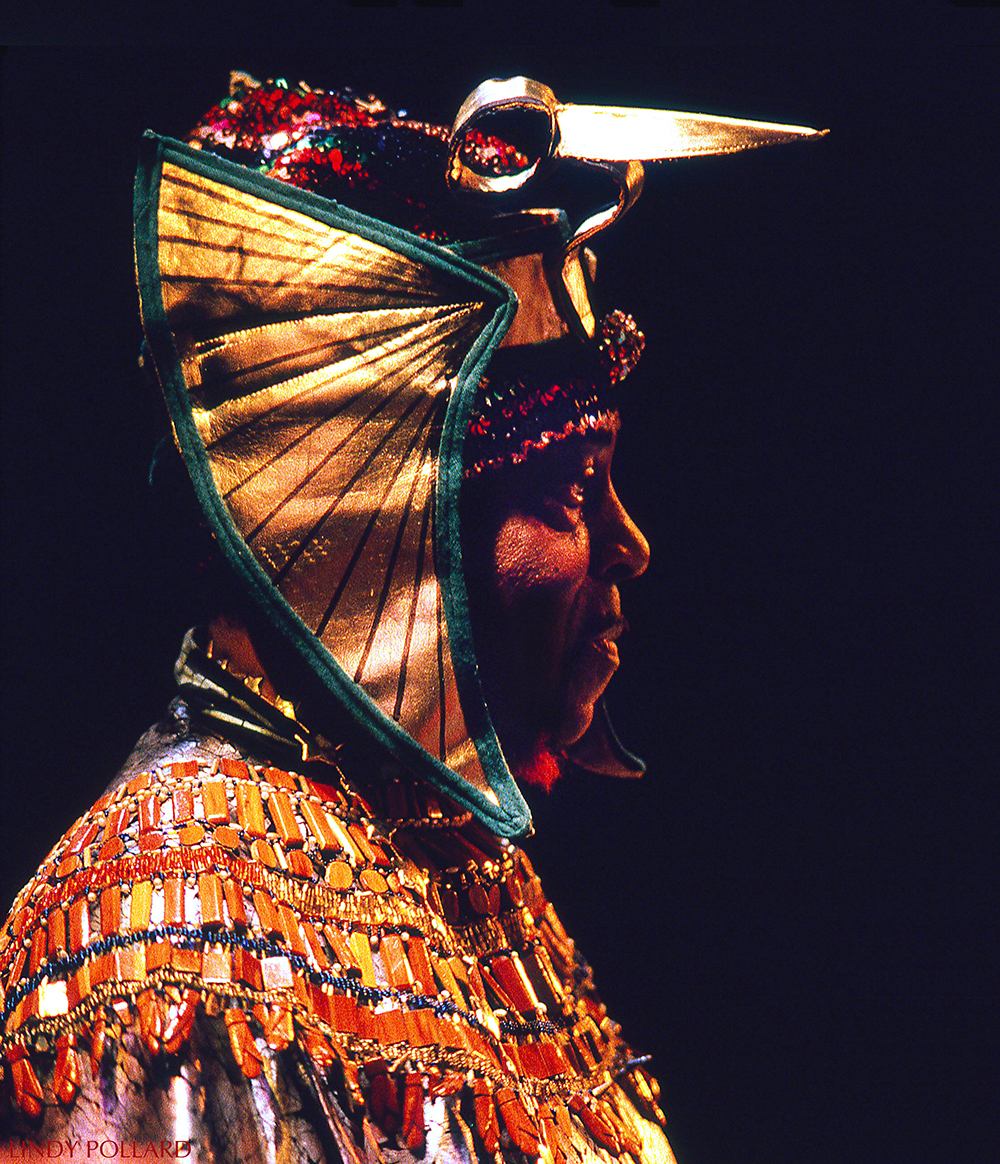
Photo courtesy of Lindy Pollard Photography.
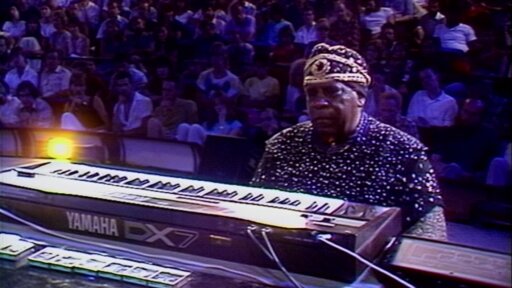
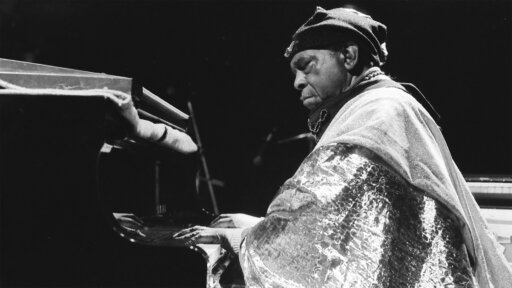
And you can hear that re-mixture in his music as well: his encyclopedic knowledge of jazz, from Armstrong and Fats Waller to Big Bands to Bebop. On the keyboards, he might move from the melodic, foot-tappingly syncopated rhythms of his idols Fletcher Henderson and Duke Ellington and then break into a “space chord”- the booming, sometimes discordant chords to shake his listeners out of an easy groove. Sun Ra led his Arkestra with the discipline and focus that would mean that they’d be practicing for hours, sometimes days without sleep, while also creating a household and community with his bandmates at once familial while subverting static gendered roles, both motherly and fatherly.
By historians’ accounts, Sun Ra was born Herman Poole Blount in Birmingham, Alabama on May 22, 1914. But by his own account, his origin story is more cosmic and mythical. As Burgin Mathews puts it,
Sun Ra was like his music, he explained: neither was born in the traditional sense. Instead, the man and the music just happened—combusted, appeared, landed or arrived—and their essence was eternal. ‘JUST SAY,’ he wrote, that “I ARRIVED ON THIS PLANET SOME OTHER WHEN AT SOME SEEMING POINT OF THEN ON POSSIBLY THE LEFT SIDE OF NOW. TRUE MUSIC IS NOT BORN… IT BE: IT IS OF COSMO-BEING GIFT-MAGNIFICENCE.’ In Sun Ra’s conception, the true musician, like any true music, existed beyond time.” (Mathews, 129).
Understanding Sun Ra’s impact means understanding him as the product of a particular time and place: Birmingham, Alabama’s Black music scene, and his own successful entry into the Big Band scene that prevailed there; his rejection by his family and community after being jailed for refusing to serve in WWII; his moves to Chicago and then New York City, that was a part of the Great Migration that included over six million Black southerners over between the late 19th and mid-twentieth century. But Sun Ra lived also guided by an expansive and extraordinary vision that followed his own logic, and his ethical and creative commitment to Black people. For Sun Ra, his music, drawing from the force of Universe and the electromagnetic pull of the planet and stars, had the power to liberate.
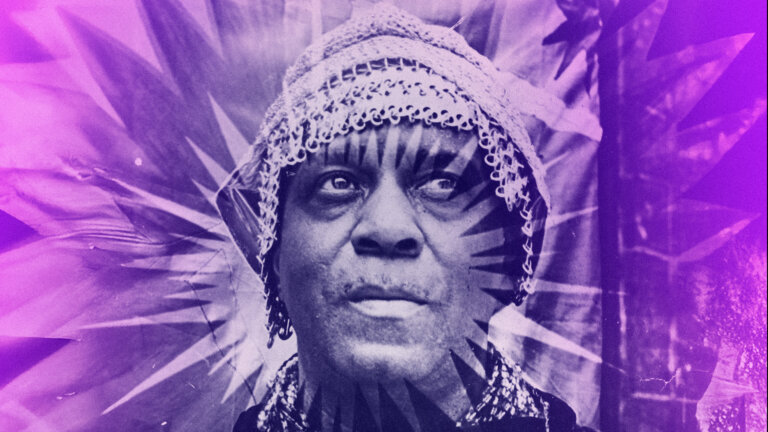
Artists that Sun Ra has influenced
From the otherworldly visions of Sun Ra have the sprung George Clinton and Parliament and Funkadelic’s Mothership and the groove to “dance our way out of our constrictions”; the sexy, space-funky gospel of Nona Hendrix and Labelle; D.J. Spooky’s hip hop and electronica experiments in rhythm and time; and the cosmic, genre-expansive sounds of Flying Lotus. You can hear the influence of Sun Ra in Janelle Monae’s Afrofuturistic concept albums Metropolis: The Chase Suite (2007), The ArchAndroid (2010), Electric Lady (2013) and Dirty Computer (2018). On these albums, Monae’s mythical personae, Cindi Mayweather, an Android from the future, is a means to explore Black humanity, creativity and erotic freedom. Moreover, like Sun Ra and his Arkestra, Monae has also created an artistic collaborative, The Wondaland Arts Society, a community of artists and chosen family that work, record and sometimes live together in her headquarters in Atlanta, GA.
In addition to the world of music, we can see the influence of Sun Ra’s Afrofuturism across the arts, from novelist Octavia Butler and the brood of Black speculative writers who came after her, to filmmaker Jordan Peele (whose “sunken place” in his 2017 film Get Out, could be the ultimate expression of cosmic dislocation). Visual artists Arthur Jaffa, Nick Cave and Wangechi Mutu, use Afrofuturistic imagery to explore the continued experience of social dislocation for Black people of the African Diaspora in the twenty-first century. Reaching beyond his time on Earth, Sun Ra continues to shape the ways that creative artists, activists and thinkers envision Black imaginative freedom.
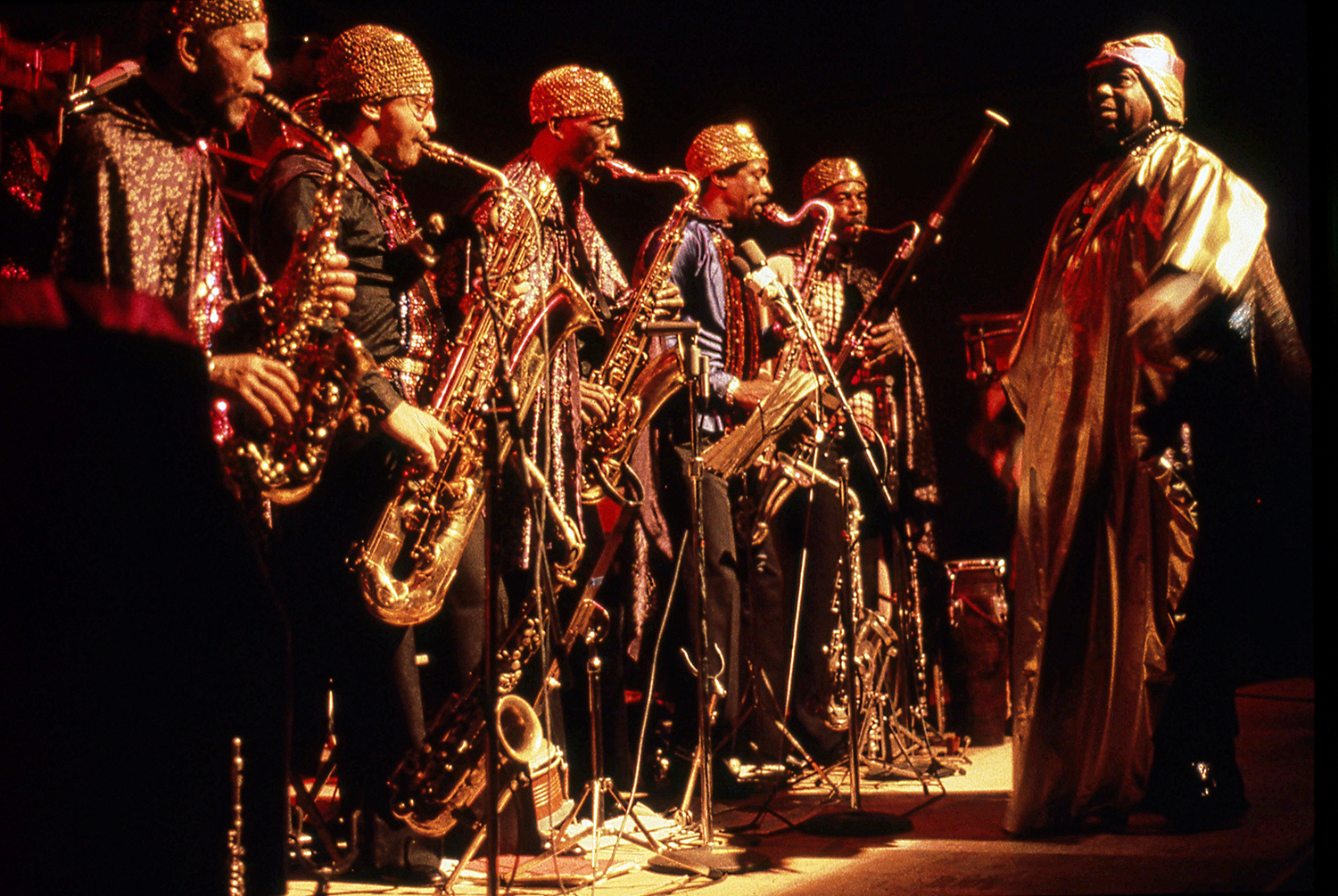
Photo courtesy of Lindy Pollard Photography.