
This piece comes to us from the Wildlife Conservation Society (WCS). To honor Asian American and Pacific Islander (AAPI) Heritage Month, WCS and Nature are sharing stories of nature and conservation.
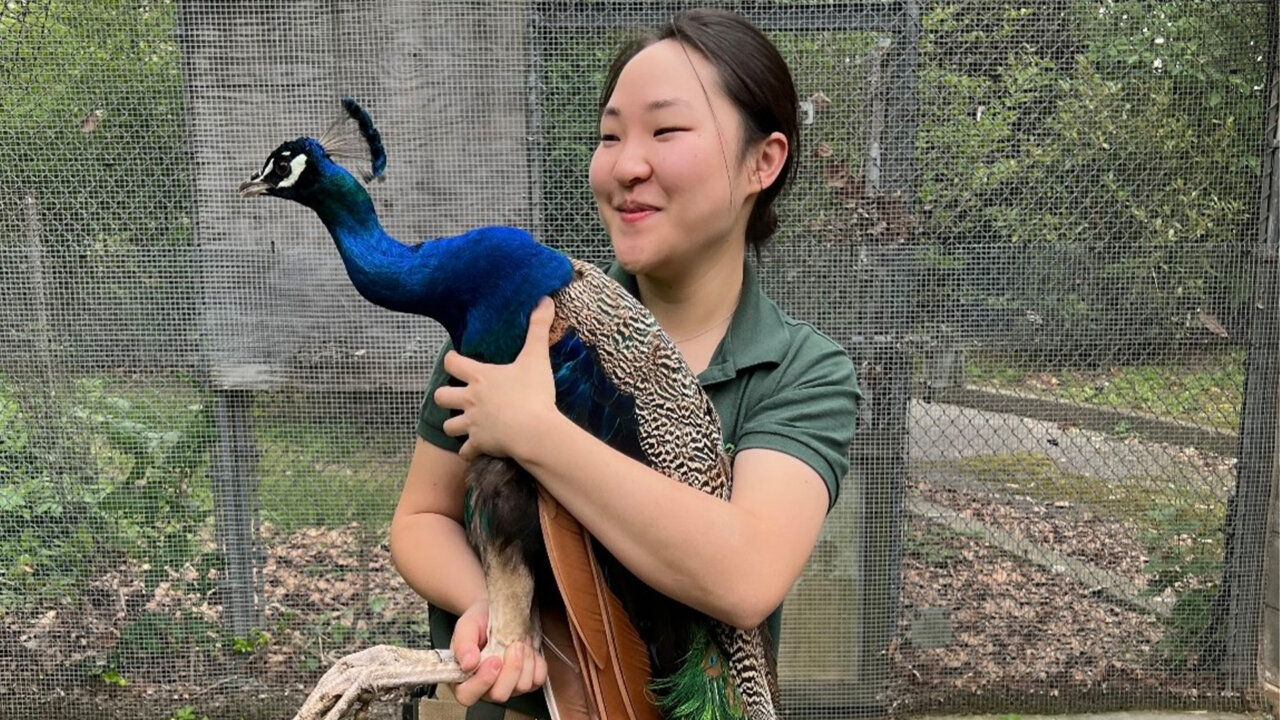
Carol holds a peacock at the Prospect Park Zoo for re-banding. Credit: ©️WCS
As a kid, I sought out any type of experience with an animal I could in the suburbs of Queens. Pets were out of the question because of my mother’s allergies to fur. Summers were spent biking around the neighborhood, searching for stray cats, raccoons, and opossums. Whenever I would find dead sparrows or squirrels, I’d bring them to my backyard to bury. Their lives and bodies felt too precious to leave out on the sidewalks.
My love for animals stemmed largely from my grandparents, despite a lack of pets of their own. Grandma was from a small fishing town in Korea known as “Muido,” and grandpa was Seoul born and raised. Back then, most people where they lived had dogs primarily for cattle rearing or protection, keeping them outdoors their whole lives.
Coming to a new country with zero understanding of the language obviously limited the things they could safely do besides stay at home. Watching nature documentaries became one of the things they did for fun once they immigrated to the United States. It also gave me a way to enjoy spending time with them since I did not speak Korean.
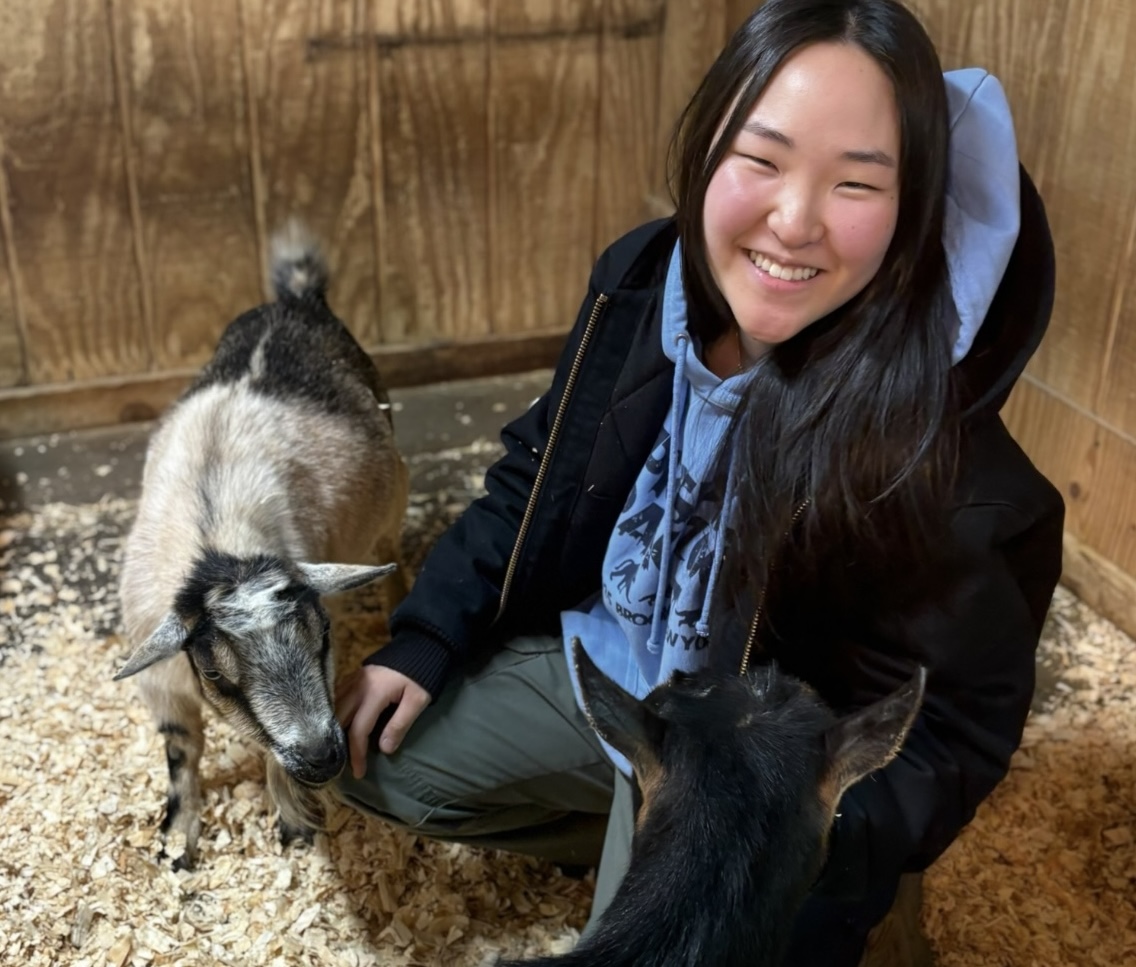
Carol sits with goats Josie (left) and Janie (right)—petting them and touching their hooves and legs to help them become better acclimated to interacting with keeper staff. Credit: ©️WCS
Despite David Attenborough’s smooth voice, his documentaries were watched in my household with the volume way down, so my grandparents didn’t have to try and understand the narration. This was my first memorable exposure to the animal world, its beauty and excitement encapsulated onto our bulky television.
In high school, my friends and I joined the Ranger Conservation Corps, and I found joy in working together as a team to do things like identify trees, plant saplings, and create compost with earthworms, newspapers, and food scraps. It cultivated a passion for appreciating our natural world and introduced us to things we could do in our own backyards. I still remember how cool the ranger instructors looked in their wide brimmed hats and khaki uniforms.
It was after college that was I was introduced to zookeeping through an animal associate internship at the Queens Zoo. I loved the proximity it gave me to some of the wildest animals I had ever seen up until then.
The moving of the gators from the winter housing to outdoor viewing area was exhilarating to watch. The amount of teamwork and coordination I saw from the Queens Zoo staff felt like watching a well-oiled machine. I remember wanting to one day be a part of a team like that. Getting to see the bison barrel through their indoor area to go out onto exhibit most mornings was also thrilling.
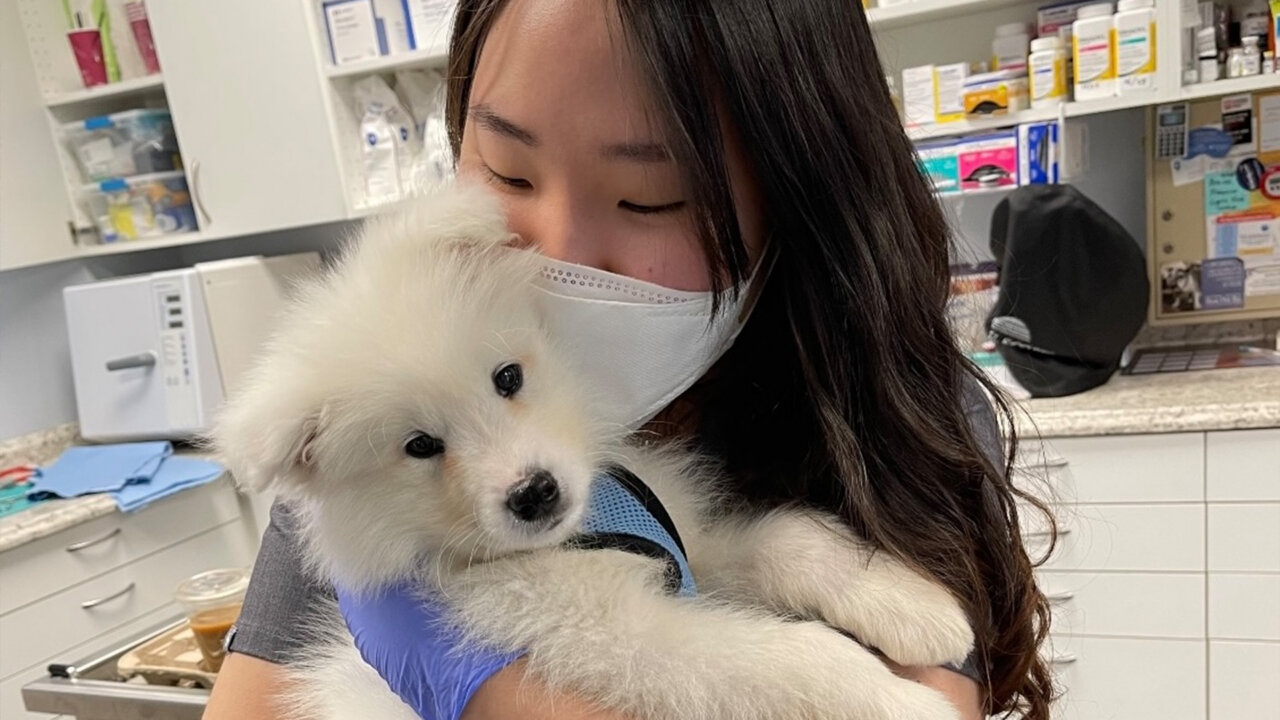
Carol grabs some post-vaccine quality time with her puppy, Joey, after one of his vet appointments. Photo courtesy Carol Yi.
Besides the excitement, I found out how much I enjoyed simple husbandry tasks, from making sure animal habitats are clean and well maintained to grooming goats with a brush to help them shed loose fur. Doing this all outdoors also was a huge plus, and I generally just loved the experience.
When the internship ended, I had to really hone a career that felt possible to me. Growing up in an Asian household, there was obviously pressure to find something viable and money-making. I found work as a vet assistant at a local private dog and cat practice to expose myself to veterinary medicine.
While I enjoyed meeting new owners and pets via the day-to-day tasks of my position, I didn’t feel that the work I was doing took advantage of my strengths. That came when I applied for an internship with the fish and invertebrates’ team at the New York Aquarium and found myself surrounded by a combination of fish I had never seen before in my life: jellyfish, coral, and their great pacific octopus.
The sensation of holding onto the octopus’s tentacles was something I will never forget. Getting to work with the team there and having exposure once again to all these wild animals reignited my desire to go into zookeeping. As soon as the opportunity presented itself, I was able to become a full-time zookeeper at the Prospect Park Zoo.
There, I have had the chance to work with a diverse collection of animals—from miniature zebus ( a species of cattle) to Hamadryas baboons. One of the most rewarding parts of my job is creating enrichment activities tailored to each animal’s natural behaviors. This could involve building feeders for the baboons and sea lions that require them to solve a puzzle, or collecting browse from the zoo garden for hoof stock.
Through these experiences, I have learned that every animal has its own personality and communicates in its own way. Understanding them requires empathy, patience, and observation—skills that I now carry into all of my relationships, both animal and human.