
This piece comes to us from WCS (Wildlife Conservation Society), where George Schaller worked for over 50 years.
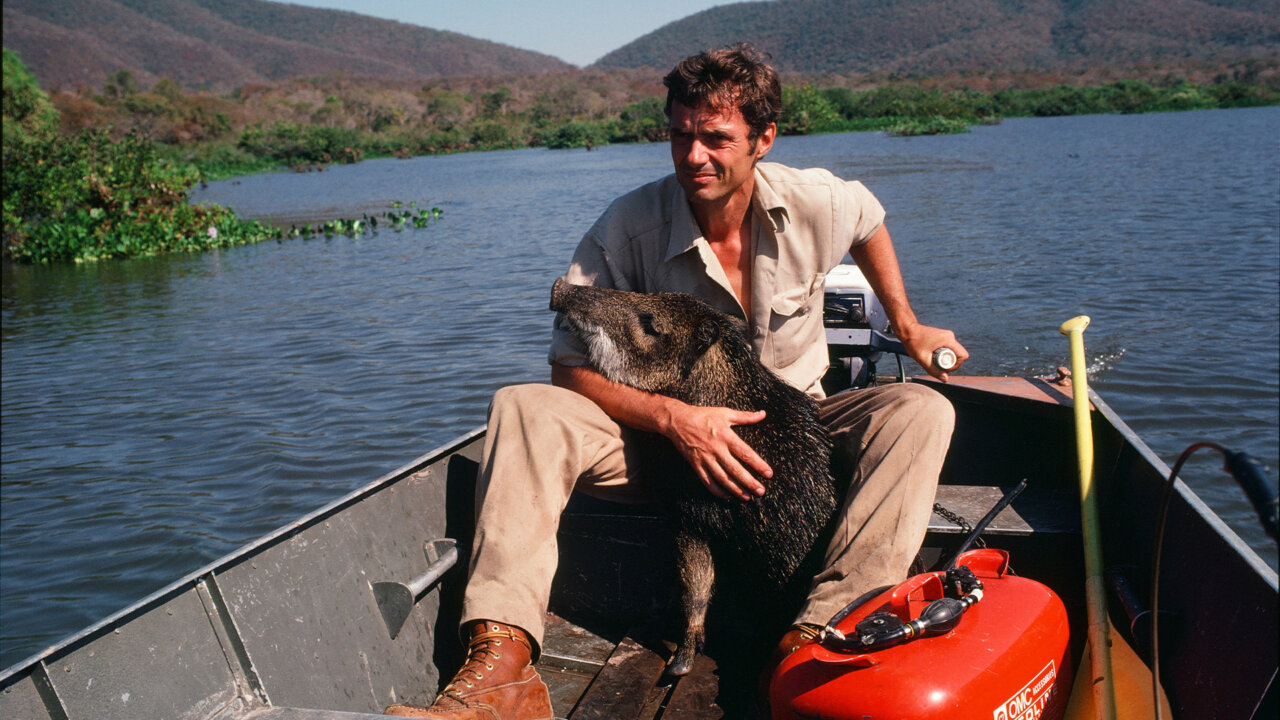
George Schaller guiding a boat with Fuxica, a rescued peccary, in Brazil’s Pantanal when he was studying jaguars. Courtesy of George B. Schaller Archive.
For centuries, the study of wildlife was largely focused on skins, skeletons, and specimens examined far from the places they once roamed. Even after Darwin showed what could be learned through patient observation in nature, most biologists remained tied to the lab and the museum.
Then, in the mid-20th century, a young scientist named George Schaller did something radical: he went into the wild and stayed— watching, listening, and learning from living animals on their own terms. From the Arctic to China’s bamboo forests, he has spent seventy years walking the planet’s remotest landscapes, immersing himself in the worlds of its most charismatic creatures to understand, as he put it at age 19 on first meeting a grizzly: When that bear is searching, what is he searching for?
Remarkably, Schaller answered that question for dozens of species on four continents. Still more remarkably, because he put his peerless skills as a field biologist in service of conservation, and inspired generations of scientists on four continents to do the same, nearly every one of the wild primates and bears and cats he attended to is now recovering — and show us the path to saving many more.
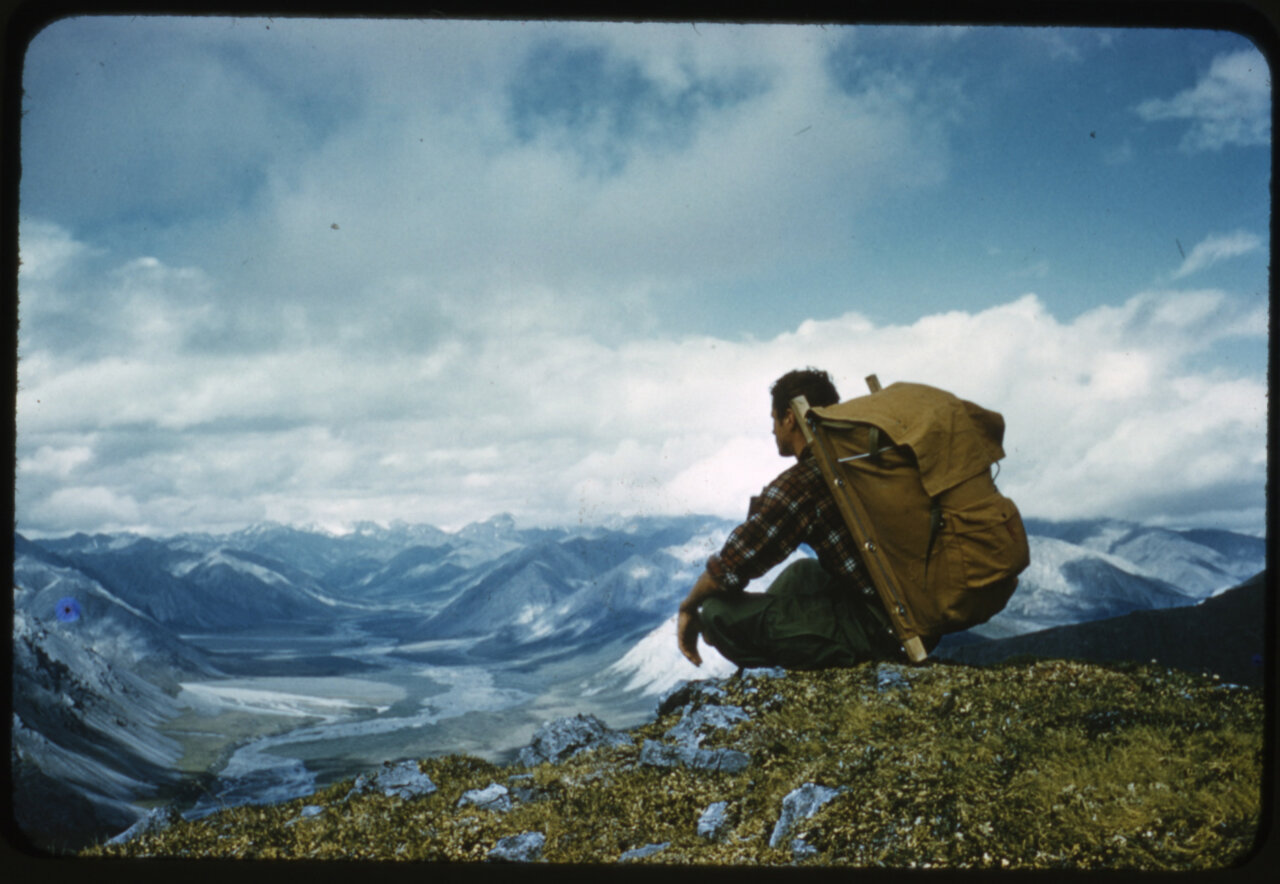
George Schaller at Katmai National Park and Preserve, Alaska. Courtesy George B. Schaller Archive.
Mountain Gorillas
Schaller was just a 26-year-old grad student when in 1959 he went to the then-Belgian Congo to live with the largest of all apes. Experts warned that he must bring an armed retinue, lest the monsters tear him limb from limb. Schaller ignored them, refusing even to carry a gun. Instead, for two years he sat quietly with the gorillas, endeavoring to see the world through their eyes.
The first to live in such intimate proximity, Schaller stirred hearts around the world with the window he opened into these beasts’ gentle and complex personalities—inspiring myriad followers, including Jane Goodall, whom Schaller mentored in her early months with her Gombe chimps.
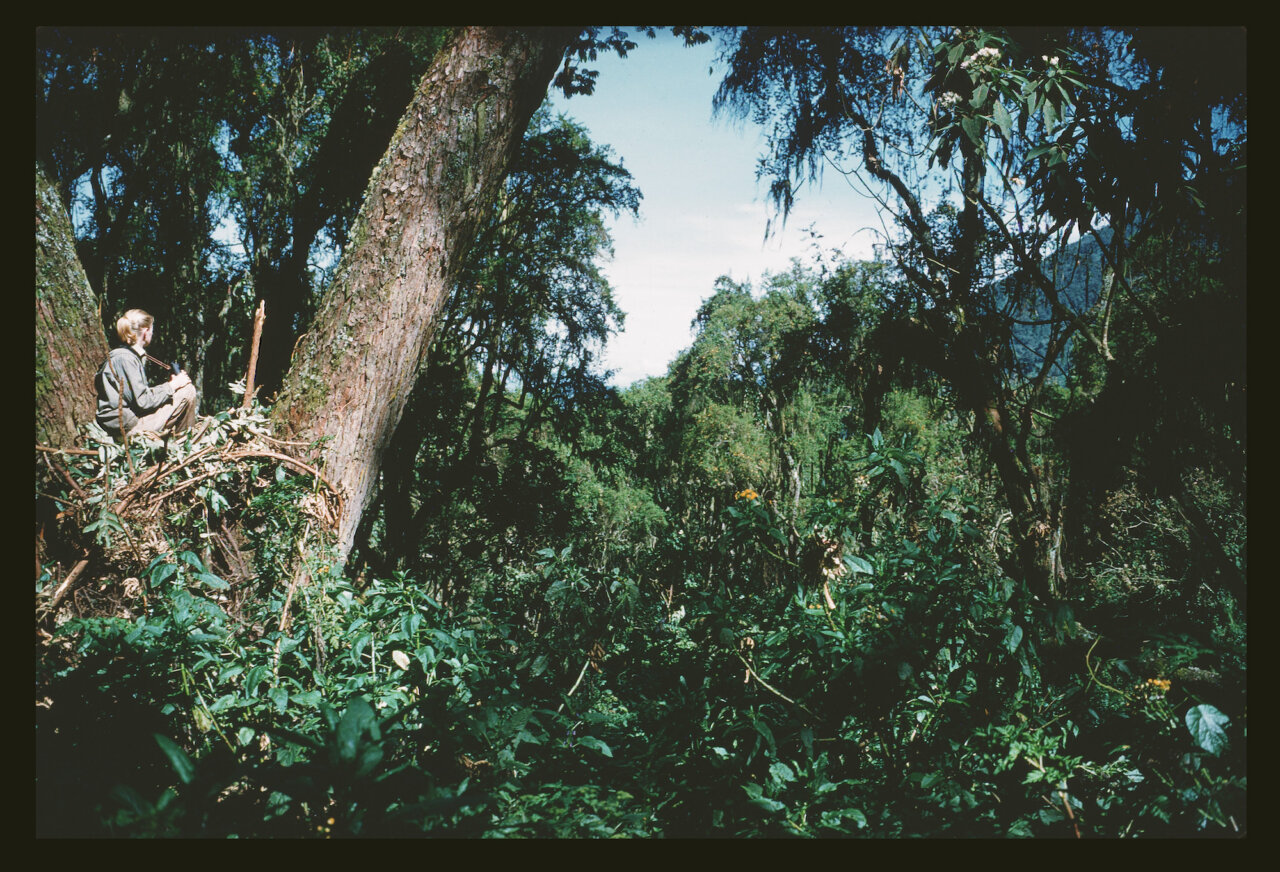
At last overcoming her terror, Kay often climbed into the gorillas’ abandoned nests to watch—and be watched. Like us, she said, gorillas are “more afraid of the unseen.” Courtesy of George B. Schaller Archive.
But with just 400 mountain gorillas remaining, all pressed into shrinking forests, Schaller saw that he must do more. He had to answer essential questions: What plants does this gargantuan vegetarian eat? Where does it move, nest, breed? What, in short, needs protecting?
His ecological study, one of the world’s first, laid the foundation for Dian Fossey’s work a decade later; it remains the lodestone for Felix Ndagijimana, who became a scientist at Schaller’s urging and now leads the Fossey Research Center. It turned mountain gorillas from the brink of extinction into a thriving tourism attraction and the most unlikely conservation success story.
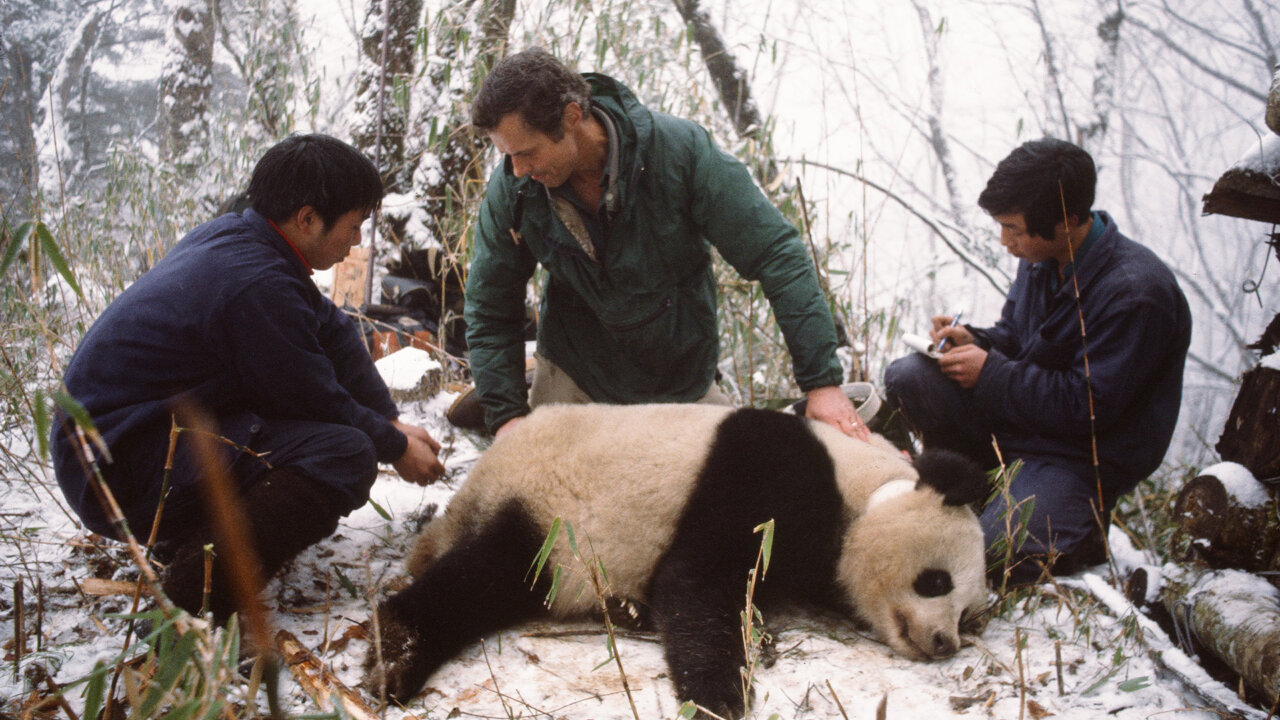
To tranquilize a national treasure was beyond nerve-racking. But by mentoring three generations in the field, as one panda scientist put it, Schaller “established the foundations of Chinese wildlife ecology.” Courtesy of George B. Schaller Archive.
Giant Pandas
Though officially a “National Treasure,” pandas, too, would have been lost to the world were it not for Schaller’s arduous effort, begun in 1980 with Hu Jinchu and other Chinese colleagues, to understand these cryptic animals.
Wild pandas were being captured at a furious pace, ostensibly to rescue them from starvation— although few were starving and a third died in captivity. In that difficult context, Schaller and Hu again answered questions crucial to shaping protections, like: How do pandas find mates in courtships that happen just once a year?
Though in the wake of the Cultural Revolution, suspicion of foreigners remained high, Schaller’s doggedness—returning year after year to his icy tent—won him the trust of Beijing and Party officials, who banned captures and expanded habitat protections. The result has been a doubling of wild panda numbers.
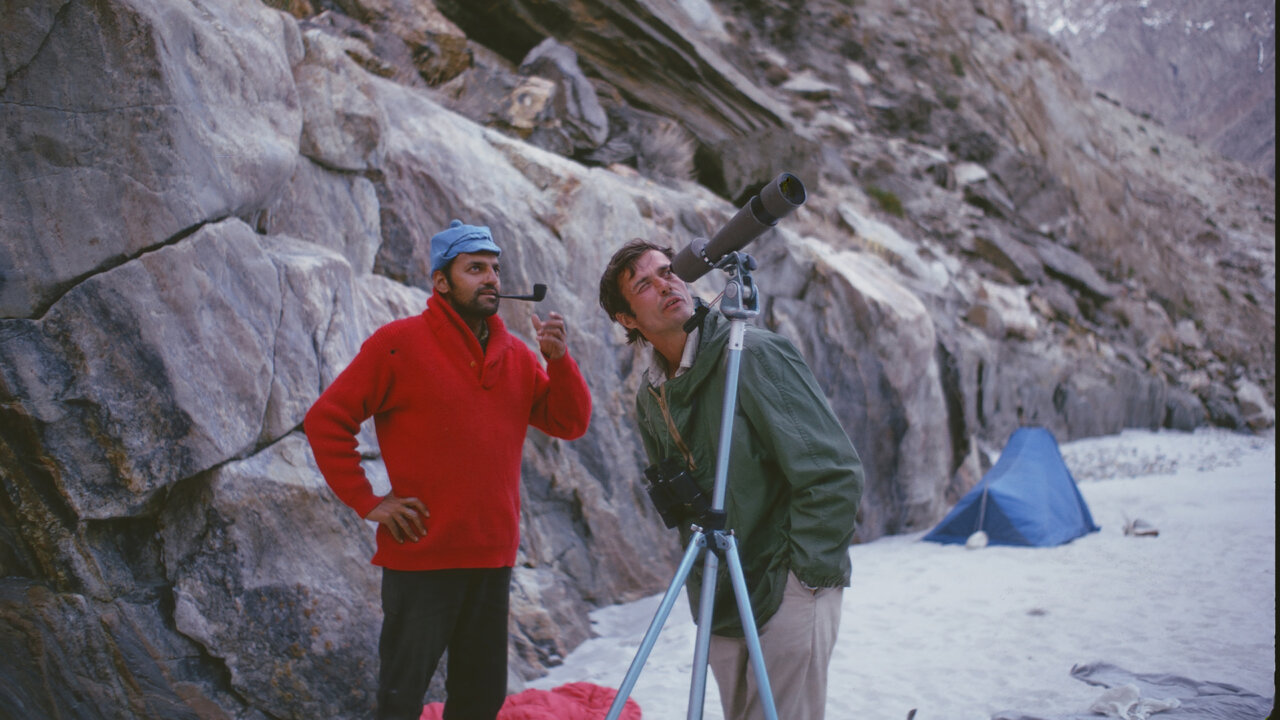
In the mid-20th century, George Schaller did something radical: he went into the wild and stayed, learning from animals on their own terms.
Snow Leopards
Roaming the harshest landscapes, snow leopards had for centuries seemed nearly mythical; scientists could not even guess at their numbers or conservation needs. Even after 1970, when Schaller took the first-ever pictures of the “ghost-cat,” his sightings were so rare he relied mostly on the knowledge of nomadic herders, who never failed to invite him to rest in their tents or share a meal.
Tragically, most families met the cats in the act of preying on their goats and sheep. Schaller understood why the herders killed them in return: seeing the world through animal eyes did not prevent his seeing through the eyes of local and Indigenous people.
The key to the leopards’ future, George saw, was protecting livestock. The young scientists he mentored—from Tibet to Nepal to Mongolia—now champion the use of stone corrals and strobe “foxlights,” which protect people and leopards together. While still declining in parts of its 12-country range, in India and central Asia the cat is recovering to such a degree that you no longer have to be George Schaller to see a snow leopard in the wild.
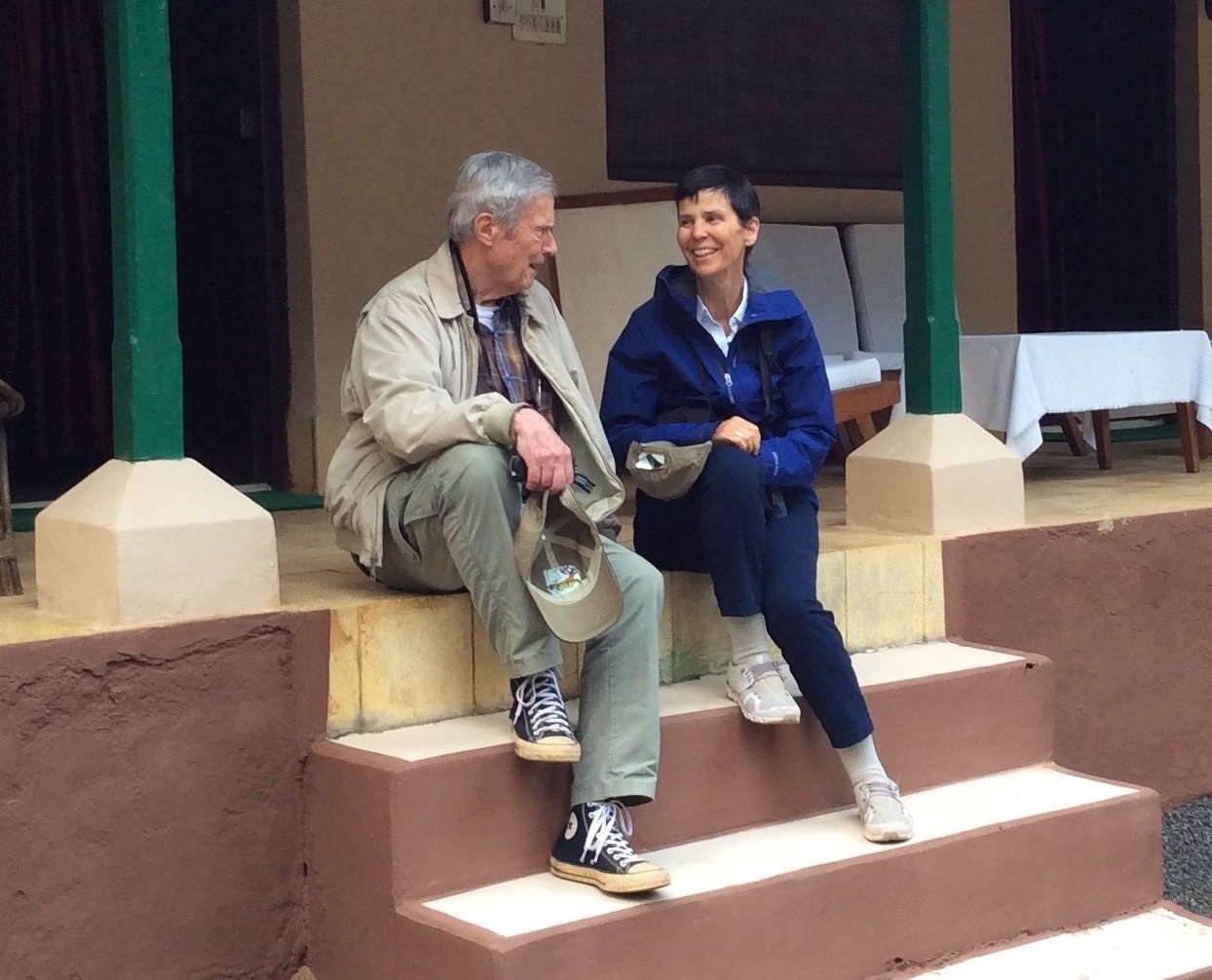
George and Miriam at the cabin in Kanha Tiger Reserve where he lived with Kay and their toddler boys. Courtesy Miriam Horn.
Across wildly diverse ecosystems and human cultures, Schaller laid down principles that still guide conservation: a commitment to science that keeps up with a changing world to add more data and new understanding; respect for the knowledge held by local communities and for their central role in conservation solutions; and an understanding that an animal’s future is not secured by a lone outsider or study, but by generations of national scientists and practitioners.
George’s greatest strength, in the end, has been humility. He did not build monuments to himself, but a science and practice for others to use to keep those mountain gorillas, giant pandas, and snow leopards all roaming their wild worlds. Long after George asked what a grizzly bear is searching for when it searches, we know what works and how to repeat it. George would be the first to now say: let’s get on with it.