
Deep within the forest in southeastern Peru lies one of the most biodiverse places in the world. The nearly 20 million acres of forest in the Amazon region of Madre de Dios are home to jaguars, tapirs, and one of the world’s largest concentrations of bird species. This expansive forest region, lush with winding rivers and abundant wildlife, is also home to over 200,000 people, including 37 Indigenous communities.
To strengthen economic development in this region, infrastructure, such as roads, has been constructed for transit and to allow for the extraction of resources like timber and Brazil nuts. But when roads cut through forest landscapes, they can disrupt the fragile ecosystems that wildlife relies on. In fact, a single roadway can separate wildlife from their habitats and access to food and shelter, interfering with daily routines and limiting access to potential mates that ensure genetic diversity.
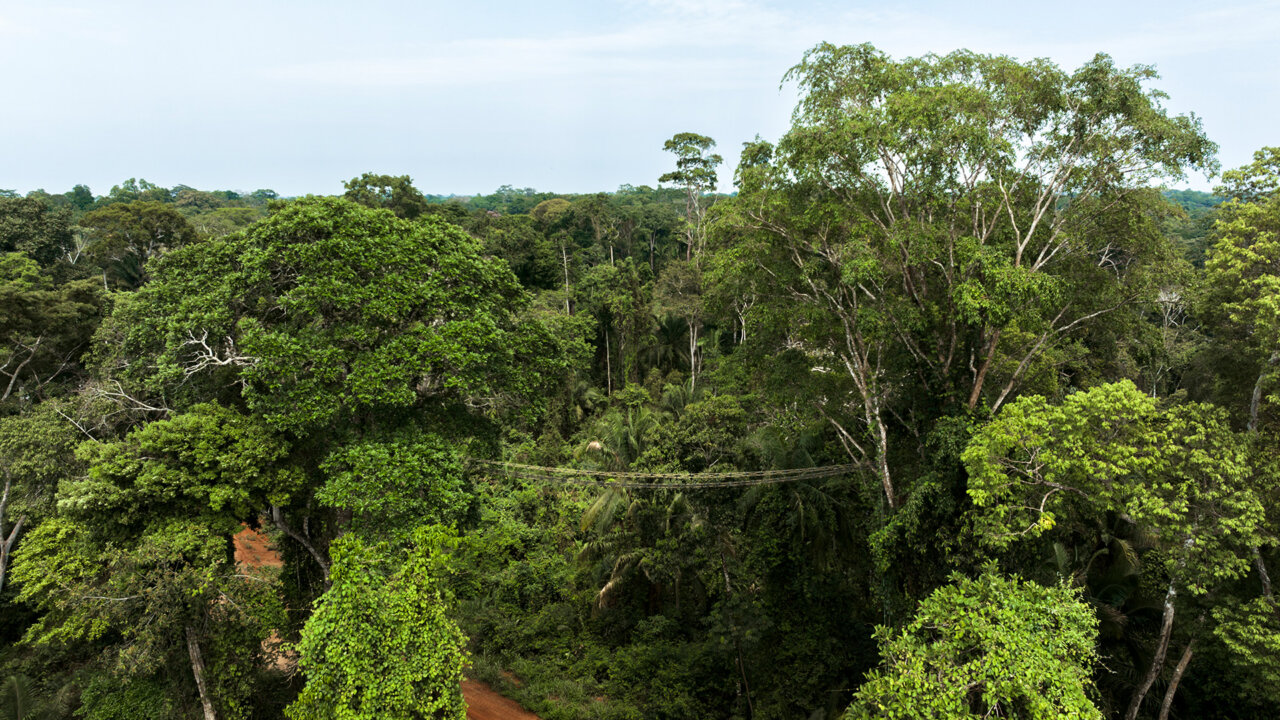
A WWF pilot program is studying how to install canopy bridges high in the forest treetops. These natural bridges allow arboreal species like monkeys to safely cross over roads used to harvest timber and Brazil nuts. These bridges help maintain wildlife’s access to the resources provided by the ecosystem without putting their lives at risk. WWF and HP, Inc. are collaborating to restore, protect, and enhance the management of some of the world’s most endangered forests, including Madre de Dios. In Peru, these efforts support improved forest management across nearly 180,000 acres and the restoration of 865 acres, delivering measurable environmental and social benefits.
© WWF-US / Yawar Motion Films
WWF staff are testing several canopy bridge designs, including single rope, simple ladder, and ladder mesh, to determine which types are preferred by local tree-dwelling species. To date, 24 canopy bridges have been installed in strategic locations to help connect fragmented areas of the forest and allow safe passage for animals.

© WWF-US / Yawar Motion Films
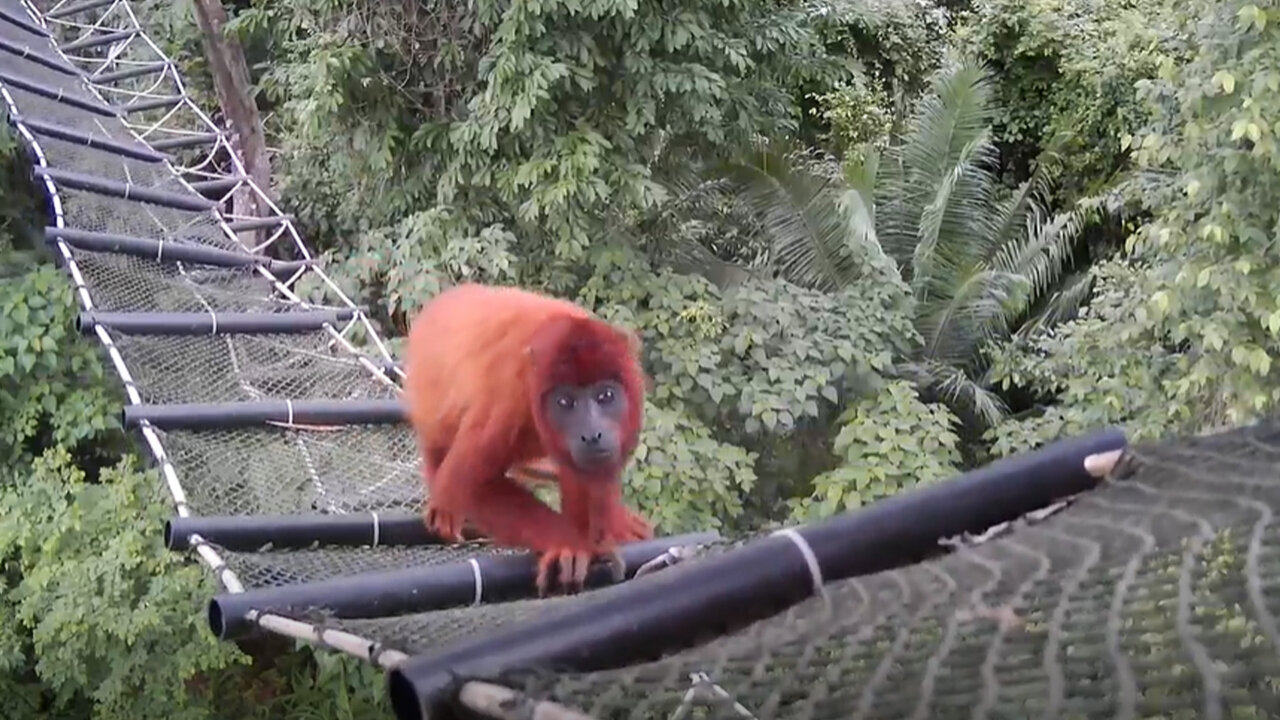
To measure the effectiveness of the bridges, camera traps are installed to capture video and images of the animals in action. These camera traps provide valuable information on the movement and behavior of the species in disrupted areas that put wildlife at risk. To date, the camera traps have revealed several monkey and other arboreal species using the bridges, including the Weddell’s saddle-back tamarin, the tufted capuchin, and the Colombian red howler, as well as a raccoon relative called the kinkajou.
©WWF Peru
This innovative project demonstrates how the conservation of nature can support the needs of both people and wildlife. Forests are a force of nature critical to the world’s diversity of life on land, and billions of people around the world rely on non-timber forest products, such as food, fuel, and medicine. The bridges serve as wildlife corridors that help species maintain their regular movement, strengthen wildlife resilience to climate change, and protect vital ecosystems.