Image taken by Maria Diekmann.
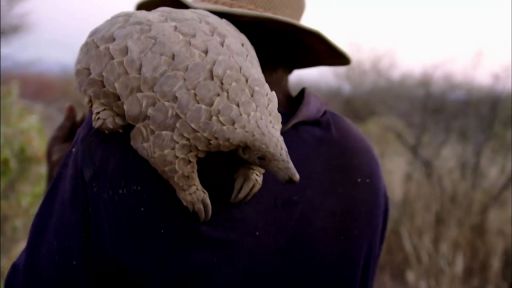
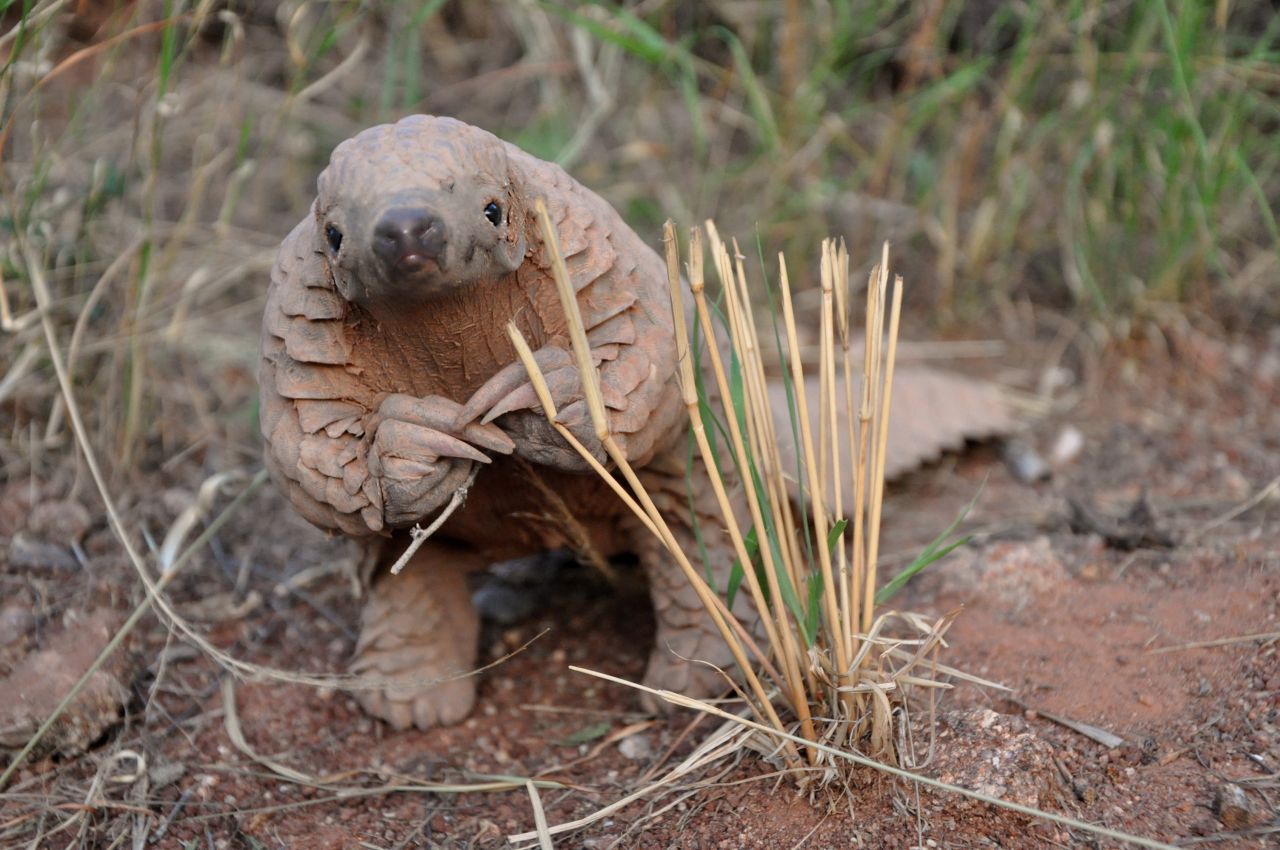
Pangolin: mammals of the order of Pholidota. There are eight species of pangolins that are found on two continents.
AKA: scaly anteaters
Kingdom: | Animalia
Phylum: | Chordata
Class: | Mammalia
Order: | Pholidota
Family: | Manidae
Four species of Pangolin are found in Africa: Black-bellied pangolin (Phataginus tetradactyla), White-bellied pangolin (Phataginus tricuspis), Giant Ground pangolin (Smutsia gigantea) and Temminck’s Ground pangolin (Smutsia temminckii).
An additional four species are found in Asia: Indian pangolin (Manis crassicaudata), Philippine pangolin (Manis culionensis), Sunda pangolin (Manis javanica) and the Chinese pangolin (Manis pentadactyla).
Size:
Pangolin typically weigh between 4.4 and 7 pounds. They are typically between 12 and 39 inches long.
Appearance:
These mammals are often mistaken as reptiles due to their scaly exterior. However, these scales are structurally and compositionally very different from the scales of reptiles. They are made from keratin, which is the same material from which human fingernails and tetrapod claws are made from.
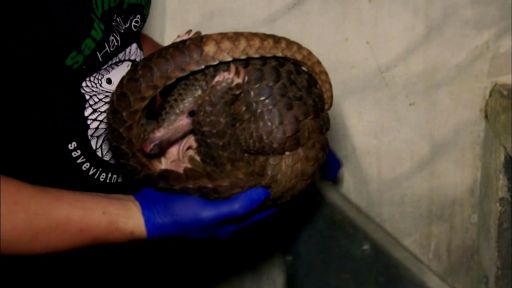
When threatened by a predator, a pangolin may curl up in a ball, and the sharp scales on the tail may be used to lash out. The scales are sharp, providing extra defense against predators.

Diet:
Pangolin are nocturnal animals. They are also known as scaly anteaters because of their preferred diet. They are insectivores, as their diet consists of various species of ants and termites, as well as other insects, especially larvae. They have poor vision so they rely on their sense of smell to find insects.
Habitat:
Pangolins can be found in forests and grasslands. They typically live in hollow trees or burrows.
Geography:
Pangolins are spread across Africa and Asia.
Breeding:
Pangolins tend to be solitary except when mating, which typically occurs once a year. Males are larger than females, weighing up to 40% more. Rather than the males seeking out the females, males mark their location with urine or feces and the females will find them.
The gestation period differs based on species but typically ranges between 70 to 140 days. While African pangolin females give birth to a single offspring, Asiatic species give birth from one to three. During the offspring’s vulnerable stage, the mother will stay in the burrow to nurse and protect it. At two years of age when the offspring are sexually mature, they will be abandoned by the mother.
Threats:
Pangolin are one of the most trafficked mammals in Asia and are increasingly trafficked in Africa. In China and Vietnam, pangolins are in high demand. Their meat is considered a delicacy in certain cultures and their scales are used in traditional medicine and folk remedies to treat a range of ailments.
Over the last ten years, an estimated 1 million pangolins were trafficked. However, this number may be conservative given the volume of recent pangolin scale seizures.
They have no natural predators, which makes them especially vulnerable to humans capturing them.
Conservation Status:
All eight species of pangolin are protected under national and international laws. Two species are listed as critically endangered by the IUCN Red List of Threatened Species.
Pangolins and the Coronavirus Outbreak of 2019/2020:
The Novel Coronavirus, 2019-nCoV, is a respiratory illness traced back to a live animal market in Wuhan, China. Since the outbreak began, scientists have been racing to identify the source of the coronavirus that is spreading panic across the globe.
In early February, Chinese scientists suggested, on the basis of genetic analyses, that the pangolin was a prime suspect, according to the scientific journal Nature. However, with further research, scientists can not say definitively that it was from the pangolin, although it is still a contender.
Public health officials hope to pin down the virus’s source to prevent new outbreaks. While the source of the virus may be back to an animal, the animal itself is not to blame for the virus or its spread.
Source: World Wildlife Foundation (WWF)