
Special
Fast and Curious: Midwest Bikes and NYC Bugs | Sophie's ELECTRIC Road Trip Part 4
Racing across the Midwest to get to New York City, scientist-comedian Sophie meets student engineers building electric motorcycles to break landspeed records; learns how much horsepower one horse actually has (spoiler: it’s not one); and finds surprises of all kinds in the City That Never Sleeps.
Sophie’s Great American Electric Road Trip
![The Grand [Canyon] Finale | Sophie's ELECTRIC Road Trip Part 8](https://www.pbs.org/wnet/nature/files/2026/08/bXtXc12-asset-mezzanine-16x9-fDqsQHK-512x288.jpg)
The Grand [Canyon] Finale | Sophie's ELECTRIC Road Trip Part 8
Sophie finishes her coast-to-coast-to-coast trip, completing her biggest science experiment yet.
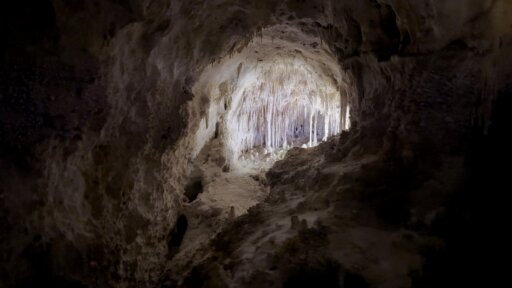
Otherworldly Wonders | Sophie’s ELECTRIC Road Trip Part 7
Arkansas to Arizona is full of extremes, literally!
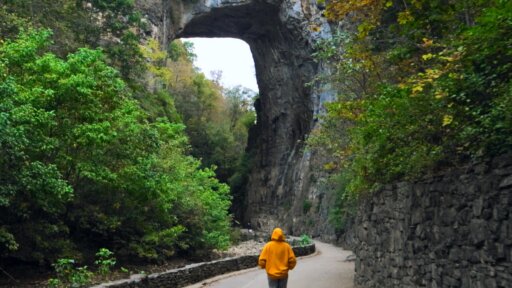
Liquid Metal, Ancient Mountains | Sophie’s ELECTRIC Road Trip Part 6
In her drive from New York to Tennessee, Sophie spots ancient mountains in Shenandoah.
Dinos, Tortoises, Rats and... Garlic: Massachusetts| Sophie’s ELECTRIC Road Trip Part 5
A museum, a university, and a festival remind Sophie that home is where the science is.
The Detour is Worth It | Sophie’s ELECTRIC Road Trip Part 3
Sophie and team face the challenges of 12,000-ft elevation and a bullet run through middle America.
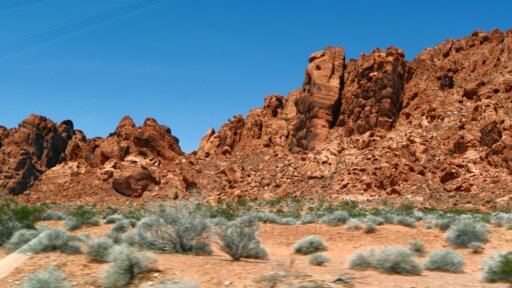
Horsepower vs Horse Power | Sophie’s ELECTRIC Road Trip Part 2
From Moab to Arches, Sophie examines the (literal) science of horsepower.
Lake Mead Mysteries | Sophie's ELECTRIC Road Trip Part 1
Sophie Shrand and crew pack the car, charge the batteries, focus the cameras, and hit the road.
TRANSCRIPT
- So this has 225 cells in it.
- I thought you were about to say it was 225 pounds.
- Oh, yeah.
- I was like - Can you tell I work out?
- Laura's a beast!
- Hi, I'm Sophie!
I drove an electric car on a coast to coast round trip journey across the USA.
I set out to answer two questions: Can it be done?
And can it be fun?
What I found was so much more.
It's "Sophie's Great American Electric Road Trip".
So today, we are trying to get to Cincinnati.
That was a very long drive yesterday.
It was our longest drive yet.
And I felt really tired by the end of it.
You can probably tell by some of the footage we got.
(Sophie sighing tiredly) I have some thoughts.
I might change the plan drastically, but I have to pitch it to Brendan.
What if we go south and we drive to Louisville?
And then go from Louisville to Columbus?
We've never been to Kentucky.
- [Brendan] Love it.
- [Sophie] Noice.
To Louisville!
Because we changed the plan.
Heh heh heh (upbeat rock music) This is probably the lowest we're going to be, getting to a charger.
I also don't know where we're going to stay tonight.
That's fun.
- [Brendan] Adventure time?
- Adventure time.
Let's book it!
Safely!
Where is the arch?
I wanna see the arch.
Driving by the arch, but I don't see the arch.
- [Brendan] The gateway to the west.
- Symbolically or literally?
- Yeah.
- Okay.
Are we going to a casino to charge the car?
- [Brendan] What are the odds these chargers are going to work?
- Yeah, we laugh now!
- [Brendan] But you were right about the view.
- (gasps) I was right about the view!
Holy toots, look at that!
[Sophie] It says that the charger is powered by renewable energy.
That's neat if it works.
Why is this not connecting?
Transaction canceled, why?
Tried two stations here and neither of them are working.
Charging, not impressed.
You know what's impressive?
The arch.
The St.
Louis Arch, everybody.
Let's talk about the science of arches.
They're a really stable shape.
They have really great distribution of weight, and so you can get something that looks really cool like that really tall because it's actually very stable and that's neat.
It just stopped.
It just stopped us.
Ha, okay, we're done.
Fine!
Being behind because of charging is very frustrating.
I was really hoping we can actually explore Louisville.
So now, we're camping outside of Louisville and that's fine.
- This like day three of corn fields.
- It's been, it's been too long since I've said 'Wow!'
Maybe I need to find the wow in the unexpected.
I can be wowed by a beautiful sunset on the plains.
- [Brendan] There's a 'wow' to that.
(light music) - [Sophie] Looks like... - [Brendan] Is that a cemetery?
- [Sophie] Oh yeah, there's a cemetery here.
- [Brendan] Oh, fun.
(Brendan chuckling) (train horn blows in background) - Oh, I hope that stops.
We're going to simmer it.
- [Brendan] Well, you can come over if you want, okay?
Or you can stay there.
- Cheers.
We need to figure out like a, a more efficient camp setup, but we're getting there.
How do you feel?
- [Brendan] Tired.
(Sophie snickers) [Brendan] Feel like I'm getting some lactic acid buildup in my arm.
- Okay, fine.
I'll switch.
(Brendan laughs) -Okay.
(light music) I've never seen these blue wasps before.
They're cool.
We've made a lot of little animal friends in the past eight hours.
We need to get to Columbus, Ohio by six o'clock.
It is 10 AM.
That's eight hours.
This should math.
We should have plenty of time.
(light music) - [Brendan] Okay, this says we can make it all the way to Columbus on one charge.
- You know, we said we want to try it.
(upbeat music) - [Brendan] Crossing the Ohio to get from Indiana to Kentucky.
- Welcome to Kentucky.
- [Brendan] Louisville Slugger!
I think the Bengals have a home game today.
(upbeat music) - Good morning from me and this beautiful fireplace in Columbus, Ohio.
Today, I'm going to be interviewing student engineers who are building solar cars and electric motorbikes and doing some rad stuff.
(upbeat rock music) Here we are at the Ohio State University Center for Automotive Research.
Say that five times fast.
Yes!
- Yay!
(Jing laughs) - We finally made a person.
- Yes!
- Thank you so much for your advice.
We've made it.
Did you think we'd make it?
Be honest.
- I thought you guys would've had some charging hiccups by now.
- We've had a couple.
And thank you for bringing me here!
- Yeah, this is an awesome space.
If I had this when I was in college, I might never have graduated.
- You just stay here forever.
- Stay here forever, yeah.
- Which I've heard happens.
- Well, 19 years later, I'm still here, so.
- These are students who are building all of this around you.
The students are designing, building, and some of them, they're racing.
- Back here, all student-run competition teams.
Formula C is a competition with hundreds of other schools around the world starting to put together the components now and convert the car completely to electric.
So Eco Car has been going on for more than 30 years.
They've been taking conventional vehicles and making them hybrid and electric, and take a car of today and turn it into the car of tomorrow.
And then the newest project in the building is a solar car.
Students got together and said, "We want to do this."
And so for about a one-year period, we work with them on the concept, and then last year, they actually got space in the building and built their own solar car, so.
This is the Buckeye Bullet.
It is currently the fastest electric car in the world.
Been to 358 miles an hour and 8,000 pounds and about 3,000 horsepower.
So it's a big drag racing machine.
- [Sophie] Okay, I promised Bill and Bob I would figure out how much horsepower equals one horse.
That 1700s inventor, James Watt, coined horsepower to compare how many horses it would take to do the work of one steam engine over a certain time, aka its power.
Power measures the rate of work, how hard you push over a distance and how fast you can do it.
Power equals Work over Time.
Watts calculations measure metric horsepower, the power needed to raise a 75 kilogram mass up one meter in one second.
While his invention helped completely change the world... Hello, Industrial Revolution.
...his calculations on a horse's power were based on estimates.
An estimate isn't an experiment, and it's pretty tricky to control all the variables here.
But over the centuries, scientists, mathematicians, and engineers have come to a tentative consensus that a horse can possibly reach close to 15 horsepower in short bursts.
A lot of uncertainty in that sentence, and that's because there haven't been enough definitive studies yet.
One of the many opportunities for further scientific exploration.
There is always more to discover.
Let's go meet one of these students.
- Definitely!
- This project looks so cool!
And here is the genius behind it.
- Hi, Sophie.
- Hi, Laura!
- Well, I am so happy to talk to you all about our project.
- [Sophie] Yes.
- And I'm gonna try not to talk fast and talk too long, but I love it, so.
- Oh, I can't wait!
That's my favorite type of talking!
Our team is Buckeye Current.
We do electric motorcycle racing.
We do professional competitions.
We do not do collegiate competitions.
Our team has been building sports bikes for many years, won lots of competitions, but now we're ready for a new challenge.
And so, now we're doing land speed racing.
You go as fast as you can in a straight line.
What you're looking at is a in-progress motorcycle that our team is building, and we're pushing it to top speed.
Our goal is to go over 200 miles an hour.
- Has that been done?
- So on an electric motorcycle in this weight class, it has not been done.
- Oh, how are you going to do it?
- Batteries, electric motor, inverter, and the whole entire electric powertrain, which you know a lot about as you've now been driving across the country in one.
- Yeah, I know a lot.
- Okay.
- I know a lot.
- [Sophie] I do know a lot, but I'm not a car expert.
Good thing Laura's here.
Take it away, Laura.
- [Laura] Those are the three main components of an electric vehicle and that's a battery, an inverter, and then your motor.
Batteries have direct current.
They go to inverter.
An inverter modulates.
It makes it go up and down.
Then it goes to your motor, which takes alternating currents.
The battery pack starts with cells.
Cells become a module.
A module, you stack three of them together, and now we have a battery pack.
This is a battery module.
- [Sophie] Ooh!
- This is heavy.
- Okay.
- So this has 225 cells in it.
- I thought you were about to say it was 225 pounds.
I was like - Oh, yeah.
Laura's a beast!
- Can you tell I work out?
- Come on.
We put three of these together and we make 567 volts.
- Wow!
- Our battery pack weighs about 50 kilograms.
So it's one third of our bike weight.
Typically, the weight of your battery pack is what's gonna constrain you for the amount of power you can output.
Because if I had a hundred kilogram battery pack, I sure couldn't have the rest of the motorcycle.
- Right.
- So.
- And then the person on top of it as well.
- F equals MA mass as a factor.
- Do you have jockeys for motorcycles where you want small motorcycle riders because you're going to have less mass?
- Well, that's a good question.
Normally, it's nice to have a smaller motorcycle rider because they fit better within the aerodynamic body of the bike.
So not necessarily how much they weigh, but how small they can make themselves.
So, the rider of our bike is a professional rider from France, and him and I are the exact same size.
And I get to use myself as a mock-up on the bike to be like, "Okay, can I see out the windshield?
How does it fit?"
- Was that part of what made you choose him as the rider?
- No.
He's gone 292 miles an hour on a motorcycle, and that is why we chose him.
- That's why I would choose him too.
And not choose me.
- We have an axial flex motor, which is the most power-dense electric motor on the market.
With this battery pack, we have 175 horsepower.
And that's about the same as a Chevy Equinox, about a four-cylinder engine.
That's what we're pushing in this small of the bike.
- [Sophie] So where is...?
- [Laura] All of this?
- [Sophie] All of it.
- [Laura] All of it... - [Laura] Before you put it in the bike, you want to test to make sure it really makes the power it says it does.
So we can go take a look at that and see how it happens.
- Yes, please.
- Okay.
- Yes.
- Yes, I want to go to there.
Yes.
(Laura laughs) - [Sophie] And thus begins a testing tour by my new best friend, Laura.
These engineers do so much research before the bike moves an inch, like testing battery performance.
- [Laura] This can demand current or give current.
Up to 900 volt power source.
- [Sophie] Balancing current flow across cells.
- [Laura] Little resistors on all of these boards modulate how much current can flow to each set of cells and make sure that they are all balanced.
- [Sophie] Simulating what it will do on the road.
- A discharging situation when you're racing, and a charging situation when you're getting ready to race.
- [Sophie] And all these experiments to build the fastest bike possible.
You can have all this electricity, but it's got to go somewhere.
- [Laura] Got to make something go fast.
- [Sophie] Got to make something go fast!
After testing the battery packs, it's time for the dynamometer.
- [Laura] And this is our test cell for our motor to see how much power output we can get for calibration, controls testing, and all of the above.
- I have to say, as someone who is not an engineer, this room is a little, intimidating maybe isn't the right word.
- Chaotic?
- Chaotic, in the best way?
- Yes, that's what we strive for.
- (Sophie laughs) I feel like that's engineering too.
It's just like, it looks like it's a mess.
There's a method.
[Sophie] The name of the testing game here is that the batteries send maximum power to the motor.
- Since we have to be under 150 kilograms in weight, power density is what we're looking for in everything.
- Just like me.
- [Laura] Power dense.
- Yeah.
- Exactly.
- And Laura.
- We're both very powered.
- Women in STEM.
- Yeah!
- What can we say?
- [Sophie] Time to ask a heated question.
People seem to be wondering, will the battery catch fire?
- Especially with racing, right?
A lot of people they do internal combustion racing, and now they're seeing us electric racers come out into the field and they're like, "Oh, your bike's going to fall over and it's going to start on fire."
And I go, "I promise you I didn't design it for that.
I promise you that's not going to happen."
And that is a really, really important characteristic that we look for when we're testing.
When you charge the battery, that is the time when things can start getting really hot.
We're going to be Liquid Immersion Cooling our batteries.
We could have used forced air, fans blowing on it and whatnot, but we decided liquid cooling works a lot better for us.
What we use is called dielectric fluid.
It's compatible with batteries, but it can be really corrosive.
In our battery, we have a lot of electronics on top.
We have to make sure that each one of those elements are compatible.
(light rock music) - Where will this be ridden?
- At the Bonneville Salt Flats in Utah.
On Bonneville Speedway.
They've been doing land speed racing there for many years, but electric is really starting to come up there.
We have a wonderful team of over 30 students.
People who are parents, people who just turned 18, and people who aren't from the US.
The passion that we have for what we're doing, there's no question in my mind that we will be ready.
- [Sophie] What made you want to do this?
- I, I love motorcycles.
I love going fast.
I love engineering.
Coming into this, you know, I was an internal combustion person, right?
Wrenching on things, that's what I expected.
When I got here and we're doing electric, I was like, "Oh, I'm not sure about it."
But it's so cool.
- Do you want to be one of the people racing these bikes?
- Yes, I do.
- Absolutely.
I think about that all the time.
Like the moment I'm out there standing there with the bike and the Salt Flats and it's empty and it's just you against time.
So who knows?
Maybe I'll finally like actually live my dream of going down the Salt Flats and riding a bike, so.
- [Sophie] Maybe we'll see you there!
Awesome, I don't know.
I don't have a clever ending.
I was trying to think of one.
But I don't have one because I just think this is neat and I'm just taking it in.
(both laugh) Lunch?
It's lunchtime somewhere is what I always say.
(light rock music) That was awesome.
I needed that actually.
I needed to be around people who are passionate about what they're doing and who have created some really, really impressive technology.
And the car is charged!
- [Megan, on phone] Are you confirmed for those events in New York?
- Confirmed for, yeah, the panel is good to go.
(upbeat rock music) We have had a really lovely morning.
We keep staying at these lovely places and meeting people who are so welcoming and hospitable that we just don't want to leave!
There's also something I want to show you before we go.
A hickory tree fell in a storm and created this mound in the yard.
And rather than dig it all up and everything, they decided to work with it and create it into something beautiful that everyone can enjoy.
Pretty nice inspiration to start the day.
Fed, watered, coffeed.
To Pennsylvania!
- [Brendan] Hey, did you forget something?
- A handsome, clever gentleman.
Let me know.
- Okay.
(light music) - [Sophie] I wonder what the lifespan of a pine is.
Oh, welcome to West Virginia!
- [Brendan] Oh.
- I didn't realize we were going through West Virginia today.
(light rock music) - [Sophie] The Allegheny Mountain Tunnel.
- [Brendan] Part of the journey.
- [Brendan] Sometimes you find yourself in a tunnel.
- [Sophie] What is the longest tunnel?
(light rock music) Hello, from a farm in Pennsylvania!
Today is the day!
We go to New York City!
There's so much more of the trip left, but this is a big moment.
We're going to be in New York for Climate Week.
Here we go.
- Next stop... New York City!
- New York City!
(upbeat jazzy music) - I'm assuming we go back out the way we came.
Next stop... New York City!
- New York City!
(upbeat jazzy music) - Connecting.
We got plenty of charge.
- [Brendan] Is it in carwash mode?
- Carwash?
What am I doing?
Like a water park!
Whooaaa!
Okay.
How do we get back in the car?
Oof.
Shoe print on the roof.
(breathing heavy) Carwash mode off.
Next stop...New York City.
(upbeat jazzy music) - We can go to the Goodwill, but that's, it's got to be quick.
- Next stop...New York City!
(upbeat jazzy music) - [Brendan] There she is!
- There she is!
(upbeat music) Welcome to New Yoooork!
(horn honks) (Brendan exhales) - [Sophie] Wait, it's not having us drive through 42nd Street, is it?
Don't make me do that.
No!
- [Brendan] Well, here you are, Soph.
- I did this to myself!
How do we get to the point where no one is moving for long periods of time?
(horn honks) What is the science behind that?
[Sophie] It would be so much faster to walk.
This is what I love about New York.
It's faster to walk and take the train than it is to drive.
- [Brendan] By far.
[Brendan] We just, just right there.
That's, that's the spot we just got to pull into for valet.
(Sophie gasps) - They just canceled the panel tomorrow.
(Sophie laughs) - [Brendan] We drove.
We, so getting to New York was a priority because it's Climate Week and you were going to take part in a couple of things.
- We skipped things.
We, we booked it here because we had to get here in time for Climate Week.
The event that I was invited to do, just canceled.
No explanation, just canceled.
And the only, I don't know, I got an email because I was following up about it.
- [Brendan] And why were you checking?
Why were you able to check your email in the car?
- Because we haven't moved in 10 minutes.
There's also an event we're supposed to do on Friday that I haven't heard back about.
Why are we here?
(Sophie laughs) - Good.
- And with that, we've made it to the hotel!
(Sophie laughs) Not sure what the rest of the week is gonna bring.
I'm going to sort of follow people around.
See what I can find.
(upbeat music) The blue whale!
Wow, this is a whole family.
(upbeat groovy music) What a New York day.
(people chattering) Oh yeah, there's someone squishing a lanternfly.
There are just huge quantities of spotted lanternflies.
We're talking about invasive species.
Look at all of these.
Spotted lanternflies feed on tree sap, infesting trees and grapevines, sometimes by the thousands.
In their native home of Asia, they have natural predators like parasitic wasps, but in the US, they're spreading unchecked.
They look really pretty.
They look like this.
These animals are so invasive.
They are death to trees.
Look at these.
Look at them all!
(Sophie gasps) Brendan, Brendan?
- [Brendan] I think we might be losing the war.
- Yeah!
How do we fix something like that?
The good news is that New Yorkers are finding community solutions and native animals are starting to recognize lanternflies as prey.
Although this local boid's not walkin' here.
It is a northern flicker, according to my app.
- [Passerby] Maybe it hit the building.
- [New Yorker] It definitely hit the wall.
- [Sophie] Oh, look, another invasive species.
Buildings with shiny windows can be fatal to birds who crash into the reflective glass because they can't see it.
Watch out.
Watch out, there's a bird!
Injured bird.
There's a movement to make buildings birds safe by adding visual cues like dots, which can reduce collisions by 95%.
Oh, and there it goes!
Yay!
Woo-hoo!
People have been hard at work here.
Give New Yorkers credit.
(subway whirs) (upbeat music) Hi, how are you?
Oh my gosh!
- Good to see you.
- It's a New York kinda day.
And I've started thinking about personal responsibility versus corporate responsibility, policy and big money focused solutions.
And I have to finish my bagel.
They need to use some of their massive profit to fix this problem they made.
- [Bill McKibben] And the thing that is in the way, above all else, is the stifling power of the status quo because it's within all of our power to do the work that citizens need to do to make a society work.
- Nice!
Gosh, I love this city.
[Sophie] Hopefully getting out will be easier.
It's kind of funny to have stopped in New York for so long.
It feels like that was the, the halfway point of the journey.
But it wasn't.
- Right.
- And Boston was the real coast to coast destination.
It'll be cool.
Like we should actually get to the coast, go to the beach.
We're trying to get home before sunset.
(light music) I see waves.
Stormy.
- [Brendan] This is the most, most rain we've seen in a while.
- Mmhm.
Hi!
- Hey Carol.
- We're coming down the hill.
- Hi!
- All right.
On our secret little turn here.
Bee boo bee boo bee boo.
(gasps) Ohhh, yeah!
- [Carol] Woohoo!
- [Joe] Wow.
- Oh my gosh, that's so sweet.
- You made it!
- Sophie sandwich!
- [Joe] You did it.
- [Carol] We have to get to the beach!
- [Joe] We got to get to the beach.
- [Sophie] Okay.
- Yeah!
- Let's go.
- [Carol] You gonna dip your toes in the Atlantic?
- Yeah, let's do it!
Okay, we're going to the beach!
[Sophie] Can we do it in time?
Okay.
Uugghhh.
(Sophie laughs) Just the cinematic moment we're all waiting for.
Oow.
Okay!
Yeah!
We did it!
Yay!
(Sophie screams) (laughter) East Coast to West Coast now!
(waves splash) This project looks so exciting.
I cannot wait to hear more about it.
Hi!
- Hey, Sophie.
- Hi!
I'm Laura.
What?
I just said I'm Laura.
I was about to say something else and I said I'm Laura because that was cool.
I'm very cool.
I just want everyone to know I'm very cool.
(laughter) Hi, Laura!
- Hi, Sophie.
Thank you for coming by our project.
- (laughing) Oh I can't wait to hear all about it [Brendan] Okay take it back.
[Sophie] Ok great!
(laughter) Support for this program was provided in part by Vela.
Vela connects families and founders in the indie education movement where families take charge of their children's education.
Learn more in the Vela app or at vela.org.
(fingers snap) Cool jacket!