
Special
Horsepower vs Horse Power | Sophie’s ELECTRIC Road Trip Part 2
While exploring Utah’s stunning national parks, Sophie gets lost in Moab, meets cowboys in Bryce Canyon, and finds a science-y surprise under changing rocks in Arches National Park.
Sophie’s Great American Electric Road Trip
![The Grand [Canyon] Finale | Sophie's ELECTRIC Road Trip Part 8](https://www.pbs.org/wnet/nature/files/2026/08/bXtXc12-asset-mezzanine-16x9-fDqsQHK-512x288.jpg)
The Grand [Canyon] Finale | Sophie's ELECTRIC Road Trip Part 8
Sophie finishes her coast-to-coast-to-coast trip, completing her biggest science experiment yet.
Otherworldly Wonders | Sophie’s ELECTRIC Road Trip Part 7
Arkansas to Arizona is full of extremes, literally!
Liquid Metal, Ancient Mountains | Sophie’s ELECTRIC Road Trip Part 6
In her drive from New York to Tennessee, Sophie spots ancient mountains in Shenandoah.
Dinos, Tortoises, Rats and... Garlic: Massachusetts| Sophie’s ELECTRIC Road Trip Part 5
A museum, a university, and a festival remind Sophie that home is where the science is.
Fast and Curious: Midwest Bikes and NYC Bugs | Sophie's ELECTRIC Road Trip Part 4
Sophie investigates electric racing motorcycles and stomps invasive bugs as she makes it halfway!
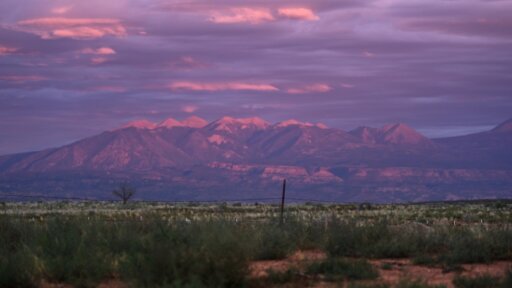
The Detour is Worth It | Sophie’s ELECTRIC Road Trip Part 3
Sophie and team face the challenges of 12,000-ft elevation and a bullet run through middle America.
Lake Mead Mysteries | Sophie's ELECTRIC Road Trip Part 1
Sophie Shrand and crew pack the car, charge the batteries, focus the cameras, and hit the road.
TRANSCRIPT
- There are 2000 or so arches here in wherever we are.
Hi, I'm Sophie.
I drove an electric car on a coast to coast round trip journey across the USA.
I set out to answer two questions.
Can it be done and can it be fun?
What I found was so much more.
It's "Sophie's Great American Electric Road Trip."
Okay.
Oh, perfect.
Well, well, well.
Where were we?
We are on a tight timeline to get to our next spot, hopefully before sundown, so let's hit the road again.
After the mysteries of Lake Mead, we're racing to our next adventure in Bryce Canyon, Utah, which will take us back in time and hopefully cool us off.
Ooh, my back is so sweaty.
It's amazing to think this is all the same country, and yet we have this vastly, vastly different landscape moment to moment in some ways.
Oh wow, look at how red it suddenly got.
The color is so fascinating.
We got to figure out what the science is behind the color changes.
- Dinosaur blood.
- Dinosaur blood, yeah, yeah.
Is it iron?
Is it iron deposits?
Maybe copper, lichen?
Either way I'll lichen it.
You have a snack?
Watch for wildlife?
Don't mind if I do.
Petrified logs over there, that's pretty cool.
Have you seen any horses yet?
- I have not seen any horses yet.
- Is this Valley of Fire?
We're not even there yet.
I'm so used to trying to get from point A to B as fast as possible when driving.
And I think that's going to be something I learn along this route is that it is the journey.
That's the whole point of, let's slow down and actually experience it.
- [Brendan] I'm just taking it in.
- Yeah, yeah, we can just be for a bit.
I think this majesty warrants just being.
I do still kind of want snacks though.
These rocks are over 150 million years old.
To some parts of the earth, these rocks would be little babies.
I feel going through these big giant rock formations like, do I matter at all?
All of these gigantic rocks are made of teeny tiny atoms, none of these things would be possible without teeny, teeny, teeny, tiny things.
That's me, just one teeny, tiny, tiny thing making (indistinct).
- [Brendan] So it's 111 degrees this afternoon.
How's it feel right now?
- Yes, 68.
Excellent.
Oh, I'm excited to wear a sweater.
Yeah.
Hey, Megan, are we horseback riding tomorrow or are we, is that Moab?
That's here, right?
- I don't know where - [Sophie] I think it's here.
- we're going to charge the horses.
Sophie, who's this?
- [Sophie] This is Bill.
- [Brendan] Hi, Bill.
- Bob.
- [Brendan] Bob and?
- Jason.
- [Brendan] The team.
This is Preacher, and this is Allie who's helping me out.
Thank you, Allie.
- You're welcome.
If you want him to go to the left, you're going to be pulling those reins over to the left.
- [Brendan] Over to the left, okay - If you wanna go to the right you'll pull them over to the right.
Just like that.
- [Brendan] Hey, Preacher.
- [Allie] See that?
- [Brendan] Look at that.
How you doing today, Bit?
- Doing good, sir.
- [Brendan] All right.
- Keeping everybody safe.
- [Brendan] Absolutely.
- Goal is to stay on top of the horse, not underneath it.
- They like to walk right next to each other, clearly.
(indistinct).
- Today, we're following in a long line of adventurous hoof steps and footsteps led by modern experts Jason, Allie, and Bit, stewards of this land keeping its history alive through education and storytelling.
I'm so happy.
- Think about what it was like to come across this kind of terrain, to come through uncharted.
So you had to make good decisions, you had to know what you were dealing with.
- [Sophie] A knowledge of the natural world, knowledge of how to find things, how to source.
- [Bit] What was a good berry and what was a bad berry?
They might not even have called it science back then, but it was.
- [Sophie] It is incredible to see all of this green in an area that is so arid.
- [Bit] Well, high desert.
- Right.
So the land naturally has its own way of reclaiming the water and storing it?
- Oh, yeah, yeah.
Well, because you look at all the undulations and then you get these basins.
If you go there after a rain, the water's visible, but then it just (indistinct) into the soil, and that restores the aquifer.
- [Sophie] Those aquifers are pockets in the underground rock or soil that hold water in a sort of pool.
We tap these aquifers to get well water.
But for aquifers to form, water has to seep into the soil.
Living in Los Angeles where there isn't a lot of infrastructure to account for rain, there isn't really a way to capture that water.
- [Jason] Well, it's all the concrete, - [Sophie] Yeah.
- so it just runs right off.
It's also a challenging thing when you're a property owner who wants to grow your business.
You can't dump anything anywhere.
The sewage treatment is extremely strict.
So they protect that.
- If we're going to build things as human beings, we have a responsibility to do it in a way that is still healthy.
- You try to work with that, right?
You try to work with the aquifer.
The water cleans really well on the soils.
How do you manage that in a way where it's sustainable?
- Wow.
Well, where next?
(upbeat music) Bit has invited us on a wagon ride to his authentic 1800s reproduction chuck wagon, essentially the original food truck, which followed and fed the cowboys as they bullied the cows, but there is something about that that makes me nervous.
We are about to go on a wagon ride, and this is where I have to reveal to him that I don't eat meat.
Yikes.
(upbeat music) - [Sophie] How far are we going?
- [Bit] About 2,700 miles.
- [Sophie] Okay.
- [Bit] But today, across the street.
- [Sophie] So this part is new.
- [Bit] This is.
So you see what the wagon did?
It caused all this.
- [Sophie] Right.
- [Bit] Yeah.
So we can't be mad about (indistinct) work.
- So we got one, we had two horsepower to, against - [Bit] Yeah.
- how many horsepower?
- [Bit] I don't know.
- [Sophie] Turns out one horse does not equal one horsepower.
The term horsepower comes from marketing, coined in the late 1700s to make new steam-powered engines more relatable to people using draft horses in farming and industry.
But an engine is kind of like a horse.
Both need energy to do work.
In physics, work means the energy or force it takes to move something.
In a horse, human, or machine, that energy comes from fuel.
Animals are efficient energy converters turning food into energy to power our muscles and brains so we can move, breathe, think, eat.
Again, that's a lot of work, literally.
A car can't eat a sandwich, but it does turn fuel into energy, whether that fuel is gasoline, electricity, hydrogen, steam, or even solar power.
A car can certainly move with more force and speed than a horse.
But there's more to this story and I have a feeling we'll find it later.
For now, the actual horsepower of Bill and Bob is doing the work of pulling us closer to the chuck wagon, where they cooked the pigs to feed the cowboys to give them more horsepower.
This is probably when I should tell him I don't eat meat.
- [Bit] There was a lot of things they had to go through that we probably really don't know nothing about.
We can only assume and think how would they have handled that?
- [Sophie] I'll tell him now.
- [Bit] So when they would hire a chuck wagon cook, chuck wagon cook would always be second in command.
- [Sophie] Tell him now.
- [Bit] But if we set our minds to something, we can accomplish all things.
- [Sophie] Now's the time.
- And as we say around the wagon sometimes, some lessons cost more than others.
- Yep.
I'll tell him right now.
- All right, ready to go cook?
- Now I have a confession to make and I've been worried about telling you this.
- Vegetarian?
- Vegan.
- Vegan.
Well, that's okay, I don't look down on that at all.
I think it's a good thing.
I eat less and less meat as time goes on.
- [Sophie] When I hear cowboy, I think, well, that's a lot of cows.
- [Bit] You know, that's a great point.
I mean, you think about it.
How often are we all guilty of assuming we know something about a culture that we really don't, and then we don't realize how accepting it may (indistinct), that's kind of why we're all here.
We all got one journey.
How we do it and how we put it together, I think it's important.
You know what?
I believe I've got everything ready to cook a cobbler.
Yeah.
- [Sophie] Now you're speaking my language.
Don't mind if I do.
- Welcome to camp.
- [Sophie] Thanks.
- So it's amazing how much this chuck wagon is responsible for how we live today still.
So again, back to history.
So let's make some history and cook.
(upbeat music) Coffee is your thing, right?
- Yes.
- Can I get you a cup of it?
- Yes, please.
That's a cool system.
Thank you.
- It's teamwork.
- [Sophie] I like to say when we laugh, we learn.
- [Bit] That's right.
- [Sophie] And it seems like you are creating a situation and a place that is for joy and laughter and learning.
- That's right.
And I wish y'all the best as you're going down the road in your electric car that has more horsepower than my horses.
- Cute.
My friends are a special kind of flavor.
Which flavor am I?
- I can't really go spicy because I didn't really get that, but it's not necessarily sugar neither.
Kind of a mixture of both.
I guess you'd be like a sweet and sour.
- A sweet and sour?
All right.
- Sweet and you got (indistinct), but you're going to stand your ground about science and history, which sometimes folks take a little bit sour, so.
- I'll take it.
- Because change sometimes is welcome and sometimes it's not.
- That's true.
- Yeah.
- You asked.
- I'll take it.
Thank you so much.
- And y'all keep tuning into what she's doing.
She's making a difference.
- Like, does it get any better than this?
- No.
- I have one more request, - What's that?
- if possible.
My crew also would really like to try cobbler.
Would I be able to take them some?
Thank you.
- Hey, check this out.
- (indistinct).
- That's how they plug in the power.
That's our hero shot.
- [Sophie] I know, we're so cool.
- [Brendan] So our next destination is Moab.
We're going to be in Moab for two nights and we'll be able to charge the entire time we're there.
- Looks like we only need to charge for about half an hour and then we'll end up with 72 miles on arrival, but we do have to go because it's going to take a while to get there.
Wow.
Thank you, Bryce Canyon.
- [Brendan] Thank you, indeed.
- What a cool unexpected group of new friends.
Oh, I already miss the horses.
So did you eat the bacon?
- I absolutely ate the bacon.
I did not get a chance to tell them that I'm vegetarian.
- You want some of that cobbler too?
- [Brendan] I would love some.
And I immediately made the decision that I was going to eat it, because they were very generous, that it would've been rude.
- I think you did the right thing.
- I think so too.
- How was it?
- It was delicious.
- How long has it been since you had bacon?
- Well, I did accidentally eat a hotdog at an Angels game a couple months ago.
- I forgot about that.
We should be talking about these amazing rocks, but instead we're talking about hot dogs.
Equally important.
- [Brendan] Can you ask Megan if she had a chance to confirm about us being able to plug in in our cabin?
- [Andrew] She hasn't had a chance to call and ask yet.
She imagines you will be able to.
- [Sophie] It looks very desolate out here.
- [Brendan] It's very remote.
It's supposed to be we have a cabin and a shower.
- Are you about to say that I need to shower?
Because you're right.
- Hey, I'm not judgemental.
I want to shower.
And you can do whatever you want as long as you shower.
- This one's fine.
This one's not fine.
- [Brendan] Here we are after sundown once again.
- [Sophie] Is Megan?
There she is.
- [Megan] Hi.
- Hi, we made it.
- [Megan] This is Tom just put our poo line into not the poo line, so they're currently trying to figure out.
- How to get it back?
Because I don't think you can get it back.
- Remember how earlier today, we were talking about how clean the water in Utah is?
- [Megan] Yeah, nope, not anymore.
- [Sophie] The wind is picking up and it's a little bit scary.
(wind blows) Let's just get inside.
- Uh-oh.
- Today had some technical hiccups, but we also got to eat some pie.
I didn't get to eat it, but Sophie got to eat it.
- Look what I got you from the campsite.
Like, I thought this would be a more exciting reveal.
I realize it doesn't look great, but hey, in the 1880s, nothing looked great.
- [Brendan] It looks like it was actually made in 1880.
- Maybe not an A+ on presentation, but that's on me.
- That's really good.
- Right?
Yeah.
- Ready?
- [Tom] Good.
- So when we say like this is the kind of day that we were hoping to have, I mean it.
Like got to meet some really fascinating people that live very different lives from us.
It's a good day.
- I got to ride horses.
We met cowboys.
I got to shower, shout out to hot water.
And now wind.
What an adventure.
I can feel the cabin shaking.
I'm actually a little bit scared.
It's so, so powerful and it's kicking sand up and it's like, oh gosh, I hope the car's okay.
I don't really want to go out to check.
- Save yourselves.
(soft music) - Yeah, this is worth getting up early for.
Wow.
Welcome to Arches National Park.
There are 2,000 or so arches here in wherever we are.
Arches National Park.
Here we are in Arches National Park.
Where are the arches?
You'll see them very soon.
These are the La Sal Mountains.
About 300 million years ago, underneath where we are standing, a salt bed formed.
And that happened because a sea came into this region, and then eventually evaporated, and left behind a lot of salt.
Then fossils and other debris over millions and millions of years turned into rock, sedimentary rock over the salt bed.
Salt doesn't do well under pressure, unlike me.
The salt started to collapse and liquefy and shift around, and when that happened, the salt repositioned itself.
The rock above it started to shift too, and so we got these massive formations coming out and you know, doing a lot of this.
And then once those rocks were exposed and in these huge jagged formations, then, over time, another millions and millions and millions of years, wind and erosion and gravity started to create what we're seeing now.
So this is a continuously changing landscape.
And that's one of the things I think is so cool about it is that these rocks look very static, and yet, it's an example of constant change.
Look at that.
- [Brendan] Wow.
- Wow, rocks are cool.
And that's just at the beginning.
We are at Pine Tree Arch, which is a classic arch that gives Arches National Park its name.
The cool thing about this one is that we can go stand under it.
A lot of them you have to admire from afar.
So let's go do that.
Wow, this sand is so soft it's actually kind of hard to walk on.
This area of Utah has the highest concentration of arches in the world, and that's because the conditions are just absolutely perfect.
The climate here is semi-arid or somewhat dry.
It gets just enough rainfall to widen rock fractures and speed erosion of the sandstone, but not enough water to wash away the cement that holds together the grains of sand to make sandstone.
These are different layers in the sedimentary rock, which tell us about the history of the rock, because each layer is a different layer of stuff that fell and then got compressed by something else that was over it and compressed by something else that was over it and over and over and over again over millions and millions of years.
Like who is that, you know?
Who is it?
Is that a dinosaur?
Is that a seashell?
Is that a little mollusk?
Who's that?
I don't know.
Wind, water, and gravity all sculpted this rock into the arches and the amazing formations that we're seeing.
It feels very fluid and very much moving, even though it is solid rock.
How cool is that?
Here's a fun fact.
Every time we touch this sandstone and you can see and feel the sand particles coming off of the sandstone, every time we're doing that, we are eroding it a teeny little bit.
That's what erosion is.
Any force that takes the particles off of something.
So technically we're contributing to erosion.
No judgment, just an observation.
I guess it's probably okay because they're letting us do it, but I still feel a little bit bad.
When we're here, it's natural to look up, but there's also some really cool science if we look down.
Not here, it's not here.
I hope it's at the next place, so let's go.
Yep, this is awesome.
Ooh, yeah, yeah, yeah, yeah.
Look at that one.
Right off the trail, this might look like dirt.
It is alive.
This is biological soil crust, also called cryptobiotic soil, and it is made up of living organisms.
We've got cyanobacteria, we've got fungi, we've got lichens, we've got mosses, and they are critically important to this ecosystem.
You've got erosion protection, provides nutrients to plants.
They're also very fragile.
So the reason we couldn't see a lot of it is because people will trample them and it will take hundreds of years to grow back.
I don't think I touched it.
To me, this is such an important example of what we can miss if we're just not paying attention, because we're looking up at these spectacular things and not to take away from that, it is spectacular.
What is way down here, microscopically small, is also spectacular.
So cool.
So everybody knows these rocks at Arches.
They're well-known, famous, everybody goes to them, but I want to show you a secret.
This is one of my favorite rocks in the park.
No one really knows about it.
That is poop in rock.
That was so cool.
But what I didn't realize is that we had calculated our range because we couldn't charge last night.
And we calculated that it would be fine getting to the park and then going to the nearby town to get lunch and charge there.
But I forgot that once we got to the park, we would have to keep driving in the park.
And we're only going, it says 6 miles, and we have 80 miles left of range, but this is where like range anxiety definitely starts to creep in, because 80 miles should be plenty, but it is variable because that's an average.
- Well, that's the thing, the terrain.
It's a lot of, it's a lot of this.
- Oh, we have 81 now because we're going downhill.
- Yep.
- I feel fine now.
- This just also went out, but I don't know where I am now.
- Oh, we have not seen a sign yet.
- No, okay, all right.
All right, I don't know.
I actually don't know where we're going.
I haven't seen the production truck, so.
- It's a.
- I think we're all right because they're ahead of us.
- Yeah.
You think we're all right because we haven't seen them?
- Because we can't miss them.
- Right, unless we're going the wrong way.
Yep, we went the wrong way.
So we could only find one charger in this area, and we found out a little after the fact that it's technically for a hotel and not for regular people.
So we're just going to hope no one's mad at us.
But we were at lunch for like 2 hours and we only got 18 miles of charge.
This is very different from the half hour to full charge from before, so I'm a little nervous.
I just hope we can get to our next charger with enough juice.
But it was free because it was for hotel guests, so that's nice.
Okay, let's go.
Is this my best moment?
No.
Is that okay?
Yeah.
There was nowhere else to charge.
Like we have the plug, but there's nowhere even to plug in, so we're getting nervous.
We'll be fine.
But like famous last words, so.
- Have we used up now our good luck, our good karma by taking something?
- I don't know.
I don't know, but the car wasn't beeping consistently at us before we did this.
Are we cursed?
No, I shouldn't have said that out loud.
I'm kidding, I'm kidding.
We're not, we're not cursed.
(equipment dings) Oh, no.
- I've got the one (indistinct).
- [Sophie] How bout the kitchen?
- We're gonna do the kitchen now.
- Does no one ever open windows out here?
Okay.
Okay, this turned green.
- This turned green.
- [Sophie] Okay, what does it say?
- Mile an hour.
- [Sophie] Okay.
- It says it's going to be fully charged in 44 hours, 45 hours, 46 hours, 47 hours, 48 hours.
- No!
- 49, 50, 230 hours.
- Right.
Well, this cabin's nice, let's just stay here for six days.
It's nice here.
- We have to be in New York in six days.
- [Sophie] I don't care anymore.
- I'd like to go to New York again someday.
(upbeat music) - I mean, I have loved collecting rocks since I was really little and I know a lot of other people feel the same way.
You gotta admit, as far as rock collecting goes, there's a real appetite for it.
(upbeat music) Support for this program was provided in part by Vela.
Vela connects families and founders in the indie education movement, where families take charge of their children's education.
Learn more in the Vela app or at vela.org.
Cool jacket.