

Now Streaming
Marie Antoinette is just a teenager when she leaves Austria to marry the Dauphin of France. At Versailles, under the complex rules of the French court, she suffers from not being able to live her life the way she wants, under pressure to continue the Bourbon line and secure the Franco-Austrian alliance.
Providing Support for PBS.org
Learn Moreabout PBS online sponsorshipProviding Support for PBS.org
Learn Moreabout PBS online sponsorshipWhere to Watch Marie Antoinette
Marie Antoinette is available to stream on pbs.org and the PBS app.
Buy Now
About the Show
Marie Antoinette (Emilia Schüle, "Berlin Dance School") is just a teenager when she leaves Austria to marry the dauphin of France (Louis Cunningham, "Bridgerton"). With pressure to continue the Bourbon line and secure the Franco-Austrian alliance, she must follow the complex rules of the French court while attempting to charm her reluctant king-to-be, Louis XVI.
More About the Show
Transforming into the Queen of Style and a true fashion icon, Marie Antoinette tries to recreate Versailles in her image: free, independent, and feminist. But defamatory pamphlets and persistent rumors about her private life undermine her status, and her opponents within the Royal Family will do everything they can to bring her down.
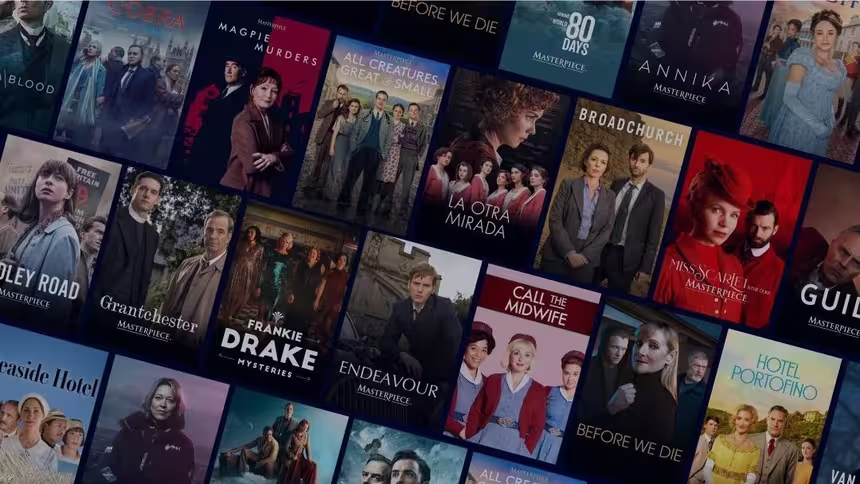
Discover Mysteries, Romances, & More
Explore our hand-picked collections of PBS dramas to find your new favorite show. Browse our catalog of sweeping historical epics, breathtaking romantic dramas, gripping crime thrillers, cozy family shows, and so much more.
Marie Antoinette (Emilia Schüle)
1/9
© Caroline Dubois / Capa Drama / Banijay Studios France / Beside Productions / CANAL+

Louis (Louis Cunningham)
2/9
© Caroline Dubois / Capa Drama / Banijay Studios France / Beside Productions / CANAL+

Chartres (Oscar Lesage)
3/9
© Caroline Dubois / Capa Drama / Banijay Studios France / Beside Productions / CANAL+

Yolande (Liah O’Prey)
4/9
© Caroline Dubois / Capa Drama / Banijay Studios France / Beside Productions / CANAL+

Josephine (Roxane Duran) and Provence (Jack Archer)
5/9
© Caroline Dubois / Capa Drama / Banijay Studios France / Beside Productions / CANAL+

Marie Antoinette (Emilia Schüle)
6/9
© Caroline Dubois / Capa Drama / Banijay Studios France / Beside Productions / CANAL+

Cardinal Rohan (Maximilien Seweryn) and Jeanne (Freya Mavor)
7/9
© Caroline Dubois / Capa Drama / Banijay Studios France / Beside Productions / CANAL+

Lamballe (Jasmine Blackborow)
8/9
© Caroline Dubois / Capa Drama / Banijay Studios France / Beside Productions / CANAL+

Marie Antoinette (Emilia Schüle) and Louis (Louis Cunningham)
9/9
© Caroline Dubois / Capa Drama / Banijay Studios France / Beside Productions / CANAL+













Support for PBS provided by: