<?xml version="1.0" encoding="UTF-8"?>
<rss version="2.0"
	xmlns:content="http://purl.org/rss/1.0/modules/content/"
	xmlns:wfw="http://wellformedweb.org/CommentAPI/"
	xmlns:dc="http://purl.org/dc/elements/1.1/"
	xmlns:atom="http://www.w3.org/2005/Atom"
	xmlns:sy="http://purl.org/rss/1.0/modules/syndication/"
	xmlns:slash="http://purl.org/rss/1.0/modules/slash/"
	>

<channel>
	<title>Nature &#187; Animal Behavior</title>
	<atom:link href="http://www.pbs.org/wnet/nature/category/episodes/by-topic/animal-behavior/feed/" rel="self" type="application/rss+xml" />
	<link>http://www.pbs.org/wnet/nature</link>
	<description>The premiere natural history program on television.</description>
	<lastBuildDate>Fri, 17 May 2013 19:53:38 +0000</lastBuildDate>
	<generator>http://wordpress.org/?v=2.8.4</generator>
	<language>en</language>
	<sy:updatePeriod>hourly</sy:updatePeriod>
	<sy:updateFrequency>1</sy:updateFrequency>
			<item>
		<title>Born Wild: The First Days of Life: Introduction</title>
		<link>http://www.pbs.org/wnet/nature/episodes/born-wild-the-first-days-of-life/introduction/5258/</link>
		<comments>http://www.pbs.org/wnet/nature/episodes/born-wild-the-first-days-of-life/introduction/5258/#comments</comments>
		<pubDate>Sun, 15 Apr 2012 21:45:29 +0000</pubDate>
		<dc:creator>tanner vea</dc:creator>
				<category><![CDATA[Animal Behavior]]></category>
		<category><![CDATA[By Title]]></category>
		<category><![CDATA[Episodes]]></category>
		<category><![CDATA[baby animals]]></category>
		<category><![CDATA[newborn]]></category>
		<category><![CDATA[parenting]]></category>
		<category><![CDATA[Season 28]]></category>

		<guid isPermaLink="false">http://www.pbs.org/wnet/nature/?p=5258</guid>
		<description><![CDATA[Across the animal kingdom, some of the most essential lessons -- and the most extreme challenges -- occur in the first moments of life.  From ostrich to orangutan, egg sac to live birth, infanticide to matricide, the diversity of behaviors between parent and progeny is as great as the diversity of life on our [...]]]></description>
			<content:encoded><![CDATA[<p>Across the animal kingdom, some of the most essential lessons &#8212; and the most extreme challenges &#8212; occur in the first moments of life.  From ostrich to orangutan, egg sac to live birth, infanticide to matricide, the diversity of behaviors between parent and progeny is as great as the diversity of life on our planet.</p>
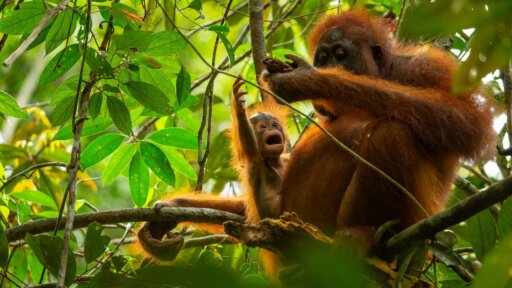
<p>As animal parents struggle to help their young survive their first days in the wild, they face seemingly insurmountable odds.  Penguins travel literally the ends of the Earth to protect their infants, facing Antarctic blizzards while they incubate their eggs.  Amaurobius spider mothers offer their own bodies for their newborns to feast on. Orangutan mothers face up to eight years of single parenthood raising their infants.</p>
<p>Understandably, the process of birthing and raising young is one of the most stressful experiences an animal can endure.  And it is in these very trials that the most extraordinary glimpses of life in the wild come to light. <em>This film premiered November 1, 2009.</em></p>
<p><em>Photo © Philippe Clement</em></p>
]]></content:encoded>
			<wfw:commentRss>http://www.pbs.org/wnet/nature/episodes/born-wild-the-first-days-of-life/introduction/5258/feed/</wfw:commentRss>
		<slash:comments>51</slash:comments>
		</item>
		<item>
		<title>What Females Want: Introduction</title>
		<link>http://www.pbs.org/wnet/nature/episodes/what-females-want/introduction/828/</link>
		<comments>http://www.pbs.org/wnet/nature/episodes/what-females-want/introduction/828/#comments</comments>
		<pubDate>Tue, 21 Feb 2012 15:53:35 +0000</pubDate>
		<dc:creator>admin</dc:creator>
				<category><![CDATA[Animal Behavior]]></category>
		<category><![CDATA[Bonobo]]></category>
		<category><![CDATA[By Title]]></category>
		<category><![CDATA[Gelada]]></category>
		<category><![CDATA[Spider]]></category>
		<category><![CDATA[courtship]]></category>
		<category><![CDATA[mating]]></category>
		<category><![CDATA[sexual selection]]></category>

		<guid isPermaLink="false">http://www.pbs.org/wnet/nature/2008/06/30/introduction-2/</guid>
		<description><![CDATA[Part One: What Females Want &#124; Part Two: What Males Will Do

Female jumping spiders will attack and eat anything that moves. This often includes males who may be courting them. So, if a male falls short in convincing a female that he will be a good mate, he may become lunch. This is a compelling [...]]]></description>
			<content:encoded><![CDATA[<p><strong>Part One: What Females Want</strong> | Part Two: <a href="http://www.pbs.org/wnet/nature/episodes/what-males-will-do/what-males-will-do-introduction/952/" target="_self">What Males Will Do</a></p>
<p>Female jumping spiders will attack and eat anything that moves. This often includes males who may be courting them. So, if a male falls short in convincing a female that he will be a good mate, he may become lunch. This is a compelling reason for males to work hard in perfecting their courtship dances.</p>
<p>In the mating game, it is not always &#8220;do or die,&#8221; but the penalties can be severe, and there is no single tried and true approach when it comes to the fascinating strategy of attracting a mate. Charles Darwin called it &#8220;sexual selection.&#8221; NATURE is calling it <em>What Females Want and Males Will Do</em> for love &#8212; a two-part miniseries about sexual selection.</p>
<p><em>What Females Want and Males Will Do</em> explores the evolution of sexual strategies and what makes certain species winners and losers in the mating game. Courtship drives evolution by controlling whose genes are passed on to the next generation, and intense competition gives rise to a wide array of dazzling displays and impressive ornamentation.</p>
<p>From spiders that dance and monkeys that drum in the name of love, to female geladas that seek male partners with hot, red chest patches &#8212; this program about sexual selection explores the unique behaviors and special adaptations that determine how animals pick their mates, and how these selections affect future generations. In some species, the normal rules of mating are turned on their head, such as the feisty female topi antelope champing at the bit to have sex with an aloof male or bonobo males practicing free love.</p>
<p>Scientists around the world are making amazing new discoveries about the complex nature of courtship and competition throughout the animal kingdom. It&#8217;s sexual education that takes us way beyond the &#8220;birds and the bees.&#8221;</p>
<p><em>Part One: What Females Want</em> &#8212; In the animal world females often call the shots. But their decisions may be surprising. In an effort to understand the mating game, NATURE follows biologist Chadden Hunter, PhD, through the Simien Mountains of northern Ethiopia, as he observes a troop of geladas, close cousins of baboons. He found that in gelada society females make all the decisions about mating, even though males are twice their size. The males are evaluated on everything from body heat to baby sitting skills. And once selected, no male gelada can ever rest on his laurels. Another male is always auditioning for his job.</p>
<p>You&#8217;ll also see female barn swallows that choose a male by the color of his chest and encounter a robotic sage grouse that is helping researchers learn about this species&#8217; elaborate courtship displays.</p>
<p>To order a copy of <em>What Females Want and Males Will Do</em>, please <a href="http://www.shopthirteen.org/product/show/34374" target="_blank">visit the NATURE Shop</a>.</p>
<p>Online content for <em>What Females Want</em> was originally posted April 2008.</p>
]]></content:encoded>
			<wfw:commentRss>http://www.pbs.org/wnet/nature/episodes/what-females-want/introduction/828/feed/</wfw:commentRss>
		<slash:comments>5</slash:comments>
		</item>
		<item>
		<title>Why We Love Cats and Dogs: Introduction</title>
		<link>http://www.pbs.org/wnet/nature/episodes/why-we-love-cats-and-dogs/introduction/4538/</link>
		<comments>http://www.pbs.org/wnet/nature/episodes/why-we-love-cats-and-dogs/introduction/4538/#comments</comments>
		<pubDate>Thu, 10 Nov 2011 01:36:23 +0000</pubDate>
		<dc:creator>tanner vea</dc:creator>
				<category><![CDATA[Animal Behavior]]></category>
		<category><![CDATA[By Title]]></category>
		<category><![CDATA[Cat]]></category>
		<category><![CDATA[Dog]]></category>
		<category><![CDATA[Episodes]]></category>
		<category><![CDATA[Featured]]></category>
		<category><![CDATA[Humans & Nature]]></category>
		<category><![CDATA[cats]]></category>
		<category><![CDATA[dogs]]></category>
		<category><![CDATA[friendship]]></category>
		<category><![CDATA[pets]]></category>
		<category><![CDATA[Season 27]]></category>

		<guid isPermaLink="false">http://www.pbs.org/wnet/nature/?p=4538</guid>
		<description><![CDATA[Some people are cat people, some are dog people.  But regardless of which camp they fall into, most people are simply crazy about their pets.  The connections people form with their cats and dogs are often the longest, strongest relationships in their lives.  They are our soul mates, our best friends, sometimes even our surrogate [...]]]></description>
			<content:encoded><![CDATA[<p>Some people are cat people, some are dog people.  But regardless of which camp they fall into, most people are simply crazy about their pets.  The connections people form with their cats and dogs are often the longest, strongest relationships in their lives.  They are our soul mates, our best friends, sometimes even our surrogate children.  What makes these creatures such key members of our families?</p>
<p>Perhaps it&#8217;s because our furry friends have long provided us with comfort, camaraderie, and unconditional love. Cats and dogs are our unending source of kisses, cuddles, slobber, claws, and laughs. Watch as NATURE shares the stories of pet owners and their beloved animals. From a very special dog named Jerry, to a cat that saved a man’s life, <em>Why We Love Cats and Dogs</em> presents a portrait of some of the most powerful and remarkable connections we experience as humans—the unbreakable bonds with our pets.</p>
<p>Four-time Emmy Award winner, filmmaker and director Ellen Goosenberg Kent kept the 10-month production of NATURE&#8217;s <em>Why We Love Cats and Dogs</em> on the right track. Ellen brings a strong visual sense to the art of storytelling and was able to illuminate the dynamic human-pet relationship, revealing how dogs and cats share our emotions in many significant ways.</p>
<p><strong>Update February 19, 2009: </strong>Professional dog trainer and behaviorist <a href="http://www.pbs.org/engage/blog/five-good-answers-animal-behavior-expert-sarah-wilson" target="_blank">Sarah Wilson answers Five Good Questions</a> on PBS Engage.</p>
<p><em>Online content for Why We Love Cats and Dogs was originally posted February 2009.</em></p>
<p><em>Photo by Joe Sinnot © EBC</em></p>
]]></content:encoded>
			<wfw:commentRss>http://www.pbs.org/wnet/nature/episodes/why-we-love-cats-and-dogs/introduction/4538/feed/</wfw:commentRss>
		<slash:comments>142</slash:comments>
		</item>
		<item>
		<title>Invasion of the Giant Pythons: Introduction</title>
		<link>http://www.pbs.org/wnet/nature/episodes/invasion-of-the-giant-pythons/introduction/5532/</link>
		<comments>http://www.pbs.org/wnet/nature/episodes/invasion-of-the-giant-pythons/introduction/5532/#comments</comments>
		<pubDate>Sun, 16 Oct 2011 18:28:59 +0000</pubDate>
		<dc:creator>tanner vea</dc:creator>
				<category><![CDATA[Animal Behavior]]></category>
		<category><![CDATA[By Title]]></category>
		<category><![CDATA[Environment & Conservation]]></category>
		<category><![CDATA[Humans & Nature]]></category>
		<category><![CDATA[Snake]]></category>
		<category><![CDATA[Burmese pythons]]></category>
		<category><![CDATA[invasive species]]></category>
		<category><![CDATA[reptiles]]></category>
		<category><![CDATA[Season 28]]></category>
		<category><![CDATA[snakes]]></category>

		<guid isPermaLink="false">http://www.pbs.org/wnet/nature/?p=5532</guid>
		<description><![CDATA[As part of an ever popular international pet trade market, and incidentally along paths of human travel, many exotic animals have been removed from their native lands and landed where they are not necessarily welcome arrivals. Among these invasive species are a growing number of Burmese pythons, which have taken up residence in the wetlands [...]]]></description>
			<content:encoded><![CDATA[<p>As part of an ever popular international pet trade market, and incidentally along paths of human travel, many exotic animals have been removed from their native lands and landed where they are not necessarily welcome arrivals. Among these invasive species are a growing number of Burmese pythons, which have taken up residence in the wetlands of Florida, courtesy of overwhelmed pet owners and hurricane-hit animal warehouses. </p>
<p>Accidentally or intentionally released pythons and other exotic animals, such as parrots, reptiles, and lizards are inhabiting dry as well as wet habitats, and feeding on or competing with native species.  Giant pythons are well-adapted for success in Florida, where the habitat is similar to their Asian home. Although they are non-venomous, pythons are among the largest snakes in the world, reaching up to twenty-six feet long. Their size and power makes them one of the top predators in Florida’s Everglades National Park, taking on even the alligators, and posing a threat to many of the indigenous and endangered species.</p>
<p>NATURE follows teams of scientists and hunters as they use their vast knowledge of snakes and their prey to uncover the impact of the pythons on the park’s fragile ecosystems. Herpetologist Shawn Heflick uses some innovative techniques to observe the mechanics of the snake’s bite, while scientists Stephen Secor and Skip Snow employ advanced technology to analyze the ways in which pythons swallow and digest animals that can be more than half their own body size. Watch as a wild python ingests an alligator whole. </p>
<p>Journey with NATURE as it investigates what comes next in the story of the <em>Invasion of the Giant Pythons</em>.</p>
]]></content:encoded>
			<wfw:commentRss>http://www.pbs.org/wnet/nature/episodes/invasion-of-the-giant-pythons/introduction/5532/feed/</wfw:commentRss>
		<slash:comments>75</slash:comments>
		</item>
		<item>
		<title>A Murder of Crows: Introduction</title>
		<link>http://www.pbs.org/wnet/nature/episodes/a-murder-of-crows/introduction/5838/</link>
		<comments>http://www.pbs.org/wnet/nature/episodes/a-murder-of-crows/introduction/5838/#comments</comments>
		<pubDate>Wed, 28 Sep 2011 17:23:20 +0000</pubDate>
		<dc:creator>rezvanib</dc:creator>
				<category><![CDATA[Animal Behavior]]></category>
		<category><![CDATA[Bird]]></category>
		<category><![CDATA[By Animal]]></category>
		<category><![CDATA[By Topic]]></category>
		<category><![CDATA[Episodes]]></category>
		<category><![CDATA[Featured]]></category>
		<category><![CDATA[Uncategorized]]></category>
		<category><![CDATA[Video]]></category>
		<category><![CDATA[crows]]></category>

		<guid isPermaLink="false">http://www.pbs.org/wnet/nature/?p=5838</guid>
		<description><![CDATA[Crow experts present us with new footage of crows.]]></description>
			<content:encoded><![CDATA[(<a href='http://www.pbs.org/wnet/nature/episodes/a-murder-of-crows/introduction/5838/'>View full post to see video</a>)
<p>Crows live everywhere in the world except Antarctica and are a part of myths and legends in many cultures. Their reputation in the stories varies from comical to frightening, godlike or wise, bringers of light and bringers of death, though a “murder” of crows refers to a flock of crows, and not to anything murderous, at all. They may be all these things, but what we are learning is that they are especially smart.</p>
<p>New research has shown that they are among the most intelligent animals on the planet. They use tools as only elephants and chimpanzees do, and recognize 250 distinct calls. One particular talent they have been discovered to possess is the ability to recognize individual human faces and pick them out of a crowd up to two years later – a trick that might make even Hitchcock shiver with fright.</p>
<p>They thrive wherever people live and have used their great intelligence to adapt again and again to a constantly changing world. Some memorize garbage truck routes, and follow the feast from day to day. Others drop nuts in the road and wait for passing cars to crack them open. And some build their nests from items we throw away – like wire clothes hangers.</p>
<p>These are social birds that mate for life and raise their young for up to five years. And they learn from each other’s misfortunes. When one is killed in a farmer’s field, it’s not uncommon for them to change entire migratory patterns so that no crows fly over that field for as long as two years.</p>
<p>These birds might have a scary reputation, but what may prove to be the scariest thing about them is how much they know about us, and how little we know about them!</p>
<p><em>A Murder of Crows premieres Sunday, October 24 at 8:00 PM.</em></p>
]]></content:encoded>
			<wfw:commentRss>http://www.pbs.org/wnet/nature/episodes/a-murder-of-crows/introduction/5838/feed/</wfw:commentRss>
		<slash:comments>135</slash:comments>
		</item>
		<item>
		<title>Dogs That Changed the World: Introduction</title>
		<link>http://www.pbs.org/wnet/nature/episodes/dogs-that-changed-the-world/introduction/1273/</link>
		<comments>http://www.pbs.org/wnet/nature/episodes/dogs-that-changed-the-world/introduction/1273/#comments</comments>
		<pubDate>Tue, 13 Sep 2011 00:05:10 +0000</pubDate>
		<dc:creator>admin</dc:creator>
				<category><![CDATA[Animal Behavior]]></category>
		<category><![CDATA[By Title]]></category>
		<category><![CDATA[Dog]]></category>
		<category><![CDATA[Humans & Nature]]></category>
		<category><![CDATA[Wolf]]></category>
		<category><![CDATA[breeds]]></category>
		<category><![CDATA[dogs]]></category>
		<category><![CDATA[wolves]]></category>

		<guid isPermaLink="false">http://www.pbs.org/wnet/nature/2008/08/15/overview-7/</guid>
		<description><![CDATA[

NATURE's two-part special Dogs That Changed the World tells the epic story of the wolf's evolution, how "man's best friend" changed human society and how we in turn have radically transformed dogs.

From the tiniest Chihuahua to the powerful and massive English Mastiff, modern domesticated dogs come in a bewildering array of shapes and sizes, with [...]]]></description>
			<content:encoded><![CDATA[<p><a href="http://www.shoppbs.org/entry.point?target=z&amp;source=pbscs_content_topnav:n:dgr:n:n:707:qpbs" target="_blank"></a></p>
<p>NATURE&#8217;s two-part special <em>Dogs That Changed the World</em> tells the epic story of the wolf&#8217;s evolution, how &#8220;man&#8217;s best friend&#8221; changed human society and how we in turn have radically transformed dogs.</p>
<p>From the tiniest Chihuahua to the powerful and massive English Mastiff, modern domesticated dogs come in a bewildering array of shapes and sizes, with an equally diverse range of temperaments and behaviors. And yet, according to genetics, all dogs evolved from the savage and wild wolf &#8212; in a transformation that occurred just 15,000 years ago.</p>
<p>In Part One, &#8220;The Rise of the Dog,&#8221; you&#8217;ll learn about how the domestication of dogs might have taken place, including the theory of biologist Raymond Coppinger that it was the animals themselves &#8212; and human trash &#8212; that inspired the transformation. The genetic analysis of Peter Savolainen of the Royal Institute of Technology in Sweden has placed the origins of domesticated dogs &#8212; and those of the first dog &#8212; in East Asia. You&#8217;ll also discover 14 dog breeds that controversial genetic studies show are the most ancient &#8212; and the best living representatives of the ancestors to all living dogs.</p>
<p><strong>Preview Part Two: Dogs by Design</strong></p>
<br /><img src="http://www.pbs.org/wnet/nature/wp-content/blogs.dir/3/files/dog-pt2-promo-big.jpg" alt="media"><br />

<p>Over 400 breeds of dog are recognized around the world, each unique for its personality, habits, and form. Most of these breeds exploded onto the scene over the past 150 years, spurred by the Victorian-era passion for the &#8220;dog fancy&#8221; &#8212; the selective breeding of dogs to enhance particular characteristics. By tinkering with its genetics, humans made the dog the most varied animal species on the planet &#8212; and also created a host of hereditary health problems.</p>
<p>Despite the plethora of new shapes and sizes, dogs have retained the instincts bred into their ancestors by thousands of years of work: the urge to herd or hunt, to dig and to guard. In Part Two, &#8220;Dogs by Design,&#8221; you&#8217;ll discover how these hard-wired behaviors help different types of dogs, from hounds to herders, excel at different tasks (and why it can sometimes be so difficult to train them to do otherwise). You&#8217;ll also learn how dogs&#8217; finely tuned senses are serving humans and saving lives. <a href="http://www.shoppbs.org/product/index.jsp?productId=2961612&amp;cp=&amp;sr=1&amp;kw=dogs+that+changed&amp;origkw=dogs+that+changed&amp;parentPage=search">Buy the DVD.</a> <em>This film premiered April 2007.</em></p>
]]></content:encoded>
			<wfw:commentRss>http://www.pbs.org/wnet/nature/episodes/dogs-that-changed-the-world/introduction/1273/feed/</wfw:commentRss>
		<slash:comments>203</slash:comments>
		</item>
		<item>
		<title>Hummingbirds: Magic in the Air: Introduction</title>
		<link>http://www.pbs.org/wnet/nature/episodes/hummingbirds-magic-in-the-air/introduction/5424/</link>
		<comments>http://www.pbs.org/wnet/nature/episodes/hummingbirds-magic-in-the-air/introduction/5424/#comments</comments>
		<pubDate>Mon, 12 Sep 2011 18:57:00 +0000</pubDate>
		<dc:creator>tanner vea</dc:creator>
				<category><![CDATA[Animal Behavior]]></category>
		<category><![CDATA[Bird]]></category>
		<category><![CDATA[By Title]]></category>
		<category><![CDATA[Hummingbird]]></category>
		<category><![CDATA[birds]]></category>
		<category><![CDATA[hummingbirds]]></category>
		<category><![CDATA[Season 28]]></category>

		<guid isPermaLink="false">http://www.pbs.org/wnet/nature/?p=5424</guid>
		<description><![CDATA[Hummingbirds take extraordinary to a whole new level.  They are the smallest warm-blooded creatures on the planet, but they are also among the fastest.  With wings that beat up to 200 times every second, they are among nature’s most accomplished athletes, the only birds able to hover, fly backwards, and even upside down. [...]]]></description>
			<content:encoded><![CDATA[<p>Hummingbirds take extraordinary to a whole new level.  They are the smallest warm-blooded creatures on the planet, but they are also among the fastest.  With wings that beat up to 200 times every second, they are among nature’s most accomplished athletes, the only birds able to hover, fly backwards, and even upside down.  Hummingbird metabolisms are set in permanent overdrive, requiring them to consume more than half their body weight in nectar every day, yet even so, they remain in constant threat of starving to death as they sleep.  To survive the night, they fluff up their feathers and adjust their thermostats, decreasing their body temperatures by half and reducing their heart rate from 600 beats per minute to a mere 36.</p>
<p>Because hummingbirds live their lives in fast forward, much of their fascinating world is typically lost to human perception.  But using cameras able to capture over 500 images a second, the hummingbirds’ magical world can finally be seen and appreciated.  Amazing footage shows these little powerhouses are far more than delicate nectar gatherers &#8212; they are also deadly predators.  And watch as the birds display their elaborate mating rituals, showing off with nose dives that subject them to over ten G’s of force &#8212; enough to cause an experienced fighter pilot to black out!</p>
<p>These tiny marvels dazzle and delight bird watchers all over the world, and NATURE reveals their stunning abilities as they have never been seen before.</p>
]]></content:encoded>
			<wfw:commentRss>http://www.pbs.org/wnet/nature/episodes/hummingbirds-magic-in-the-air/introduction/5424/feed/</wfw:commentRss>
		<slash:comments>147</slash:comments>
		</item>
		<item>
		<title>Supersize Crocs: Introduction</title>
		<link>http://www.pbs.org/wnet/nature/episodes/supersize-crocs/introduction/1746/</link>
		<comments>http://www.pbs.org/wnet/nature/episodes/supersize-crocs/introduction/1746/#comments</comments>
		<pubDate>Fri, 26 Aug 2011 14:41:26 +0000</pubDate>
		<dc:creator>admin</dc:creator>
				<category><![CDATA[Animal Behavior]]></category>
		<category><![CDATA[By Title]]></category>
		<category><![CDATA[Crocodile]]></category>
		<category><![CDATA[Environment & Conservation]]></category>
		<category><![CDATA[conservation]]></category>
		<category><![CDATA[crocodiles]]></category>
		<category><![CDATA[reptiles]]></category>

		<guid isPermaLink="false">http://www.pbs.org/wnet/nature/2008/09/02/overview-3/</guid>
		<description><![CDATA[Crocodiles instill fear in most people at any size. But crocodile conservationist, Romulus Whitaker's fear is that the most colossal of these creatures might no longer exist. Rom suspects that human hunting may have selectively killed off crocs surpassing 20 feet in length. A sad fact considering the sophisticated adaptations and body design of crocodiles [...]]]></description>
			<content:encoded><![CDATA[<p>Crocodiles instill fear in most people at any size. But crocodile conservationist, Romulus Whitaker&#8217;s fear is that the most colossal of these creatures might no longer exist. Rom suspects that human hunting may have selectively killed off crocs surpassing 20 feet in length. A sad fact considering the sophisticated adaptations and body design of crocodiles have helped them outlast even dinosaurs.</p>
<p>In <em>Supersize Crocs</em>, Rom takes viewers along as he sets off on his own hunt to find the last of the leviathans. Venturing to Ethiopia&#8217;s Lake Chamo, the riverbanks of India&#8217;s northern border with Nepal, and to the Adelaide River of Australian outback, Rom hits the hotspots of supersize croc habitats as he searches for signs of life among the brackish waters. Rom will share with viewers his insight and fascination with the cryptic world of crocs. Along the way, viewers will learn about ancient croc survival skills as well as how crocs are ideally designed to be the most successful freshwater predator.</p>
<p>Will he find his supersize croc among the three titans of the croc world: the Nile crocodiles, saltwater crocodiles and gharials? Tune in to find out.</p>
<p>To order a copy of <em>Supersize Crocs</em>, please <a href="http://www.shopthirteen.org/product/show/29330" target="_blank">visit the NATURE Shop</a>.</p>
<p>Online content for <em>Supersize Crocs</em> was originally posted February 2007.</p>
]]></content:encoded>
			<wfw:commentRss>http://www.pbs.org/wnet/nature/episodes/supersize-crocs/introduction/1746/feed/</wfw:commentRss>
		<slash:comments>11</slash:comments>
		</item>
		<item>
		<title>Clever Monkeys: Introduction</title>
		<link>http://www.pbs.org/wnet/nature/episodes/clever-monkeys/introduction/3946/</link>
		<comments>http://www.pbs.org/wnet/nature/episodes/clever-monkeys/introduction/3946/#comments</comments>
		<pubDate>Mon, 22 Aug 2011 13:52:10 +0000</pubDate>
		<dc:creator>tanner vea</dc:creator>
				<category><![CDATA[Animal Behavior]]></category>
		<category><![CDATA[By Title]]></category>
		<category><![CDATA[Episodes]]></category>
		<category><![CDATA[Monkey]]></category>
		<category><![CDATA[culture]]></category>
		<category><![CDATA[intelligence]]></category>
		<category><![CDATA[monkeys]]></category>
		<category><![CDATA[Season 27]]></category>

		<guid isPermaLink="false">http://www.pbs.org/wnet/nature/?p=3946</guid>
		<description><![CDATA[Just how smart are monkeys? Their innate curiosity leads them to try new things, but it’s their culture -- the passing of information from one generation to the next -- that teaches them much of what they know. Their young learn by reaching out with their hands to experience the world around them, grasping new [...]]]></description>
			<content:encoded><![CDATA[<p>Just how smart are monkeys? Their innate curiosity leads them to try new things, but it’s their culture &#8212; the passing of information from one generation to the next &#8212; that teaches them much of what they know. Their young learn by reaching out with their hands to experience the world around them, grasping new objects, slowly piecing together an understanding of their society. They learn from their families how to find food, communicate, recognize kin, even use tools, medicine, and language. It is these familiar actions that make monkeys so fascinating to humans. We can see ourselves in their faces, our nature in their actions.</p>
<p class="MsoNormal">NATURE travels around the world to visit some of these fascinating primates. From tiny pygmy marmoset in South America to aggressive baboons of Africa and compassionate toque macaques in Sri Lanka, <em>Clever Monkeys</em><span> challenges many ideas about what is purely “human.” <a href="http://www.shoppbs.org/product/index.jsp?productId=3511832&amp;cp=&amp;kw=clever+monkeys&amp;origkw=Clever+Monkeys&amp;sr=1">Buy the DVD.</a> This film premiered November 9, 2008.</p>
]]></content:encoded>
			<wfw:commentRss>http://www.pbs.org/wnet/nature/episodes/clever-monkeys/introduction/3946/feed/</wfw:commentRss>
		<slash:comments>109</slash:comments>
		</item>
		<item>
		<title>Is That Skunk?: Introduction</title>
		<link>http://www.pbs.org/wnet/nature/episodes/is-that-skunk/introduction/4514/</link>
		<comments>http://www.pbs.org/wnet/nature/episodes/is-that-skunk/introduction/4514/#comments</comments>
		<pubDate>Thu, 11 Aug 2011 12:28:47 +0000</pubDate>
		<dc:creator>tanner vea</dc:creator>
				<category><![CDATA[Animal Behavior]]></category>
		<category><![CDATA[By Title]]></category>
		<category><![CDATA[Humans & Nature]]></category>
		<category><![CDATA[Skunk]]></category>
		<category><![CDATA[adoption]]></category>
		<category><![CDATA[sanctuaries]]></category>
		<category><![CDATA[Season 27]]></category>
		<category><![CDATA[skunks]]></category>

		<guid isPermaLink="false">http://www.pbs.org/wnet/nature/?p=4514</guid>
		<description><![CDATA[We find them in the evening digging through our garbage, hiding under our houses, or walking through our yards, streets, and parks. Skunks seem perfectly adapted to life around us. But we are less comfortable around them, for fear of their potent spray. As we expand our urban areas, many skunks find themselves increasingly unwelcome [...]]]></description>
			<content:encoded><![CDATA[<p>We find them in the evening digging through our garbage, hiding under our houses, or walking through our yards, streets, and parks. Skunks seem perfectly adapted to life around us. But we are less comfortable around them, for fear of their potent spray. As we expand our urban areas, many skunks find themselves increasingly unwelcome neighbors. It seems everyone has their own skunk story. But what do we really know about these infamous black and white creatures?</p>
<p>Watch as a California town overrun with skunks deals with their furry problem, and see what life is like for an evolutionary biologist in New Mexico who runs one of the few sanctuaries for skunks. Meet a researcher on the sandy shores of Martha&#8217;s Vineyard who stalks her striped specimens at night, and a woman in Ohio who runs a shelter and adoption agency for abandoned pet skunks. <em>Is That Skunk?</em> paints a complete portrait of the misunderstood skunk family, <em>Mephitidae</em>, and the people who love them.</p>
<p><strong>To order a copy of <em>Is That Skunk? </em>please <a href="http://www.shopthirteen.org/product/show/53819" target="_blank">visit the NATURE Shop</a>.</strong></p>
<p>Online content for <em>Is That Skunk? </em>was originally posted January 2009.</p>
<p><em>Photo credit: Cici Clark / © WNET.ORG</em></p>
]]></content:encoded>
			<wfw:commentRss>http://www.pbs.org/wnet/nature/episodes/is-that-skunk/introduction/4514/feed/</wfw:commentRss>
		<slash:comments>120</slash:comments>
		</item>
	</channel>
</rss>

<!-- Served @ 2013-05-18 21:02:40 by W3 Total Cache -->