<?xml version="1.0" encoding="UTF-8"?>
<rss version="2.0"
	xmlns:content="http://purl.org/rss/1.0/modules/content/"
	xmlns:wfw="http://wellformedweb.org/CommentAPI/"
	xmlns:dc="http://purl.org/dc/elements/1.1/"
	xmlns:atom="http://www.w3.org/2005/Atom"
	xmlns:sy="http://purl.org/rss/1.0/modules/syndication/"
	xmlns:slash="http://purl.org/rss/1.0/modules/slash/"
	>

<channel>
	<title>Nature &#187; Current Season</title>
	<atom:link href="http://www.pbs.org/wnet/nature/category/episodes/current-season/feed/" rel="self" type="application/rss+xml" />
	<link>http://www.pbs.org/wnet/nature</link>
	<description>The premier natural history series</description>
	<lastBuildDate>Mon, 07 Dec 2009 20:31:58 +0000</lastBuildDate>
	<generator>http://wordpress.org/?v=2.8.4</generator>
	<language>en</language>
	<sy:updatePeriod>hourly</sy:updatePeriod>
	<sy:updateFrequency>1</sy:updateFrequency>
			<item>
		<title>Fellowship of the Whales: Introduction</title>
		<link>http://www.pbs.org/wnet/nature/episodes/fellowship-of-the-whales/introduction/5263/</link>
		<comments>http://www.pbs.org/wnet/nature/episodes/fellowship-of-the-whales/introduction/5263/#comments</comments>
		<pubDate>Thu, 22 Oct 2009 20:23:50 +0000</pubDate>
		<dc:creator>tanner vea</dc:creator>
				<category><![CDATA[Animal Behavior]]></category>
		<category><![CDATA[By Title]]></category>
		<category><![CDATA[Current Season]]></category>
		<category><![CDATA[Whale]]></category>
		<category><![CDATA[Alaska]]></category>
		<category><![CDATA[baby animals]]></category>
		<category><![CDATA[Hawaii]]></category>
		<category><![CDATA[humpback whales]]></category>
		<category><![CDATA[whales]]></category>

		<guid isPermaLink="false">http://www.pbs.org/wnet/nature/?p=5263</guid>
		<description><![CDATA[In Hawaii, where new land is born as volcanic rock, another birth takes place.  A baby humpback enters the world and joins the 3,000 or more whales that congregate in the warm waters off Hawaii each winter to mate and give birth.  This is the story of her first year of life.  [...]]]></description>
			<content:encoded><![CDATA[<p>In Hawaii, where new land is born as volcanic rock, another birth takes place.  A baby humpback enters the world and joins the 3,000 or more whales that congregate in the warm waters off Hawaii each winter to mate and give birth.  This is the story of her first year of life.  Over twelve months she will learn many skills from her mother, and eventually they will make the several-thousand-mile journey together to Alaska’s southeast coast.</p>
<p>Humpbacks travel between Hawaii and Alaska every year, guided by their internal compass.  The krill-rich waters of Alaska’s Alexander Archipelago are the whales’ summer feeding grounds, an environment very different from the calving grounds they have left behind in Hawaii.  Here, more than the water temperature changes, the behavior of the whales changes, as well.  While fiercely competitive in the breeding season in Hawaii, fighting for mates and protecting young, the opposite is true in Alaska.  Whales cooperate, working in teams to gather food in the most efficient way possible.  When the summer ends and the food is gone, mother and baby will head back to Hawaii again.</p>
<p>The young humpback calf has only a year to learn the subtleties of whale society before she is left by her mother to continue her education on her own, learning from observation and experience.  It’s an incredible journey between two strikingly different environments that reveals the true complexity of the fellowship of the whales.</p>
<p><strong>NATURE’s <em>Fellowship of the Whales</em> premieres Sunday, November 15 at 8pm (<a href="http://www.pbs.org/wnet/nature/schedule/">check local listings</a>).</strong></p>
<p><em>Photo © 2008 (Peggy Stap / Hawaii Whale Research Foundation) under NMFS Research Permit No. 587-1767-01</em></p>
]]></content:encoded>
			<wfw:commentRss>http://www.pbs.org/wnet/nature/episodes/fellowship-of-the-whales/introduction/5263/feed/</wfw:commentRss>
		<slash:comments>12</slash:comments>
		</item>
		<item>
		<title>Black Mamba: Introduction</title>
		<link>http://www.pbs.org/wnet/nature/episodes/black-mamba/introduction/5260/</link>
		<comments>http://www.pbs.org/wnet/nature/episodes/black-mamba/introduction/5260/#comments</comments>
		<pubDate>Fri, 02 Oct 2009 13:49:21 +0000</pubDate>
		<dc:creator>tanner vea</dc:creator>
				<category><![CDATA[Animal Behavior]]></category>
		<category><![CDATA[By Title]]></category>
		<category><![CDATA[Current Season]]></category>
		<category><![CDATA[Humans & Nature]]></category>
		<category><![CDATA[Snake]]></category>
		<category><![CDATA[Africa]]></category>
		<category><![CDATA[reptiles]]></category>
		<category><![CDATA[snakes]]></category>
		<category><![CDATA[Swaziland]]></category>
		<category><![CDATA[venom]]></category>

		<guid isPermaLink="false">http://www.pbs.org/wnet/nature/?p=5260</guid>
		<description><![CDATA[The black mamba is Africa’s deadliest snake.  Untreated, its bite has a fatality rate of 100 percent, making it a killer among killers on a continent where it is thought that nearly 20,000 people die of snake bites each year, and the residents of Swaziland in southern Africa have suffered losses for generations.  [...]]]></description>
			<content:encoded><![CDATA[<p>The black mamba is Africa’s deadliest snake.  Untreated, its bite has a fatality rate of 100 percent, making it a killer among killers on a continent where it is thought that nearly 20,000 people die of snake bites each year, and the residents of Swaziland in southern Africa have suffered losses for generations.  With essentially no access to anti-venom, many people turn to traditional healers for help, but their herbal remedies always fail, leaving Swazis feeling fearful and defenseless against one of their nation’s most infamous killers.</p>
<p>Swaziland resident Clifton Koen doesn’t really care for snakes, but his wife, Thea Litschka-Koen, is crazy about them.  With her husband’s sometimes reluctant help, she has endeavored to change attitudes about black mambas and other snakes found in the area.  In addition to starting the nation’s only reptile park, devoted to educating the public and providing a refuge for the animals, the two have become the region’s go-to experts for safe, humane snake removal from homes, schools, resorts and workplaces.  In the course of catching and relocating any number of snakes per day, Thea and Clifton give impromptu lessons about the snakes, covering fact and fiction, and do their best to prevent any unnecessary casualties – human or reptile.</p>
<p>In addition to their other efforts, Thea and Clifton developed a program designed to track black mambas in the wild for the first time and to gain new insights into their behavior.  With the help of a snake expert from Johannesburg, they were able to surgically insert radio transmitters in a number of captured black mambas, allowing them to follow the snakes after their release.  If their research pays off, they may be able to show that their relocations are working, successfully removing snakes from residential areas for the long term, and thereby bringing some relief to the locals and some respite for the snakes.</p>
<p><strong>NATURE’s <em>Black Mamba</em> premieres Sunday, November 8 at 8pm (<a href="http://www.pbs.org/wnet/nature/schedule/">check local listings</a>).</strong></p>
<p><em>Photo by Andrew Yarme © Tigress Productions</em></p>
]]></content:encoded>
			<wfw:commentRss>http://www.pbs.org/wnet/nature/episodes/black-mamba/introduction/5260/feed/</wfw:commentRss>
		<slash:comments>25</slash:comments>
		</item>
		<item>
		<title>Born Wild: The First Days of Life: Introduction</title>
		<link>http://www.pbs.org/wnet/nature/episodes/born-wild-the-first-days-of-life/introduction/5258/</link>
		<comments>http://www.pbs.org/wnet/nature/episodes/born-wild-the-first-days-of-life/introduction/5258/#comments</comments>
		<pubDate>Thu, 01 Oct 2009 21:45:29 +0000</pubDate>
		<dc:creator>tanner vea</dc:creator>
				<category><![CDATA[Animal Behavior]]></category>
		<category><![CDATA[By Title]]></category>
		<category><![CDATA[Current Season]]></category>
		<category><![CDATA[baby animals]]></category>
		<category><![CDATA[newborn]]></category>
		<category><![CDATA[parenting]]></category>

		<guid isPermaLink="false">http://www.pbs.org/wnet/nature/?p=5258</guid>
		<description><![CDATA[Enter the Baby Animal Photo Contest for a chance to win this program on DVD!

Across the animal kingdom, some of the most essential lessons -- and the most extreme challenges -- occur in the first moments of life.  From ostrich to orangutan, egg sac to live birth, infanticide to matricide, the diversity of behaviors [...]]]></description>
			<content:encoded><![CDATA[<p><strong><a href="http://www.pbs.org/wnet/nature/episodes/born-wild-the-first-days-of-life/enter-the-baby-animal-photo-contest/5277/">Enter the Baby Animal Photo Contest</a> for a chance to win this program on DVD!</strong></p>
<p>Across the animal kingdom, some of the most essential lessons &#8212; and the most extreme challenges &#8212; occur in the first moments of life.  From ostrich to orangutan, egg sac to live birth, infanticide to matricide, the diversity of behaviors between parent and progeny is as great as the diversity of life on our planet.</p>
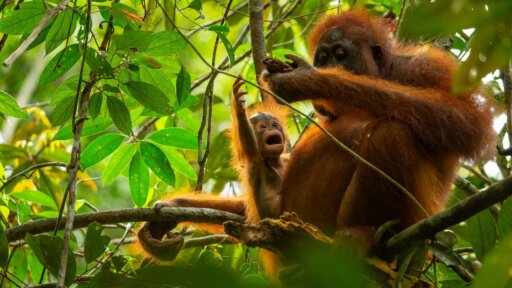
<p>As animal parents struggle to help their young survive their first days in the wild, they face seemingly insurmountable odds.  Penguins travel literally the ends of the Earth to protect their infants, facing Antarctic blizzards while they incubate their eggs.  Amaurobius spider mothers offer their own bodies for their newborns to feast on. Orangutan mothers face up to eight years of single parenthood raising their infants.</p>
<p>Understandably, the process of birthing and raising young is one of the most stressful experiences an animal can endure.  And it is in these very trials that the most extraordinary glimpses of life in the wild come to light.</p>
<p><strong>NATURE’s <em>Born Wild: The First Days of Life</em> premieres Sunday, November 1 at 8pm (<a href="http://www.pbs.org/wnet/nature/schedule/">check local listings</a>). </strong></p>
<p><em>Photo © Philippe Clement</em></p>
]]></content:encoded>
			<wfw:commentRss>http://www.pbs.org/wnet/nature/episodes/born-wild-the-first-days-of-life/introduction/5258/feed/</wfw:commentRss>
		<slash:comments>20</slash:comments>
		</item>
		<item>
		<title>Cloud: Challenge of the Stallions: Introduction</title>
		<link>http://www.pbs.org/wnet/nature/episodes/cloud-challenge-of-the-stallions/introduction/936/</link>
		<comments>http://www.pbs.org/wnet/nature/episodes/cloud-challenge-of-the-stallions/introduction/936/#comments</comments>
		<pubDate>Wed, 30 Sep 2009 22:49:46 +0000</pubDate>
		<dc:creator>tanner vea</dc:creator>
				<category><![CDATA[Animal Behavior]]></category>
		<category><![CDATA[By Title]]></category>
		<category><![CDATA[Current Season]]></category>
		<category><![CDATA[Horse]]></category>
		<category><![CDATA[Humans & Nature]]></category>
		<category><![CDATA[Cloud]]></category>
		<category><![CDATA[Ginger Kathrens]]></category>
		<category><![CDATA[horses]]></category>
		<category><![CDATA[Season 28]]></category>

		<guid isPermaLink="false">http://www.pbs.org/wnet/nature/?p=936</guid>
		<description><![CDATA[Acclaimed wildlife filmmaker Ginger Kathrens has been filming the life of the remarkable wild stallion, Cloud, since the day of his birth in 1995, allowing NATURE viewers to watch as he grew from tiny foal to the powerful leader of the largest band of wild horses in the Arrowhead Mountains that he is today.  [...]]]></description>
			<content:encoded><![CDATA[<p>Acclaimed wildlife filmmaker Ginger Kathrens has been filming the life of the remarkable wild stallion, Cloud, since the day of his birth in 1995, allowing NATURE viewers to watch as he grew from tiny foal to the powerful leader of the largest band of wild horses in the Arrowhead Mountains that he is today.  Along the way, much has been learned about wild horse society and the importance of family and loyalty in their dangerous and unpredictable world.</p>
<p>In this chapter of his story, Cloud is one of two fathers who bring up each other’s sons.  Bolder is Cloud’s son by birth – beautiful and golden, but raised by Shaman, a rival band stallion.  Flint, dark and determined, was sired by Shaman, but became Cloud’s adopted son.  The two sons mature and progress from playful youths into valid contenders for mares and bands of their own.  Will one of them rise to take Cloud’s place?</p>
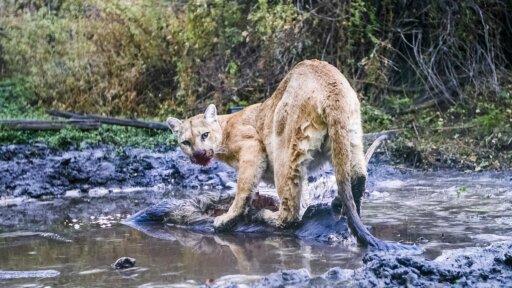
<p>This poignant and engrossing chronicle explores the challenges presented not only by ambitious sons, but also by the harsh mountain weather, deadly mountain lion attacks, and the changing relationships within and between bands of wild horses in the mountains.</p>
<p>The film also touches upon the effect of the on-going efforts of the Bureau of Land Management (the BLM) to administer a program of population control, including infertility drugs and bait trapping, to remove animals from the mountains.  It is yet another hurdle that Cloud and his family and the rest of the horses in the Arrowheads must overcome in the day-to-day efforts to survive in the wilderness.</p>
<p><strong><em>Cloud: Challenge of the Stallions</em> premieres Sunday, October 25 (check local listings).</strong></p>
<p>You can follow the developments of Cloud’s family, along with updates about the BLM measures to control horse population at the <a href="http://www.pbs.org/wnet/nature/episodes/cloud-iii/the-cloud-blog/introduction/939/" target="_self">Cloud Blog</a>.</p>
<p>If you missed the first two installments, watch <em><a href="/wnet/nature/episodes/cloud-wild-stallion-of-the-rockies/full-episode/260/" target="_self">Cloud: Wild Stallion of the Rockies</a> </em>and <em><a href="/wnet/nature/episodes/clouds-legacy-the-wild-stallion-returns/full-episode/266/" target="_self">Cloud&#8217;s Legacy: The Wild Stallion Returns</a></em> online.</p>
]]></content:encoded>
			<wfw:commentRss>http://www.pbs.org/wnet/nature/episodes/cloud-challenge-of-the-stallions/introduction/936/feed/</wfw:commentRss>
		<slash:comments>72</slash:comments>
		</item>
		<item>
		<title>Video: What&#8217;s Ahead on NATURE</title>
		<link>http://www.pbs.org/wnet/nature/episodes/current-season/video-whats-ahead-on-nature/5172/</link>
		<comments>http://www.pbs.org/wnet/nature/episodes/current-season/video-whats-ahead-on-nature/5172/#comments</comments>
		<pubDate>Fri, 19 Jun 2009 21:17:33 +0000</pubDate>
		<dc:creator>tanner vea</dc:creator>
				<category><![CDATA[Current Season]]></category>
		<category><![CDATA[Featured]]></category>
		<category><![CDATA[Video]]></category>

		<guid isPermaLink="false">http://www.pbs.org/wnet/nature/?p=5172</guid>
		<description><![CDATA[This season of NATURE has come to a close, but that doesn't mean the excitement is over. Find out what NATURE has in store for the seasons to come in this sneak peek video.

Here's the full fall 2009 lineup of premieres:

	October 25: Cloud: Challenge of the Stallions
	November 1: Born Wild: The First Day of Life
	November [...]]]></description>
			<content:encoded><![CDATA[<p>This season of NATURE has come to a close, but that doesn&#8217;t mean the excitement is over. Find out what NATURE has in store for the seasons to come in this sneak peek video.</p>
<p>Here&#8217;s the full fall 2009 lineup of premieres:</p>
<ul>
<li>October 25: <a href="http://www.pbs.org/wnet/nature/episodes/cloud-challenge-of-the-stallions/introduction/936/"><em>Cloud: Challenge of the Stallions</em></a></li>
<li>November 1: <a href="http://www.pbs.org/wnet/nature/episodes/born-wild-the-first-day-of-life/introduction/5258/"><em>Born Wild: The First Day of Life</em></a></li>
<li>November 8: <em>Black Mamba</em></li>
<li>November 15: <em>Fellowship of the Whales</em></li>
</ul>
<p><strong>What are <em>you</em> most excited for?</strong></p>
<br /><img src="http://www.pbs.org/wnet/nature/wp-content/blogs.dir/3/files/512x288-showcase09.jpg" alt="media"><br />

]]></content:encoded>
			<wfw:commentRss>http://www.pbs.org/wnet/nature/episodes/current-season/video-whats-ahead-on-nature/5172/feed/</wfw:commentRss>
		<slash:comments>65</slash:comments>
		</item>
	</channel>
</rss>