Visit Your Local PBS Station PBS Home PBS Home Programs A-Z TV Schedules Watch Video Support PBS Shop PBS Search PBS

White Shark/Red Triangle
Introduction

White Shark

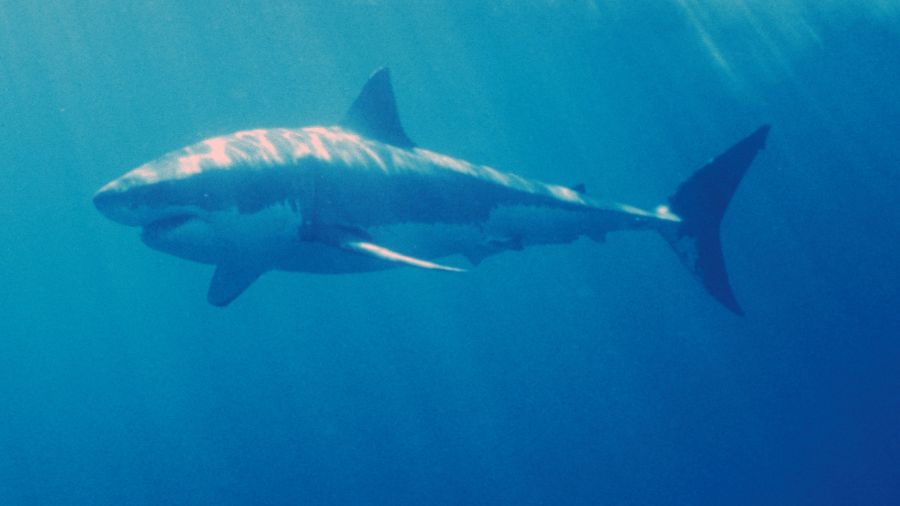
Learn the surprising truths behind the monster myths on NATURE’s WHITE SHARK/RED TRIANGLE.

Each year, in the late summer, a region known as the Red Triangle bustles with marine mammal activity. Lying between San Francisco and Monterey, the Red Triangle includes beaches where elephant seals go to molt, and offshore sites where great whites feed on unwary prey. When not prowling the Red Triangle, great white sharks search the kelp forest for sea lions, or roam the open ocean. Their migration is predictable. Each year they turn up at the same place at the same time, occasionally crossing paths with humans who still swim and surf in these dangerous waters.

Experts have spent decades studying these legendary killing machines of the seas and the animals that make up their food chain, including elephant seals, killer whales, sea otters, and sea lions. Their research reveals several surprising facts. Great whites are not always solitary hunters, they occasionally hunt and feed together. Once thought a coastal species, great whites do swim in the mid-Pacific, at depths matching those of female seals. Sea otters were previously considered immune to attacks by great whites. In fact, they are often their victims.

NATURE challenges you to join this exploration of the infamous WHITE SHARK/RED TRIANGLE.

To order a copy of WHITE SHARK/RED TRIANGLE, please visit the NATURE Shop.
Online content for WHITE SHARK/RED TRIANGLE was originally posted November 2003.

   Print    Email    comments (11)

(3 votes)
Loading ... Loading ...
11 responses
Susan Hanes -- December 5th, 2008 at 2:51 pm

I think this is a boing attical I have a question. does the great white shark allways attack when the spot a human even when your just flotting?

Jonatan Åcerclinth -- January 17th, 2009 at 5:38 pm

I´m very afraid of sharks, of any spice, every time. And I´m also very interested in them, so this red triangle sounds very interesting to me. But I have one question. Maybe a bit stupid but, if I landed up with one or more sharks, like the great white, what should I do. Just stay still or swim like a had my butt on fire. Excuse me for the chooise of language. I´m from Sweden and starting in high school after the sommer holiday.

chad -- January 19th, 2009 at 12:46 pm

If you are fortunate enough to see a white shark and it’s not an attack situation, do not take your eyes off of it and get out of the water. They rely on the element of stealth most of the time. Just because you haven’t been attacked does not mean that it won’t bite just to investigate what you are. Consider yourself lucky to have witnessed the animal personally and call it a day.

Rebecca -- February 5th, 2009 at 12:26 pm

Susan im answering your question ::: Sharks no matter if it is a Great White will not attack unless provoked or threaten so don’t be afraid

Elle -- February 23rd, 2009 at 12:13 pm

Jonathan, if you ever find yourself in a situation with a shark swimming next to you, not a good idea to panic. If the shark wanted to eat you, you wouldn’t have seen it in the first place because G.W. sharks are ambush predators. If one just swims next to you, its just investigating and its very important not to act like prey by panicking. But do try to get out of the water as soon as possible to keep all your fingers! Oh, and try to wear light clothing in the ocean and not black because sharks are known to confuse swimmers with dark clothing with seals.

Mark -- April 6th, 2009 at 11:15 pm

Great Whites and any other sharks are not monsters and should be respected not feared. Remember you are in their terriroty and most likely disrupting their dinner. Great Whites only attack bacause they are 1) curious (just like babies-they bite everything to taste whether it is appealing or not) 2) the smell of blood lured them (sharks are known for locating the scent of one drop of blood in a million drops of water or 3) your surf board looks similar to their favorite meal-the sea lion. The most important rule to remeber and keep at heart is that provoking a shark such as beating the water violently (in known shark infested waters) sounds like a wounded animal and that the best way to protect yourself (shark defense 101) is to punch the shark in the nose as it is the most sensative area on the shark or multiple punches to the gills. Usally this works immediatly.

jericho dela cerna -- July 5th, 2009 at 4:56 am

theres 3 kind of attack by great white shark,1st is they bite you and go just for curiosity sake. if it taste good they will coming back to you. the 2nd one is they will bump you and the third one is the so called sneaky attack. this is unprovoke suprise attack coming from under your feet. the lesson here is never ever ventured to any water u dont know what is in there. even in shallow water and fresh water river a bull shark is known species who can able to swim and live there.sharks even unprovoke they will attack you if theres an opportunity for you to do it thats why dont swim alone in any beaches its better to swim where theres alot of people in that area.

Arks -- August 24th, 2009 at 2:26 am

Susan, it’s not funny to joke around when somebody’s life may be at stake — Great Whites or any other sharks for that matter will bite anything, they are some of the most curious animals ( as they have nothing to fear ). The first bite they will be checking you out ( accounting for most shark attacks ) and are generally only fatal from the loss of blood. When dealing with Great Whites your life is in their hands entirely, believe me, if they want to eat you they will have no problem in doing so. While their are many, many nerves in the nose of these monsters, it is actually the worst spot of it’s head to strike ( think about it, they are basically bumping into anything they check out with it ), instead, try the gills or gouging at the eyes, the feeling of threat is one in the same with confusion for the GW and it will typically opt out on lunch in this scenario. The best way to avoid an attack is to think like a shark ( savage ), think about how, where and when you would expect to find marine edibles, and then use that with your own intuition, remember to never go into the ocean with open wounds and yeah, wearing light colors is always good too.

Arks -- August 24th, 2009 at 2:27 am

edit * Rebecca *

GW -- September 18th, 2009 at 3:01 am

“Sharks no matter if it is a Great White will not attack unless provoked or threaten so don’t be afraid”

I hate to tell you this but you couldn’t be more wrong. The majority of attacks from sharks like Great Whites, Tigers, and Bulls are unprovoked. Most attack survivors say that there was no warning, or only saw the shark when it was far too late.

That being said, the chances of being attacked are absurdly, ridiculously small. About 60-100 people are attacked annually worldwide, and only about 5-10 are fatal. So… your chances of being killed by a shark are literally about one in a billion.

But even with statistics on your side, remember to avoid swimming alone, at dawn or dusk or at night, and to never swim with an open wound.

Robert Wolfe -- September 23rd, 2009 at 11:35 pm

I and my community surf these northern waters and chose to do so knowingly. The tuna is not the The King of the Sea…seabed7

post a comment
Please note that the THIRTEEN editorial staff reserves the right to not post comments it deems to be inappropriate and/or malicious in nature, as well as edit comments for length, clarity and fairness. No solicitations or advertisements will be allowed. Users may link to other Web sites relevant to discussion, but most often links to commercial Web sites will not be permitted.

Produced by THIRTEEN    ©2009 Educational Broadcasting Corporation. All rights reserved.

Major corporate support for Nature is provided by SC Johnson, Canon, CPB.