When a passionate shark conservationist partners with one of the top shark hunters in East Lombok, Indonesia to create an ecotourism venture called “Project Hiu,” their lives and that of those in their village are changed forever. Madison “Shark Girl” Stewart didn’t know what awaited ...
This post comes to PBS Nature from World Wildlife Fund (WWF). Views and opinions expressed in blog posts are those of the individuals expressing them and do not necessarily reflect those of THIRTEEN Productions LLC/The WNET Group. In the dense tropical forests of Asia and ...
Tiger shark (Galeocerdo cuvier): a species of ground shark. Kingdom: | Animalia Phylum: | Chordata Class: | Chondrichthyes Order: | Carcharhiniformes Family: | Galeocerdonidae Genus: | Galeocerdo Species: | G. cuvier Size and Weight: Tiger sharks are one of the largest shark species. On average, ...
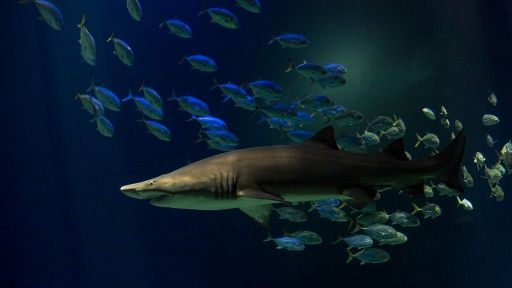
Views and opinions expressed in blog posts are those of the individuals expressing them and do not necessarily reflect those of THIRTEEN Productions LLC/The WNET Group. Sand tiger sharks are top predators throughout their extensive range, which spans from the continental coasts of Australia, South ...
Last year those who have spent the past decades trying to raise awareness of the global collapse of shark and ray populations spent the summer looking ahead to the possibility that governments would take action to save these ancient ocean predators at an international meeting ...
It’s that time of the summer. Our screens are filled with a blitz of exploitative and fear-inducing programming about one of the ocean’s top predators. Here’s the thing. I grew up watching the film Jaws. It's one of my favorite movies. Sadly, though, the advent ...
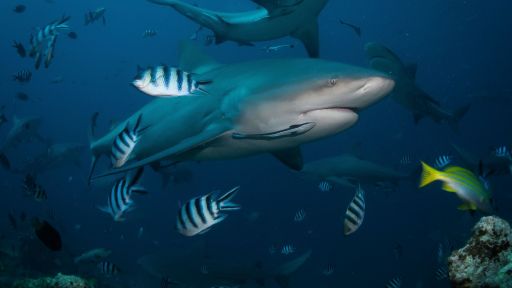
Shark and ray species (over 1,200 species globally) are literally and figuratively in hot water—their populations are declining and some of their body parts are among the most valuable in the global seafood trade, which includes the well-known trade in dried fins for shark-fin soup. ...
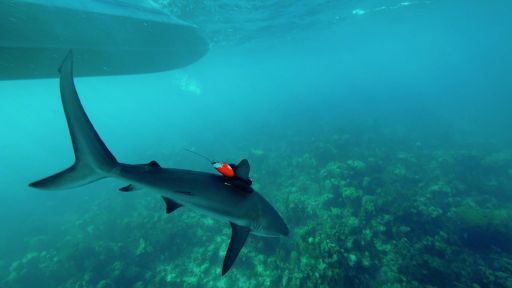
The team deploys shark cameras to different sections of the Andros Barrier Reef to get an overview of the area. In total, the sharks capture 25 hours of footage, providing a much more detailed look into their world than any diver could achieve.
This piece comes to us from Luke Warwick, the Director of Shark and Ray Conservation for Wildlife Conservation Society (WCS). As shark sightings catch our attention this summer, it is time for journalists, producers, and podcasters to rethink how they communicate about these unique and imperiled fish. ...