‘My Father Sold Me’: The Stories of Sex Workers Caught in India’s AIDS Crisis
Girls and women in India’s red-light districts, some of them sold into sex work by their own families, were forced to navigate their country’s AIDS crisis. Some of them decided to fight back. Their stories unfold in ‘India: The Sex Workers,’ the latest documentary from FRONTLINE’s archives to be released for streaming on YouTube.

July 7, 2026
Share
When she was 13 years old, Dolly’s father trafficked her into prostitution in India.
He “didn’t mean to do it,” she told FRONTLINE. “He was a drug addict. You know what people do when they’re on drugs.”
In a 2004 documentary short, Dolly described the first moments after her father sold her into commercial sex work, many aspects of which are illegal in India.
“I said, ‘I want to go back to my mother,’” Dolly told producer and reporter Raney Aronson, adding that when she tried to escape, the madam “grabbed me and tied a chain to my foot.”
Dolly would go on to spend five years in Mumbai’s red light district before exiting the prostitution industry with the help of a group called Sanlapp.
By then, she was one of 4.5 million people in India who were HIV-positive.
Dolly was one of the young women who shared their stories in India: The Sex Workers, a documentary short that’s now streaming on FRONTLINE’s YouTube channel for the first time as part of an effort to make the series’ archive widely accessible. The documentary originally aired as part of FRONTLINE/World, a special FRONTLINE series that ran from 2002-2010 and was developed in partnership with GBH in Boston and KQED in San Francisco.
At the time India: The Sex Workers was filmed, more than two million women and girls were working in India’s sex trade. Often, their only defense against HIV was convincing men to wear condoms. But frequently, the documentary reported, the men would refuse.
“Most men will pay more to have unprotected sex, and they’ll pay the highest price for the youngest girls,” Aronson said in the film’s narration.
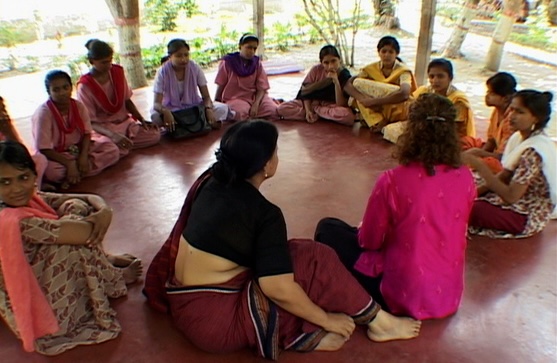
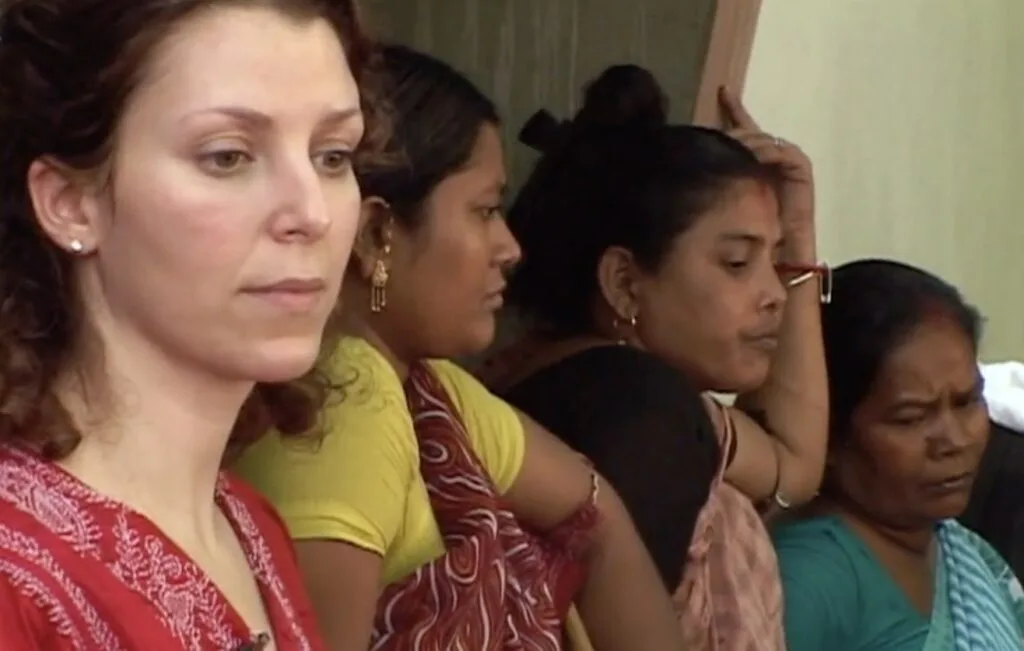
As she reported this story, Aronson, who is now FRONTLINE’s editor-in-chief and executive producer, found girls as young as 12 years old who had been sold into prostitution by their families. She also found organizations across the country that were trying to fight back and help India’s sex workers protect themselves from HIV, including a sex workers union, a group of peer educators, and an AIDS prevention group.
Since joining the latter, an organization called the Sonagachi Project, one woman told Aronson, “I’m able to fend for myself and stand up for my rights.” The woman, Putul Singh, was sold into the sex trade by her husband at age 20. She said, “Now if there’s a problem, I go and ask what’s going on. I have faith in myself.”
Many advocates saw law enforcement’s treatment of sex workers as part of the problem, Aronson reported. Police raids on brothels were common — but once arrested, a number of women told Aronson they were either forced to have sex or pay bribes for their release. Legalizing and regulating commercial sex work, the union argued, would help fight the spread of HIV and AIDS by giving sex workers legal protections and the right to stand up for themselves — and could also help prevent the trafficking of minors.
“If our profession was made legal and regulated, in the same way other industries don’t employ children, this industry wouldn’t employ children, either,” said the union’s president at the time, Rama Debnath.
The legal landscape around prostitution in India remains complex. In 2022, India’s supreme court ordered the country’s police to “treat all sex workers with dignity.” A supreme court decison issued earlier this year drew a distinction between criminal sex trafficking and exploitation, and voluntary sex work involving consenting adults.
According to UNAIDS, the number of HIV/AIDS cases in the country was estimated at 2.6 million as of 2024.
For Aronson (now Aronson-Rath), the release of India: The Sex Workers on YouTube for the first time is both an important chance to bring this story to a wider audience, and an illustration of FRONTLINE’s commitment to making its archive of reporting part of the public historical record.
“To this day, I carry with me the lessons I learned producing India: The Sex Workers,” she said. “I am so grateful to the people who shared their stories with me, and those at FRONTLINE who helped me tell them.”
Watch the Full Documentary | India: The Sex Workers
Additional FRONTLINE/World documentaries will be released on FRONTLINE’s YouTube channel throughout the summer. Subscribe now so you don’t miss an episode.
Journalism powered by your support — and accessible to all.
Watching our “Scammed” documentary revealing how the global scam industry operates? Exposing the truth is where accountability begins. Help keep reporting like this paywall-free for everyone with a gift of $5 or $10 today.

Senior Digital Writer, FRONTLINE
Support provided by:
Learn More
Related Documentaries









Latest Documentaries




Related Stories

India: The Sex Workers
Related Stories
India: The Sex Workers
Explore
Policies
Teacher Center

Jon and Jo Ann Hagler on behalf of the Jon L. Hagler Foundation
Corey David Sauer
Koo and Patricia Yuen
FRONTLINE is a registered trademark of WGBH Educational Foundation. Web Site Copyright ©1995-2025 WGBH Educational Foundation. PBS is a 501(c)(3) not-for-profit organization.
Funding for FRONTLINE is provided through the support of PBS viewers and by the Corporation for Public Broadcasting, with major support from Ford Foundation, and Fialkow Family Foundation. Additional funding is provided the Abrams Foundation, John D. and Catherine T. MacArthur Foundation, Park Foundation, Heising-Simons Foundation, and the FRONTLINE Trust, with major support from Jon and Jo Ann Hagler on behalf of the Jon L. Hagler Foundation, and Corey David Sauer, and additional support from Koo and Patricia Yuen. FRONTLINE is a registered trademark of WGBH Educational Foundation. Web Site Copyright ©1995-2026 WGBH Educational Foundation. PBS is a 501(c)(3) not-for-profit organization.