Former White House special envoy to the Middle East
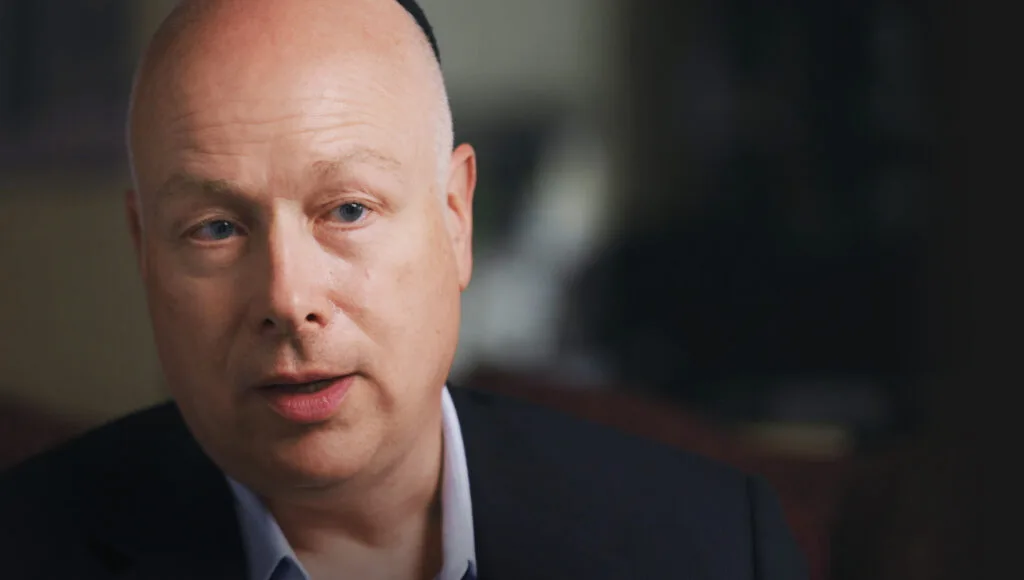
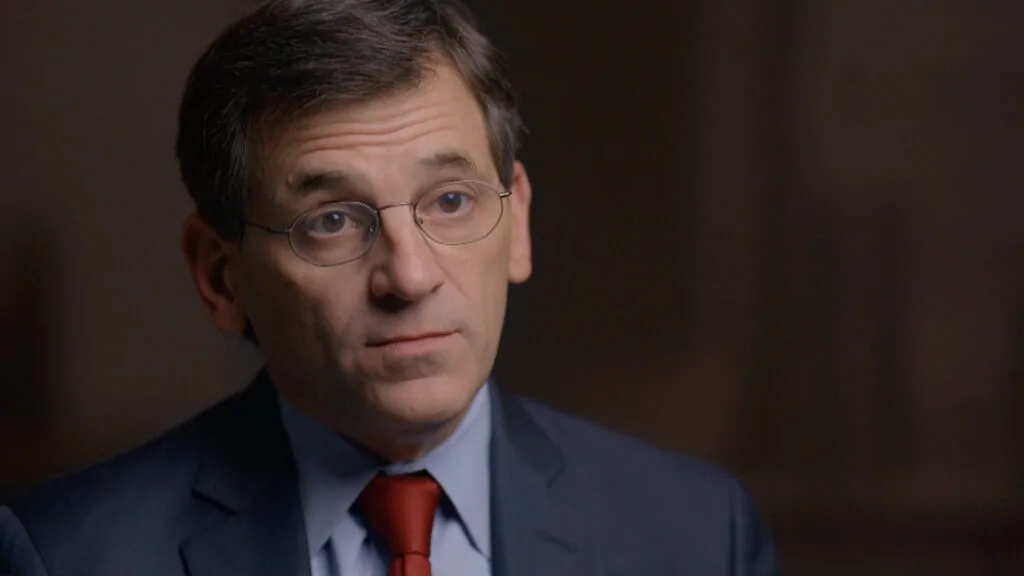
Jason Greenblatt was White House special envoy to the Middle East during the first Trump administration. He is a lawyer, author and commentator. Previously, he held various positions at The Trump Organization including executive vice president and chief legal officer.
Greenblatt spoke to FRONTLINE’s Martin Smith on May 28, 2026, for our documentary The Crown Prince & the President.
Text Interview:
Highlight text to share it
Jason Greenblatt
You came to the job in 2017, and you say that at that point you weren't familiar at all with Saudi Arabia.
Correct. Actually, I was familiar in a negative way, right?September 11th, anything I ever read about them was hostile, you know — enemies, enemies of the U.S., enemies of Jews, enemies of Israel.So I came with a preconceived notion, a negative — very negative preconceived notion.
And the Saudis had already sent a delegation over to talk with members of [President Donald] Trump's team after the election, before the inauguration even.And they were — you were aware of those conversations?
No.
You weren't?
No.
But at the time that you joined, there was discussion, I'm presuming, over making the president's first trip to the Middle East, or his first foreign trip to be to Saudi Arabia.
That heated up very quickly once we were in office, yes.
And it was somewhat controversial. As I understand it, there were aides that were in favor of it.There were advisers that were against it.
It's true. It was controversial to some, but Jared [Kushner], who led the team, was very much in favor of it.I think President Trump was in favor of it.And it made a lot of sense to us, because if we were going in there trying to create stability in the Middle East, which included Israeli-Palestinian matters, but the broader region, Saudi Arabia is arguably the most important player there — some would say one of the most important players there.So it made a lot of sense to us.
Give me a little bit more of a sense of the pros and cons of that.I mean, the debate that was going on inside the administration over that trip.
Well, the pros are we can't pretend they're not important.We need a strong, good relationship with Saudi Arabia.They're going to be essential to any kind of peace process with the Palestinians.We need oil. We need money.We need them to buy our defense.There are so many reasons why we need a strong relationship.
And historically, we had a very strong relationship with the kingdom.But there were others who felt that they were bad guys.I wouldn't say, for example — they said what President [Joe] Biden said when he was campaigning, that he was going to make Saudi Arabia or MBS [Mohammed bin Salman], I forget the exact quote, the pariah that they are.Nobody said anything like that. But they just felt it was not the right move.
And we felt you can't put the pieces in order in the Middle East without actually visiting the entire Middle East.And Saudi Arabia is part and parcel, if not the center of all of that.
And at that moment, Jared's role and his adopted agenda was what exactly?
So he wore many hats, but among the hats he wore, and the one that I worked on, was deepening and strengthening the U.S.-Israel relationship, which President Trump had felt suffered under the Obama years.Deepening the U.S.-Gulf relationship, which we all felt, in particular Jared and the president, was crucial to national security and other issues for the U.S. Trying to resolve that ever-elusive Israeli-Palestinian conflict.
And then there were whispers even before we came into office about whether or not Israel can make peace with its Arab neighbors, perhaps even if the Israeli-Palestinian conflict was not resolved.But that really didn't gain traction until much later in our time there.
You said that initially you didn't set out to create the Abraham Accord agreement, that that came out of an effort to get the Palestinians and the Israelis to come to terms.Explain.
So our immediate task was to try to solve the Israeli-Palestinian conflict, which by definition to us didn't just include an agreement with the Israelis and the Palestinians but as many of the Arab countries as possible.It wouldn't make sense for an agreement between the Israelis and the Palestinians to be signed and then find out the Israelis were still an enemy of countries throughout the Middle East.We knew we couldn't get everybody, but our goal would be to get as many as possible.But there was no jumping over the Palestinian issue.
The first time I heard something called the inside-out approach was from a journalist who said to me pretty early in my time in 2017, “Jason, I'm told that you guys are going to make peace between Israel and the Arab countries, in particular, the Gulf, and then you're going to tell the Palestinians, ‘Hey, the train is leaving the station.’That's a phrase that a lot of people used. Or, ‘The train has left the station,’ and they're going to be forced to run up and catch it and jump in.”
That wasn't our approach at all.In fact, I was a little bit offended by the approach because we spent an enormous amount of time trying to understand the Israeli-Palestinian conflict, what people had done before, what mistakes were made, is it even possible, what the issues were, and we were not interested in that at all.Later, after the end of 2017, when President Trump announced or recognized Jerusalem as the capital, which is something that's U.S. law.He committed to do it, as did prior presidents who reneged on the promise.The Palestinians walked away from us.
And they told us, by the way, that they were going to do that before the actual announcement.We sat down with them. We told them what was coming.They essentially said — I mean, this is not an exact quote, but Saeb Erekat, their late chief negotiator, told me, "Hey, Jason, if you do that or President Trump does that, just pack your bags and go home.You're going to go home as a total failure."
And I told him he's missing a tremendous opportunity, that the president had put three people in charge of the file that he trusted: Jared, myself, and David Friedman, who was our ambassador to Israel, that we had his ear, we had his attention.He was deeply interested in solving the problem.We couldn't make any promises. We felt that the Jerusalem announcement and the embassy announcement were very different.We understand the Palestinian position but we follow U.S. law.We don't follow Palestinian aspirations and positions.And they said they'd never come back, and they didn't.
We didn't think that would happen, by the way. We thought that at some point they would come back, but they didn't.A lot of people came into my office and said that they were there on behalf of President [Mahmoud] Abbas, the PA [Palestinian Authority].I never knew if they were or they weren't.I talked to all of them. But to this day, I don't know if President Abbas truly was sending messengers to try to get us to give him something to the expression they always use.It must be a famous diplomatic expression: “Give him a ladder to let him climb down the tree.”And I said, “It's not our job to construct ladders.It's our job to try to make peace. And he should want to try to make peace.”
Mahmoud Abbas, the head of the PLO [Palestine Liberation Organization].
Correct.
The trip to Saudi Arabia, you're on it, right?Can you give me some sense of the conversations you had with Jared about what you were hoping to achieve?
Well, the first is to develop a real relationship, a rapport between the president and the leadership in Saudi, a rapport for all the things President Trump had on his laundry list, which he repeated in the current term, meaning he had a list of asks in terms of what they could do for the United States.I don't recall and I would doubt if Israel normalization with Israel came up.In fact, I'm 99% sure it wouldn't have come up.
And the reason I say that is I remember part of my job was reading any public announcements, speeches, et cetera, that would go out relating to the region.And I remember getting the speech that he was going to make in Saudi Arabia in front of all the Arab and Muslim leaders who attended.And it mentioned Israel at least several times, in a very positive way.And I remember thinking, like, this is great.Nobody is out there in the White House saying, “We can't talk about Israel publicly.”So he said good things about Israel, but I don't think he went so far as to talk about what later became the Abraham Accords.I think it was probably more general than that.
And the Abraham Accords grew — was created later, in fact.
Yeah, I think we built the framework alongside the goal of Israeli-Palestinian peace, meaning everyone was curious what was Israeli-Palestinian peace and while we talked about all the normal issues that people were curious about: Jerusalem, what they call refugees, which I think is an incorrect term, what some call the West Bank, and I would call Judea and Samaria.I mean, you name the issue, there's tons of them. Everybody knows them over the years.
But we also said this means normalization.This means Israel being part of the security architecture there.This means trade between Israel and these countries.This means tourism. This means diplomatic relationships, et cetera, et cetera.So it came as no surprise.But the actual Abraham Accords and the idea of breaking them apart came after the Palestinians never came back to the table.So some people say we sidestepped the Palestinians.I would say the Palestinians sidestepped themselves.
In the speech that he made, the very important speech near the end of the trip, you say you reviewed it.In that speech, he made a pledge that we are not going to impose our way of life on you.Some have looked at that, human rights activists especially, and said, “That gave a green light to the crown prince to crack down on internal dissent.”Do you have a comment on that?
I do. What I've witnessed about Saudi — and remember, I'm a guy who came in with a very harsh negative attitude, because of everything I read and learned growing up.What I witnessed from 2017 through and including today is a remarkable shift in how Saudi Arabia and the region writ large has changed.MBS in particular may be controversial to some, but what he's done in the kingdom with respect to women, with respect to the economy, with respect to openness, with respect to welcoming.I mean, there are times I walk around with a kippah in Riyadh.I don’t now, by the way, not because of Saudi, but because I'm sanctioned by the Iranian regime.So I don't want to call attention to myself.
But I've only witnessed over the years continued significant progress.And I've also, over the years, become very friendly with many Saudis of all stripes, young, old, wealthy, royal, non-royal business people, people on the street, people in diplomatic meetings.I can't think of a single person who isn't excited about the direction of the kingdom.
Do they have complaints? A little bit.Do some projects don't go forward?Like there's the normal thing you would see here, general chatter about, “I wish he would do this differently or that differently,” but on an overall basis everyone's excited about the direction.And I think the human rights watchers are missing that story.
I think that's correct that he has done a lot to modernize the kingdom.However, in 2017, women still were not permitted to drive.Clerics were being imprisoned.Writers, journalists, others, anybody who voiced any opposition to Mohammed bin Salman, were at risk.
There are many countries in the world that don't operate like the United States, right?We're lucky. We live in the United States.Freedom is paramount. Many countries don't have that, and I don't think they'll ever become the United States.I don’t think many of those countries will become the United States.And frankly, I don't think they want to become the United States.
I think they want to modernize as best as they can, respecting monarchies.That's what they are. It's their choice of government.Maybe it's not everybody's choice, but it's the government they've had.They want to respect culture, their religion, all these things.
So, to go back to your question about Trump's statement, that's his approach.His approach is, “Listen, we want to be safe together.We want to be prosperous together. We're not — and we want to make sure that within the confines of what's normal, you behave normally.But we're not going to come here and lecture you and tell you what to do.
I think he took particular offense to what President [Barack] Obama did when he went to Egypt on his trip and effectively, I guess, apologized for America.Trump's very proud of America. I mean, everything he says is always about how proud he is of America.And he didn't want to go there and say, “Therefore, you have to be America.”
So you reject the notion that in any way the president approach on human rights abroad emboldened the crown prince or any other autocrat in the region?
I think what they do in that region, they do regardless of what the president says or doesn't say, meaning they did it under prior presidents, and I don't think it emboldened anybody.They operate the way they want to operate, and President Trump, had — not to diminish human rights — but President Trump had a very, very big agenda to cover.And as much as people think a president can fix the world, he can't fix the whole world, and he can't make demands out of every country, let alone very powerful countries.
At the time, Mohammed bin Salman — who extended this invitation to the president to come and that's why you were there — was still not the crown prince.Were you aware of him moving into position to become the crown prince?Were you aware of the tension between him and Mohammed bin Nayef [MBN]?
I have to be careful how I talk about it, obviously, because I can't disclose things that I can't disclose.But we heard whispers, we heard movements, but until it happened, we didn't know.At least, I didn't know.
You didn't have a sense that MBN was on the way out?
I can't really get into things like that, but I would say the little sense that I might have had meant nothing until it actually happened.
What were the main things you were asking of MBS?
One was to help us on the Israeli-Palestinian conflict.We did not think that trying to put just the Israelis and the Palestinians in the room together would — even with America's power, if you will — would resolve it.So, having countries like Saudi Arabia get involved, we thought, could only help us.They helped to a degree. They weren't in the room, and they probably didn't love the ideas that we were sharing with them.They probably thought they were too friendly to Israel. But they were more than willing to roll up their sleeves and give us their thoughts.
Most of their thoughts were pretty traditional and we didn't think would resolve the conflict.Despite what people say, and there's a lot of people that say, ”Oh, these countries, they don't care about the Palestinians.”They deeply care about the Palestinians.They support the Palestinians. They were not abandoning the Palestinians.That's another misnomer I used to hear: “Oh, the Saudis don't care.”
Well, there's a difference between the royal family in Saudi Arabia and the people of Saudi Arabia, and there's a potential that MBS had a little more flexibility of mind in looking at the Palestinian issue and might be willing to show a little bit of willingness to leapfrog that issue.
I think what MBS and all the leaders had was a desire to get past the issue, but not to abandon or sideline the Palestinians along the way.Because if you think about it, if you sideline them — and, you know, we weren't so smart that we could have predicted October 7th — but it's not as if the bad guys are going to ever disappear.
Even if President Trump manages to create this massive Abraham Accords architecture under today's situation, there's always going to be a Hamas, Hezbollah ideology, an Iranian regime ideology lurking in the background and popping up.So MBS and none of these Arab leaders want to deal with that.So they are very careful how they approach this issue.
Well, I talked to Ambassador [Michael] Ratney, who told me that he imagined that Jared and you wanted to get Saudi Arabia on board because, as he put it, “Saudi Arabia was the big kahuna.And if they would be willing to normalize or move towards normalization with Israel, other Arab nations would follow.”
I think getting Saudi Arabia to have signed on to the concept of the Abraham Accords in the first term would have been a giant leap forward.And I think many countries would have followed suit.But Saudi Arabia wasn't ready for it then.It's unfortunately not ready for it now either.
We had a significant period of crackdown in Saudi Arabia marked by, as I mentioned, the arrest of many opposition voices in the country.And then we had the events of November 4, when a lot of people were rounded up at the Ritz-Carlton.Just before that trip, Jared Kushner visited with MBS.A matter of days or maybe a week or two, I don't know, beforehand.Do you know anything about that trip and what was discussed?
I was on that trip.Usual topics of conversation — peace, stability, oil, money, you know, everything you would expect.
But at that time, the planning had to be in the works to have this, what's been called the “shakedown” at the Ritz-Carlton.That had to be in the works.Did that come up?
No. I mean, I was with them for a very significant amount of time.I wasn't with them every minute, obviously.
With MBS?
And Jared. Never came up in my presence.I'd be surprised if it came up between the two of them, but I don't know.I can't speak to the times I wasn't in the room, but I was in the room a very significant amount of the time.
Mmhmm. There's the people have written about it and said that Jared and MBS played video games late into the night.
I remember the article — something like they were up till 4:00 a.m. Well, the truth is we were up to, at least I was up probably till 2:00 a.m., right?It's — you go there to multiple countries at once over the span of maybe three days.You work really hard. You have to stay up late into the night, even if you're an American.But Saudi, Arab culture generally starts the day a little bit later, stays up really late.Until I left the room, again, I can't speak about what happened after I left the room.We were talking, plenty of coffee going around.Maybe we were ties off, and maybe we were sitting in a majlis-style setting instead of at a conference table.
In the desert, right?
All over the place. I mean, they have some very beautiful places.But all business, pleasantries, you know, relaxed atmosphere.But that's how you get business done. If you're going to sit at a conference room for 18 hours a day, maybe you get less business done.
But you weren't playing video games.
I didn't, and I didn't see anybody play video games.I did see some cool video games, but I didn't.
And this goes to the issue of how close Kushner and MBS became.Can you talk a little bit about that?What brought them together?
Yeah, I mean, I could really — I think one of the assets that people miss is when a president has not just a trusted advisor but a family member who he trusts running a file like this.Being a family member matters to the region, not just the Arabs, by the way, Israel too.They all know that Jared, he didn't speak for the president, but he was as close as one can get to the president in terms of being able to connect with the president on issues that matter.So it's not just a relationship with MBS that he cultivated.He cultivated a relationship with every leader in the region, some a little bit stronger than others.
And by the way, this is not — before we get to Jared, I should really point this out.In diplomacy, every country in the world will use every lever that they can get to get their points across, whether at the White House, the State Department, any agency.They need to know that their concerns and needs are going to be addressed or heard or thought about.So they will try to find everybody from the most junior staffer to the most senior staffer to try to get the attention that they need.
So Jared was a gift to them and he was a gift to the White House because he was able to bridge that gap, get close to everybody, be respected by everybody, and talk to them in a way that wasn't diplomatically forced, but rather, I'll use that — coming from me, it's going to sound funny — let their hair down, right?Just, how do we shoot the breeze and figure out how do we get these problems resolved versus sitting there very uptight with note cards talking about diplomatic points that mean nothing and say nothing?
If you think about statements that, let's say, come out of the United Nations, they're highly stylized, highly scripted.A lot of them don't say a whole lot.We had maybe five minutes of formal, let's look at the note cards, make sure we cover everything.You know, we did, on the State Department side, whatever they wanted us to say in the National Security Council.The Arabs and the Israelis did the same.Then you put the note cards aside and you shoot the breeze in a way that actually could lead to progress.And if anybody thinks that's strange, you know, look what President Trump accomplished.Out of that came the Abraham Accords.
I mean, you're sort of speaking to this, but the harshest criticism that one hears about Jared Kushner is that he came in, he had no experience in diplomacy, he was a real estate man, and he went into these situations without any experience whatsoever.
I've seen those criticisms. Well, let's talk about the very beginning of the criticisms, because most of them come either from the media — not every media — or think tanks or people from the other side.You know, let's say the Democrats or people that don't like Trump, whatever you want to define the other side as.
One of the first criticisms lodged against the three of us — Jared, David Friedman, who was our ambassador, and me — was, what do these three Orthodox Jews know anything about the Arabs and making peace with the Arabs?Well, guess what? We didn't do so bad, right?We had a unique circumstance, a unique president, a unique time in history, willing open ears.But at first that criticism bothered me.But when I started to read the criticism and understand the criticism and people talking about me who never met me, didn't know a thing about me before I even started doing media appearances or wrote things, a lot of the criticism is just people with an agenda.So that doesn't bother me.
As to Jared specifically, you know, what did they think — he was a baby?I mean, he had a very successful business.He ran a very successful business.Just because he wasn't a diplomat, that doesn't mean he wasn't smart, strategic, could learn quickly.People make fun of a quote he once said about how many books he read.Yeah, he was very earnest in what he tried to do.And besides that, like me, he got briefed by the CIA [Central Intelligence Agency].He got briefed by, I assume, the FBI [Federal Bureau of Investigation].He got briefed by the State Department. He got briefed by the National Security Council.We spent the better part of 2017 learning the file.So I think he came pretty much up to speed pretty quickly because he's a smart guy.
One of the critics that I spoke to back in 2019 when I was working on another project, but in his interview, Martin Indyk said, “They had no interest in learning from me.They didn't want, they didn't care.They rejected me.”
Look, I'll pause a little bit because Martin is no longer with us, and I don't want to say anything unkind because I liked him genuinely as a person.I spent a lot of time with Martin.Maybe Jared spent less time with Martin. I spent a lot of time with Martin.I heard him out just like I heard out most think tank people, not all.And I found the conversations useful, like everything is useful when you're trying to absorb like a sponge.But there's a difference between listening and learning and accepting.Just because we didn't think Martin's way was correct doesn't mean we didn't listen and try to understand it and fold it into the wider picture.
He's not the first guy who we listened to and didn't agree with.If you want to take maybe the most prominent person, let's talk about Secretary [John] Kerry, who I never had the opportunity to meet.But Secretary Kerry, not long before we were in office, I don't remember when he did this, when he said this, and this is not an exact quote, but almost an exact quote, “No, no, no, there will never be peace with Israel and the Arab neighbors until there's peace with the Palestinians.”It's funny that he used the “no, no, no,” because that was the sort of the cartoon no’s.It's like a mirror image but a different purpose.He was dead wrong. He might have been right for decades, right?But in the time and space, historically speaking, that we were in, even though he was saying it, he was dead wrong.
So Martin and others who make comments like that, forgive me if I say they're not only inaccurate, but they're a little bit, I'm searching for the word.They feel upset that we didn't take their advice and run with it.If we took their advice and ran with it, there would be no Abraham Accords.And that's not dismissive or disrespectful of Martin.Smart guy, good guy. He didn't agree with our approach.
The murder of Jamal Khashoggi.The decision — were you part of the decision being made at the White House as to how to respond to that?
No.
You were still there.
I was still there.
I mean, this seems that, I mean, this supports the notion that somehow the crown prince had been seemingly free to do whatever he wanted, that he felt that he could get away with this.
So I'll speak about myself, you know, how I see it.I can't speak about deliberations within the White House because I wasn't part of it.And I want to try to be very precise though that happened many years ago, so hopefully my memory is correct.
You had a gruesome, grisly murder.Terrible. You had a 2018, I believe, leaked CIA assessment initially.So, a leaked report right away is suspect.If it was unauthorized, which, as I recall, it was unauthorized, it's actually a crime.And it was an assessment that said, I think the words were, “Highly confident this happened.”So that's step number one. And by the way, I've seen CIA assessments that were wrong many times.So it's an assessment.
We know about the war in Iraq.
Right. Then you had 2020 or 2021, a declassified report — I forget which agency put it out — that had a different conclusion that, I think, the CIA one from 2018 that was leaked said he ordered it.I think the '20 or '21 report said he approved it, but also an assessment.And those assessments are written for policymakers.Are they right? Are they wrong?Here's my take on it. We have, at least in America, a concept of beyond a reasonable doubt, right?
So if you take the leaked report, which was an assessment, the declassified report, which is an assessment that differs from the original report, and you have MBS who said, he didn't do it.I'm not a judge. I'm not a jury. I don't know what happened.But I also can’t condemn somebody based on that kind of evidence.We would never condemn somebody based on that kind of evidence.
Well, the circumstantial evidence was quite strong.
But we never convict on murder based on circumstantial evidence.Like, how could I hold him to a lesser standard than we uphold ourselves to?I just don’t know what happened. I can't comment one way or the other.
What did it do to your efforts to draw Saudi Arabia closer to Israel?Did it have any impact?
I don't think so. I mean terrible thing though it was, we still have to do business right?
Did you talk with the crown prince afterwards?
We met him many times afterwards. Things were still going on.Until I left the White House at the end of 2019, we had plenty of conversations
Did you ask him directly about the murder?
Not my role to do that.
I want to get to October 7th.You say you weren't smart enough to predict October 7th.Few people were. But there is the idea that the Abraham Accords were not giving — well, let me ask it this way.What was in the Abraham Accords for the Palestinians?
Specifically nothing. But if they had actually put their hand up and said, “Hey, we can be the glue here.We know Israel. We know the Arabs. We speak Hebrew, some of us.We speak Arabic. We could be great partners here for everybody.”That would have been a huge benefit to them.
Every which way we ever dealt with the Palestinians, they were never interested — the leadership, not the people.Big, big difference, by the way.They were never interested in talking about real economic and social and benefit programs to actually help the people while the conflict is brewing.Meaning, if we weren't successful solving the political angle, we still wanted to help their lives, economically and otherwise.The leadership had no interest in that.So with the Abraham Accords, that was a fly in their ointment.They were not interested in joining the Abraham Accords in any shape or form, even if it could benefit the people economically, because it left behind the politics.Okay, that's their choice. I think it's a poor choice.But therefore, there was nothing in it for them, because they chose to sit out.
So you put it on them? You could not have done more to offer something to the Palestinians?
They were not interested in talking to us anymore.Would we have offered them some of the — one, some of their asks?For example, if I go back to the people who visited me at the White House after we were cut off, the people who purported to come on behalf of Abbas: “Why can't you make an announcement that East Jerusalem will be the capital of Israel, and then we'll come back to the table?”Why would we give you something that's supposed to be a negotiated point?Just to get you back at the table so maybe we can make a deal?That doesn't make any sense. “Why don't you do this?Why don't you do that?” They were constantly asking for things to take chips off the table but with no commitment on their part to actually solve the problem.There's no benefit to doing that.
It's ironic. It's a style of negotiation, and it's ironic that we're sort of facing that issue now with Iran, right?“Open up the Strait [of Hormuz] and we’ll talk about nuclear,” is what the Iranians are saying.And Trump's view is, ”Why would I do that?”Now, we may see that change in the coming days.
He may do just that.
Right.
President Trump came to office promising to keep the United States out of foreign entanglements.He pledged an America First agenda.But yet he's in a war with Iran.How does the war with Iran advance his America First agenda?
So foreign entanglements, my guess, to him means something like Ukraine, where he clearly believes that the Ukraine issue is Europe's first and foremost.Whether we should help Europe or not, he thinks that it's not America's job to be a policeman.That would be an example of a foreign entanglement that has less to do with America First, in particular because there are people that come before us whose job it is to fix this problem.
When it comes to things like Iran, there are multiple reasons why it is an America First problem.If Iran could attack the region — let's start with Israel.If Iran could attack Israel with nuclear weapons, missiles, et cetera, that's not only bad for an ally of the United States, it's bad for America.It destabilizes the whole region. If Iran can attack — and they have — the Arab countries that only heightens the tension and makes it worse.So we're seeing a problem that Iran is.
People might want to blame him for lighting the match, except the problem is the fuel was there.Sorry to use that pun, I guess, right?Iran built the missiles, reached toward nuclear weapon capability, built the drones, with a plan of whether they could destroy Israel or not, attacking the region.All of that is terrible for the United States. So I view this as a very different type of foreign entanglement that does advance America's interests and the interests of our allies.
Why go with military force at the time?There was the choice made to stop talking and to attack.And I can't imagine a situation that isn't more tangled than the war in Iran is today.
Because at some point you have to stop you think the other side really isn’t talking to you, they’re just buying time, which is the style of the Iranian negotiators.
Isn't that what Hamas was doing on October 7th?
What do you mean?
They didn't feel they had any way to continue talking, so they struck out with horrendous violence against Israelis.
But Hamas was never talking to Israel. They might have had like a hudna, right, a temporary peace, but Hamas had no interest and still has no interest in making peace with Israel.Iran at least pretended to want to make some sort of agreement with the United States, but at some point you realize they're just fooling around.
Let me ask it this way.Why did the United States have to go to war with Iran now?
Well, I think a couple of reasons, and I'm not privy to intelligence reports, but I think what they got, and I think Secretary [of State Marco] Rubio has said this pretty clearly, The intelligence they must have gotten showed that Iran was very close to making their weaponry, whether it's the nuclear enrichment facilities or the missile production, maybe something else, almost indestructible.
So at some point you have to ask yourself, well, if we’ve reached that bridge, then we'll never be able to fix this problem.War is hard. War is never, you know — I know that President Trump sometimes makes it seem like it'll be over quickly.
He says we've won.
Yeah, it doesn't really work that way. So why did we go then?I think they reached the point of no return — an Iranian regime that wasn't serious about talking, reaching a point of maybe making it more costly, both in terms of lives, U.S. lives and others, real dollars to try to destroy their capabilities.And we may never get beyond that. All the best we may be able to do, which is what Israel has done with Hamas and Hezbollah, is just kick them back a bunch of yards.I don't know that you'll ever be able to completely cause them to surrender.I hope so.
Iran's a little bit different. It's actually a state as opposed to Hezbollah and Hamas.But sometimes with ideology like that, you can't necessarily hope to uproot it.Or you hope you can, but you can't necessarily do it.
I have a thousand questions, and we could go on talking about this very thing.
Sounds like a second documentary.
Yeah, all the way back to 1979 and some meddling that we and the British did then that have led to the animosity that there exists today, and the chanting, “Death to America.”But haven't we just ensured more generations of hostility?
I don't buy the argument. I know they make it with respect to Palestinians and Israelis.If it takes — if I need to protect my family or the president needs to protect our country or any leader needs to protect their country, you don't cower in fear and say, "Well, if I strike back or if I attack them, I'm going to create more people who want to attack me."The reality is they want to attack us.They want to wipe Israel off the map. They want to take over the Gulf.They want to attack America. They were building missiles that reportedly could reach London.So do you just say, "Okay, that's life.I'll take it and hope for the best?"No. I think I'd rather protect my family, even if I make some enemies along the way.
I want to jump to this question of monetizing the presidency.In the second term, the Trump Organization, which you once headed, has profited enormously from licensing deals, real estate deals in Saudi Arabia and other Gulf countries.The organization run by Trump's two sons, owned by Trump, as I understand it, correct?
I don't know the legality. I think he put everything into a trust, so I don't know who owns it.
It's not a blind trust. He sees what his sons are doing.In any case, there is a lot of criticism of Trump for profiting off of his position as president.
So in the first term, they actually forswore all international deals, and yet they raked them through the coals.I think this time, and I think Eric Trump was probably the one who said this, “If we gave up billions of dollars and still got raked through the coals, and it's legal for me to do this, why shouldn't I do it?”I think that's a reasonable position, right?If there's a law that they're breaking, then they should uphold the law and they should be punished if they break the law.But if they're not breaking the law, why should they be rewarded with making less money just because President Trump is the president and they happened to be his sons?
I mean, this was a hugely successful business for decades, right?I was there 20 years. I started, things were a little bit slower, and he shot up like a rocket over 20 years.Why should they walk away from all that just because their father decided to serve the country?He walked away from a lot.
And in the interim period between the first term and the second term, there were lawsuits that — most of them, I think, got dismissed.There were judgments. Most of them got overturned.He could have had serious financial problems.Why? You know, he would argue, and I don't think it's unfair to say that things were weaponized against him, and they went after him because they hated him.In the end, it seems that the law prevailed, and most, if not all, the cases had to be pushed aside.So are we saying that forever anybody who's dad or mom or sister or brother is a president, they can't do business?
Or Trump himself.
Well, so I'm not familiar with the law, but if you're saying that because his sons are running the company, have done license deals or whatever deals they're doing in the region, and therefore Trump indirectly benefits from that if he retains ownership of those trusts or companies, it gets back to the same answer, which is, is it allowed under the law?Then, it's allowed.
Is it a legal question only? Isn't there an issue here of protocol and morality?When it comes to diplomacy, should one have skin in that game financially?
Who's going to be the arbiter of that? Is it going to be CNN or Fox?Is it going to be a Democrat who hates Trump or a true Republican who loves Trump?It's a slippery slope.That's why we have laws.
There's an appearance of conflict of interest, is there not?
I could put 30 people in the room from this community or the next community or the one down the road.Every community might have a different makeup. And a certain percentage of the room is going to say, "Nothing wrong with it."And a certain percentage of the room is going to say, "It's the worst thing in the world."
That's why we have Congress. If they think it's the worst thing in the world, then they should enact very clear laws that forbid it.And that's that. But we can't sit here as citizens — even if we don't like it and maybe we think it doesn't smell right, whatever the complaint is — and decide, therefore, because I don't like it or I don't think it's moral, he shouldn't do it.He has to be guided by the law just like everybody else.His kids have to be guided by the law just as everybody else does.But I don't think they have to be guided by the pundits on “Pick Your Station” who hate it.
But what do you think? Do you think that it looks good?Do you think this smells right for there to be so much money being made while Trump and his son-in-law are negotiating?I mean, let me put it this way.Jared Kushner is making something like $80 million in fees for his [company] Affinity Partners, while he is negotiating on behalf of the president.
Well, I can't begrudge him for the money he's making.He's making it, I guess, because he's doing a good job.But I'd rather have him on the team, even though he's making all that money, than not having him on the team.
Right, fair enough. You'd rather have that, but just —
Let me even say it a step further, because I'm a guy who saw him in action.I'm a guy who understands maybe better than almost anybody else on the planet, other than the people that are there today, how effective a person he is to have on the team.So if it's allowed and he's not forbidden for making money, and I have to choose between having him on the team and saying no money, in which case he might say, “No thanks” — or advancing U.S. interests while he's making money as long as he's not breaking the law, I'll take the latter.Every day of the week.
Jared Kushner has talked a lot about peace through prosperity.What does this mean?
I think the theory, I’ll speak for myself, I can’t speak for Jared or the president.When people are comfortable and happy and living lives where they can pay their bills, just like we hopefully could do here, they have safety, they have security, they can send their kids to school, they don't have to worry about healthy water, healthy food and all that, people are less likely to want to make trouble.When people are stuck in an endless grind of poverty and death and destruction and sewage, you name the issue, disease, right?People get angry.
It doesn't solve the religious ideological issues by any stretch, but it does allow a host of people who get recruited by the ideologues who say, “You know what?I'm happy, man. I have a great spouse and great kids, and my kids are learning how to do AI.I don't believe in that. I might be a religious man, but I'm good.Leave me alone.” So I think that's the general thought.It doesn't solve everything, but it certainly helps take a lot of bad pieces off the table.
What does the Iran war do to the Abraham Accords?
Well, if the president has his wish, it might actually expand the Abraham Accords.I mean, I think it's typical Trump to seize the moment and try to take advantage of the opportunity and make the demand, mandatorily, I think was his word, for most of the countries to join.I'm a skeptic. I don't know that that'll happen. But at the same time, I've seen him do amazing things that everybody thought he'd never do, including the original Abraham Accords.
The crown prince says there's no way that he's signing up for normalization of relations with Israel until there is a solution to the Palestinian-Israeli divide.
I don't know if that was his answer to the president's recent demand about the Abraham Accords.I think the words he has said, and the words that are coming directly out of the Saudi government, are something that changes ever so slightly, depending on who's saying it, but an irreversible path to Palestinian statehood, which is actually a bit of a tighter box than a solution to the Israeli-Palestinian conflict, which is the language I actually prefer.
Fair enough.
Well, it doesn't come all too — yeah, I mean, there is this issue of Trump may be making money in the Gulf, or the Trump Organization may be making a lot of money in the Gulf.But Saudi Arabia is investing in America, and it benefits Americans.
Sorry, what?
Does it?
Oh, I mean, when Saudi or any of these large countries — not just in the Gulf, even China, right — when they invest in America, what do they do?They create jobs. They buy our goods.It's great for our economy. I only see us winning when it comes to things like that.
How was it that you would — became suddenly an envoy to the Middle East when you, prior to that, you were running Trump?
Because I was his lawyer. And I think, people used to ask me: do any of my legal skills, do they really help in diplomacy?And I think it almost goes to something you just said, which is you have to be a really good listener to be a lawyer.
But you had no Middle East experience?
Same answer as Jared. No Middle East experience. If anything, I was de-experienced, right?I had my pro-Israel, my negative Saudi, and I consider myself incredibly privileged to learn a whole new world that's different.