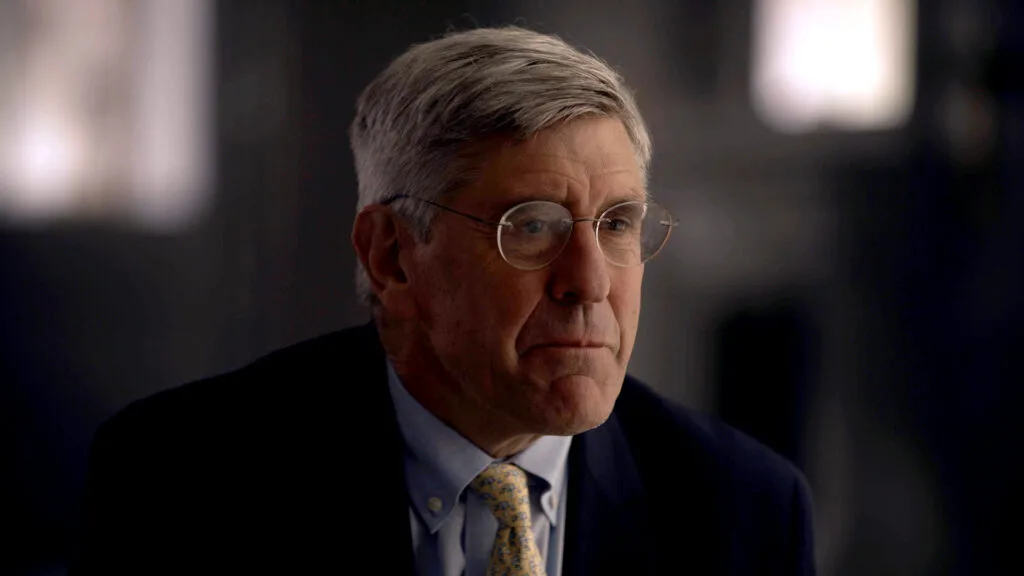
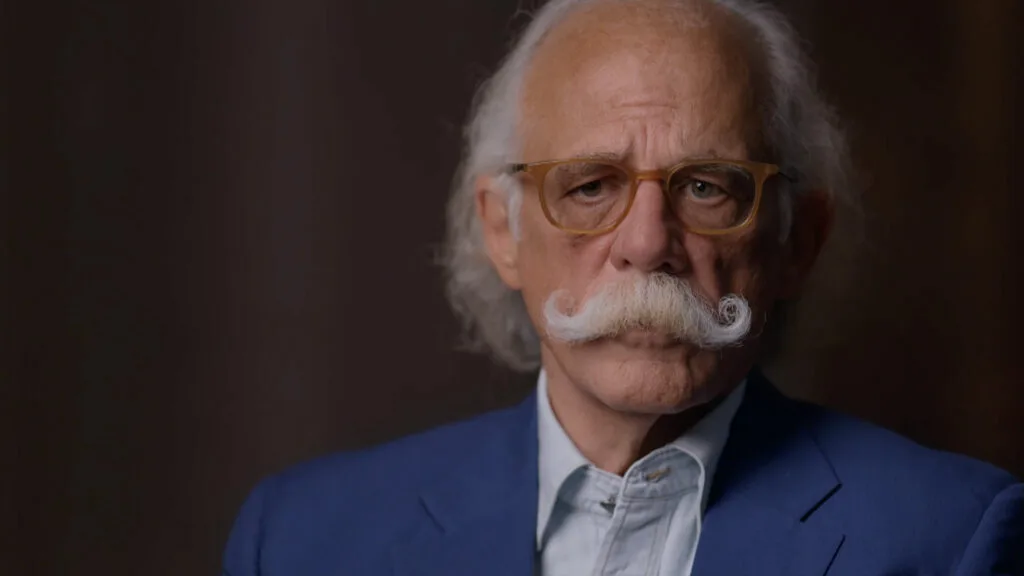
Stephen Moore was an economic adviser to President Donald Trump. He is an economist, columnist and television commentator. He previously held positions at the conservative think-tanks The Heritage Foundation and the Cato Institute.
Moore spoke to FRONTLINE’s James Jacoby on April 2, 2026, for our documentary The President vs. the Fed.
Text Interview:
Highlight text to share it
Stephen Moore
So I'd love to start back in, actually, that — the first Trump term.What was the disagreement about the Fed and what it was doing by raising rates early on Trump's first term?
Well, Donald Trump is an old real estate guy, so real estate people like low interest rates.And so Trump was always harping on the fact that he believed that the Fed was restraining economic growth by holding interest rates too high.And so that was his central complaint about the Fed.And there was a big debate about whether Jerome Powell was the right guy to run the Fed.People forget that Powell was Donald Trump's appointment.And so that was what was going on there.
There was no question that one thing I remember pretty vividly is that I think it was the — I'm pretty sure it was the Christmas season of 2018 and the stock market just crashed.You know, I remember Christmas Eve, it was like a 500-point decline in the stock market.And it was pretty clear that the Fed had been too tight.And by the way, that was when Powell was new to the Fed.He had just taken over as Fed chairman. And then the Fed decided to lower rates.And Trump was right about that. As soon as — at that time, as soon as the rates came down, the economy, we just had a boom period.So, the Fed was choking off growth then, and I think Trump was right about that.
You say the Fed was choking off growth then.Explain that to me.
Well, first of all, I do think overall Washington and Wall Street over-obsess about what the Fed is doing.I want to make something pretty clear, that there is a mythology out there that the Fed sets interest rates.The Fed doesn't set interest rates. It has — it sets the — it sets what's called the federal funds rate, which is an overnight rate.Nobody even borrows at that rate.So, the market is what sets the interest rates, and the interest rates are determined by the supply and demand for credit.
But also, one of the driving forces of what drives up interest rates, as we saw, for example, in the 1970s, when we had historically high rates, is when the market believes that there's going to be inflation.It's very simple. If you think that inflation over the next 10 years is going to be 7%, are you going to lend me money at 5%?No. You know, you'd lose money on that. So if the market perceives that we're going to have higher inflation, then the price for borrowing money is going to go up.And so that is something also people forget, about the responsibilities of the Fed.But I do think that most people believe that the Fed is like the Wizard of Oz behind a curtain.He can just push a button or pull a lever and it will repair the economy.And I believe that's a myth.
Well, we saw some consternation develop between the president and Chair Powell rather quickly in that first term.
Yes. Yes.
What do you attribute that to?
It was what happened in late 2018 when we were really ready for a boom.We had passed the tax cut. Everything was looking good.And then there was a big market sell-off, a big sell-off.And Trump was very frustrated with Jerome Powell at that point.
Because the market sell-off, because the markets reacted to these —
And he thought he was slowing the economic growth that the economy was capable of.
And you share that view?
At that time, yes. I think he was right that we were too tight.And we know that, by the way, with pretty much certainty.Because as soon as the Fed started lowering rates, it was just, you know, like letting, you know, just like a boom, like uncorking a cork from a champagne bottle.
Was it seen as somehow political?I mean, there's a lot of talk about whether the Fed is indeed political.
Yes, right.
Did you see the Fed's moves to raise rates at that point as —
No.
— as political?
No, I didn't. I just think they made a mistake.But what's evolved over time is, I do believe that Jerome Powell has been a very political Fed chairman.It's no secret that Donald Trump and Jerome Powell don't like each other personally, and they're trading barbs back and forth.And I think that's — you know, look, Trump has been political when it comes to trying to strong-arm the Fed.But I think Powell has also been influenced in his decision-making by the fact that he's not a fan of Trump's.And that's not been a healthy thing for the country, frankly.
One thing I do remember about the, you know, his first term, that is Donald Trump's first term, is, you know, when I would go and see him, he would say things like, to me, like, “I made a big mistake with Jerome Powell.”And I would say, “Yes, sir, I think, I think you probably did.”And that was sort of the beginning of when Trump — because remember — Trump didn't really know Jerome Powell.It was kind of an odd choice that he picked someone who he was not familiar with.Steve Mnuchin, who had been the Treasury secretary, was the one who kept pushing Trump to pick Powell, and I do believe Trump was right: That was a mistake.
If you could sum up why Jerome Powell, in your view, was a mistake.
I think Powell has been political.I think that he's made mistakes with respect to rate decisions.It didn't make a lot of sense why you'd be — why the Fed would be lowering interest rates at a time when we still had 3 to 4% inflation.Remember, the Fed's target rate for inflation is 2%.So we were above that level. So if your goal is to keep, you know, stay in that margin, it didn't make a lot of sense to be lowering rates at that time.I believe, and I think a lot of others do, I don't have evidence of this, but I think Powell is being political.
In September of 2024, Jerome Powell cut the interest rate by 50 basis points.That's a fairly large point reduction, and that came two months before the election.And I do believe that he might have been putting his thumb on the scale to try to help Kamala Harris get elected by putting some juice in the economy before the election.Now, I don't have evidence of that, but that is my sense.
Now, we all know Jerome Powell is just one vote on a committee, so that would — that the insinuation then is that the entire committee was trying to be —
Well, not exactly. I mean, I'm not an expert on the Fed.I mean, how its operations work.But I will say this, if you look over the last 40 years or so, it's very uncommon for the Fed board to overrule the chairman.It happens, but not very often. I mean, you could look those numbers up, but I remember there was one time, I think Paul Volcker, when he was chairman, the board went against him, and there might have been a time or two when Ben Bernanke was, but it's rare.So the — in most cases — in almost all cases, the board follows the chairman.
Soon after Trump is elected, he's talking at Davos three days after his election about wanting rates to come down.
Yes.
There's a big Fed meeting nine days after that at which the Fed holds steady.
At that time, I believe that Jerome Powell was basically saying, “I'm not going to let Trump, you know, boss us around.We're independent.” So I think to some extent, by Trump really pushing so hard on getting the Fed to lower rates, Powell resisted that partially because Powell, you know, I think he does believe the Fed should be independent.I believe it should be independent.And he — I — you'd have to ask him this directly, but I believe he thought this was an assault against Fed independence.
I think at that point in time, I've talked to Fed officials and they say that, look, the president came in with a very ambitious economic agenda.
Right.
Right? There were tariffs, there was immigration policy, there were tax cuts.So the Fed sort of took this kind of wait-and-see attitude.
I think this is one of my disagreements with the Fed generally, not even with respect to Powell.It's been a problem, in my opinion, and a lot of other free market supply-side economists.So, what really drives the inflation: You go back to Milton Friedman's famous phrase, which is, “Inflation is just too many dollars in the economy chasing too few goods.”So that means when you increase the money supply, you're going to have more inflation.But if you increase the amount of goods and services in the economy, by increasing the productive capacity of the economy, what's gonna happen to prices?They will go down.
And this is something the Fed for 40 years doesn't get, at least it's not in the mentality of many of the Fed members, which is, that's why, by the way, they call people like myself and Art [Arthur] Laffer and Larry Kudlow and Steve Forbes “supply siders” because we believe that one of the solutions to inflation is increase the output of goods and services.If, as I like to say, “You know, if the U.S. economy produces more apples, what happens to the price of apples?They go down. They don't go up.”
And that's what we had in the 1980s, for example.We had a lot of increased output, and the inflation rate fell very dramatically with tax rate reductions.So Trump is sort of borrowing from that Reagan model of reducing tax rates will reduce inflation.But I bet if you ask a lot of economists, and they're sitting in this chair, they would say the opposite: “Oh, tax cuts are going to increase demand for goods and services, and that means the prices will go up.”But I think I have history on my side to show that's not true.
By the way, I want to be clear on this. I'm not a big advocate for more rate cuts right now.I think, you know, that I'm more worried about inflation than maybe some of my Republican colleagues are.So I don't think, for example, right now there's much of a case for lowering rates.I mean, my goodness, we've seen because of the oil crisis prices rising.
So what was your view at the time?Have you been, look we —
So I've been kind of in the — I don't — I've been sort of in the middle on this.I can see both sides of the argument, but I think the most — let me just start with a very basic point.The purpose of the Fed is not to stimulate the economy.The purpose of the Fed is to keep inflation under control.
It goes right down to the very essence of why do we have a currency in the first place?Well, we have a currency for two main reasons.This is Economics 100, right? You want a currency to retain its value over time.So a dollar today will be worth pretty much what it's gonna be worth a year from now or two years or five years from now.And it's a means of exchange. And it can't be a means of exchange if the value of the dollar is going up and down and up and down.So I just want stable money.
Donald Trump is not alone in wanting low rates as president.
Right.
What was your view, however, of his calls and demands for low rates?Did you think that —
Well, by the way, I don't think it's inappropriate for the president to say, “Hey, I want lower rates or higher rates,” or, you know, for him to opine on monetary policy.But I also believe the Fed has to be independent, and that's an important component of a good monetary policy.I am an inflation hawk. I believe the Fed should not be trying to, you know, increase economic growth.I don't think they should be concerned about climate change or racism or thisism.Their one job is to make sure that the dollar remains stable in price.We are incredibly advantaged as a nation over almost every other country in the world because the dollar is the world reserve currency.
And what I, for example, said to Kevin Warsh, who I think will be an outstanding Fed chairman, he understands this: “Make sure whatever you do, you maintain the dollar as the world reserve currency.We don't want it to be the yuan, we don't want it to be the yen, or the euro.We are tremendously advantaged in that every financial, major financial transaction in the world, happens with dollars.”
You'd mentioned that the president had come to you in the first term and basically said, “Maybe I made a mistake with Powell.”
Yeah.
Was there any talk of firing Powell in the first term that you were a part of?
Not that I'm aware of. I don't — by the way, I'm not a constitutional scholar, so I don't know, you know, I mean, I've wondered a lot about this.I do believe in Fed independence, but if you have a Fed chairman who is not competent, you know, should the Fed be — should they be responsible?Or who do they — in other words, if the president can't fire the Fed chairman, who can?And is it — is that a healthy thing to say, “Oh, he could just stay?”And I mean, this is one of the most powerful positions in America, the Fed chairmanship.And if he isn't accountable to the president, then who is he accountable to?
Well, the Fed was set up to be accountable to Congress.
All right. I get it. I get it.
But are you basically —
But do you think that Powell is accountable to Congress?I don't. I think it's a bit dangerous that one of the most powerful people in the world who has control — an important hand on the economy, can't be replaced.I think that's a flaw. I don't know how it should happen, but you know, we saw in the 1970s what damage bad Federal Reserve policy can do to the country.
Do you — so, are you essentially saying that you think in some ways independence shields the Fed from accountability?
Yeah, I do. I do.
What did you make of the building, right?I just am curious about these cost overruns.Do you think that it's emblematic of something?
Yeah, I do. I think it was a real black eye for Jerome Powell.I mean, look, the Fed has oversight of our money supply.They're supposed to be financially responsible — responsible.And this is ridiculous. It was outrageous to spend that amount of money.And, Trump, you know, who's a builder and had been in the construction business, was right.He said, look, “I could have — this is a $2 billion project.We could have probably done it for one-tenth of the cost.”Now, I don't know if that's true, but I think it just sends a bad signal that the Fed was spending money so irresponsibly.
As you know, I mean, again, I'm asking for your reaction to certain moments here, but you know, Powell comes out on a video address and says that he's under criminal investigation by the Department of Justice, right?So, what was your response to that?
I thought that was outrageous. I thought the allegation was unsubstantiated.It looked blatantly political, and I think it was a mistake.And so, my view of Jerome Powell is, I do think he's been political.I do think he's been made mistakes that have been expensive for our country, but I do not believe the man is a criminal.I mean, look, even if Powell was guilty of these charges, he's leaving in four or five or six months.You know, my attitude was just wait him out.You know, why bring this up?
I mean, how do you view these efforts?I mean, some people have described it to us as a sort of power grab.Do you think that this was an attempt to recompose the board?To essentially carry out his desired —
Well, Trump, I mean, there's no question Trump would like to have a majority of people he appointed on the board.Although ironically, Jerome Powell is one of those people he's appointed to the board.But I'm much more comfortable with letting the Fed be independent, putting really good, smart people on the Federal Reserve Board.And I don't think it's a problem to have people with differing views on the Fed.You know, I think it would be a problem to have everyone, you know, just being yes-men to the chairman.
Tell me about: Why did you call for Powell to resign?
Because I have believed that the Fed has been overtly political under Powell's leadership.And I think he's made some major mistakes.And he would do well, especially now that he's kind of a lame duck.Why not just step aside and let Trump put someone else in?That would be my view.
You say he's been overly political, but it sounds like you've basically agreed with what the Fed has done during the second Trump presidency.
Yeah, I generally would say that holding pat has probably been a pretty wise idea, although until what happened with Iran, the inflation rate was coming down pretty rapidly.So you could have made a case at that point, okay, now you can lower rates.I think it would be a big mistake to do that right now though, because we're probably gonna see the consumer price index go to 3 to 4% or more because of the big spike in the oil price.
Last November's election appeared to be kind of referendum on the economy —
Yes.
— in that there's widespread discontent in the United States with the economy.And I'm just curious if you think, you know, the president came out soon after the electoral losses in November of 2025 and, you know, certainly pointed to Jerome Powell and the Fed and said that if only they lower rates, things would become more affordable.I'm curious, though. I mean, how is it that you see that?How is it that you see the kind of — whether or not —
I think Trump was frustrated as I have been that, you know, if you looked objectively at the economy, it was doing very well.And we actually had evidence. I showed Trump the evidence that, you know, if you looked at people's wages and salaries and their incomes, they were rising faster than inflation.So, people's — just based on the statistics, people's affordability was going up, not down.And yet there was this perception that — by the public — that everything's more expensive.And part of that is just people would focus on — it's maybe human nature to see, oh, my grocery price is going up.Well, did you look at what's happening in airline prices or these things?And so I think there was a frustration that people were overly pessimistic on the economy more than they should have been.Now we're in a different world now, because prices really are going up because of what's happening with the oil prices.But at that time, we had a really strong economy and yet the public wasn't feeling the love.
And why do you think that is?
I don't — I think partly it is that, you know, we're an incredibly polarized country today.It just is a fact. And I believe that, you know, half the country would not, as I used to say, you know, even if Trump gave us the Garden of Eden, half of the country would've still been angry and saying, “We don't like the way things are going.”And by the way, part of that was also true under Biden's presidency too.I mean, again, we're in an unhealthy polarized situation in the country where, you know, Democrats are on Venus and Republicans are on Mars.
But what about the claim at the time? I mean, at the time President Trump went to swing states like Pennsylvania and made speeches saying, one, affordability is a hoax, and two, if only Jerome Powell and the Fed would lower rates, then, you know, things would be more affordable — mortgages, car loans.
I wouldn't have said that, you know, affordability crisis is a hoax, but I would say that, you know, objectively speaking, people, you know, look at what has happened to people's incomes relative to inflation.And I think he made — should have made the case better that, you know, yeah, sure, some things are up in price, but, you know, people's paychecks are up too.
And I'm curious, though, I mean, in your view, that does rebut the argument of —
Yeah.
— that there's an affordability crisis?
Yeah. I mean, look, I think what's been happening is that the price of three things have gone up pretty substantially: groceries, housing and healthcare.My own wife, you know, she would complain, you know, come home and she'd say, “You have no idea what the groceries cost,” you know.So people, that's a natural thing.