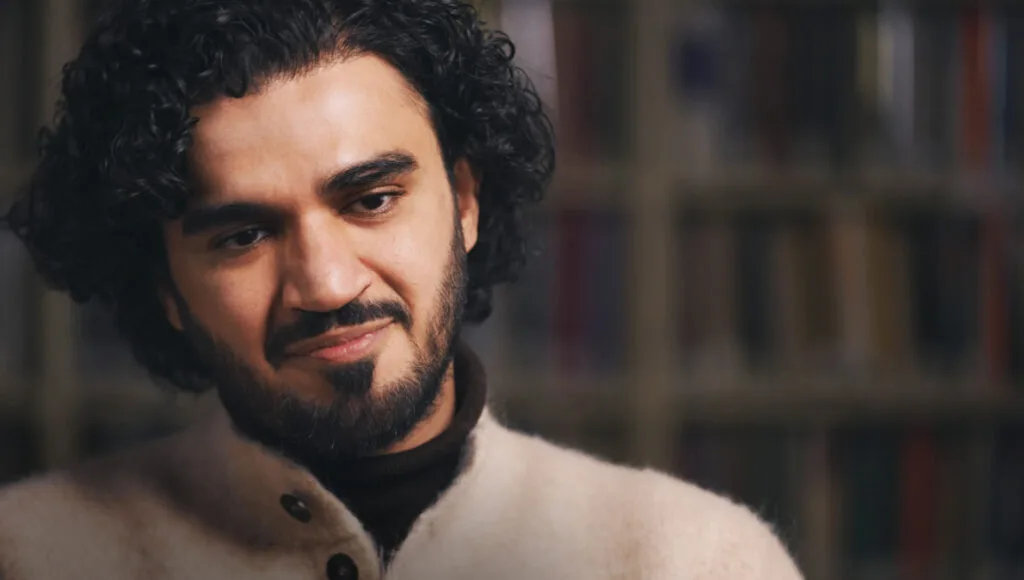
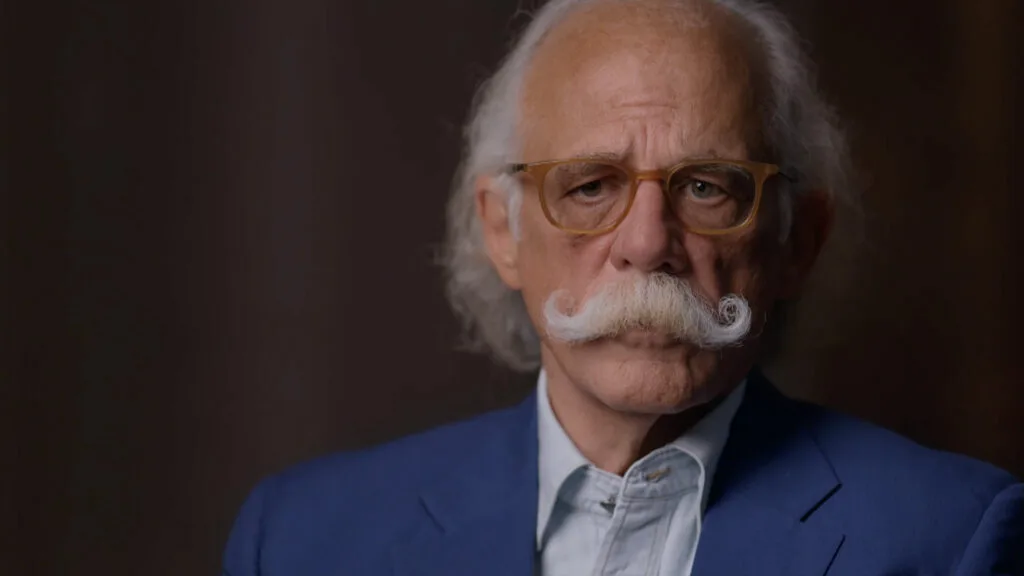
Khalid Aljabri is a cardiologist and a health-tech entrepreneur. He is a Saudi exile and the son of former Saudi intelligence official Saad Aljabri, who served as a top aide to the former Saudi Crown Prince Mohammed bin Nayef. Two of Aljabri's siblings have been imprisoned in Saudi Arabia since 2020.
Khalid Aljabri spoke to FRONTLINE’s Martin Smith on Jan. 20, 2026, for our documentary The Crown Prince & the President.
Text Interview:
Highlight text to share it
Khalid Aljabri
I want to talk about November 2016.Trump has won the election, surprise election, and a team is sent from Saudi Arabia to meet with Jared Kushner.Do you know about this?
Through common friends in New York and D.C. I learned of a team led by senior Saudi officials who are close to then-deputy crown prince, you know, MBS [Mohammed bin Salman], that traveled to New York to meet the Trump incoming administration transition and it was an early attempt by the current crown prince to kind of court the Trump administration because historically U.S. administration had more experience with other royals within the Saudi political sphere and MBS was a newcoming, emerging prince.
They had more experience with people like your father.
You can say that.
Yeah. And certainly with your father's boss MBN.
Yes, the former Crown Prince Mohammed bin Nayef.Historically, post-9/11, he was the main interlocutor between Saudi Arabia and the United States and other Five Eyes [intelligence alliance] countries.You can probably argue that he salvaged the relationship when the cornerstone of the bilateral relationship was the security aspect.
So, they put together a report after meeting with Kushner and sent it back to MBS.And this is eventually, this report apparently gets leaked to a newspaper in Lebanon.Are you aware of this?
I'm not aware of that specific report, but I'm aware of, you know, some, I wouldn't say analysis or conclusions, but in the aftermath of those meetings, one of my friends who was in New York at that point, working for the permanent mission side of the UN [United Nations], came down to Boston where I was and, you know, we had lunch.
And one of the things he said, "Oh, by the way," — 'cause he knew my dad's affiliation with the former crown prince and so on — he said, "Trump is going to visit Saudi Arabia as his first foreign trip on May 21, and a month later, they're going to change the crown prince."
And I thought it couldn't be this easy and blatant and straightforward, 'cause there are, you know, internal procedures in Saudi and the whole allegiance and council and pledging allegiance and things we thought were going to be constraints.And, you know, I reported that back.I think people —
You reported that back to whom?
To my father, who reported it to the then-crown prince.I don't think it was taken seriously.But May 21 was the trip, and June 21 was the succession change.So it was an accurate tip, and I received that mid-March 2017.
Your friend, and in the, you said permanent mission?
Yes.
Of the Saudis?
Yes.
— said to you anything about the content of their report as they went back to Saudi Arabia to talk to MBS?
I wasn't aware of even — such a report existed.I was aware that there were multiple components or three pillars that they were discussing, and one of them included investments, arms deals, modernization in Saudi, and then ultimately normalizing with Israel.
So these were enticements that the— Kushner and Trump were perhaps putting out there and saying you need to do these things for us?
I think I would say that these were the pillars of what an MBS-Trump relationship would look like.
And why do you think it was important for MBS to reach out to Trump at that point?
Historically, and this is not just limited to Saudi Arabia, but endorsement of the U.S. as a superpower, especially given its presence and relationship across the Middle East, is seen as an endorsement.And not just an endorsement, but also almost a legitimization of any leadership.If you are seen as the go-to person by great powers, then you are the powerful person that should rule or control Saudi Arabia.
Sure, but it is rather extraordinary that they would be able to come and make a deal whereby Trump's first foreign trip would be to Saudi Arabia.That's not what most presidents do.
It was quite unorthodox, to say the least.But I can see the pitch going, “Look, we are Saudi Arabia, we're the leaders of the Muslim and Arab world.”And this is a fact, given the size, given — housing the two holy mosques.I think they spoke to what appealed to President Trump, in terms of deals, in terms of normalizing with Israel, in terms of using Saudi Arabia as a platform to speak to the larger Arab and Muslim world, and that must have resonated with him.
And from that point on, Kushner and MBS — or even from before — were forming a friendship.Can you characterize those bonds?
Friendship with whom?
With MBS, Kushner and MBS.
Actually, what I was told when the delegation met for the first time — and I'm told in that meeting, Steve Bannon was there, and then [Michael] Flynn, the first national security adviser to be, at that point, were in the meeting.They were very skeptical of the Saudi delegation and they were mostly in listening mode in terms of like, "Hey, what are you guys offering us?”“Why should we trust you?” “Why should we listen to you?"
Ultimately, there were multiple meetings and MBS and Jared Kushner developed a personal relationship that is visible through the kind of multiple trips that Kushner took to Saudi Arabia.I mean, he speaks frankly about that in a lot of interviews and a lot of podcasts, so it's not a secret.
So, well, this trip takes place.Trump seems quite well-treated.Red carpet, sword dance, the whole nine yards.How did you see the Saudi-U.S. relationship taking shape at this point?I mean, you're obviously concerned, your dad is concerned.Your dad leaves the country when?
That was May 2017, just about a few days before the Trump visit.
So he leaves just before that visit.So, he can sort of sense what's going on.
There was, obviously it was climactic, and there were tensions that preceded that, you know, not — even before Trump was elected.So in terms of the jockeying between Mohammed bin Salman, MBS, and the former Crown Prince Mohammed bin Nayef, and unfortunately, that's where my dad and my family got kind of tangled in the middle.So it was climactic until that point.
Interestingly, a week before the visit, there was a Politico article about — that was, I think, the title was very sensitizing, like "President Trump Joins the Saudi Game of Thrones."And it was about a lobbying contract that the former crown prince signed with somebody who's close to President Trump in order to actually showcase the role and the importance of Saudi Arabia as a security partner.That was misperceived by the current crown prince as some kind of last hour sabotage attempt.And—
Like usurping his —
Yes, and basically I think he blamed my father for it and my father was tipped to leave the country at that point.
And you were in the States already.
Yes, I was in Boston.
You were in Boston going to school.
I was, I had just finished my clinical fellowships and about to start my graduate business degree.
Right. And what did your father tell you was going on?
He was, you know, like we — obviously from afar, we speak cryptically and, you know, we minimize our conversations, but it was clear to me that something wasn't, you know, wasn't adding up and that the tensions between the current and the former crown prince were at boiling level and both my dad was actually kind of warned and advised to leave the kingdom.
Do your best to characterize MBS, his personality, his character.
So as a backdrop, MBS and myself are the same age.I think I'm a few months older than him.We graduated the same class from King Saud University.That was 2007. He was in law school; I was in medical school.He read the graduation speech.His dad was the chaperone of that graduation ceremony.He handed me my honors degree.
King Salman [bin Abdulaziz Al Saud] did.
Yes, then-Prince Salman, governor of Riyadh.And so growing up in the same generation, like people knew each other.I didn't know him directly, but we had a lot of common friends, and he was notorious for his adventurism.He clearly had animosity towards his cousins, mainly because — and this is something I don't approve of at all — but like within the royal family, there is an internal hierarchy depending on who your mom is and who your dad is, depending on your wealth, depending on your access.And up until his dad became a crown prince in 2012, he was a fringe royal.
Say more about his adventurism.
There — he was hungry for power.And initially when the power that he held was only limited to his household, you can hear a lot of stories about how he would, you know, mistreat domestic workers or even his dad's guests.
And then ultimately, when he graduated, or during high school, his power basically was, again, limited to Riyadh, where his dad was the governor.So he would stop streets and basically imitate what a police officer would do.
When he graduated college and became an advisor to his dad at the level of the governorate, he tried to make a lot of deals in terms of actually acquiring some lands that were purposed for public use.
He made a lot of money doing that.
He did, I think he — and to be fair — he wasn't different than a lot of other royals.And when he started doing that, he was applauded by his father.I'm told that he was like, "Oh, how come your elder brothers never taught me to do this?"And he was referencing his half brothers who one was an astronaut and the other one has a PhD from Oxford.
So clearly he became his dad's favorite during that timeframe, not because of what he was able to do for his father and show him how to assert himself as a son of the founding king, but also at that point, his dad had lost two of his elder children who were very close to him.So there was an emotional gap that both Mohammed bin Salman and his mother very cleverly exploited.
At the time that the Trump entourage, that Donald Trump decides to go to Saudi Arabia on this state visit, received this rather warm welcome, what is the situation in Saudi?And what I'm referring to is there were a lot of problems that he was facing in Yemen, in the Eastern province, with women, just paint me a picture of what was going on.
I mean like — there were a lot of problems that he inherited and there was a problem, a lot of problems that he self-created.So, you know, Saudi Arabia in 2014 — like, look and again, this is because I come from the generation that was, you know, in their 30s at that point.
We were frustrated with the slow pace of reform.We knew what Saudi Arabia was capable of for us.We were the sleeping giants.We saw neighboring countries with less resources overtake us.And I don't think that was a result of nefarious, you know, actions within the government, but mostly because we had you know ailing leadership that are — were completely out of touch with the streets.
King Abdullah — and he did so many great things, King Abdullah, may he rest in peace — was ailing and it was just extremely frustrating.So on every aspect, there was this kind of, I would say regression, you know, in Saudi Arabia, and inability to keep up with the kind of booming surrounding nations like UAE and Qatar.
So whether it's unemployment or, you know, women not being able to drive or join the workforce, an inflated public sector wage bill, like the housing issues — these are problems that, you know, predate MBS.And they were an accumulation of errors or a lack of fixing.But they were also things, at least, you know, and mainly you mentioned that, the war in Yemen, that was his own kind of engineering, and he was the architect behind it.
So the country that Donald Trump was coming to visit was, as you would I guess describe it as, full of potential but ossified.
I would say so.And I think, look, every leader in Saudi Arabia acknowledged the need to diversify away from oil.There is, you know, at some point, you know, we started joking about it because like every five years there will be a five-year plan and the first line will be diversification away from oil.But, you know, it's a natural resource curse.You know, it's easy money and you get addicted to it and basically there's no incentive to look somewhere else.
And I think MBS early on — I think it was April 2016 when he came out with his, you know, the blueprint for like Vision 2030 and Saudi transformation — rightly acknowledged that the secret sauce of Saudi stability in the past, which was, you know, welfare for loyalty state and ultra-conservatism was not going to cut it anymore.
It might have worked when you had three million population not 30 [million].It worked when oil prices were always there to kind of cover your problems, like whatever is the issue, just throw money at it and it will go away.And he realized that he was, you know, the kingdom was running on borrowed time and that there had to be genuine attempts at diversifying the economy.
Now, you can't do it — if you diversify the economy, you can't do it with an ultra-conservative state.So he had to decouple the economy and the country, in a sense, from being ultra-religious and conservative.And that was the kind of pivotal moment in Saudi Arabia.It coincided almost a few months later with the election of Donald Trump.
Yeah, I mean, it seems quite progressive.It seems quite aware, quite — it was the right thing to do.
Absolutely, 100%. Now, it's a different story when rubber hit the road, but on paper, it was the right thing to do.
Where does it go wrong?
I think implementation. I think, look, and there were a lot of great things that went right, and there was a lot of things that went wrong.There were a lot of low-hanging fruits.For example, allowing [women] to drive. And it's not just their right to drive, it's actually empowering a large portion of the society to join the workforce that otherwise was basically crippled by inability to get to their place of work.
Half of the workforce.
Absolutely, 100%. And some of the selective social liberalization as well, these were low-hanging fruits, not in terms of actually driving economic output, but also within a society that 70% was youth.
I'm trying to understand that when Donald Trump becomes the president and goes to Saudi Arabia and Vision 2030 has been announced.How does that stoke the situation in Saudi Arabia?
Again, when you are embarking on a pivotal moment in your history that basically includes diversification of the economy and genuine attempts at that, and even some of the risky social changes, getting the involvement and even just the visible endorsement of the United States is actually a good thing.
Because most of — if you look back throughout history in Saudi Arabia, like the association with the United States yielded a lot of dividends for the kingdom, the discovery of oil, you know, in Aramco.And literally, we can go in every decade and show examples of why a close partnership with the United States benefited the kingdom, and that also benefited the United States as well.
So to have that kind of gesture, the grand gesture of a U.S. president creating a precedent of visiting Saudi Arabia as a first trip, that was probably the ultimate global endorsement of that transformation plan.
But yet, a lot of things go wrong, and a lot of things are, I mean, even before he announces that women should be allowed to drive, he arrests a whole bunch of women, including Loujain al-Hathloul.
Absolutely, and I think people, you know, some people struggle to reconcile it, but it's actually simple.Everything that MBS does — whether it's right or wrong, whether we agree with it or disagree — he is generally driven by his attempts to diversify the economy away from oil.It's driven by political survival.He knows that the House of Al-Saud, the Kingdom of Saudi Arabia will not survive unless they are independent of oil.And if you put that in mind, everything he does is driven by that.
And the way he would look at citizens, he would look at them as economic units.So if you're able to contribute to that transformation journey with added value, then you're welcome to drive a car, go to a dance rave, attend a concert, absolutely, enjoy that, but dare you ask for anything more?And that's the only way you can reconcile where while on the same day he allowed women to drive, he arrested, or ordered the arrest of the long-time women driving advocates.
And other women activists as well.
Because you know what? Women driving is not a right, it's a privilege.That's the way he sees it.
What's the point? I mean, let women drive and let Loujain be free.What is he getting out of putting her in prison?
Because then people would perceive that grassroot activism in Saudi Arabia yields rights.Today, they'll be asking for women driving.Tomorrow, they'll be asking for elections.
So what?
I don't think — I think that's fundamentally incompatible with the model of absolute monarchy, for a start.
Fair enough.
But that is the issue. Like, whatever, whatever, there are no rights.There are privileges that are bestowed upon you from the royal elites.
But there's ways in which he could have disciplined some of these women without putting them in prison, without —
Oh, absolutely.
I mean, some really dark stuff went on.
I think if, you know, having the benefit of hindsight, you can argue that he could have achieved every objective he sought with — basically, without the need for suppression.
Without arresting academics, without arresting poets, and I mean, you go, give me the list.I mean, he's—
Kidnapping out of state, shaking down the business elite.I'll give you an example, so, 'cause that would be a good example.So, Saudi people are really the nicest people you can meet, and you've been there on the ground, and you've engaged with them.If MBS had basically invited all of the people that he had shaken down at the Ritz-Carlton and told them, "Look, you've been making money for all these years.There is no income tax in Saudi Arabia.Oil prices are tanking.I have ambitions to transform the economy.I want you to be part of it."
I kid you not, people would have probably donated their wealth.And I'm not exaggerating.Like Saudi people are among the most generous people you'd see.Like I've seen elderly ladies sell their gold when the king announces, you know, a campaign to support freezing children in Syria or like, you know, Afghanistan or ...
Then why arrest them, hold them in the Ritz-Carlton and, in fact, in some cases torture or kill them?
I think that's a mix of his own traits and his own demons and vindictiveness towards his cousins.There's an element of inferiority complex, and I think is also extremely ill-advised by those around him and you know that's a recipe for disaster —
Like [former royal court advisor Saud al-] Qahtani or Mohammed al-Sheikh.
Absolutely. Especially Qahtani.
Yeah, especially Qahtani.Does he get as far as you know any pushback from the United States on his human rights record during this period of time?
I doubt he got any pushback.If anything, maybe tacit approval.And I'm not guessing. I remember there was a tweet by the president at that point endorsing what happened, you know, both domestically like the Ritz-Carlton or even, you know, the siege of Qatar.
Right. As far as the Ritz-Carlton, I think the president tweeted something about these people who had been milking the kingdom and they deserved, I guess — the implication is they deserved what they got.
And that speaks to the point I made earlier: when you feel you have the endorsement of the United States, effectively, you feel you have a carte blanche to pursue whatever you want, both domestically and regionally.
Well, this is a central question.To what degree has the Trump administration in its first term enabled Saudi's behavior, MBS' behavior.
I think to a significant degree, because remember, King Salman didn't come to power when President Trump was elected.He was king since January 2015, during the Obama administration.So that was a restraint on MBS.
You can argue that, again, if you look at it, it's pretty clear.His actions, including accession to the position of crown prince, only started after Trump's visit to Saudi Arabia.It didn't start when his dad became king.Yes, he was slowly consolidating power, but he was unleashed right after the Trump visit.
By the endorsement and approval of the U.S. administration.
Yes.
As a Saudi, you hold the administration responsible.
I actually, you know — I'm not a human rights activist and I'm a physician, I'm an entrepreneur, you know, my dad worked for the Saudi government for a long time.And when I have meetings at the White House, even during the Biden administration, I was like, look, “I'm not here to ask for a rupture in the U.S.-Saudi relationship or like, you know, giving the Saudi leadership a bloody nose.”
I actually genuinely believe that the best case for Saudi Arabia on every front — socially, economically, culturally, security, even human rights — is a robust U.S. partnership where each aspect is part of the conversation.So I think what the Trump administration was guilty of is basically the complete absence of any conversations over human rights.
Now, there were some minor exceptions when it came to U.S. citizens, but overall, in general, not just MBS — authoritarians are astute observers and they will perceive the lack of conversation on human rights as a green light and a tacit approval to do whatever they wish.
I mean this leads up to the climax, really, of, at least in terms of the public's view of Saudi Arabia, of MBS actually ordering the murder of a Washington Post columnist.
So yes, for the public, you know, that was the kind of climax.But for me personally, it started long before that.And I'll come to share, you know, where I was and what happened on the day Jamal was assassinated.
But, you know, I'm from a big family.My mom and dad and two girls and six boys.All of us were outside the kingdom. The only two that were remaining were my brother and sister, Sarah and Omar.They were 16 and 17 at that point, just in Saudi waiting for their U.S. student visa interview.
So they could come for an education in the US.
Yes, absolutely, and join me in Boston.You know, the succession change happened overnight, and it was June 21.On the first day that Mohammed bin Salman became crown prince, in the airport, as they were trying to come to the U.S., they were banned from travel.They were told that you can't leave the kingdom.
And for us, we realized that as a family, we have a bullseye on our back, and it was as clear as MBS' first day as crown prince.So for — and that was long before all the other kind of oppressive milestones that you talked about, whether the Ritz-Carlton or the detainment of the female activists, or even what happened with Jamal Khashoggi.
Ultimately, three years later, my siblings were disappeared.And this March, it will be six years.And nobody has seen them or visited them since then.So for me, like I live this every day and I can only imagine what others are going through as well.When I speak about the case of my sibling[s], I don't just speak about it because it's documented and verified, but it's also emblematic of the wider oppression that continues until today.Now —
Were you expecting anything, was it a possibility in your mind that this would happen on June 21, 2017, when you're —
I was worried.
Yeah?
I was worried, and actually—
Is that why they decided to leave at that point?
No, I made the decision for my family as early as December 2016.
So that was a coincidence?
It was just the interview date for the visa.That's the reason they were waiting until then.December 2016, during Trump's transition, and actually part of my analysis was driven by the kind of election of President Trump.I remember calling my mom and dad, they were in Saudi, I was in Boston, I was like, you know, this is going to get ugly in Saudi Arabia.There is political jockeying for the throne, and a lot of collateral damage is going to happen, and I think it's going to hurt a lot of innocent people, including us.
And it’s — I think people inside Saudi live in an information bubble and sometimes they have their own biases because you don't want to believe how grave things are because then you get upset and you need to act on it.But being able to observe Saudi from the United States, it allowed my vision to be clear and unclouded.And I told my mom and dad, “Look, it is going to get ugly.Come to Boston, let's focus on the kids' education.Let's sit this out for the next three years 'cause it will be ugly.”
And it was like, “Oh no, you're exaggerating.You're always, you know, worst-case scenario.It's the physician in you, you know, talking again.”And I said, “Fine, I'll apply, you know, I'll take care of the academic application.”And, you know, here I am today, unfortunately, you know, whatever I kind of expected stands to be true.
Can I ask what led you to make that phone call in December of 2016?You say Trump had been elected.What is it about that election of Donald Trump that led you to believe that things were going to get nasty?
It was one of the factors.So again, being from the same generation as the current crown prince, as MBS, knowing his personal traits, knowing the stories, seeing how my father was target[ed] throughout 2015 and 2016, understanding that Mohammed bin Salman wanted to be king of Saudi Arabia and that the last hurdle happens to be my dad's boss.Obviously, it was going to get ugly.And then —
But what was it about the Trump election that made you worry?
Because then I knew that — because, you know, it was Trump versus Hillary [Clinton].If Hillary had won it would have probably meant the same kind of you know continuation of traditional diplomacy towards Saudi Arabia and not taking sides and not tipping the scale one way or another.
But I thought that with the election of President Trump who is, you know, an anti-establishment who came to disrupt and knowing how persuasive MBS can be, I thought that there was a chance that basically MBS would feel empowered to do things that he wasn't comfortable doing during the Obama administration.
You know, your question originally was about Jamal Khashoggi.And let me relive it through my own lens, okay?Like, I was sitting for one of my graduate classes and then, you know, I had a WhatsApp group of some friends.One of them shared a screenshot of a tweet by a Saudi exile who basically said Jamal Khashoggi had entered the Saudi consulate in Istanbul and hasn't appeared.
And my first reaction was like “Please don't let it be what I think it is.”And I kid you not, I felt my heart falling to my knees.Not because I was scared, but I had really wished that what I thought really happened at that point wasn't true.I leave the room. I call one of my friends who's close to Jamal, because I didn't have a direct relationship with Jamal.He said, "No, it's true. He's been missing for a few hours."And his fiancée's, you know, basically outside waiting for him.
I sent the tweet to my dad.And I told him — I actually still have that conversation — that “I think they killed him.”And he said, “Oh, there’s no way.”And again, this is somebody who's worked for the Saudi security apparatus for almost four decades.And I said, "No, I think they did."And at that point —
Why did you think they did?
Again, because knowing the personal traits, knowing the vindictiveness, knowing the vengeance, knowing at that point the fact that so many things had happened with zero consequences, like it would only empower you to do more things.
And, you know, we were waiting and waiting and waiting.The following day, same time, I get a message, and I remember seeing a notification on my phone screen, and it was from my father, who was at that point was in Canada, saying, "May he rest in peace."And look, I'm having goosebumps again now.
And so I leave the class and I called, like, "Who?"He was like, "Jamal." I was like, “What do you mean?”He was like, “He was killed in the embassy.” I was like, “You gotta be kidding me.”He was like, “No, and he was butchered by the doctor.”I was like, “How do you know?”He told me how he got to know from like, obviously his intelligence kind of relationship and that he was specifically warned not to go to any — close to any Saudi mission.
And it was a shock for everyone.And getting to know what happened within 24 hours, but then seeing what transpired afterwards for almost three weeks, including the implausible deniability and the —
Alibis.
— and the narratives that the Saudi authorities were putting out, that was pretty harmful to the kingdom's image, to the credibility, to everybody associated with this heinous crime.
Well, they're still clinging to the theory they came up with, that it was a rogue operation, that the crown prince had no knowledge of.It doesn't hold water.
Look, Saudi Arabia was always an absolute monarchy.It's a hyper-centralized state.In the last decade, even more so.Nothing, nothing good or bad can happen without at least the knowledge of people at the top of the pyramid.I think that's, you know, fair to say.Also, as a physician, why do you send a forensic pathologist —
With a saw.
— to a crime scene? If you want to drug somebody, send an anesthetist.They're pretty good with IVs; they know them.But like sending somebody who only deals with dead bodies kind of gives it up.
And he comes in with a bone saw.
And a body double.
And they talk about needing to cut the body up beforehand.I've seen the transcript.How did your dad process this?You say he initially said it was impossible, he didn't believe it?
Yeah, he didn't believe it because — I mean, probably denial is the first reaction, but as an intelligence, a former intelligence official, like, there are red lines that you shouldn't cross, and obviously kidnappings and assassinations are — go beyond that.And the fact that, you know, it's just like, he — I don't think he believed that the brutality of the regime at that point would reach to what happened in Istanbul.
Under MBN, there's at least one incident, or perhaps more, of attempts to repatriate Saudi royal family members, in one case, bring them back to the kingdom?
So I don't know if you're speaking about the same individuals.
Switzerland to Egypt.
Yeah, but that wasn't, that wasn't, MBN was present, but at that point you have to acknowledge that there was a whole team operating under the auspice of the royal court.There was almost two parallel states.And I'm actually glad that you bring this up because in — shortly before my dad was dismissed in September 2015, there was one of, there were a few royals who are pretty vocal in dissent outside the kingdom.And the current crown prince asked my dad for basically — “We need to get these guys back.And can we use Mabahith?” — which is a Saudi kind of counter-terrorism or domestic intelligence force to repatriate them.
MBS asked —
MBS, yes.
— your father?
Yes, and basically my dad said, “No, we don't do this.”And it's quite interesting because it was that kind of denial, like when my dad kind of refused, that led MBS to create his personal kind of team, the notorious Tiger Squad.And if you actually go to the OFAC [Treasury’s Office of Foreign Assets Control] page, you would see that it was established in September 2015.That was the same month my dad was dismissed.
So there were, I wouldn't call them institutional, but at least there were individual safeguards from things that prevented things from happening, like what happened in Istanbul.
You witnessed the reaction of the Trump administration to that.What was your — what did you think?
So now I'm trying to like, I'm reliving the moments.It was interesting, ‘cause I was in Boston at that time and there was a lot of you know Saudi students, some of them royals, they were celebrating.They thought that was going to be the end for MBS, that he was — his father was going to be pressured on sidelining him.
I said, “No, he's going to survive.”That was my impression from day one.I thought that the Trump admin would stand by MBS and that he would basically, you know, emerge unscathed.I think that's a bit unfair. I think it did do a lot of damage to MBS.I don't think he was held accountable, but it did dent his — it will dent his legacy, you know, for the rest of his life.
But had the Trump administration not stood by him, had Kushner and [former Secretary of State Mike] Pompeo and Trump and [former national security adviser John] Bolton not stood by the crown prince at that time, do you think it would have changed?
I think it would have. I think it would have, especially if they applied pressure at least to resolve some of the standing matters.But if I can be completely honest here, if what happened to Jamal Khashoggi happened under the Obama admin or the Biden admin or any U.S. admin, I think the ultimate outcome would have been the same.It would have been just probably better at PR management, unfortunately.
That was 2018. We go into, well I don't want to go through all the details of what happens right after that, but eventually we have a campaign where [Joe] Biden is saying, “I'm going to hold MBS responsible.He's, in my view, a pariah.”And did you think that he meant it?
For campaign purposes? Yes, he meant it.Was I confident that he was going to follow through?Absolutely not. And actually, when it comes to, you know, human rights — and again, this is not ignoring the long-term effect on basically human rights and democracy.
I think what Biden did, which is making all these campaign promises, whether it's towards MBS or other like Middle Eastern dictators, and then basically going in with a hat in hand when he was in office, is actually more dangerous and more damaging to human rights than being blatant as Trump.
In the case of Jamal Khashoggi and what happened, what MBS — what Trump said, remember during interviews and some of the releases from the White House is, “Maybe he did, maybe he didn't.”He left it ambiguous and that was kind of a constraint.
What Biden effectively did is like, “I'm gonna hold you a pariah, like, I'm gonna hold you accountable, you're a pariah.”His, Biden's director of national intelligence released the report, and then Biden went and gave MBS a fist bump.You know what that looks like? Looks like an indictment then allowing somebody to walk out of the courthouse.
So basically he says, “I believe he did it, and I'm going to ignore it.”
Yes, and you know what? How that would be perceived?It's like, “Ooh, that was a near miss.Next time, I just have to make sure I'm not caught.”
So that's why I actually think Biden did more harm to Saudi human rights than President Trump.
You mentioned that you'd been in the White House and had conversations on the issues that we're talking about, human rights in Saudi Arabia.Can you share any of that with us?
Yes, I actually even, I wrote an op-ed shortly before Biden announced that he was going to Saudi Arabia.And one of the recommendations was actually like for Biden to go to Saudi Arabia, but with conditionality.
We had multiple, I had multiple meetings in the State Department, in the White House, you know, National Security Council.And the way I would go in, is I will say, look, you know, I'm a Saudi citizen.I love my country. I think me and my friends here believe in the value of a strong Saudi-U.S. relationship.Nobody here is asking you for a “rupture” or making MBS a pariah, but we do believe that you have an abundance of leverages and that your policy should be more nuanced than the extreme of pariah or lopsided fist bumps.And —
The hypocrisy of that.
No, they go quiet, 'cause that was, you pull the argument from underneath them 'cause they're coming in with the straw man argument that is a self-serving excuse to do nothing where like, “Oh, you're asking us to rupture the relationship with the kingdom.Of course we can't do that.”
It's like, no, no, no, no. Actually, counterintuitively, we're here to tell you to enhance the relationship because we believe that the best case for Saudi Arabia — as a state, as a country, as people on all fronts, economic, healthcare, education, and human rights — is a robust Saudi-U.S. relationship where everything, including human rights, is part of the conversation.
Who were you meeting with?
National security officials.
Of the Biden administration?
Yes. And senior State Department officials within the Near East Affairs Office.
I mean, you had a very powerful case to make about your siblings — about your sister, about your brother, about your uncle.
About my brother-in-law.And again, I love my country.I love Saudi people.I’m not — It's actually very tough for me to be in a position where I'm forced to fight for my family in a way that can be misconstrued as dissent.Obviously, I'd rather —
As being anti-Saudi.
Yes. And that was the essence of a letter I recently delivered to Saudi officials in the embassy around the corner here.I went inside the embassy.
What did your letter say?
So let me give you the backdrop to that.And it's a very interesting anecdote.So, it was elections day, the second Trump election day.It was a Tuesday.I had work meetings all morning.I was driving to pick up my kids from school and my phone rings and I look and it says Embassy of Saudi Arabia.I was like, this has to be a spam call.
I answer, and it's the head of citizen affair at the consulate.Very nice, very cordial."Hi, Dr. Khalid, how are you?Did you submit any requests?We are here to serve you like we serve all Saudi citizens."It was genuinely a very genuine, nice call.And I said, "I haven't submitted any requests, but a couple of weeks ago I was having breakfast and Princess Reema was on the table next to me.I thought it was inappropriate to kind of interrupt her breakfast, so I texted her.That was the only — asking for a meeting.That was the only request I made."
He said, "You know, if you need anything, let me give you the address or the email and you can write a letter.”And then, I said, “Look, I jog by the embassy every day.Like I know the embassy inside out.There's a lot of turnover in people, but how about if you're okay, I'll write something and I'll leave it at the front desk for you to pick up.”And by that, I wanted to also display that, like at the end, I'm a Saudi citizen.I love my country. Like, you know, let's solve this.All of this is needless.
Solve this, meaning …
My family situation, yes.
The family situation being held.
Yes, absolutely.
Or disappeared.
Yeah, or me being exiled, you know?Like I was here on a Saudi scholarship, I owe my country, I wanna go back, I wanna practice medicine in Saudi.That was always my dream. I invested time, money, effort, and so did my country and so did my family.
So I wanted to go.My wife said, "There's no way you're going to the embassy by yourself."I said, "Okay, you're welcome to come."So we go, we stop, knock [on] the door, security comes out, private security, they ask, “Oh, do you have your Saudi passport or national ID?”And I smiled because that has been long expired.I said, “Oh, I forgot it at home.”I was like, “Are you sure you're Saudi?” He said, “Yeah, I'm Saudi.”
I go in. There was this, you know, Saudi person at the front desk.Introduced myself. You can tell that he was kind of shocked that I was there.And I said, “I don't want to take a lot of your time.Here's a letter that, you know, that was requested and I’m here to deliver it.”And he said, "Do you want to go upstairs and deliver it in person?"I'm like, "No, no, I'm fine with you delivering it."And I left.
And the essence of that letter was exactly what I said.Like, I'm a Saudi physician.I was fortunate to get government scholarship.I studied in public schools in Saudi.My whole dream was to serve my country.I actively avoided any work in politics and it truly pains me to be in a position that is needless where I have to fight for my family and all my activism can be seen or misconstrued as being anti-Saudi.And whatever the grievances are, they're easy to solve.
Response?
None. But it was encouraging because that was in seven years at that point that was the first time the first official reach out and this is not a Saudi official in the D.C. embassy waking up on Election Day saying, “Oh, what can I do today?Let me reach out to Khalid Aljabri.”
Like, he got orders. And behind those orders, clearly, was this deliberation that the conclusion was, okay, let's open a channel.I was hoping for more. My position, you know, never changed.Again, I love my country. I love the Saudi people.I would love to have the chance to go and serve my country.Unfortunately, I can't.
It was six years after the murder of Jamal Khashoggi —
Yes.
— walking into a consulate in Istanbul.You're walking into the embassy in Washington.You had to be a little bit reminded of that.
Yes, and that's why my wife did not want me to go there alone.And it was funny because walking into the Saudi embassy, you smell the scent, you smell the cardamom from the Arabic coffee, you hear the adhan.And as we left, my wife was crying 'cause she was nostalgic.And that was the closest thing we'd been to our homeland since 2017.
Wow.
So, yeah.
And you're still missing your — Sarah and Omar.
Yes.
You don't know where they are?
They were initially held at an unconventional detention site.They're now separated in prison, but like nobody has been able to visit them.Not a single visitation.
Can you communicate with them?
They've been allowed to make some sporadic calls every now and then, where basically you can't take anything substantive out of these calls other than a proof of life.
And they've done nothing?
They've done nothing. They're not political activists.They're not human rights activists. They were children.
So they're just being held as chips?
That's what the U.N. Working Group clearly says in its report.
As bargaining chips?
Yes, as part of collective punishment and transnational repression against family members who are abroad, mainly my father.
You don't want to be anti-Saudi, but you must have a deep reservoir of anger at Mohammed bin Salman for running the country as he is.
I don't, honestly, like they say anger hurts the people that hold onto it more than who you're angry at.And for me, actually, when I think of MBS, I think of disappointment, not anger.
Can you forgive him?
Oh, yeah. I mean, but that doesn't mean the scars will go away.You know, like, you know, at the end.And I don't know when my family ordeal is going to end, but I don't think anger or fear is the framework here.I think responsibility and reconciliation should be the objective.
If he were here, what would you say to him?
I would say exactly what I wrote in this letter.I was like, “You have beef with your cousin, my dad.They're big boys; they can handle themselves.But like, whatever you have with them, whatever grievances that can be solved, like me and my family should not suffer and all of this is needless.There's a way where all of this can be reconciled and ended with basically within seconds.”
And if I were him, I guess I would say — if I were he, I would say back to you, “Well, then get your dad to talk to me.Get your dad to come back to Saudi Arabia and talk to me.”
I would say, well, getting back right now when your own innocent siblings are detained is probably suicidal.I think, look, ultimately, in an ideal world, all of my family would be able to go back to Saudi Arabia, including my dad.But that should be the end point, not the starting point.
Okay, so a lot of people that I've spoken to, who've been in Saudi Arabia 20, 30 years ago, and they've gone back more recently, and they say, wow, I mean, this place is unrecognizable.There's a lot of good things happening there.
Yes, look, there is undeniable change happening in Saudi Arabia economically, culturally, socially, all of that is visible and all of that actually was designed to be seen.But what is visible should not distract us from what remains invisible and that is the continuing systemic repression, the ongoing human rights violation —
Go ahead.
The matter here, the question here is not, is Saudi reform real or not?It is, because you can see some aspects of that.The question is, the issue here is that reform remains discretionary.It's not institutional. It's not protected by law.It's not protected by due process.There are no check and balances.There's nothing guaranteeing that it won't be reversible.And that is the major issue.
Well, some people who are impressed with this change say this is, you know, we can't let the death of one man in a consulate in Istanbul get in the way of all this modernity that is being achieved in Saudi Arabia, that yeah, there are people that are suffering in the country, but there's a lot more good against the bad.
So one death is emblematic for a lot of things.You're seeing a lot of visible positive change.There's a lot of invisible negative continuing oppression.And the death of one man is just emblematic for that.There are a lot of things that remain to be unseen and that's why the visible changes should not be distracting us from what's going beneath the surface.
Also, I think a lot of people, both here and even in Saudi Arabia, misunderstand the talk about human rights and the need for reform and accountability and oversight as some form of virtue signaling or Western position.I don't see it this way. I actually see it as a fundamental prerequisite for durable and sustainable transformation and success for the kingdom.
Like nobody's going to force the kingdom to do the right thing, but the kingdom should do the right thing because it is right for the kingdom.It will guarantee that all these changes are sustainable and they're not just hostage to the whim of one person, that they're not protected by due process, they're not protected by check and balances.It goes both way.
As easy as the reforms that you've seen, in terms of allowing women to drive, or, you know, like the social liberalization, the selective social liberalization, there's nothing today that guarantees that they won't be irreversible.If they were enacted by the order of one man, they can be taken away, unless you have these safeguards.So it cuts both ways.
So for all these guys that are talking, no, actually, if you truly care about a modern, transformed Saudi state, then you should be advocating for all the things that we talk about, due process, judicial independence, 'cause that's the only way you can have sustainable, durable change, positive change.