Skip to main content Skip to footer site map
S28E1

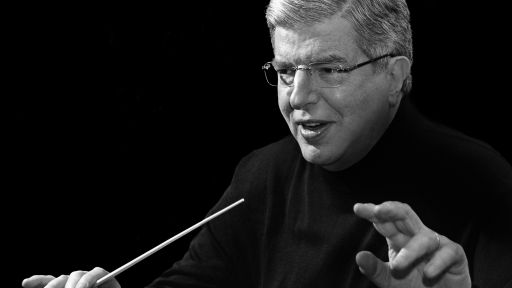
Marvin Hamlisch: What He Did For Love

Premiere: 12/27/2013 | 2:35 | NR |

A musical prodigy accepted to Juilliard at age six, Marvin Hamlisch devoted his talents to musical theater and pop music composition. The composer and conductor earned four Grammys, four Emmys, three Oscars, three Golden Globes, a Tony Award, and a Pulitzer Prize. Barbra Streisand, Steven Soderbergh, Quincy Jones, Christopher Walken are among those who admire Hamlisch as a person and a musician.

About the Episode

Composer, conductor, genius, mensch: Marvin Hamlisch (June 2, 1944 – Aug. 6, 2012) earned four Grammys, four Emmys, three Oscars, three Golden Globes, a Tony Award and a Pulitzer Prize before his untimely death, making him one of only two PEGOT winners ever. Hit after hit — “The Way We Were,” “Nobody Does It Better” and scores for The Sting, Sophie’s Choice and the Broadway juggernaut A Chorus Line — made him the go-to composer and performer for film, Broadway, every U.S. President since Reagan and concert halls worldwide. With exclusive access to Hamlisch’s personal archival treasure trove and complete cooperation from his family, Dramatic Forces and THIRTEEN’s American Masters explore his prolific life and career in the series’ Season 27 finale, Marvin Hamlisch: What He Did For Love.

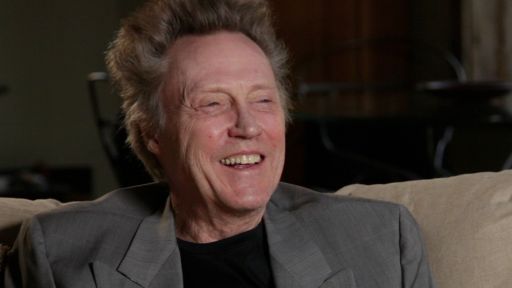
In the first film biography about Hamlisch, award-winning filmmaker and four-time Tony Award-winning Broadway producer Dori Berinstein (Carol Channing: Larger Than Life, Gotta Dance, ShowBusiness: The Road To Broadway) presents a deeply personal, insider portrait of one of the greatest artists of our time. Candid new interviews with Hamlisch’s family, friends and A-list collaborators include wife Terre Blair Hamlisch, Barbra Streisand, Carly Simon, Steven Soderbergh, Quincy Jones, Christopher Walken, Sir Tim Rice, Joe Torre, Woody Allen, John Lithgow, Lucie Arnaz, Ann-Margret, Sir Howard Stringer, Kelli O’Hara, Brian D’Arcy James, Idina Menzel, Melissa Manchester, songwriter Carole Bayer Sager and many others.

A musical prodigy accepted to Juilliard at age six, Hamlisch defied classical expectations to create his own music, dedicating his talents to musical theatre and pop music composition. By age 31, he achieved unprecedented success and honors with a string of smash hits, and then his streak ended. Faced with overwhelming pressure and sky-high expectations to repeat his hits, Hamlisch fell into a self-described “period of suffocating despair,” before rebounding to find true love worthy of a Broadway musical and renewed passion for creation. Marvin Hamlisch: What He Did For Love reveals the events that led to both his staggering success and, ultimately, his even greater humanity: his creative process, struggles, inner turmoil and breakthroughs.
SHARE
TRANSCRIPT

(dramatic music) - [Marvin] I'm gonna tell you a little bit about me and how I got started 'cause that's one of the questions people always ask me, how did you get started in show business?

If it's in your blood and you gotta do it, then you gotta do it.

You just have to do it.

- Here comes, Marvin.

- Thank you.

(audience applauding) - You know, you knew who Marvin Hamlisch was through "The Sting."

- "Chorus Line."

- "Nobody Does it Better."

- "Ice Castles."

- "They're Playing Our Song."

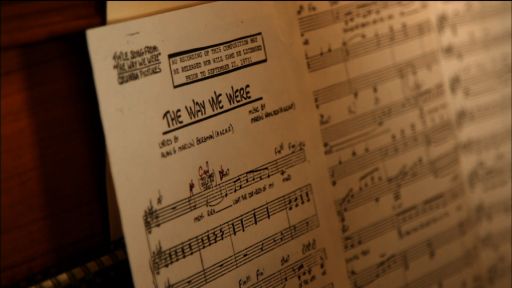
- "The Way We Were."

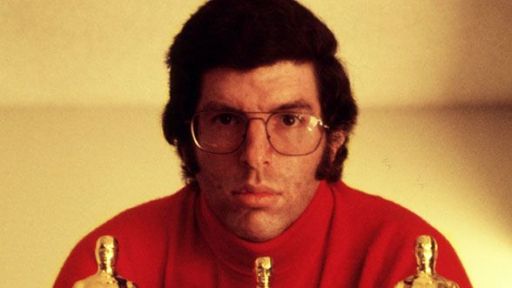
- He won three Academy Awards, He's now added four Grammys, two Golden Globes, and a Tony.

And last week it was announced he'd won The Pulitzer Prize.

Incredible, would you welcome Marvin Hamlisch?

(audience applauding) - His music is so accessible to people and speaks to the heart, and yet he has such training and such a facility.

- Marvin seemed to move effortlessly between film, theater, and performance.

They were all part of one great gift he had.

- I think when they, when they called me Hamlisch, I think they put the ham in there for real.

I just think they, just they knew.

- He is a performer.

To be a combination of Victor Borg and Oscar Toscanini, he had that duality.

- Now, what they taught me at Julliard really was how to make things look very difficult.

- He made it look easy.

It was fun, but what was underneath it was the ability to, you know, to write down to the very last nanosecond of the downbeat, know what needed to happen musically.

- Marvin was the complete musician.

He didn't simply say I'm a tunesmith and leave it at that.

That's what puts Marvin in the category of Gershwin.

- There were 30 instruments playing, and Marvin is hearing a single string on a single instrument.

That was mind blowing.

I couldn't believe it.

- When you're at that level of success that young, and you have a whole life still ahead of you, I'm sure that it plays on you.

- I have not had a hit song for quite a long time right now.

What's a composer?

A composer is a man who's giving or a woman who's giving birth all the time, and you'd like that to have acceptance.

- I don't think he thinks of it in terms of success.

I think he thinks of it in terms of joy.

Music gave him joy.

- He wanted to experience everything.

He wanted to do everything, and he had a lust for life where he dug in.

- He was a beautiful, beautiful human being.

- He just loved doing what he did.

And I think for him, it was a dream.

- He was just this generous, funny, brilliant person.

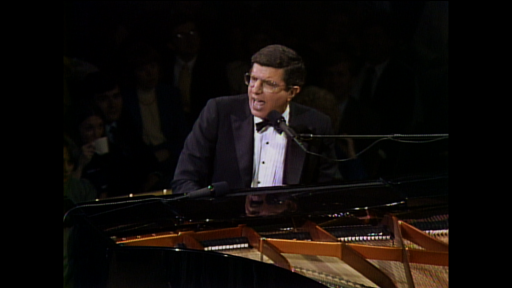
- If Marvin walked into a room and there was a piano in it, just wait.

Something wonderful is about to happen.

(upbeat music)