Leaving Ultra-Orthodox Judaism


LUCKY SEVERSON: They live conspicuously pious lives in a secular world, especially in enclaves and suburbs of New York. Ultra Orthodox Hasidic Jews observe the strict rules of the Torah, the first five books of the Hebrew Bible, and its 613 commandments.

Their structured lifestyle seems to work for the majority. But, for some, the lack of choices is too rigid, so they choose to leave, even though doing so can be very painful. Hasidic groups remain some of the most insular religious sects in the U.S. Sol Feuerwerker knows, he was one of them.

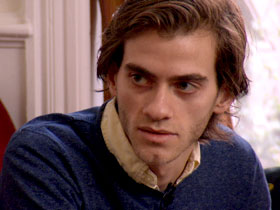
SOL FEUERWERKER: I think that’s what surprises most people, you know, most outsiders, is that how can something this insular be happening right here in the middle of New York City. You know, as I’ve moved farther away from it, it kind of shocks me too actually.

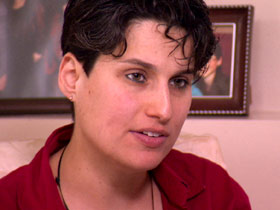
CHANI GETTER: When I tell people that I grew up 30 miles north of New York, that I went into the city and I had never seen a movie before I was in my 20s, they think I’m insane.

SEVERSON: Chani Getter grew up, married and had three children before she broke away from her Hasidic community. Those who leave Hasidism paint a picture of a very puritanical and sheltered way of life.
Chani Gette

GETTER: When I left, I moved into my own apartment and I started driving, and as a woman who was driving, my parents disowned me. In our sect, women did not drive. And so, for eight years, they didn’t talk to me.

SEVERSON: In Hebrew, the word Hasidim translates to mean the “pious ones.” They are defined by their devotion to a hereditary leader known as the “Rebbe”, by their distinctive clothing and Yiddish language. Professor Samuel Heilman is a Jewish scholar at Queens College.

PROFESSOR SAMUEL HEILMAN: They have everything that makes up a culture, social norms, language, a career pattern in life. Even the ones who leave say that there are aspects of their lives that they left behind that they miss. To go to a Hasidic gathering and to sing the songs and to dance in the circle and to be enfolded into the community, and to hear your voice in a chorus of other voices. This is a tremendously exciting experience and when you leave and you’re all alone, all alone in the city…

SEVERSON: Professor Heilman says there are as many as 350 thousand Hasidic Orthodox in the U.S. and Canada, and an even larger population in Israel. And the numbers are increasing fast, he says, because Hasidism strongly encourages very large families.
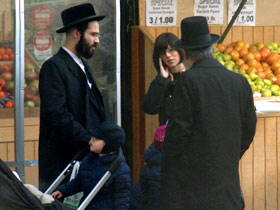
PROFESSOR HEILMAN: They don’t believe in birth control. They believe that the commandment of “be fruitful and multiply” is incumbent upon all Jewish people and they practice it. Not only do they have large families but they are the poorest of all Jews because they don’t go to college, so they lack often some of the skills that are necessary for high income. They are all literate in Jewish education, but their secular education is limited. That is not to say there are not some who are successful…in the diamond business, electronics business, in trading on Wall Street.

SEVERSON: Relatively few leave, in professor Heilman’s view, because they’ve been taught to shun the secular world.

PROFESSOR HEILMAN: They’ve been told that the world outside their own is demonic, corrosive, dangerous, they wouldn’t want to be part of it, that they live a superior kind of life.

GETTER: One of the things that they teach you is that we get to choose what we allow our eyes to see. We get to choose what we allow our ears to hear. And so when you go into the city, you make a conscious choice not to allow your eyes to see.
Sol Feuerwerker

FEUERWERKER: There’s this whole, like belief or narrative in the community that if you, if you try to break away or change you will fail and you won’t be happy and you’ll just end up on drugs.

SEVERSON: Lani Santo is the Executive Director of a non-profit group called Footsteps, founded in 2003, not to proselytize but to provide counsel and support to those who want to explore life outside the confines of the world in which they were raised. They’ve assisted over 700 altogether so far, a majority are young men.

FOOTSTEPS GROUP DISCUSSION: “I mean my mother still hasn’t called me. My mother hasn’t spoken to me this whole time.”

LANI SANTO: We are seeing a lot more, just in this year alone, we’ve seen a 60% increase in our membership and in new people coming to us, and that’s compared to a 35% increase that we’ve been on for the last few years.

SEVERSON: In the past, it was easier to shelter those in ultra religious communities from the outside world. Television, magazines, radio, even libraries were off limits. Then along came the internet.
Prof. Samuel Heilman

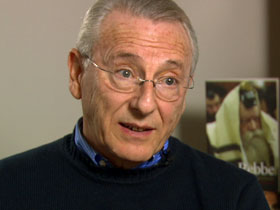
PROFESSOR HEILMAN: The internet is a real problem for them. There has been, there have been efforts, for example there was a recent gathering at Citi Field here in New York that was against the internet. But it’s a case of trying to close the barn after the horses are out.

SEVERSON: Lani Santo says those who do leave suffer serious bouts of loneliness and guilt.

SANTO: It’s more about guilt in terms of impacting their families. If they have younger siblings, the fact that they’re leaving is putting at risk the marriage prospects for their younger siblings and that’s a real challenge.

PROFESSOR HEILMAN: Marriage is critical. And it’s all by matchmaking. Finding single people in this community is rare, and if they’re single then it means they’re problematic…and problematic can be that you have someone in the family who’s not Orthodox or that there’s some mental or physical ailment in the family or that there are, it can even be somebody has too many people with red hair in the family.

SANTO: Any mark of difference is a mark of shame. So whether it’s a mark of having a child that’s leaving the community, whether it’s a mark of having a child that’s sexually abused or whether there’s some sort of ailment in the family, um, or someone who’s committed suicide, all of that will be covered up.
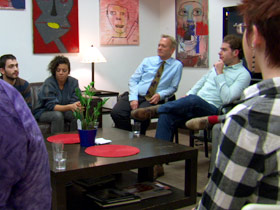
Footsteps meeting

MICHAEL JENKINS: The first thing that really struck me was the courage in the room.

SEVERSON: Michael Jenkins is Footsteps’ senior social worker. He says he’s amazed at the risks young Hasidim are taking by even walking through the front door. He conducts group therapy and private counseling, says a number of people he meets with lead dual and deeply conflicted lives, with one foot in their Hasidic community and one foot out.

JENKINS: There’s things in the community that I love, that work for me, family, friendships, relationships … this is where I’ve always been and this is where I want to be, yet there are things that I disagree with…and I want to be able to talk about that or express that somewhere else.

FOOTSTEPS GROUP DISCUSSION: “I want to be who I want to be. And if I find God, I find God on my own, you know? I don’t go any more according to what I was told as a kid.”

SEVERSON: In Hasidic communities, young men study the Torah in Hebrew at least 7 hours a day and spend only one hour on secular education. So those who leave are woefully unprepared to go out on their own. Sol was 19 when he broke away.
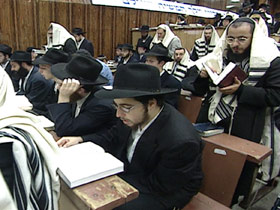
(to Feuerwerker): What was your education level at that point?

FEUERWERKER: If I had to estimate it would probably be, you know 4th or 5th grade.

SEVERSON: Was that pretty standard for most of the men of your age?

FEUERWERKER: That’s the norm, yeah. And in fact I believe I was actually a little bit more advanced than some of my friends at the time.

SEVERSON: Another consequence of the insularity is that if a crime is committed, it often goes unreported.

FEUERWERKER: I have many friends, men and women who have been abused, sexually, physically, emotionally…

SEVERSON: Sol is now in his 4th year as a pre-med student. He says it hasn’t been easy. Some old friends speak to him, some don’t. He says he has a message for others who are worried about leaving the sheltered world of Hasidism.

FEUERWERKER: My point is it’s challenging and it looks really, really scary at the beginning. Um, but it’s, it’s possible.

SEVERSON: Chani Getter says Footsteps has made leaving the Hasidic community a little less scary.

GETTER: Since Footsteps opened the thing that I saw different is that when people used to leave the community before it would be through alcohol and drugs. In order for them to leave, they had to become a total outcast.

SEVERSON: When Chani left, her parents were traumatized, and then she announced that she is gay. Now she’s studying to be a rabbi.

GETTER: They’re hurt by the fact that I will not live, you know, that kind of life, because my soul is in danger. And yet they don’t understand why my eyes sparkle and why I’m so happy.

SEVERSON: As the world continues to shrink because of access to modern technology, like the internet, it’s becoming increasingly difficult for anyone or any group to shield their families from the outside world.

For Religion & Ethics NewsWeekly, I’m Lucky Severson in New York.

Prison Nonviolence Project


KATE OLSON, correspondent: For most of its 160 year history, San Quentin has been known as a tough place to do hard time. But over the past two decades, this has begun to change.

Thanks to thousands of engaged citizens in the surrounding community, a growing number of innovative programs aimed at reducing violence and recidivism are having an impact.

One of those programs was started by this man, Jacques Verduin.

JACQUES VERDUIN (Psychologist): There’s a growing alienation and a lack of sense of belonging for most people in society. It seemed that nowhere else stronger than in our prison system had we turned our backs on each other.

OLSON: A psychologist who has practiced meditation for many years, Verduin created a program called GRIP—Guiding Rage Into Power. The year-long initiative seeks to help prisoners address the root causes of their violent behavior and make the journey of transformation from violent offender to peacemaker, from the inside out.

VERDUIN: (to inmates) Is home just four walls and a roof on the outside? Or is home a state of mind as well? Can you go home before you leave? Can you leave prison before you get out?

ELIZABETH SIGGINS (Dept. of Corrections and Rehabilitation): The reality is that the parole board does not grant parole very easily. So for many of them they don’t actually know when they will get out of prison. And I think what the GRIP program has done is offered them a way to not be trapped by that, to realize that they’re living their lives now, that they’re still part of a community. It’s not the community outside the prison but it’s the community inside the prison.

OLSON: Elizabeth Siggins, who visited San Quentin the day we were there, is a senior policy adviser in the Department of Corrections and Rehabilitation for the state of California.

Elizabeth Siggins

SIGGINS: When you work in a prison system, you don’t think that you’re going to go sit in a group of offenders and close your eyes. And when I was sitting there today I thought, I feel safe…

OLSON: Creating this safe environment is the responsibility of the prisoners who understand that the program belongs to them.

ROBIN GUILLEN (Inmate): (speaking to group) My name is Robin, and I’m a peacemaker.

OLSON: Fellow inmates, like Robin Guillen, who are graduates of the program, guide the weekly sessions.

GUILLEN: (speaking to group) That’s part of what we explore here and discover about ourselves on why we acted violently.

OLSON: Guillen has served 40 years in prison—20 of them here at San Quentin—for a murder he committed at age 17. After witnessing a stabbing outside his cell, he made a decision to turn his life around beginning with facing his painful past.

RICHARD POMA: (to Guillen) Can you go back to the very first time, the very first time that you witnessed trauma or pain in your life?

GUILLEN: My father and my cousin were in a fight in the living room. My father stabbed the cousin in the living room many times. And I’m sitting there, crying, blood curdling cries, out of sheer fear, terror. That was the first experience of original pain.

OLSON: To help the new class of prisoners understand how pain and suffering from their past can trigger violent behavior, Robin prompted others to share their experience.

GUILLEN: How many of you suffered from trauma early on in life, as far back as you can remember, as an adolescent, as a little one?

BYRON HIBBERT (Inmate): Early on in my life, you know, everything you do you get hit. It was just something to me that happened just normal. If you go to school late, you get a whipping. If you come home late, you get a whipping. Those things taught me how to be aggressive and hurtful towards another human being.

VERDUIN: See if you can connect the emotional feeling with some sensation in your body.

OLSON: Through a practice called “sitting in the fire” the inmates learn to face painful emotions from their past.

VERDUIN: (speaking to group) So breathing in, I welcome this feeling. I feel this fear, this grief, this anxiety.

VERDUIN: In my experience in working in San Quentin, I saw that it was often difficult strong emotions that propelled people in a life of crime and addiction and trying to medicate what you could otherwise process. “Sitting in the fire” in essence, basically is a movement of responsibility, where you say, “The causes and the origins of this feeling lie within me,” so you can stop blaming.

GUILLEN: And see that’s the whole piece, is to be able to feel what’s going on, to be able to really address, internally, what is this feeling? Where is it coming from? And how I’m going to respond versus react.

OLSON: Focusing on the breath, this practice draws on the contemplative tradition in many of the world’s religions.

Jacques Verduin

VERDUIN: We talk a lot about breath and spirit being the same thing. So to sit in the portal of feeling the movement of breath, of spirit as it enters and passes through, is a practice that orients us on a very deep level.

GUILLEN: It’s kind of like you know sitting with myself and allowing God to love me. You know, things may not be all good all the time, but you have something to draw from. You can ground yourself and breathe.

OLSON: Making amends to families of their victims is also part of the journey in GRIP, and to the experience of inner freedom for Guillen.

GUILLEN: I have character defects, flaws, and I’m imperfect. But I have a walk and I have a commitment to honor. And to honor those people that I’ve hurt. And I have something to give. And I could either give it in here, or I could give it out there.

SIGGINS: This is 52 weeks of very difficult self-exploration. Not only do the facilitators hold the men accountable, they do hold each other accountable, and ultimately, the success of the program is whether or not after they’re done they really do stick to that commitment of non-violence.

VERDUIN: I think it’s an enormous gift to a community to bring back groups of men that have been imprisoned and the gift is to say, these are safe men. Not only will they not create conflict and violence in your community, they can help resolve it and de-escalate it.

OLSON: This gift was evident in the testimonies at the graduation ceremony of last year’s GRIP class.

VAUGHAN MILES (Inmate): My name is Vaughan. I’ve been incarcerated for 18 years for taking the life of Kneeck. Through all that hurt and you accept that responsibility for that, they got a part in there called “sitting in the fire,” so you sit through all them emotions and I got to see all the ugly that I did. Also what it helped me do is to look back and find my authentic self, to look back at that kid that used to cry when his hamster died and allow that person right there to come forth and shine and guide me. And if I can stop another Kneeck from being murdered and another Vaughan from murdering somebody, then I did my job.

VERDUIN: Derrick Cooper…

OLSON: The “diploma” the graduates received is their pledge to a code of attitudes and behavior to turn a life of violence into being a peacemaker.

In a closing ritual, supporters welcomed the graduates into the community as peacemakers, ready to give back.

For Religion & Ethics NewsWeekly, this is Kate Olson reporting from San Quentin.

Muslim Antiterrorism; Iraqi Refugees in California; Room to Read

Haris Tarin of the Muslim Public Affairs Council talks about what US Muslims can do to stop extremism; we meet Iraqi refugees resettling in San Diego and talk with groups such as Catholic Charities and the International Rescue Committee who are helping them adjust to life in America; and we interview John Wood, a former Microsoft executive who founded a nonprofit called Room to Read.

Muslim Antiterrorism


BOB ABERNETHY, host: Amid the continuing investigation into the Boston Marathon bombing, President Obama this week spoke of the threat of self-radicalized individuals here in the US and the difficulty of identifying them. He said his counterterrorism team has discussed ways it can engage communities where such radicalization can occur. In recent years, American Muslim groups have launched their own efforts to combat extremism.

For more on this, I’m joined by our managing editor, Kim Lawton, and Haris Tarin. He directs the Washington office of the Muslim Public Affairs Council.

Haris, welcome. The president referred to self-radicalizing. What—how does that work, and what can the Muslim community do to prevent it?

Haris Tarin, MPAC

HARIS TARIN (Muslim Public Affairs Council): Well, the phenomenon of self-radicalization is where individuals who do not find a place in mainstream Muslim institutions, places like mosques and organizations, they don’t find a place for their fiery rhetoric, for their violent, extremist rhetoric, so they go online, and they listen to sermons, and they listen to individuals like Anwar al-Awlaki or Adam Gadahn or other folks who misinterpret the religion to give it a violent, violent ideology, and they fall prey to these individuals who are basically online predators, and they get influenced by these individuals to address their grievances through violence.

ABERNETHY: And then what can you do about it?

TARIN: I think what we can do, number one, is to ensure that there’s a counter-narrative, that there’s a narrative of life, of positivity, that even if you have a grievance or you have a disagreement on policy, whether domestic or international, you can address those policy grievances through civic and political engagement and change that— maybe not overnight, but eventually you have the power to change policy.

Managing editor Kim Lawton

KIM LAWTON: I know the Muslim community has been trying to offer these kinds of counter-narratives. Has that just not worked, or what do you need to do differently in order to combat this online issue?

TARIN: Well, I think, you know, I said before, I think to overwhelming extent the American Muslim community has not fallen prey to this. It’s individuals who are radicalized online, but I think what needs to happen is that we need to ensure that we have a narrative that goes viral. A lot of these videos, they are very emotive. These sermons they use violence and gruesome images to tug at the emotion of young people. And so we also need to ensure that when we put out the counter-narrative it’s as savvy, it goes as viral and addresses the same issues and that we’re not afraid to address some of the same policy grievances that they address, but to make sure that the outcome is positive and not negative.

LAWTON: And how do you deal with the perception that many outsiders have that the more religious someone, a Muslim, gets, the more prone he or she is to being violent or being an extremist?

TARIN: Well, I think that notion, fortunately, is false. There’s a notion that the more religious you get it leads to acts of violence. The studies have shown that when people go through rigorous religious training and understanding, they’re less prone to violence, but that people who skip that religious understanding part and have an awakening and then go straight to politics, that’s where they become more prone to violence and twisted ideologies and perverted interpretations of the religion.

ABERNETHY: Is there a special role here for young people? I mean, the perpetrators are young. Does that invite, then, or say that the people who can best correct that are young people?

TARIN: The first thing you have to understand is a lot of young American Muslims, they deal with everything else that all young Americans are dealing with—college tuition, jobs, but there is a place for them to ensure that their peers on college campuses and youth groups are having a conversation that’s positive, that when they see a negative conversation that they step in, and they interfere and ensure that they move the conversation towards a more positive aspect.

ABERNETHY: O.K. Haris Tarin of the Muslim Public Affairs Council and Kim Lawton, many thanks to you both.

TARIN: Thank you.

Iraqi Refugees in California


SAUL GONZALEZ, correspondent: It’s these kinds of images that have defined Iraq over the past decade, as America’s 2003 invasion was followed by a long insurgency against U.S. forces. Brutal sectarian violence among Iraqis followed and continues to this day in the country.

At least 100,000 Iraqis have died in the conflicts. And fears of violence and religious persecution have led more than a million and a half Iraqis to flee their country, with most settling in other Middle Eastern nations.

Thousands of these Iraqi refugees have wound up on the very distant and unlikely shores of San Diego, California, a place better known for the tanned and toned southern California good life than its connection to turmoil in the Middle East.

(to Milheer El Anny and his wife Hebba): When did you get here, may I ask?

MILHEER EL ANNY: About 42 days ago.

GONZALEZ: You got to the United States only 42 days ago?

EL ANNY: Yeah. (laughs)

GONZALEZ: Iraqis Miheer El Anny, his wife Hebba, and young daughter Jumana are trying to adjust to their new life in the U.S. after leaving Iraq and then spending a year in Turkey as refugees.

EL ANNY: We left Iraq because there was a direct risk on our lives. It is very risky, especially for us because our lives are in danger. So, for the time being we can’t go back to Iraq.

GONZALEZ: We met the El Annys in the San Diego offices of Catholic Charities, a nonprofit group which helps new Iraqi refugees resettle in the community, regardless of their faith.

MIKE MCKAY: They are what we call the unintended consequences of the war.

GONZALEZ: Mike McKay is Catholic Charities’ Director of Refugee Services in San Diego. He says because of America’s long and controversial military involvement in Iraq, the U.S. has a moral obligation to help the Iraqis now here.

MCKAY: Just like we help the veterans who come home from the wars, and they have a lot of challenges, so also we have a responsibility and a need to help these folks as well.

Mike McKay

GONZALEZ: In the early years of the Iraq War, the United States only accepted a trickle of Iraqi refugees. But that changed in 2007 when resettlement restrictions were loosened.

In the years since, more than 64,000 Iraqi refugees have been allowed in to the United States, with thousands of them coming to the San Diego area.

That migration has transformed some communities, like El Cajon, where a quarter of it’s 100,000 residents are now Iraqis, and where on some streets it’s easy to feel like you’re in the Middle East.

For the Iraqis who come to the United States, they’ve traded the violence and desperation of their own country for the relative peace and prosperity of the United States. But for many it can be like traveling between two worlds and that creates its own problems.

MUHAMMED: My name is Muhammed, and I’ve been in the United States since 2009 as a refugee.

GONZALEZ: Muhammed is like many in the Iraqi expatriate community when he requests that we don’t reveal his identity. He fears it could put family members back home at risk, either from militants or criminal gangs.

MUHAMMED: They kidnap one of your family, thinking that because you are living in America you are a millionaire or something and asking for a ransom. That happens many times.

GONZALEZ: Muhammed says he was forced to leave Iraq. He says just because he was an English teacher, militants thought he was working with the Americans. Many Iraqis who worked with the U.S. military or private contractors as translators have been killed.

MUHAMMED: They start targeting teachers, educated people. So we received a threat note to leave or you will be killed.

GONZALEZ: And why did so many Iraqis, like Muhammed, choose to come to San Diego? Well, many of them had family connections here because of an older, established Iraqi community that’s been in the city for years.

That’s especially true for Iraqi Christian Chaldeans, who have put down deep roots in San Diego.

Local Chaldean churches, along with mosques and groups like Catholic Charities and the International Rescue Committee offer aid and orientation to the Iraqi refugees.

INSTRUCTOR: …By using the three techniques at least. Apply online. What else? Networking.

Erica Bouris, International Rescue Committee

That help often comes in the form of classroom instruction, where the newly arrived Iraqis learn survival skills for everyday life in America.

Erica Bouris is a resettlement manager for the International Rescue Committee in San Diego.

ERICA BOURIS: We provide cultural orientation. We help with housing and, you know, making sure that kids are immunized, kids enroll in school, those are the kinds of things that we are doing with folks in the first couple of months.

GONZALEZ: Really nitty-gritty things?

BOURIS: Very nitty-gritty things. Absolutely. Get your driver’s license. Do you know how to take the bus? We just saw in the class practicing how to write a check. Do you know how to pay your rent and pay your bills?

GONZALEZ: Some institutions which try to help the refugees, such as San Diego’s most prominent Iraqi Christian church, acknowledge providing assistance has stretched resources.

Father Michael Bazzi is the church’s pastor.

Father Michael Bazzi

FATHER MICHAEL BAZZI: We used to have them coming to us a thousand, two thousand every year, three thousand every year, and lately, more than five thousand people. And I established here a committee to show them how to live as Americans here, and we have many committees that take them to the schools and to, you know, insert them into American society.

GONZALEZ: Although grateful to be here, many Iraqis complain that settling in the United States has been difficult, especially when it comes to jobs. According to Catholic Charities, only about a third of Iraqi refugees find employment during their first year in the United States. Anecdotally, the refugee agencies say long term unemployment or underemployment continues for most of the Iraqis. Muhammed blames the refugee resettlement process for many of the Iraqi community’s problems.

MUHAMMED: We didn’t get any orientation about life in America or even the law, so we were lost. It’s not about the person himself. It is about applications and system software that you have to fit in. It doesn’t matter what your life was. But for me no one can sit and talk to you.

GONZALEZ: Mike McKay of Catholic Charities empathizes with the Iraqis.

MCKAY: They have very conflicted feelings. They’re grateful about being out of harm’s way and have a chance to start a new life and seek the American Dream. But at the same time, not unlike the Hebrew people who left the slavery of Egypt, when they got in the desert, they said, “Oh, Lord, Moses, why did you bring us here? Take us back. Life is too hard in the desert.”

GONZALEZ: For the El Annys, freshly arrived in this country, the choices and freedoms America offers is both confusing and exciting.

EL ANNY: These 42 days, it’s like introducing for a new world because the system here is different than the system in the Middle East, especially the option things. Here in the United States, everything, there are options.

HEBBA: There are many options.

EL ANNY: Yeah. Many options. Everything, there are options.

GONZALEZ: A little fear at times, do you feel a little fear?

EL ANNY: Sometimes we feel fear. Yeah, sometimes. But, you know, with all the support we have, things will be fine, I think.

GONZALEZ: When we left Catholic Charities, the staff were preparing for new refugees from Iraq at the airport in the coming days.

For Religion & Ethics NewsWeekly, I’m Saul Gonzalez in San Diego.

Room to Read


JOHN WOOD: We are, you know, not a religious organization. Our religion is literacy, our religion is gender equality and education.

LUCKY SEVERSON, correspondent: Here is John Wood spreading his religion in Vietnam, in Africa, in India. It was only 15 years ago that Wood took a hike that changed his life and impacted millions of others. He was a Microsoft executive trekking in Nepal when a headmaster invited him to visit his run-down, dilapidated, overcrowded school.

WOOD: And we went to this school’s library, and it was a library in name only. They didn’t have any books for the children. And I asked the headmaster why, and he said we’re too poor to afford books. And I said, well, that must make your job very difficult as a headmaster and he said well actually in Nepal we’re too poor to afford education for our children but until we have education we’re always going to remain poor.

SEVERSON: This came as a shock to Wood, who as a kid loved to read more than anything.

John Wood

WOOD: I loved to read. I’ve loved to read from the day I could first decode words. And when I was growing up, if I did something well, you know, I surprised my mom by washing the dishes, and I was given anything I wanted as a reward, I would always say I want to stay up late and read tonight.

SEVERSON: Wood promised the headmaster that he would return with books for the school’s library. He asked his friends and his parents for help and they did, big time—more books than his yak could carry. But he kept his promise.

WOOD: I was just in awe of how excited those kids were when we delivered the books. And then to see the kids then running with the book, sitting under a tree, and you see three kids all with their eyes wide open looking at a picture of men walking on the moon, looking at photographs of African wild life, kids in a land-locked nation who had never seen sharks or whales.

SEVERSON: Wood says he’s inspired by Buddhism and had been reading the Dalai Lama’s teaching that the greatest happiness comes from giving something to someone in need.

WOOD: I thought, what am I doing patting myself on the back? That’s one library in a world that needs tens of thousands of libraries. That’s 450 children helped in a world where 800 million people are illiterate. That’s almost a billion people who can’t read or write, and then people remain, you know, confused about why do the poor remain poor. Well, if you don’t get an education, if you can’t read or write, the odds are stacked against you.

SEVERSON: So Wood decided to leave his lucrative job at Microsoft for the low-paying life of a book peddler, although that may be an oversimplification of what his nonprofit organization does. It’s called Room to Read and they now have libraries and schools and millions of books in 10 countries, including Cambodia.

(to Kahn Kall): Room to Read has been doing very well in Cambodia?

KAHN KALL: I would not hesitating to say yes.

SEVERSON: Kahn Kall is the head of Room to Read in Cambodia. He’s happy because the Cambodian government has given its rare blessing to the Room to Read mission. This is the country that barely survived the terror reign of the Khmer Rouge, in which education was completely obliterated. It was so bad even after the Khmer Rouge that the current provincial education minister says as a school teacher he had to scrounge for a piece of paper.

MR. UNG SIREIDY: No chair, no table, no clothes for children, no books. Sometimes I collect the paper from the road to make my lesson plan.

SEVERSON: Even today in many schools in Cambodia, reading, especially for pleasure is often frowned upon.

KAHN KALL: You only allowed to read the book which is related to what you learn. Any other books they always say it’s not useful. And you know what I did, I go to the bookstore and then I rented a book, I had to hide it behind my back, because otherwise my father when he saw I read the book that were different, I read the story, I read everything, he would spank.

SEVERSON: There are about 6,500 primary and secondary public schools in Cambodia. Until 10 years ago, about the only books found in these schools were official, authorized textbooks, one per grade. Now more 1,500 of these schools have their very own library, like the one behind me, provided by Room to Read with the blessings of the Cambodian government. Now, in Phnom Penh, hot off the press, books with pictures created and published by Room to Read.

WOOD: If you look around the developing world, when you bring bright, colorful children’s books into a child’s life, there’s just something instinctive, inherent inside them where they just get it immediately. Their faces light up.

SEVERSON: (speaking to young girl through interpreter) How many books have you read?

INTERPRETER: Around 30 books.

SEVERSON: How about your girlfriend?

INTERPRETER: She reads five books a day.

SEVERSON: Five books a day?

INTERPRETER: Yeah, yeah.

SEVERSON: These bright, colorful books were commissioned by Room to Read and created by local Cambodian artists, always with a message.

RATANA: Yes, very popular among the children.

SEVERSON: Ratana says this one is meant to discourage young girls from leaping into marriage.

RATANA: The message is that she is too young. She needs to learn more, so she cannot get married when she is very young.

SEVERSON: The story lines always treat boys and girls as equals.

WOOD: If you’re working with boys and girls you want to make sure you don’t have gender stereotypes, right? So sometimes in books you’ll see the boys are out playing soccer while the girl is inside, you know, washing the dishes. Well, is that really the lesson we want to teach to kids or do you want to reverse that and make sure that you’re having good gender roles in the books.

SEVERSON: Room to Read pays special attention to young girls because, Wood says, that’s where the need is the greatest.

WOOD: You know, two-thirds of those who are illiterate, two-thirds of those who are out of school are girls and women. And this is basically nothing less than planned poverty, that if you have a woman not get educated, of course the next generation does not get educated.

SEVERSON: Now Room to Read has a program that guarantees girls an education all the way through high school, including, when necessary, room and board. Borin is one of the organization’s few full-time employees in Cambodia.

SREY BORIN: We provide the girls with something like school uniforms, the shoes. And we provide them with transportation, let’s say, bicycle for those who live far away from the school.

SEVERSON: So far 20,000 girls worldwide have enrolled. These girls are old enough to be in college, but this was their first opportunity to go to high school.

FIRST STUDENT: My father and my mother, when I study, know what,he very happy.

SEVERSON: With you?

FIRST STUDENT: Yeah, with you, with me.

SEVERSON: And what about your parents, are they happy?

SECOND STUDENT: Ah, the same, too.

SEVERSON: Room to Read now has an annual budget of $44 million, funding that comes from individuals, foundations, and corporations. Wood says one reason Room to Read has been so successful in the 12 years since it was founded is because local communities are also required to contribute.

WOOD: In Room to Read we honor the communities we work with by requiring them to co-invest, right? They can give land, they can give labor. You know, I’ve had parents who will point out, they’ll point to the building and they’ll say I painted that building. You know, there’s an old adage you can’t help people if they don’t want to help themselves.

SEVERSON: As philanthropic organizations go, few have grown as big and fast as Room To Read.

WOOD: Somebody once just said to me you’re no longer going to be rich monetarily but you’ll be rich in books, you’ll be rich in experiences and you’ll be rich in just absolute happiness. In a certain sense it’s like being a millionaire but you’re counting your millions in terms of the number of kids and books.

SEVERSON: Room to Read has now constructed 15,000 libraries, over 1,500 schools and distributed over 12 million books in 10 countries.

(to Wood): I’m about done here.

WOOD: I’m not. I got a lot more to say.

SEVERSON: For Religion & Ethics NewsWeekly, I’m Lucky Severson in Phnom Penh, Cambodia.

Painting Icons

This week, Orthodox Christians mark the final days of Great Lent, a time of repentance, fasting, and prayer in preparation for Orthodox Easter, or Pascha, on May 5. Iconographer Seraphim O’Keefe talks about how icons play a role similar to fasting in the Orthodox tradition. Both, he says, are ways of finding order and beauty. The interview was filmed at Holy Cross Orthodox Antiochian Orthodox Church in Linthicum, Maryland, where O’Keefe has covered the walls with icons. Interview by Julie Mashack. Videography and editing by Patti Jette Hanley.


SERAPHIM O’KEEFE: It’s traditional to fast and pray as part of the process of painting icons and make an image that’s harmonious and ordered. The details are all serving the whole. Painting the icon is a way of praying using the paint, but it’s a prayer and it’s to manifest prayer. It shows prayer and it calls the people in the church to prayer. That’s the idea, is to have this concentrated, directed sense in the icon that people can respond to so that when you come into the church, your heart is lifted up in a way. Your whole…not just your heart and your eyes, your mind, and your body as one are immediately called to a higher place.

For most saints, the church has a tradition of making an icon of any given saint. And so the most important thing is to pay attention to what they look like and other icons. It’s not supposed to look like a naturalistic portrait of a person. It’s supposed to be in a way a transfigured person—the light is coming from inside. But through the process of painting here I have come to believe that they do look like the person depicted.

Sometimes I’ll be working and I’ll try to imitate the tradition of how a particular saint looked, and I’ll be failing miserably. And I feel like, maybe on every one of them, there’s a time when I feel like the saint steps in and gives some guidance. And then I’ll stand back and say, “Oh this actually looks like the tradition of how this person looks. You know, that’s him.”

Birmingham and the Children’s March

KIM LAWTON, correspondent: At the Civil Rights Institute in Birmingham, Alabama, local students are on a field trip, learning how 50 years ago, kids around their age played a pivotal role in the struggle against segregation. One of them was Freeman Hrabowski, who is now president of the University of Maryland, Baltimore County. He was 12 at the time and a math whiz.

FREEMAN HRABOWSKI III (Univ. of MD, Baltimore Co.): I was not a courageous kid. I did not get into fights. The only thing I would attack was a math problem. And so, this was not about courage at all, it was about having a dream of a better day.

LAWTON: In 1963, Birmingham was considered one of the most segregated places in the US.

HRABOWSKI: Children knew, children of color were well aware we were considered second class.

LAWTON: Rev. Martin Luther King, Jr. came to Birmingham in January 1963 to support local efforts to end segregation through non-violent protests. But the campaign didn’t take off as he had hoped.

Taylor Branch

TAYLOR BRANCH (Pulitzer Prize-Winning Author): He prepared for three months and started the demonstrations in April. They fizzled quickly, nothing went according to plan.

LAWTON: While King was trying unsuccessfully to inspire adults to march and get arrested, civil rights leaders including Rev. James Bevel and Dorothy Cotton were holding special meetings for Birmingham elementary and high school students.

DOROTHY COTTON (Civil Rights Leader): We knew that they were curious about what was going on in their town. We were not there to recruit them. They just started hanging around, coming around and it swelled.

BRANCH: When Dr. King was about to retreat from Birmingham, the people running the children’s workshops said, “Don’t do it because we’re out of people. I got plenty of foot soldiers.”

LAWTON: It was a controversial prospect. Birmingham’s police commissioner Bull Connor was notorious for his efforts to stop any protests. Movement leaders argued among themselves about whether this was the right strategy.

REV. VIRGIL WOOD (Civil Rights Leader): Dr. King was severely criticized for allowing the children to be involved, but the children insisted themselves. The children were their own self-initiators of their own freedom. They said, “This is our future and we want to help shape it.”

LAWTON: Rev. Carolyn McKinstry was 14 and volunteering in her church, Sixteenth Street Baptist, when she overheard the ministers calling on children to march.

REV. CAROLYN MCKINSTRY (Author, While the World Watched): It was such an excitement in the air I knew I wanted to be part of it.

LAWTON: She didn’t tell her parents, especially her strict father, about her decision.

MCKINSTRY: I know if I had asked he would have said no.

LAWTON: Hrabowski came from an educated middle class family. He says his parents dragged him to a civil rights meeting, and he was sitting in the back of the church doing his math homework when he heard King give the call.

Freeman Hrabowski, president of UMBC

HRABOWSKI: And I’ll never forget listening, but doing the math and hearing a man say, if the children participate in this demonstration, in this peaceful demonstration, all of America will see that even children understand the difference between right and wrong and that children want the best possible education.

LAWTON: Afterward, he told his parents he wanted to march.

HRABOWSKI: And they said, absolutely not. And I was very upset, and I said to them, “Then you guys are hypocrites. You told me to go and listen to the minister. I did. I want to do what he suggested and you’re saying no.” But at that time you did not say that to your parents. So my father said very calmly, “Go to your room.”

LAWTON: He says the next morning, his parents came in and sat on both sides of his bed.

HRABOWSKI: I could tell they had been crying. I’d never seen my parents cry. And they said they’d been praying all night. And they said this to me: “It wasn’t that we didn’t trust you. We simply didn’t know who’d be responsible for you and how you’d be treated if you were placed in jail.” And so they thought about it and they said, “But we have decided to leave it in God’s hands.”

LAWTON: Before they could march, the young people were trained about the importance of non-violence.

MCKINSTRY: We were told what to expect when we marched, if we did encounter the police. They might hit you, they might spit on you, they will have dogs and billy clubs but the only appropriate response ever is no response, or a prayerful response.

LAWTON: On Thursday May 2nd, “The Children’s March” began. Students left their classrooms mid-day and gathered in Sixteenth Street Baptist Church. They came out marching and singing, row after row after row of them, some as young as six years old. Waiting police arrested them for parading without a permit, but the kids kept coming, and when the paddy wagons were full, the police had to get a school bus to take them all away. Nearly a thousand children had signed up to march, and more than 600 were taken into custody on that day.

LAWTON: As hundreds and hundreds more children showed up to demonstrate and face possible arrest, Bull Connor was anxious to restore order. He instructed his forces to bring out the fire hoses and the dogs.

Some of the most shocking confrontations happened in Kelly Ingram Park, across from the church, where monuments to the marchers now stand. Officials aimed the water hoses full blast at the marching children. McKinstry was among those hit.

Rev. Carolyn McKinstry

MCKINSTRY: The water came out with such tremendous pressure and, uh, it’s a very painful experience, if you’ve never been hit by a fire hose and I thought, whoa. You know, I got knocked down and then we found ourselves crouching together and trying to find something to hold onto. People ran, people hid, people hugged buildings or whatever they could to keep the water hoses from just…just knocking them here and there.

LAWTON: Then, bystanders watched in horror as the police used dogs to try to control the crowd. News reporters captured images of young people being attacked by the German Shepherds. The marching, and the arrests, went on for several days. Energized by the children, adults soon joined in.

COTTON: People felt, they felt it and their actions and their involvement came from that feeling that we were on to something that needed, that was right and that was to change this society.

LAWTON: Hrabowski was in a group of children who marched to city hall.

HRABOWSKI: The police looked mean, it was frightening. We were told to keep singing these songs and so I’m singing, [sings] I ain’t gonna let nobody turn me round, keep on a walking, keep on a talking, marching on to freedom land. And amazingly the other kids were singing and the singing elevates when you can imagine hundreds of children singing and you feel a sense of community, a sense of purpose.

LAWTON: He says he had a direct confrontation with Connor.

HRABOWSKI: There was Bull Connor, and I was so afraid, and he said, “What do you want little nigra?” And I mustered up the courage and I looked up at him and I said, “Suh,” the southern word for sir, “we want to kneel and pray for our freedom.” That’s all I said. That’s all we wanted to do. And he did pick me up, and he did, and he did spit in my face, he really…he was so angry.

LAWTON: Hrabowski was arrested, and like hundreds of other children, held for five days. When the jails got full, the kids were held in the fairgrounds.

post07-childrens-march

HRABOWSKI: I will never forget, Dr. King came with our parents…outside of that awful place. We’re looking out at them, if you can imagine children encaged…it was, it was worse than prison. It was like being treated like little animals, it was awful, crowded, just awful. And he said, what you do this day will have an impact on children who’ve not been born and parents were crying, and we were crying, and we knew the statement was profound, but we didn’t fully understand.

LAWTON: News reports and pictures of what was happening in Birmingham were transmitted around the world. According to Pulitzer Prize winning author Taylor Branch, those reports had a dramatic impact on public opinion.

BRANCH: Millions of Americans who had been seeing demonstrations for years and saying, “Well, there’s something wrong about that and we should do something but it’s not for me, it’s for somebody else,” that broke down those emotional barriers when they saw those children suffering it and millions of people said, “I need to do something about this.”

LAWTON: Branch says the children’s march touched him personally as well.

BRANCH: I was 16. And doing my best to avoid the fearful civil rights movement and when I saw the pictures of those kids half my age singing songs, just like the ones I sang in church, marching into those dogs and fire hoses it had a tremendous effect on me.

LAWTON: Upset about the image of their city, white leaders negotiated a plan with movement leaders to start ending segregation. The Kennedy Administration was also prompted into action and on June 11th, citing the events in Birmingham, President Kennedy announced his intention to introduce new federal civil rights legislation.

MCKINSTRY: It led me to believe, especially after the laws were changed, that there were many things that were worth fighting for.

LAWTON: McKinstry, who became a Baptist minister, continued to fight for civil rights. And today, she works to keep the story of the struggle alive.

MCKINSTRY: It is disappointing to me when I meet people, young people especially, whatever culture they are, and they don’t know the story. We’ve been in some very difficult places, but we’ve come a long way, and we continue to grow and to learn.

LAWTON: Hrabowski says in his work with students, he also continues to draw on the lessons he learned in the Children’s March, lessons, he says, about the power of community, discipline and faith.

HRABOWSKI: The message is this, the world doesn’t have to be the way the world is. That good people can act and the world can be better and so can we.

LAWTON: I’m Kim Lawton in Birmingham.