<?xml version="1.0" encoding="UTF-8"?>
<rss version="2.0"
	xmlns:content="http://purl.org/rss/1.0/modules/content/"
	xmlns:wfw="http://wellformedweb.org/CommentAPI/"
	xmlns:dc="http://purl.org/dc/elements/1.1/"
	xmlns:atom="http://www.w3.org/2005/Atom"
	xmlns:sy="http://purl.org/rss/1.0/modules/syndication/"
	xmlns:slash="http://purl.org/rss/1.0/modules/slash/"
	>

<channel>
	<title>American Masters &#124; PBS &#187; By Title</title>
	<atom:link href="http://www.pbs.org/wnet/americanmasters/category/episodes/by-title/feed/" rel="self" type="application/rss+xml" />
	<link>http://www.pbs.org/wnet/americanmasters</link>
	<description></description>
	<lastBuildDate>Thu, 03 Dec 2009 16:25:46 +0000</lastBuildDate>
	<generator>http://wordpress.org/?v=2.8.4</generator>
	<language>en</language>
	<sy:updatePeriod>hourly</sy:updatePeriod>
	<sy:updateFrequency>1</sy:updateFrequency>
			<item>
		<title>Aaron Copland: About the Composer</title>
		<link>http://www.pbs.org/wnet/americanmasters/episodes/aaron-copland/about-the-composer/475/</link>
		<comments>http://www.pbs.org/wnet/americanmasters/episodes/aaron-copland/about-the-composer/475/#comments</comments>
		<pubDate>Mon, 11 Jul 2005 17:07:41 +0000</pubDate>
		<dc:creator>colin fitzpatrick</dc:creator>
				<category><![CDATA[A, B, C]]></category>
		<category><![CDATA[By Title]]></category>
		<category><![CDATA[Music]]></category>
		<category><![CDATA[Aaron Copland]]></category>
		<category><![CDATA[American classical]]></category>
		<category><![CDATA[composers]]></category>
		<category><![CDATA[folk]]></category>
		<category><![CDATA[jazz]]></category>

		<guid isPermaLink="false">http://www.pbs.org/wnet/americanmasters/?p=475</guid>
		<description><![CDATA[Aaron Copland was one of the most respected American classical composers of the twentieth century. By incorporating popular forms of American music such as jazz and folk into his compositions, he created pieces both exceptional and innovative. As a spokesman for the advancement of indigenous American music, Copland made great strides in liberating it from [...]]]></description>
			<content:encoded><![CDATA[<p>Aaron Copland was one of the most respected American classical composers of the twentieth century. By incorporating popular forms of American music such as jazz and folk into his compositions, he created pieces both exceptional and innovative. As a spokesman for the advancement of indigenous American music, Copland made great strides in liberating it from European influence. Today, ten years after his death, Copland&#8217;s life and work continue to inspire many of America&#8217;s young composers.</p>
<p>Copland was born in Brooklyn, New York, on November 14, 1900. The child of Jewish immigrants from Lithuania, he first learned to play the piano from his older sister. At the age of sixteen he went to Manhattan to study with Rubin Goldmark, a respected private music instructor who taught Copland the fundamentals of counterpoint and composition. During these early years he immersed himself in contemporary classical music by attending performances at the New York Symphony and Brooklyn Academy of Music. He found, however, that like many other young musicians, he was attracted to the classical history and musicians of Europe. So, at the age of twenty, he left New York for the Summer School of Music for American Students at Fountainebleau, France.</p>
<p>In France, Copland found a musical community unlike any he had known. It was at this time that he sold his first composition to Durand and Sons, the most respected music publisher in France. While in Europe Copeland met many of the important artists of the time, including the famous composer Serge Koussevitsky. Koussevitsky requested that Copland write a piece for the Boston Symphony Orchestra. The piece, &#8220;Symphony for Organ and Orchestra&#8221; (1925) was Copland&#8217;s entry into the life of professional American music. He followed this with &#8220;Music for the Theater&#8221; (1925) and &#8220;Piano Concerto&#8221; (1926), both of which relied heavily on the jazz idioms of the time. For Copland, jazz was the first genuinely American major musical movement. From jazz he hoped to draw the inspiration for a new type of symphonic music, one that could distinguish itself from the music of Europe.</p>
<p>In the late 1920s Copland&#8217;s attention turned to popular music of other countries. He had moved away from his interest in jazz and began to concern himself with expanding the audience for American classical music. He believed that classical music could eventually be as popular as jazz in America or folk music in Mexico. He worked toward this goal with both his music and a firm commitment to organizing and producing. He was an active member of many organizations, including both the American Composers&#8217; Alliance and the League of Composers. Along with his friend Roger Sessions, he began the Copland-Sessions concerts, dedicated to presenting the works of young composers. It was around this same time that his plans for an American music festival (similar to ones in Europe) materialized as the Yaddo Festival of American Music (1932). By the mid-&#8217;30s Copland had become not only one of the most popular composers in the country, but a leader of the community of American classical musicians.</p>
<p>It was in 1935 with &#8220;El Salón México&#8221; that Copland began his most productive and popular years. The piece presented a new sound that had its roots in Mexican folk music. Copland believed that through this music, he could find his way to a more popular symphonic music. In his search for the widest audience, Copland began composing for the movies and ballet. Among his most popular compositions for film are those for &#8220;Of Mice and Men&#8221; (1939), &#8220;Our Town &#8221; (1940), and &#8220;The Heiress&#8221; (1949), which won him an Academy Award for best score. He composed scores for a number of ballets, including two of the most popular of the time: &#8220;Agnes DeMille&#8217;s Rodeo&#8221; (1942) and <a href="http://www.pbs.org/wnet/americanmasters/database/graham_m.html">Martha Graham</a>&#8217;s &#8220;Appalachian Spring&#8221; (1944), for which he won the Pulitzer Prize. Both ballets presented views of American country life that corresponded to the folk traditions Copland was interested in. Probably the most important and successful composition from this time was his patriotic &#8220;A Lincoln Portrait&#8221; (1942). The piece for voice and orchestra presents quotes from Lincoln&#8217;s writings narrated over Copland&#8217;s musical composition.</p>
<p>Throughout the &#8217;50s, Copland slowed his work as a composer, and began to try his hand at conducting. He began to tour with his own work as well as the works of other great American musicians. Conducting was a synthesis of the work he had done as a composer and as an organizer. Over the next twenty years he traveled throughout the world, conducting live performances and creating an important collection of recorded work. By the early &#8217;70s, Copland had, with few exceptions, completely stopped writing original music. Most of his time was spent conducting and reworking older compositions. In 1983 Copland conducted his last symphony. His generous work as a teacher at Tanglewood, Harvard, and the New School for Social Research gained him a following of devoted musicians. As a scholar, he wrote more than sixty articles and essays on music, as well as five books. He traveled the world in an attempt to elevate the status of American music abroad, and to increase its popularity at home. Through these various commitments to music and to his country, Aaron Copland became one of the most important figures in twentieth-century American music. On December 2, 1990, Aaron Copland died in North Tarrytown, New York.</p>
<p><strong>Connected artists:</strong></p>
<ul>
<li><a title="Leonard Bernstein and Aaron Copland were friends and collaborators." href="http://www.pbs.org/wnet/americanmasters/database/bernstein_l.html">Leonard Bernstein</a></li>
<li><a title="Harold Clurman and Aaron Copland were good friends." href="http://www.pbs.org/wnet/americanmasters/database/clurman_h.html">Harold Clurman</a></li>
<li><a title="Aaron Copland composed the score for Martha Graham's Appalachian Spring." href="http://www.pbs.org/wnet/americanmasters/database/graham_m.html">Martha Graham</a></li>
<li><a title="Aaron Copland lived in Paris in the 1920s." href="http://www.pbs.org/wnet/americanmasters/database/paris.html">Paris</a></li>
<li><a title="Aaron Copland was an ambassador of good will to South America during World War II." href="http://www.pbs.org/wnet/americanmasters/database/world_war_ii.html">World War II</a></li>
</ul>
<p><strong>Related Web sites:</strong></p>
<ul>
<li><a href="http://www.classical.net/music/comp.lst/copland.html">Classical.net Entry</a></li>
<li><a href="http://www.coplandhouse.org/">The Copland Heritage Association</a></li>
<li><a href="http://memory.loc.gov/ammem/achtml/">Library of Congress Collection</a></li>
</ul>
]]></content:encoded>
			<wfw:commentRss>http://www.pbs.org/wnet/americanmasters/episodes/aaron-copland/about-the-composer/475/feed/</wfw:commentRss>
		<slash:comments>47</slash:comments>
		</item>
		<item>
		<title>Ahmet Ertegun: Atlantic Records</title>
		<link>http://www.pbs.org/wnet/americanmasters/episodes/ahmet-ertegun/atlantic-records/97/</link>
		<comments>http://www.pbs.org/wnet/americanmasters/episodes/ahmet-ertegun/atlantic-records/97/#comments</comments>
		<pubDate>Wed, 02 May 2007 21:21:40 +0000</pubDate>
		<dc:creator>daniel ross</dc:creator>
				<category><![CDATA[By Title]]></category>
		<category><![CDATA[D, E, F]]></category>
		<category><![CDATA[Music]]></category>
		<category><![CDATA[Ahmet Ertegun]]></category>
		<category><![CDATA[Atlantic Records]]></category>
		<category><![CDATA[R&B]]></category>
		<category><![CDATA[rock and roll]]></category>

		<guid isPermaLink="false">http://www.pbs.org/wnet/americanmasters/?p=97</guid>
		<description><![CDATA[

Ahmet Ertegun (1923-2006)

The Greatest Record Man Of All Time
by Robert Greenfield
"I think it's better to burn out than to fade away... it's better to live out your days being very, very active -- even if it destroys you -- than to quietly... disappear.... At my age, why do you think I'm still here struggling with [...]]]></description>
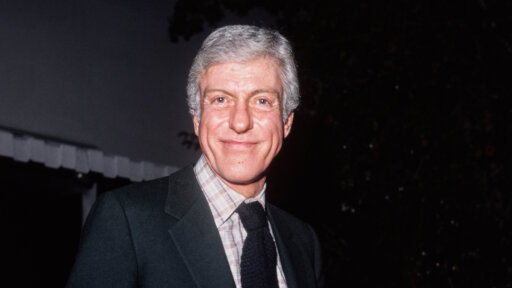
			<content:encoded><![CDATA[<p><a href="http://www.pbs.org/wnet/americanmasters/files/2008/08/610_ertegun_intro.jpg"><img class="alignnone size-full wp-image-159" title="610_ertegun_intro" src="http://www.pbs.org/wnet/americanmasters/files/2008/08/610_ertegun_intro.jpg" alt="" width="610" height="310" /></a></p>
<p>Ahmet Ertegun (1923-2006)</p>
<p><strong>The Greatest Record Man Of All Time</strong><br />
by Robert Greenfield</p>
<blockquote><p>&#8220;I think it&#8217;s better to burn out than to fade away&#8230; it&#8217;s better to live out your days being very, very active &#8212; even if it destroys you &#8212; than to quietly&#8230; disappear&#8230;. At my age, why do you think I&#8217;m still here struggling with all the problems of this company &#8212; because I don&#8217;t want to fade away.&#8221;<br />
&#8211;<em>Ahmet Ertegun</em></p></blockquote>
<p>More than most in the $5 billion-a-year global industry he helped build from scratch, Ahmet Ertegun loved the rhythm and the blues. He loved the rock and the roll, jump and swing, and all forms of jazz. More than anything, he loved the high life and the low. When he died at the age of eighty-three on December 14th, about six weeks after injuring himself in a backstage fall at a Rolling Stones concert at the Beacon Theater in Manhattan, the world lost not only the greatest &#8220;record man&#8221; who ever lived but also a unique individual whose personal and professional life comprised the history of popular music in America over the past seventy years. On every level, the story of that life is just as rich, varied and exotic as the music that Ahmet brought the world through Atlantic Records, the company he founded in 1947 and was still running at the time of his death.</p>
<p>Born in Istanbul on july 31st, 1923, Ahmet Ertegun might never have come to America, which he later called &#8220;the land of cowboys, Indians, Chicago gangsters, beautiful brown-skinned women and jazz,&#8221; if the Ottoman Empire had not suffered a crushing defeat at the hands of the Allies during World War I. Occupied by foreign forces, the empire began crumbling in the face of an all-out rebellion led by Mustafa Kemal Ataturk, a former army major general who would become the father of modern Turkey.</p>
<p>In 1920, Ahmet&#8217;s father, Mehmet Munir (he added the surname Ertegun in 1936), a graduate of Istanbul University whose father was a civil servant and whose mother was the daughter of a Sufi sheik, was sent by the sultan to persuade Ataturk to lay down his arms. Switching sides, Mehmet decided instead to become Ataturk&#8217;s legal adviser. Two years later, Mehmet was sent to the international conference at which the Treaty of Lausanne was signed on July 24th, 1923, setting the borders of modern Turkey and extending diplomatic recognition to the new republic.</p>
<p>In 1925, Mehmet was named minister to Switzerland and moved with his wife, Hayrunisa; his two sons, Nesuhi and Ahmet; and his daughter, Selma, to Bern. In rapid succession, Mehmet served as ambassador to France (where Ahmet first learned to speak French, the traditional language of the court in Turkey) and then to the Court of St. James (where Ahmet was taught English, which he spoke with a French accent, by a governess who had worked at Buckingham Palace).</p>
<p>In 1932, when Ahmet was nine, his older brother took him to see Cab Calloway and Duke Ellington at the London Palladium. &#8220;I had never really seen black people,&#8221; Ahmet recalled, &#8220;and I had never heard anything as glorious as those beautiful musicians wearing white tails, playing these incredibly gleaming horns.&#8221; Two years later, Ahmet was delighted to learn his father had been posted to Washington to serve as Turkey&#8217;s first ambassador to the United States during President Franklin D. Roosevelt&#8217;s administration.</p>
<p>Expecting to be thrust into an America he had only experienced through music, Ahmet was sent instead to the Landon School, an all-boys institution run like a British public school. He then attended St. Albans, whose graduates include Al Gore and George H.W. Bush&#8217;s father, Prescott. However, as Ahmet would later note, &#8220;I got my real education at the Howard.&#8221; Located in the heart of the black district, the Howard was the nation&#8217;s first theater built for black audiences and entertainers. At the Howard, the greatest stars of the day &#8211; Duke Ellington, Ella Fitzgerald, Count Basie, Billie Holiday, Louis Armstrong and Lionel Hampton &#8211; performed. &#8220;As I grew up,&#8221; Ahmet would later say, &#8220;I began to discover a little bit about the situation of black people in America and experienced an immediate empathy with the victims of such senseless discrimination. Because although the Turks were never slaves, they were regarded as enemies within Europe because of their Muslim beliefs.&#8221;</p>
<p>Even as a boy, Ahmet wanted to make records. When he was fourteen, his mother bought him a toy record-cutting machine. Taking an instrumental version of Cootie Williams doing &#8220;West End Blues,&#8221; Ahmet put it on a Magnavox record player, sang lyrics he had written into a microphone and then amazed his friends by playing the acetate without telling them he was singing. In 1940, the year he enrolled in St. John&#8217;s College in Annapolis, Maryland, Ahmet and his brother put on Washington&#8217;s first integrated concert at the only venue that would allow black and white musicians to play on the same stage before a mixed audience: the Jewish Community Center.</p>
<p>On Sunday afternoons, the brothers turned the Turkish Embassy into an open house where visiting jazz musicians would jam together in a huge parlor. According to Ahmet, his father soon began receiving letters from outraged Southern senators, saying, &#8220;It has been brought to my attention, sir, that a person of color was seen entering your house by the front door. I have to inform you that in our country, this is not a practice to be encouraged.&#8221; Mehmet responded by writing, &#8220;In my home, friends enter by the front door &#8211; however, we can arrange for you to enter from the back.&#8221;</p>
<p>When Mehmet died in 1944, at the age of sixty-one, the family left the embassy. Ahmet and Nesuhi were forced to sell their collection of more than 20,000 records, which they had amassed by going door-to-door in the ghetto and hanging out in black record shops. Rather than return to Turkey to enter the diplomatic corps, the brothers decided to stay in America. Moving into an apartment near the embassy, Ahmet began doing post-graduate work in medieval philosophy at Georgetown University, but he spent most of his time at &#8220;Waxie Maxie&#8221; Silverman&#8217;s Quality Music Shop, where he learned the retail end of the record business firsthand.</p>
<p>In 1946, Ahmet and his friends Herb and Miriam Abramson talked Waxie Maxie into putting up the money to start two labels: the gospel-based Jubilee, and Quality, which focused on jazz. After their first few records went nowhere, Waxie Maxie decided he wanted out. Somehow, Ahmet persuaded Dr. Vahdi Sabit, a Turkish dentist who had been a longtime family friend, to mortgage his home and loan Ahmet $10,000 to start his own label in New York. In 1947, Atlantic Records was born.</p>
<p>The rise of independent record companies like Chess, King, Vee-Jay, Modern, Kent, Savoy and Roulette in America after World War II came about because of several factors. The wartime rationing of shellac, a key ingredient in the manufacture of records, had forced the major labels to drop most of their &#8220;race music&#8221; and country &amp; western artists to concentrate on the mainstream audience. The postwar boom in the economy put money into the hands of working people, many of them black. And then there was payola, a practice that enabled even the smallest label to get its records played on the radio &#8211; if it was willing to pay for it.</p>
<p>Atlantic set up shop in a tiny suite on the ground floor of the broken-down Jefferson Hotel on 56th Street in Manhattan. From the start, Ahmet had a vision of what he wanted to put out on Atlantic. &#8220;Here&#8217;s the sort of record we need to make,&#8221; he once said. &#8220;There&#8217;s a black man living in the outskirts of Opelousas, Louisiana. He works hard for his money; he has to be tight with a dollar. One morning he hears a song on the radio. It&#8217;s urgent, bluesy, authentic and irresistible. He can&#8217;t live without this record. He drops everything, jumps in his pickup and drives twenty-five miles to the first record store he finds. If we can make that kind of music, we can make it in the business.&#8221;</p>
<p>The reason for the demand was simple. America was still a racially divided nation. In even so sophisticated a city as New York, as Ahmet would later recall, &#8220;Harlem folks couldn&#8217;t go downtown to the Broadway theaters. They weren&#8217;t even welcome on 52nd Street, where the big performers were black. Black people had to find entertainment in their homes &#8211; the record was it.&#8221;</p>
<p>Ahmet&#8217;s first major signing was the singer Ruth Brown, whom he had seen perform at the Crystal Caverns club in Washington. On her way to New York to perform at the Apollo Theater in October 1948, Brown was in a car accident and broke both her legs. On January 12th, 1949, Ahmet brought her a contract to sign while she lay in bed. He then handed her a book on how to sight-read and a large tablet on which she could scribble lyrics while she recovered. Atlantic paid the portion of her hospital bill not covered by insurance.</p>
<p>When Ahmet had first seen Brown perform, her biggest number was &#8220;A-You&#8217;re Adorable,&#8221; a Perry Como song that was completely mainstream. As he did with so many black artists who had lost touch with their own musical roots, Ahmet pushed Brown toward a funkier and more down-home sound. In October 1950, she had a Number One R&amp;B hit with &#8220;Teardrops From My Eyes.&#8221; In 1953, she recorded &#8220;Mama, He Treats Your Daughter Mean&#8221; with Ray Charles directing her backing band. The song, which Ahmet had her do at four different speeds until he found the one he liked, stayed at Number One on the R&amp;B charts for five weeks and helped put the label on solid ground. By then, many people were calling Atlantic &#8220;The House That Ruth Built.&#8221;</p>
<p>Because music publishers were not eager, as Ahmet said, to provide material to &#8220;a hole-in-the-wall company called Atlantic,&#8221; he began writing songs himself. In a recording booth located in a Times Square arcade, he would make a vinyl demo of a song that he would then play for the artist in the studio. Using the pseudonym &#8220;Nugetre,&#8221; his last name spelled backward, so he would not embarrass his family, Ahmet wrote &#8220;Don&#8217;t You Know I Love You&#8221; and &#8220;Fool, Fool, Fool,&#8221; which were hits for the Clovers in 1951.</p>
<p>One Friday during the noon show at the Apollo Theater, Ahmet saw Big Joe Turner, who was already thought to be past his prime and had recently been dropped from Columbia, struggling as the vocalist with the Count Basie Orchestra. After the show, Ahmet looked everywhere for Turner only to find him drowning his sorrows in a nearby bar. Telling Turner he was the greatest blues singer ever, Ahmet said that all he needed was new material and persuaded him to sign with Atlantic. He then wrote &#8220;Chains of Love&#8221; for Turner, which went to Number Two on the R&amp;B charts.</p>
<p>In 1952, Ahmet signed the artist who would come to define Atlantic: Ray Charles. Up to that point, Charles had been playing in the smooth style of Nat King Cole and Charles Brown, and had recorded a minor hit called &#8220;Baby Let Me Hold Your Hand&#8221; for Swingtime. Wanting to push Charles toward a grittier sound, Ahmet wrote two songs for him, &#8220;Heartbreaker&#8221; and &#8220;Mess Around.&#8221; Although the session is portrayed in a different manner in Taylor Hackford&#8217;s 2004 film biography, Ray, Charles had never before played boogie-woogie piano. As Ahmet began explaining the sound he wanted, Charles suddenly began, in Ahmet&#8217;s words, &#8220;to play the most incredible example of that style of piano playing I&#8217;ve ever heard. It was like witnessing Jung&#8217;s theory of the collective unconscious in action &#8211; as if this great artist had somehow plugged in and become a channel for a whole culture that just came pouring through him.&#8221;</p>
<p>When the Army called Herb Abramson up in 1953 to serve in Germany during the Korean War, Ahmet brought in the Billboard writer who six years earlier had coined the term &#8220;rhythm &amp; blues.&#8221; Jerry Wexler, an intense, brilliant former street kid from Manhattan&#8217;s Washington Heights section, became a partner in Atlantic Records for $2,063.25. Ahmet took Wexler&#8217;s money and bought him a green Cadillac El Dorado, the only kind of car in which a self-respecting record man could then be seen. Ahmet, who had always been cooler than cool, was now working alongside someone who generated heat like a steel-mill blast furnace. The two made an incredible pair.</p>
<p>The ultimate story of their time together, which both men loved to tell, concerned the night in New Orleans when they went to find an unknown genius named Professor Longhair who was playing in a joint across the river, where no taxi driver would take them. Their cabbie dropped them off in the middle of a field. After walking a mile in darkness, they saw a brightly lit house in the middle of town so full of people that they seemed to be falling out of the windows as music blared. Talking their way past the guy at the door, who assumed they were cops, the pair made their way inside. Out came Professor Longhair, who played a piano with an attached drumhead that he would hit with his right foot. As people danced, Ahmet and Jerry could barely contain themselves. An utterly primitive, completely original artist was making a kind of music they had never heard before. Rushing up to Longhair after his set was over, they told him just how much they wanted to sign him to Atlantic. &#8220;I&#8217;m terribly sorry,&#8221; said Longhair. &#8220;I signed with Mercury last week.&#8221; In Ahmet&#8217;s version of the story, the pianist then added, &#8220;But I signed with them as Roeland Byrd. With you, I can be Professor Longhair.&#8221;</p>
<p>By the time Herb Abramson returned from the Army in 1955, Jerry Wexler had physically and psychically taken over his role at the company. Rather than break up their studio partnership, Ahmet put Abramson in charge of a subsidiary label, Atco, and gave him the Coasters and a young piano player named Bobby Darin to work with. By then, Atlantic had moved to a brownstone at 234 West 56th Street. Pushing back the desks at night, Ahmet and Jerry would record in a room with a creaking floor, a sloping ceiling with a skylight in the middle and a young genius named Tom Dowd, who was studying nuclear physics, behind the board. Using the third eight-track recording machine ever made, for which he invented faders to replace the knobs, Dowd recorded &#8220;Save the Last Dance for Me&#8221; by the Drifters.</p>
<p>During this period, those in charge of Atlantic began to realize that their target audience was no longer rural and black. Rather, it was teenage and white. The message had come through loud and clear for the first time in 1954, when Big Joe Turner&#8217;s version of Jesse Stone&#8217;s &#8220;Shake, Rattle and Roll&#8221; was covered initially by Bill Haley &amp; His Comets and then Elvis Presley. In a 1954 essay in Cashbox magazine, Ahmet and Wexler wrote that the blues would have to change to meet the tastes of the bobby-soxers who were looking to find their own sound. What Jerry Wexler chose to call &#8220;cat music&#8221; would be &#8220;up-to-date blues with a beat and infectious catch phrases and danceable rhythms&#8230;. It has to have a message for the sharp youngsters who dig it.&#8221; To put it another way, the blues had a baby, and they called it rock &amp; roll.</p>
<p>In 1955, Nesuhi, who had married and moved to Los Angeles after his studies for a Ph.D. in philosophy at the Sorbonne in Paris were interrupted by World War II, announced he was going to work for Imperial Records, the label on which Fats Domino recorded. Ahmet could not bear the thought of his brother laboring for a competitor and persuaded him to come back to New York to head Atlantic&#8217;s jazz division. Within a year, Nesuhi had signed and recorded the Modern Jazz Quartet and jazz bassist Charles Mingus.</p>
<p>Nesuhi also brought Jerry Leiber and Mike Stoller, who had written and produced &#8220;Smokey Joe&#8217;s Cafe&#8221; and &#8220;Riot in Cell Block #9&#8243; for the Robins on Spark Records. Although the practice was then unheard of in the industry, Ahmet signed them to work as independent producers. In 1957, after two of the Robins left Spark to form the Coasters on Atlantic, Leiber and Stoller&#8217;s &#8220;Searchin&#8217; &#8221; and &#8220;Young Blood&#8221; became a huge two-sided hit for the label.</p>
<p>Having failed to produce a hit with Bobby Darin, and feeling as though his time at Atlantic had come to an end, Herb Abramson left the company in 1958. Cash-poor, Ahmet and Wexler managed to raise enough money to buy out Vahdi Sabit. In return for his $10,000 investment in Atlantic, he received between $2.5 million and $3 million, quit dentistry and moved to the South of France. Ahmet and Jerry also bought out Miriam Abramson, thereby making themselves and Nesuhi the sole owners of Atlantic Records.</p>
<p>When Ahmet learned that Bobby Darin was thinking about leaving the label, he took him into the studio in May 1958 and cut &#8220;Splish Splash&#8221; and &#8220;Queen of the Hop,&#8221; both of which became big hits because Ahmet wanted Darin to aim his music squarely at the kids who watched American Bandstand on TV each day. Ahmet&#8217;s great success with Darin led him to Los Angeles, where he began looking for lucrative pop acts. Concerning the early years at Atlantic, Wexler would later write, &#8220;We weren&#8217;t looking for canonization; we lusted for hits. Hits were the cash flow, the lifeblood, the heavenly ichor &#8211; the wherewithal of survival.&#8221; Nonetheless, he found it hard to adjust to the company&#8217;s new direction. &#8220;As Ahmet grew older,&#8221; Wexler wrote, &#8220;he grew less judgmental and more interested in a wide range of commercial forms, especially white rock &amp; roll. I stayed with what I knew and loved.&#8221;</p>
<p>With money now flowing into the Atlantic coffers, Ahmet was once again living the kind of life he had first learned to love while growing up, with &#8220;chauffeured cars, servants, cooks and per diem&#8221; in embassies all over the world. In a striking photograph from that era, Ahmet, resplendent in a dark suit with a white silk tie and matching pocket square, can be seen doing some sort of dance step with a gorgeous fashion model named Rosalie Calvert. Both hold drinks in their hands.</p>
<p>During this period, Ahmet hit upon the idea of hiring a bus, which he equipped with a bar so he and all his friends could drink as they went from club to club together. On the rare occasions when Ahmet found himself alone at the end of an evening, he would say, &#8220;Let&#8217;s go home,&#8221; and the driver would take him to the very stylish El Morocco (known as &#8220;Elmer&#8217;s&#8221; to its regulars) on 54th Street for more drinks and more fun.</p>
<p>After cutting the classic &#8220;What&#8217;d I Say&#8221; in 1959, Ray Charles chose to leave Atlantic without giving Ahmet and Jerry a chance to match the offer that ABC-Paramount had made him. Although Ahmet was personally devastated by the loss of someone he considered a friend, he would later note that the relationship between a label and an artist was like a marriage. At the start, there was always a great deal of excitement. Eventually, the artist found someone richer or the label found someone younger. Although Wexler feared the company might not survive, Ahmet said, &#8220;Somehow, I wasn&#8217;t that concerned. I always figured that we were going to make another hit&#8230;. New artists somehow magically appear.&#8221;</p>
<p>In the world in which Ahmet Ertegun now lived, the change in sensibility that marked the beginning of the Sixties can best be understood by the fact that the fabled El Morocco was suddenly dead and the place to see and be seen was the Peppermint Lounge, an impossibly crowded dance club on 54th Street, where Ahmet could often be found doing the twist alongside the duke of Marlborough, Jackie Kennedy and Truman Capote.</p>
<p>One night, some friends brought Ahmet to dinner with a woman named Ioana Maria Banu. Called Mica by all who know her, she was, in Ahmet&#8217;s words, &#8220;a natural aristocrat.&#8221; Born in Romania to a family of wealthy landowners, Mica had been forced to flee the country after the communist takeover in 1947. With her husband, an older man who had worked for the royal household, she moved to Canada, where for eight years they ran a chicken farm. Although Mica was still married when she met Ahmet, and he had only recently separated from his first wife, the attraction between them was immediate and intense. Ahmet pursued Mica as only he could. During the time they were courting, he once hid a five-piece band that played &#8220;Puttin&#8217; on the Ritz&#8221; in the bathroom of her suite at the Ritz-Carlton in Montreal. The two were married on April 6th, 1961.</p>
<p>In a nation reinvigorated by President John F. Kennedy&#8217;s promise of a &#8220;New Frontier,&#8221; civil rights became the predominant issue. &#8220;Soul lyrics, soul music,&#8221; Ahmet would later say, &#8220;came at about the same time as the civil rights movement, and it&#8217;s very possible that one influenced the other.&#8221; In partnership with Stax/Volt, Atlantic began releasing music recorded by Tom Dowd and Jerry Wexler in Memphis and Muscle Shoals, Alabama. In 1962, Atlantic released &#8220;These Arms of Mine,&#8221; the first hit single by Otis Redding, who, as Ahmet would later recall, &#8220;used to call me &#8216;Omelette,&#8217; but not as a nickname &#8211; he thought at first that this actually was my name.&#8221; During this era, Atlantic had big hits by the Mar-Keys, Rufus and Carla Thomas, Solomon Burke, Wilson Pickett, Sam and Dave, Percy Sledge, and Joe Tex. In 1967, Wexler took Aretha Franklin into a studio in Muscle Shoals to record &#8220;I Never Loved a Man (The Way I Love You).&#8221; While his partner was turning out the greatest soul music ever recorded, Ahmet continued to pursue white rock acts for the label.</p>
<p>Ahmet had first met Sonny Bono through Phil Spector, who had come and gone at Atlantic without producing any major hits. Bono had actually worked as Ahmet&#8217;s assistant on recording sessions for the Righteous Brothers, the progenitors of &#8220;blue-eyed soul.&#8221; When Charlie Greene and Brian Stone, then managing Sonny and Cher, called to say the pair was not happy at Warner Bros., Ahmet signed them to Atco. In 1965, &#8220;I Got You Babe&#8221; was, as Ahmet would later recall, &#8220;a nationwide hit and an international hit &#8211; I mean, like nothing we had ever experienced before.&#8221;</p>
<p>Greene and Stone then contacted Wexler about another band they had found in Los Angeles. Wexler, who hated dealing with the new breed of stoned-out, longhaired, hippie musicians whom he called &#8220;the rockoids,&#8221; turned the project over to Ahmet. The band was Buffalo Springfield, and Ahmet was knocked over by the demo of Neil Young&#8217;s &#8220;Flying on the Ground Is Wrong.&#8221; Sitting down on the floor in Los Angeles with Young, Stephen Stills, Richie Furay, Dewey Martin and Bruce Palmer, Ahmet pitched them on going with a record company that would understand their music. &#8220;I think they liked the fact that I sat down on the floor,&#8221; Ahmet would later tell Young biographer Jimmy McDonough. &#8220;When I like an artist, I treat them like a star, and to me these guys were exceptional stars. I thought they were going to be a revolutionary kind of group. It was fantastic to have three great guitar players who were also three outstanding lead singers.&#8221; Or, as Young would tell the audience as he was being inducted into the Rock &amp; Roll Hall of Fame in 1995, &#8220;When Ahmet walked into the room, you got good.&#8221;</p>
<p>Much to Ahmet&#8217;s dismay, Buffalo Springfield broke up after making only two albums. &#8220;I think it was one of the few times I cried,&#8221; Ahmet told McDonough, &#8220;because I just thought that I had the historic group.&#8221;</p>
<p>Ahmet, who had been blessed with supreme self-confidence, never worried about failure. The same could not be said about Wexler, who worried about everything, most especially the future of Atlantic Records. By 1967, Vee-Jay had collapsed, and Chess was failing. Wexler told Ahmet and Nesuhi that he wanted to sell Atlantic Records to the highest bidder. When Nesuhi sided with Wexler, Ahmet had no choice but to comply. Atlantic Records was sold in October 1967 to Warner-Seven Arts for $17.5 million, split among Ahmet, Nesuhi and Wexler.</p>
<p>&#8220;I didn&#8217;t want to sell the company,&#8221; Ahmet would later say. &#8220;The company was my idea, it was my brainchild, and we were doing well. I saw no reason to think that disaster was imminent. However, they were so insistent on selling, I really didn&#8217;t have an option.&#8221; In retrospect, with the value of Atlantic Records today estimated between $2 billion and $4 billion, the deal has come to be viewed as somewhat of a catastrophe. Yet Ahmet himself never blamed Wexler for urging him to do it, saying, &#8220;I&#8217;m thankful for what I&#8217;ve got. I&#8217;ve lived very well all my life, even when I had no money, and there&#8217;s very little I can&#8217;t afford.&#8221;</p>
<p>In 1969, Warner-Seven Arts was acquired by Kinney National Service, a conglomerate of parking lots, funeral parlors and rental cars, whose chairman, Steve Ross, knew virtually nothing about music. Ahmet announced that he, Nesuhi and Wexler would leave the company once their contracts expired. Faced with the loss of Atlantic&#8217;s entire management team, Ross took Ahmet to dinner at 21 in New York along with Warner CEO Ted Ashley. When Ross promised he would give Ahmet anything he wanted without interfering in the day-to-day operations at Atlantic, Ahmet negotiated a new deal for himself, Nesuhi and Wexler. Ross would later claim this was one of the luckiest days of his life.</p>
<p>With the era of the small independent label now officially over, rock &amp; roll was big business. Because Ahmet Ertegun was smart enough to understand he would need corporate money to compete in this new industry, he was able to seduce and then sign the world&#8217;s greatest rock &amp; roll band.</p>
<p>In 1970, the Rolling Stones&#8217; onerous long-term deal with Decca finally expired. Intent on landing the band, Ahmet flew to Los Angeles to meet with Mick Jagger at the Whisky a Go Go, where Chuck Berry was performing. Before he got there, Ahmet dined with radio programmer Bill Drake, who challenged him to a drinking contest. Both men chugged several bourbons and then enjoyed a dinner that included some expensive wine and more bourbon. Already jet-lagged, Ahmet dragged himself into the Whisky. When Mick arrived, they drank several toasts. As Mick brought up the Stones&#8217; new recording contract, Ahmet&#8217;s head sagged forward and he fell asleep at the table. &#8220;I couldn&#8217;t keep my eyes open,&#8221; he told Vanity Fair in 1998. &#8220;Mick thought it was very funny.&#8221;</p>
<p>While Mick may have been charmed, the deal was far from closed. In London, Ahmet phoned Jagger to say it was time to sit down and make a deal. Mick replied he would be more than happy to do just that after he spoke to Clive Davis at Columbia. Stunned, Ahmet hung up the phone. As he would later recall, &#8220;Whenever I saw Mick with someone else, my heart sank. It was a painful, ecstatic courtship.&#8221; Picking the phone back up, Ahmet called Jagger and said that while he completely understood his talking to Clive, he could only sign one major act this year and unless he got an answer in a hurry, it was going to be Paul Revere and the Raiders. Then he hung up. For the next forty-five minutes, the phone rang constantly. Ahmet never picked it up. Not long after, the Rolling Stones joined Atlantic.</p>
<p>Landing the Stones confirmed that Atlantic was now the pre-eminent record label in America. Ahmet was so close to Jagger that he had advised him to drop Marianne Faithfull as his girlfriend, warning that her overwhelming drug habit could ruin everything for them both. Shortly after, Mick married the lovely Bianca Perez Morena de Macias in St. Tropez, France. Nor was Ahmet shy about offering musical advice to the Stones. Andy Johns, then twenty years old, was sitting at the board at Olympic Studios in London, having some trouble mixing &#8220;Bitch&#8221; for Sticky Fingers, when Ahmet sat down in the control room. &#8220;Hey, kid!&#8221; Ertegun said to Johns, who had no idea who he was. &#8220;What you oughta do is add a little bottom to the guitars and turn the bass up.&#8221; Johns did as he was told and, as he says, &#8220;Bingo! The thing jelled.&#8221; After Ertegun left, Johns turned to Keith Richards and said, &#8220;Who the f*** was that?&#8221; Keith said, &#8220;You don&#8217;t know who that is? That&#8217;s Ahmet Er-te-gun! And he&#8217;s been making hit records since before you were born.&#8221;</p>
<p>Ahmet trumped everything he had already done for the Stones by throwing them a party on the roof of New York&#8217;s St. Regis Hotel to celebrate the end of their triumphant 1972 tour of America. The guest list included Tennessee Williams, Bob Dylan, Huntington Hartford, Oscar and Françoise de la Renta, and a host of titled nobles, with entertainment by Count Basie and Muddy Waters. Culturally, it was a major step in crossing over what had formerly been outlaw music into the mainstream.</p>
<p>On May 3rd, 1975, Jerry Wexler, feeling as though he was no longer involved in decision making at the label, wrote a letter to Ahmet in which he stated, &#8220;Under no circumstances, Ahmet, can I be your employee. That&#8217;s the bottom line.&#8221; Although Ahmet protested, &#8220;Man, you can&#8217;t quit. It&#8217;s unthinkable,&#8221; the greatest team in the history of the record business split after twenty-two incredible years. In 1978, Wexler complained to New Yorker writer George W.S. Trow that he never saw his old pal anymore, stating, &#8220;Ahmet sees only two kinds of people &#8211; social people and morons. And I ain&#8217;t either one.&#8221; Nonetheless, when Wexler wrote his autobiography, Rhythm and the Blues, in 1993, he dedicated the book to Ahmet Ertegun.</p>
<p>In 1983, after being approached with the idea of doing a television show called &#8220;The Rock &amp; Roll Hall of Fame,&#8221; Ahmet contacted Rolling Stone founder and editor Jann Wenner, Jerry Wexler, record executives Bob Krasnow and Seymour Stein, and music-business lawyer Allen Grubman with the idea of actually establishing an institution to honor the greatest artists, producers and record executives in the field. Going from city to city, they heard a variety of presentations before deciding on Cleveland as the physical home for the building, which Ahmet insisted be designed by famed architect I.M. Pei. The first Hall of Fame class &#8211; which included Jerry Lee Lewis, James Brown and Chuck Berry &#8211; was inducted in 1986; the museum opened nine years later. &#8220;Ahmet was the guiding moral aesthetic sensibility and consciousness of this thing,&#8221; recalls Wenner. &#8220;In the end, it was always, &#8216;What does Ahmet think?&#8217; because Ahmet had the vision. Everyone deferred to Ahmet&#8217;s taste, his judgment, his knowledge. I don&#8217;t think he consciously thought this through, but he was building an institution to something that he had built. And really memorializing the history of an art form which in great part was his doing.&#8221; Ahmet Ertegun himself was inducted into the Hall in 1987. The main exhibition space at the museum bears his name.</p>
<p>In 1988, Atlantic Records celebrated its fortieth anniversary with a gala concert at Madison Square Garden, presenting a marathon twelve-hour show that featured, among many others, a Led Zeppelin reunion, Yes, the Coasters and the Bee Gees. Shortly before the show, Atlantic finally came to terms with Ruth Brown, who had waged a long, protracted and very public campaign on behalf of herself and other artists who had been on the label&#8217;s early roster. Atlantic agreed to waive all unrecouped costs charged to their royalty accounts and to pay twenty years of back royalties. Atlantic also agreed to begin limited audits on behalf of twenty-eight additional pioneer artists and contributed nearly $2 million to fund the Rhythm and Blues Foundation, which then pressured other labels to bring about royalty reform and gave money to needy musicians. Of all the companies and record men who had been in business back then, only Ahmet and Atlantic were still around.</p>
<p>At an age when most of the others with whom he&#8217;d started in the record business had long since retired, Ahmet was still putting out hits by artists such as Debbie Gibson, Twisted Sister, AC/DC, Rush and Skid Row. When Phil Collins, whom Ahmet considered one of the most impressive artists he&#8217;d ever known, played &#8220;In the Air Tonight&#8221; for him for the first time, Ahmet told Collins that if he wanted it to be a single, he would have to put extra drums on it.</p>
<p>&#8220;Labels and artists are never going to get along, because they think we&#8217;re brats, and we think they just haven&#8217;t smoked enough,&#8221; Tori Amos, another artist Ahmet championed when he was already old enough to be her grandfather, told Vanity Fair. &#8220;But with Ahmet you know he&#8217;s smoked more than you ever did.&#8221; She noted that although Ahmet was then seventy-four years old, she could not keep up with him on the dance floor. In 1997, the Atlantic Group, consisting of Atlantic, Rhino and Curb Records, was the number-one label in America, with annual global sales rising to $750 million.</p>
<p>Ahmet began cutting back on his daily corporate duties in 1996. In 1997, he suffered a serious bout of pneumonia. As the result of a shattered pelvis and three separate hip operations, he walked with a cane. Always on the go, he continued to live in unsurpassed style. He and Mica shared a townhouse on 81st Street in Manhattan, an apartment in Paris, a country home in Southampton, New York &#8211; with a living room he had demanded be enlarged so that there would be room for an orchestra &#8211; and a retreat in Bodrum, Turkey, built with ancient stones from the Mausoleum of Halicarnassus, one of the Seven Wonders of the World. His homes were filled with works by Matisse, Magritte, Hockney and Picasso.</p>
<p>In 2001, at the age of seventy-seven, Ahmet produced a session by saxophonist James Carter in Baker&#8217;s Keyboard Lounge in Detroit, a club so small that a mobile recording studio had to be set up outside. Although it was 110 degrees inside the club, Ahmet, clad in a long wool sport coat, a crisp white shirt without a tie and pressed light tan pants, looked as cool as a cucumber as he ran back and forth from the mobile unit to the stage. Calling the songs, asking players to sit out for a number, telling Aretha Franklin to sing the blues on this one, Ahmet ran the session just as he had done for more than fifty years. The next day, he hosted a lunch for the singer Anita Baker, Kid Rock and Pamela Anderson. That night, Ahmet went right back to the club and did it all over again.</p>
<p>Unlike so many who made it big in the music business only to cash out by selling the companies they had infused with their own lifeblood, Ahmet held fast to the tiller. Until the end of his life, he was still in charge of what he had built from the ground up. That he died after falling backstage at a show by a band whom he truly loved is an ending too perfect for any self-respecting Hollywood screenwriter to have written. A year before he died, Ahmet told an interviewer how he&#8217;d like to be remembered: &#8220;I did a little bit to raise the dignity and recognition of the greatness of African-American music.&#8221;</p>
<p>Although the music business that Ahmet helped create has completely changed, its success still comes down to the quality of a song that people want to hear again so badly that they will happily pay for the privilege. Better than anyone, Ahmet Ertegun understood that need, having experienced it himself from the time he was a child.</p>
<p>And while the fabulous manner in which he chose to live caused all those with whom he came into contact to love him madly, the real reason Ahmet will be remembered is because by dedicating his life to rhythm and blues, rock and roll, jump and swing, and every form of jazz, from Ruth Brown, Big Joe Turner and Ray Charles to the Drifters and Bobby Darin to Buffalo Springfield, Cream, Crosby, Stills, Nash and Young, Phil Collins, Tori Amos, Kid Rock, and Gnarls Barkley, Ahmet Ertegun gave people all over the world, many of whom still do not know his name, the soundtrack of their lives.</p>
<p>&#8211;<em>Rolling Stone issue 1018, January 25, 2007M</em></p>
<p><strong>Editor&#8217;s Note:</strong> This article has been slightly edited to remove explicit language. The content has not been modified in any other way.</p>
]]></content:encoded>
			<wfw:commentRss>http://www.pbs.org/wnet/americanmasters/episodes/ahmet-ertegun/atlantic-records/97/feed/</wfw:commentRss>
		<slash:comments>8</slash:comments>
		</item>
		<item>
		<title>Albert Einstein: How I See the World</title>
		<link>http://www.pbs.org/wnet/americanmasters/episodes/albert-einstein/how-i-see-the-world/585/</link>
		<comments>http://www.pbs.org/wnet/americanmasters/episodes/albert-einstein/how-i-see-the-world/585/#comments</comments>
		<pubDate>Wed, 16 Aug 2006 15:47:28 +0000</pubDate>
		<dc:creator>diana cofresi</dc:creator>
				<category><![CDATA[A, B, C]]></category>
		<category><![CDATA[By Title]]></category>
		<category><![CDATA[D, E, F]]></category>
		<category><![CDATA[Albert Einstein]]></category>
		<category><![CDATA[physicists]]></category>
		<category><![CDATA[scientists]]></category>

		<guid isPermaLink="false">http://www.pbs.org/wnet/americanmasters/?p=585</guid>
		<description><![CDATA[

Albert Einstein is considered one of the greatest scientific thinkers of all time. His theories on the nature of time and space profoundly affected the human conception of the physical world and set the foundations for many of the scientific advances of the twentieth century. As a thinker on the human condition, politics, and all [...]]]></description>
			<content:encoded><![CDATA[<p><img class="aligncenter size-medium wp-image-917" title="Albert Einstein" src="http://www.pbs.org/wnet/americanmasters/files/2008/10/610_alberteinstein_about.jpg" alt="" width="610" height="310" /></p>
<p>Albert Einstein is considered one of the greatest scientific thinkers of all time. His theories on the nature of time and space profoundly affected the human conception of the physical world and set the foundations for many of the scientific advances of the twentieth century. As a thinker on the human condition, politics, and all issues of the day, he was as well-respected as anyone in his time.</p>
<p>Born in Ulm, Germany in 1879, Einstein was brought up in Munich. His parents were of Jewish German ancestry, and his father ran an electrical equipment plant. He did not speak fluently until after he was nine and was considered slow. Though his grades were fair in high school, he was eventually expelled for his rebellious nature. Always an individual, he traveled around before re-enrolling and completing school in his new home in Zurich, Switzerland.</p>
<p>After graduating from high school, Einstein enrolled in the Swiss Federal Institute of Technology, where he studied the works of classical physicists. By 1900 he graduated with a teaching degree and three years later married his college sweetheart, Mileva Maric. Unable to find a teaching job he tutored high school students until beginning work at the Swiss Patent Office. His job at the patent office allowed much time for independent work and it was during these seven years that he made his most important discoveries.</p>
<p>By 1905 Einstein had brought together much of the works of contemporary physicists with his own thoughts on a number of topics including the nature of light, the existence of molecules, and a theory concerning time, mass, and physical absolutes. The &#8220;Theory of Relativity&#8221; proposed a revolutionary conception of the physical world, suggesting that time, mass, and length were not fixed absolutes, but dependent on the motion of the observer. Two years later he presented his equation E=MC2 (Energy equals mass times the speed of light squared). With this early work Einstein unhinged the assumptions of the absolute within the physical world and set the course for the scientific investigations of the century.</p>
<p>Though the Theory of Relativity was to be his most famous, his other work that year was equally important. With his publication of the article, &#8220;On the Movement of Small Particles Suspended in a Stationary Liquid Demanded by the Molecular-Kinetic Theory of Heat,&#8221; he abandoned Newton’s theory that light was made of particles, in exchange for one that presented light as being made of particles and waves. It was for this work with light that he was eventually awarded the Nobel Prize (1929) for physics.</p>
<p>Not immediately recognized for the important thinker he was, Einstein moved through a number of teaching jobs before being offered a research position at the University of Berlin in 1914. Soon after his move to Berlin, Einstein was divorced by his wife and married his cousin Elsa. During the 1920s Einstein’s fame grew and he spent much of this time traveling throughout the world with Chaim Weizmann, the future president of Israel, promoting the cause of Zionism. By the early 1930s the growing threat of Nazi fascism had made it impossible for Einstein to continue working in Germany, and he moved to Princeton, New Jersey. There, while teaching at Princeton University, he continued to elucidate his theory of relativity and work on new theories that brought together our understanding of other physical phenomenon.</p>
<p>It was from Princeton, in 1939, that Einstein signed a letter to President Franklin D. Roosevelt discussing the possibilities of creating an atomic bomb. Though Einstein was never directly involved in the creation of the bomb, it was his earlier theories that had paved the way for its possibility. After its eventual use on Hiroshima and Nagasaki, Einstein became a constant and vocal activist for peace—spending much of the rest of his life speaking and writing on the subject. By the time of his death in 1955, Einstein was considered by many not only the most important scientist of his time, but the smartest man alive. It is impossible to understand how different the events of the last hundred years might have been without the work of Albert Einstein.</p>
]]></content:encoded>
			<wfw:commentRss>http://www.pbs.org/wnet/americanmasters/episodes/albert-einstein/how-i-see-the-world/585/feed/</wfw:commentRss>
		<slash:comments>1</slash:comments>
		</item>
		<item>
		<title>Alexander Calder: About the Artist</title>
		<link>http://www.pbs.org/wnet/americanmasters/episodes/alexander-calder/about-the-artist/78/</link>
		<comments>http://www.pbs.org/wnet/americanmasters/episodes/alexander-calder/about-the-artist/78/#comments</comments>
		<pubDate>Sat, 12 Aug 2006 21:45:24 +0000</pubDate>
		<dc:creator>daniel ross</dc:creator>
				<category><![CDATA[A, B, C]]></category>
		<category><![CDATA[By Title]]></category>
		<category><![CDATA[Visual Arts]]></category>
		<category><![CDATA[Alexander Calder]]></category>

		<guid isPermaLink="false">http://www.pbs.org/wnet/americanmasters/?p=78</guid>
		<description><![CDATA[
In short, although Calder has no desire to imitate anything—his one aim is to create chords and cadences of unknown movements—his mobiles are at once lyrical inventions, technical, almost mathematical combinations and the perceptible symbol of Nature: great elusive Nature, squandering pollen and abruptly causing a thousand butterflies to take wing...
--Jean-Paul Sartre
In a time of [...]]]></description>
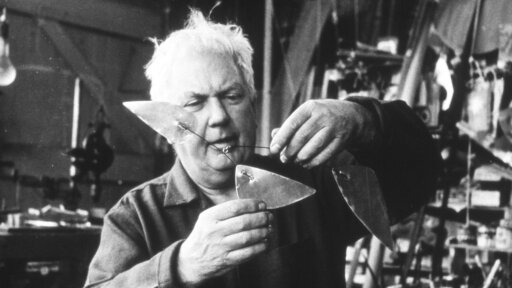
			<content:encoded><![CDATA[<p><a href="http://www.pbs.org/wnet/americanmasters/files/2008/08/610_calder_intro.jpg"><img class="alignnone size-full wp-image-166" title="610_calder_intro" src="http://www.pbs.org/wnet/americanmasters/files/2008/08/610_calder_intro.jpg" alt="" width="610" height="310" /></a></p>
<blockquote><p>In short, although Calder has no desire to imitate anything—his one aim is to create chords and cadences of unknown movements—his mobiles are at once lyrical inventions, technical, almost mathematical combinations and the perceptible symbol of Nature: great elusive Nature, squandering pollen and abruptly causing a thousand butterflies to take wing&#8230;<br />
&#8211;<em>Jean-Paul Sartre</em></p></blockquote>
<p>In a time of constant artistic upheaval, Alexander Calder&#8217;s aesthetic revolution concerned itself with a somewhat taboo topic in the art world — fun. His prolific and passionate output brought with it a humor and sense of play unlike any before. From a wire animal the size of a match box to a fountain filled with mercury to a seventy foot representation of a man in metal, Calder ignored the formal structures of art and in so doing redefined what art could be.</p>
<p>Born in 1898 in Philadelphia, Calder came from a family of artists. Both his father and grandfather were well-known sculptors, and his mother was a painter. Throughout his young life, Calder was more interested in mechanics and engineering than art. After graduating high school he attended the Stevens Institute of Technology, receiving his degree in 1919. Within a short while, however, his creative energies turned toward art and he enrolled in the Art Student&#8217;s League in New York. Working as a freelance illustrator, Calder began to paint and sculpt. Soon after his first one man show in New York, Calder left for Paris.</p>
<p>It was then that he began work on one of his most famous projects, the &#8220;Calder Circus&#8221;. The &#8220;Circus&#8221; was a miniature reproduction of an actual circus. Made from wire, cork, wood, cloth and other easily found materials, the &#8220;Circus&#8221; was a working display that Calder would show regularly. A mix between a diorama, a child&#8217;s toy, and a fair game, Calder&#8217;s &#8220;Circus&#8221; found many eager fans among the avant-garde. One of the methods used to create the &#8220;Circus&#8221; was the bending of wire to form realistic figures. Drawn to the ease and simplicity of it, Calder began to make wire portraits. A combination of a line drawing and of sculpture, these instant portraits represented a new possibility in three dimensional art.</p>
<p>By the early 1930s Calder had brought his &#8220;Circus&#8221; to the United States and back, and was living in Paris off the proceeds of his regular performances. While regularly fixing and adding to the &#8220;Circus&#8221;, Calder began to show and work on wire and wood sculpture as well as painting. It was around this time that he became interested in the work of the Surrealist painter Joan Miró and the modernist painter Piet Mondrian. Both men had gone beyond abstraction and were making paintings of colors and shapes with no direct reference to the outside world. Enthusiastic about this embrace of form and color, Calder began to make moving sculptures in a similar vane.</p>
<p>Beginning with painted aluminum and wire, Calder created motored objects that could move to create different visual effects. In a short while, however, he realized that the mechanized movement didn&#8217;t have the fluidity or the surprise he wanted in his work. He decided to let them hang and have the wind or a slight touch begin their movement. When the experimental French artist Marcel Duchamp saw them, he named them &#8220;mobiles&#8221; (a pun on the French for &#8220;to move&#8221; and &#8220;motive&#8221;). These new sculptures, arranged by the chance operations of the wind, went against everything that sculpture had been. They were not monumental, nor were they sober. They were simply about form and color and the joy in creating both. So, in his early thirties Alexander Calder had not only found a project he would continue for the rest of his life, he had created a unique form of art, the mobile.</p>
<p>In 1933, Calder and his wife, Louisa James, moved to Roxbury, Connecticut, where they would spend the rest of their lives. Working on hundreds of small mobiles, Calder became interested in making large, more substantial works as well. Using similar colorful abstract forms, he made giant metal structures whose shapes and colors stood out bravely in both rural and urban settings. Known as &#8220;stabiles,&#8221; these works often had a similar whimsical quality to the smaller kinetic pieces. By the time of his first major show at the Museum of Modern Art in 1943, Calder&#8217;s quiet revolution was known internationally. Throughout the 1940s and 1950s he was commissioned to create site specific &#8220;stabiles&#8221; and had major retrospectives in a number of cities including Amsterdam, Berne, and Rio de Janiero.</p>
<p>By 1970, Calder had reached the height of his fame. He had worked regularly creating thousands upon thousands of objects—everything from jewelry to children&#8217;s toys to major monuments for the Lincoln Center in New York and UNESCO in Paris. That same year his gifts were honored again with a comprehensive show at the Guggenheim Museum and a smaller one at the Museum of Modern Art. In 1976, Alexander Calder died. Throughout his life, his commitment to creating work free from the pretensions of the art world and accessible to all, never stopped him from making exquisitely beautiful and important sculpture. In a century that saw the forms of art and literature reinvented regularly, Alexander Calder stands out as one of the great pioneers of his time.</p>
]]></content:encoded>
			<wfw:commentRss>http://www.pbs.org/wnet/americanmasters/episodes/alexander-calder/about-the-artist/78/feed/</wfw:commentRss>
		<slash:comments>14</slash:comments>
		</item>
		<item>
		<title>Allen Ginsberg: About Allen Ginsberg</title>
		<link>http://www.pbs.org/wnet/americanmasters/episodes/allen-ginsberg/about-allen-ginsberg/613/</link>
		<comments>http://www.pbs.org/wnet/americanmasters/episodes/allen-ginsberg/about-allen-ginsberg/613/#comments</comments>
		<pubDate>Sun, 29 Dec 2002 21:56:30 +0000</pubDate>
		<dc:creator>diana cofresi</dc:creator>
				<category><![CDATA[A, B, C]]></category>
		<category><![CDATA[By Title]]></category>
		<category><![CDATA[G, H, I]]></category>
		<category><![CDATA[Literature]]></category>
		<category><![CDATA[Allen Ginsberg]]></category>
		<category><![CDATA[Beat generation]]></category>
		<category><![CDATA[poems]]></category>
		<category><![CDATA[poets]]></category>

		<guid isPermaLink="false">http://www.pbs.org/wnet/americanmasters/?p=613</guid>
		<description><![CDATA[

"I saw the best minds of my generation destroyed by madness, starving hysterical naked,
dragging themselves through the negro streets at dawn looking for an angry fix,
angelheaded hipsters burning for the ancient heavenly connection to the starry dynamo in the machinery of night, who poverty and tatters and hollow-eyed high sat up smoking in the supernatural [...]]]></description>
			<content:encoded><![CDATA[<p><a href="http://www.pbs.org/wnet/americanmasters/files/2008/10/610_ginsberg_about.jpg"><img class="alignnone size-medium wp-image-884" title="610_ginsberg_about" src="http://www.pbs.org/wnet/americanmasters/files/2008/10/610_ginsberg_about.jpg" alt="" width="610" height="310" /></a></p>
<p><strong>&#8220;I saw the best minds of my generation destroyed by madness, starving hysterical naked,<br />
dragging themselves through the negro streets at dawn looking for an angry fix,<br />
angelheaded hipsters burning for the ancient heavenly connection to the starry dynamo in the machinery of night, who poverty and tatters and hollow-eyed high sat up smoking in the supernatural darkness of cold-water flats floating across the tops of cities contemplating jazz&#8221;<br />
- excerpt from &#8220;HOWL&#8221;</strong></p>
<p>Allen Ginsberg, the visionary poet and founding father of the Beat generation inspired the American counterculture of the second half of the 20th century with groundbreaking poems such as &#8220;Howl&#8221; and &#8220;Kaddish.&#8221; Among the avant-garde he was considered a spiritual and sexually liberated ambassador for tolerance and enlightenment. With an energetic and loving personality, Ginsberg used poetry for both personal expression and in his fight for a more interesting and open society.</p>
<p>Allen Ginsberg was born in Newark, New Jersey on June 3, 1926. As a boy he was a close witness to his mother’s mental illness, as she lived both in and out of institutions. His father, Louis Ginsberg was a well-known traditional poet. After graduating from high school, Ginsberg attended Columbia University, where he planned to study law. There he became friends with Jack Kerouac and William Burroughs. Together the three would change the face of American writing forever.<br />
Ginsberg</p>
<p>With an interest in the street life of the city, Kerouac, Ginsberg and Burroughs found inspiration in jazz music and the culture that surrounded it. They encouraged a break from traditional values, supporting drug-use as a means of enlightenment. To many, their shabby dress and &#8220;hip&#8221; language seemed irresponsible, but in their actions could be found the seeds of a revolution that was meant to cast off the shackles of the calm and boring social life of the post-war era. While a nation tried desperately to keep from rocking the boat, Allen Ginsberg and the Beats saw the need for a more vibrant and daring society.</p>
<p>One of the primary first works of the Beats was Ginsberg’s long poem &#8220;Howl.&#8221; In an age plagued by intolerance, &#8220;Howl&#8221; (1956) was both a desperate plea for humanity and a song of liberation from that intolerant society. Ginsberg’s use of a gritty vernacular and an improvisational rhythmical style created a poetry which seemed haphazard and amateur to many of the traditional poets of the time. In &#8220;Howl&#8221; and his other poems, however, one could hear a true voice of the time, unencumbered by what the Beats saw as outdated forms and meaningless grammatical rules.</p>
<p>For its frank embrace of such taboo topics as homosexuality and drug use, &#8220;Howl&#8221; drew a great deal of criticism. Published by City Lights, the San Francisco based publisher of many of the Beats, the book was the subject of an obscenity trial. Eventually acquitted of the charges, City Lights came out with Ginsberg’s second book in 1961. &#8220;Kaddish, And Other Poems,&#8221; often considered Ginsberg’s greatest work, dealt again with a deep despair and addressed Ginsberg’s closeness with his mother while she was hospitalized and fighting insanity. The raw nature of the subject matter and Ginsberg’s desperate emotions found a perfect home in his poem &#8220;Kaddish.&#8221; Of &#8220;Kaddish,&#8221; Ginsberg wrote &#8220;I saw my self my own mother and my very nation trapped desolate&#8230;and receiving decades of life while chanting Kaddish the names of Death in many mind-worlds the self seeking key to life found at last our self.&#8221;</p>
<p>Throughout the 1960s, Ginsberg experimented with a number of different drugs, believing that under the influence he could create a new kind of poetry. Using LSD, peyote, marijuana and other drugs he attempted to expand his consciousness and wrote a number of books under the influence including the &#8220;Yage Letters&#8221; with William Burroughs. For much of the youth of the day, Ginsberg’s embrace of illegal drugs and unrestrained sexuality made him a central figure in the rebelling movements of the time. More than any other American poet of the 20th century, Ginsberg used his popularity for social change. Coining the phrase &#8220;flower power,&#8221; Ginsberg encouraged protesters of the 1960s to embrace a non-violent rebellion. By the 1970s, his fame had grown enormously, and though he cast aside drug use for an interest in Buddhism and yogic practices, he remained important to newly-formed youth movements.</p>
<p>By the 1980s, Ginsberg was the most famous living American poet. As a writer he continued to publish challenging and personal verse and as a celebrity he maintained an international presence as a spokesperson for peace and tolerance—working often as a teacher and lecturer . In the last decade of his life, Ginsberg wrote and performed at the prolific rate of his youth. He had sold millions of books and had often expanded into other genres. Among the collaborators of his final years were members of the bands Sonic Youth and U2. He died on April 5, 1997 at the age of seventy. At the time of his death, &#8220;Howl&#8221; had been reprinted more than fifty times, and the words of William Carlos Williams’ introduction still rang true—&#8221;This poet sees through and all around the horrors he partakes of in the very intimate details of his poem. He avoids nothing but experiences it to the hilt. He contains it. Claims it as his own—and, we believe, laughs at it and has the time and affrontery to love a fellow of his choice and record that love in a well-made poem.&#8221;</p>
]]></content:encoded>
			<wfw:commentRss>http://www.pbs.org/wnet/americanmasters/episodes/allen-ginsberg/about-allen-ginsberg/613/feed/</wfw:commentRss>
		<slash:comments>0</slash:comments>
		</item>
	</channel>
</rss>