Dogs That Changed the World
Medical Dogs

Medical Dogs

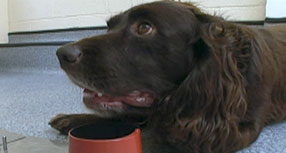
Dogs That Changed the World introduced Daisy and Tangle, dogs able to sniff out cancer cells, and Delta, a German Shepherd who can sense changes in the blood sugar levels of her young master. The talents of these special animals are matched by those of tens of thousands of remarkable canines — dogs trained to sense disease and seizures, to assist the physically and emotionally disabled, and to provide comfort, affection, and therapy to their human companions.

Medical Research

Daisy and Tangle were trained to detect the unique odor of bladder cancer cells in urine samples, but researchers have found that dogs can also nose out other forms of cancer. At the Sensory Research Institute at Florida State University in Tallahassee, scientists have trained dogs to detect the odor of skin melanomas and prostate cancer. In 2006, researchers at the Pine Street Foundation in Northern California reported that they had taught dogs to pinpoint patients with lung cancer (with 97 percent accuracy) and breast cancer (with 88 percent accuracy)-simply by sniffing their breath. The researchers are now training dogs to detect ovarian cancer.

Service Dogs

Dogs like Delta are trained to detect subtle changes in a diabetic patient’s body chemistry that occur when the levels of glucose in the blood drop too low or rise too high. Either can lead to seizures, convulsions, diabetic coma, and death. Other dogs have been trained to respond to heart attacks, and to recognize changes in the blood pressure of their owners.

Delta can sense changes in blood sugar   

Delta, a German Shepherd, can sense changes in the blood sugar levels of her young diabetic master.

Dogs known as seizure dogs (or seizure response dogs) have been trained or have learned to react when a person with epilepsy is having a seizure. These dogs might bark to notify others of the seizure, lie down next to the person to prevent them from harm, remove dangerous objects from the vicinity so the person is not harmed, or attempt to revive the person after the seizure ends if they lose consciousness. More remarkably, the companion dogs of epileptics may learn to sense an impending seizure in their owner before it happens. In a 1998 survey by researchers at the University of Florida, 10 percent of epileptic patients with companion dogs reported that their dogs seemed to know when they were going to have a seizure. Although experts aren’t sure exactly how dogs do this, it may be that they are detecting subtle changes in body chemistry or in the behavior of their owner. In some cases, these dogs have been trained to perform a particular activity — running in circles, for example-to notify their owner of what they have sensed.

The most widely used and well-known service dogs are those trained to provide assistance to blind or visually impaired people, acting as the eyes of their owner. There are also hearing dogs, trained to assist deaf people and to alert them to sounds such as smoke alarms, doorbells, and crying babies; mobility assist dogs, which pull wheelchairs and provide help to the physically impaired; and walker dogs, which help provide balance when walking to individuals suffering from movement disorders such as Parkinson’s disease and spasms. In addition, dogs have been trained to assist persons with psychiatric conditions such as bipolar disorder, post-traumatic stress disorder, autism, schizophrenia, and anxiety disorder. These dogs learn to recognize changes in their owner’s behavior or environment that indicate paranoia, panic attacks, hallucinations, or potentially harmful repetitive actions, for example, and may remind them to take medication.

Therapy Dogs

Therapy dogs provide comfort and affection and improve the general well-being of people in hospitals, nursing homes, mental institutions, retirement homes, schools, and even prisons. In addition to providing companionship, researchers are now finding that the dogs are legitimately therapeutic. For example, in a 2005 study by the American Heart Association of hospitalized heart failure patients, researchers found that a 12-minute visit with a therapy dog reduced blood pressure and levels of stress hormones, and eased anxiety. Therapy dogs have been shown to improve the focus and memory of patients with Alzheimer’s, encourage speech and simple physical activities among stroke victims and individuals with impaired mobility.

Many organizations now test and provide accreditation to therapy dogs. The dogs must meet rigorous standards of temperament and obedience; they have to be accepting toward friendly strangers, sit and stay on command, be able to walk through a crowd with wheelchairs, and not startle easily.

Tags: ,
49 Responses to “Medical Dogs”
  1. Matthew weidl says:

    How do the trainers teach the dogs to sniff out cancer

  2. PAT CALDWELL says:

    MY GRAND DAUGHER, AGE 20, HAS BREAK THROUGHT SEIZEURES, SHE STARTED WITH PETIT MAL AND NOW IS INTO GRAND MAL. SHE WANTS TO DRIVE AND SOMETIMES BE ALONE BUT THAT IS RISKY. SHE MAY GO 4 MONTHS WITHOUT ONE BUT THEN THEY BREAK THROUGH. MEDS ARE BEING CHANGED ALL THE TIME.
    WHERE CAN I WRITE TO ABOUT A SEIZEURE DOG AND WHAT WOULD BE THE COST. SHE HAS A LONG LIFE AHEAD AND COULD USE A SAFETY NET AND GIVE HER CONFIDENCE.

  3. Rishma says:

    I am 13, and I have type one diabetes. I have some problems noting when my sugar levels are high and low, and would really like to know a little bit more about these medical trained dogs and how this would help me.

    I would also like to know what the cost would be roughly, and how long would it take to receive the dog if I live in the UK.

  4. Diane Ives says:

    Here’s some websites: http://www.medicalservicedogs.com; http://www.dogs4diabetics.com; http://www.deltasociety.org; Canine Campanions for Independence (www.CCI.org); and books: Dr. Allan Schoen (DVM), “Kindred Spirits”: Dr. Rupert Sheldrake (PhD); “Dogs Know When Their Owner is Coming Home”; Frances Ruffin, “Medical Detective Dogs”; Pat Shipman, “The Animal Connection”. Does anyone else have suggestions for books or websites about medical dogs/animals?

  5. Debbie says:

    What is the behavior of a medical dog? I know someone who says there dog is a medical dog and I am not sure I believe them. The dog acts like any other dog. He is kept on a long leash and goes about sniffing and pulling on the leash. He never sits still. He is a good dog. He will go to anyone to get petted.

    Thank you

  6. Geneva says:

    My husband is recovering from a brain annurism and while in a coma to treat the annurism, he had two small stokes. He is fully mobile, but suffers tasking difficulties and memory loss. I’d like him to have some independance. I think it would be extremely helpful to his recovery especially if he (and I) could help train the dog along with providing it a loving home. Who could I talk to to see if thisan option and if so, how to get it started?

  7. Robin McDaniel says:

    It would be a wonderful thing to know how to get an alert dog. I’ve had epilepsy for 34yrs. and never been able to sense a seizure coming. Disabled I am now but a life is what I want. If a person could be blessed to share one with someone that cares enough to be beside them it would be worth everything. Someone please tell me why we don’t have those special animals for people like myself. I have read all of the articles and would pray that some people could work with me.

  8. I will immediately seize your rss as I can’t find your e-mail subscription hyperlink or newsletter service. Do you have any? Please permit me recognise in order that I may subscribe. Thanks.

  9. Hello, Neat post. There is a problem with your site in web explorer, could check this? IE still is the marketplace chief and a huge component of other folks will omit your fantastic writing due to this problem.

  10. Michelle W says:

    I have always loved dogs, anything I can watch or read about them I will. My parents don’t like sitting with me when we watch or go to a dog show because I can name every breed.

    I am even more in love with dogs now as I have a medical alert and hearing service dog. She was suppose to be my pet but at nine months old she alerted me to my very severe panic attack (I black out from them and I can not tell when one is comming on) due to a severe nervous breakdown. I could not drive, go shopping own my own or do anything else (I was 28 yrs old and looking at being dependent on someone the rest of my life). I also am hard of hearing and can not hear anything from behind and without my hearing aids I can’t hear much.

    I was very lucky, my pups basic trainer, trained service dogs, and when I told her what my pup did. The trainer started working with me and her for 2 yrs to train her to be a SD. Moose is now 6yrs and has saved my life twice since her first warning and numerous times she has gotten me to a chair or bed when my medication does not work so I will not pass out and hurt myself. My hearing is becoming worse and she knows the days I need her ears more.

    We have been together as Handler and SD for 5 yrs now and I don’t know what I would do without her. She isn’t a large SD, she is a 10lb yorkie/poodle SD.

  11. diedre chase says:

    i looking for place to that have dogs for the hearing impare and the deaf. i have poor hearing with and with out my hearing aids. do you know where i can go? please help me? thanks for your help.

  12. Martin says:

    Does anyone knows about a reputable organization in Houston TX, or in Mexico for seizure dogs? We are considering the possibility of getting a dog for our brother who lives in Mexico. Thanks ind advance.

  13. Sherri says:

    I watched your show on dogs that changed the world and dogs by design. I am a animal lover, but these two shows made me see how incredible dogs are. We have taken these animals genetic make up and twisted them in to what we consider to be our perfect pet. Yet in spite of that they are still devoted to us. They are willing to learn new tasks in order to help us achieve a better life. They are even willing to put their life on the line to procect us. How incredible is that. All dogs deserve a loyal and devoted master who treats them with love and respect. I truley hope all dogs go to heaven.

  14. Lori Candilora says:

    I also have an adult son living along haveing grand mall siezures. He had one in the shower today . How do I find out more on these dogs?

  15. Dee says:

    My beagle, Penny starts barking and goes up to our other dog, Buddy a minute or so before Buddy actuallyTy has a seizure. Buddy seems to be perfectly normal, just walking around. Penny will start barking and coming up to Buddy and then Buddy will seize. Penny always seems to know before hand. Can’t explain it

  16. Eileen Geraci says:

    Our dog Belle has never been trained but is very sensitive to oncoming storms/danger and also medical issues. She is extremely sensitive around my Dad who is diabetic. She watches him like a hawk and we know when he is not right or his sugar is running high or low because she acts differently. Follows him, shakes. We call her the nurse dog and we joke about it but when she alerts us – we always make sure he is okay! One weekend we were visiting and she was charging my dad and hitting him in the leg with her nose – we were joking about it that she wanted him to sit down because he was unsteady. The next week my father found out he had a blood clot in his leg. We will never take her “signs” for granted again.

  17. Megan H. says:

    I have been a type one diabetic for almost 25 years (diagnosed when I was 7) and have had a problem with low bloodsugars in the middle of the night. Recently, my husband and I adopted a mastiff puppy named Brutus. My husband and I took shifts in taking Brutus out and my husband ended up with the night shift. So when Brutus (then a five month old puppy) started whimpering and pawing at me in the middle of the night, my husbandd knew something was wrong. He quickly woke me up to test my bloodsugar and learned my bloodsugars had dropped dangerously low. At first, we thought this behavior was a quirk or one time event… but over the past year, Brutus has woken me up countless times – even going to seek out my husbad in another part of the house when I had a hypoglycemic attack in the middle of the day. Having Brutus in our lives has been a miracle and even though his size (140 lbs. at one year old) can take a little getting used to,I wouldn’t trade the happiness and peace of mind he has brought to our family for all the world.

  18. Jill says:

    I have rheumatoid arthritis and my Australian Cattle Dog seems to be sensing my flares before they start. He has been licking and mouthing my hands for a couple of weeks now, when the flare got worse ,he stopped mouthing but is still licking my hands, feet and knees. These are areas known to cause me the most pain. I have had a hard time digging up more info on this. He was acquired as the family pet but quickly “chose” me.

  19. Taira says:

    Hi my name is Taira and my spaniel woke me up tonight she wouldn’t let me go bk to bed I have many medical problems also she sniffs my breast I’m not sure y for people out there u can buy a puppy and take it to a service dog trainer as some places have very long waiting lists

Leave a Reply

Please note that the THIRTEEN editorial staff reserves the right to not post comments it deems to be inappropriate and/or malicious in nature, as well as edit comments for length, clarity and fairness. No solicitations or advertisements will be allowed. Users may link to other Web sites relevant to discussion, but most often links to commercial Web sites will not be permitted.

Produced by THIRTEEN    ©2013 Educational Broadcasting Corporation. All rights reserved.