

Encouraging your child to explore their world through writing starts at home. Modeling all of the ways you write in your everyday life is a great start. Let your child see you make a grocery list, write a thank-you note, text a relative, send an email, or write down a funny thing your child said in a journal. When your child watches you write and has access to theIr own writing and art materials, they’ll feel encouraged to explore the world of writing at their own pace (even if they aren't writing legible letters or words yet!).
Children love to play pretend — and writing can be part of this creative work. For example, if they like tea parties, encourage them to make invitations for guests, place cards, maps, signs or menus. Keep writing materials readily available and at child-level to help them integrate writing into their pretend play. When you’re writing stories or poems with your child, try using favorite books as templates. Don't be afraid to borrow the structure of a beloved story while helping your child think up ideas for their own version!
Questions to Ask Your Child
- Ignite their imaginations! Talk with your child about a favorite story: Ask: "If you could write a new ending for this story, what would you write? If you could add a new character, who would it be? What would they act like? What would they look like?"
- Encourage your child to write (or scribble or draw, if they’re not to that stage yet!) a story inspired by their favorite hobbies or interests. Help them come up with ideas for their story by asking questions to spark their imagination. If they like horses, ask questions such as, “What if a horse could talk? What would it say?” Or if racecars excite your child, perhaps a prompt like, “What do you think it feels like to drive a race car? What does it look like inside the car? If you owned a race car, how would you take care of it? Where would you drive it?”
Play and Learn Together With Children 2 to 5
Thick markers, crayons and paint brushes are ideal for the youngest writers since they’re still developing the small muscles in their hands that help them hold tools. (Plus, drawing and scribbling are often types of early writing.) Get crafty (and develop fine motor skills) by making a favorite toys book together. Tub letters, alphabet blocks, ABC puzzles and letter magnets are simple and often inexpensive toys that support literacy development. Get outside and trace words on the sidewalk to help your child learn to spell their name or other words in this outdoor literacy activity. Or, help your child play with words and express themselves by creating found poetry. Encourage them to notice letters and words written on scrap pieces of paper, signs, books, junk mail, cereal boxes, etc. Words are everywhere, ready for you to notice them and play with them!
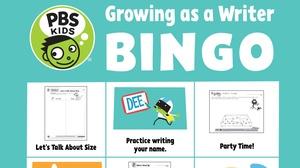
Learn Along Bingo for Ages 2-5: Growing as a Writer
Play and learn with this activity packet all about growing as a writer!
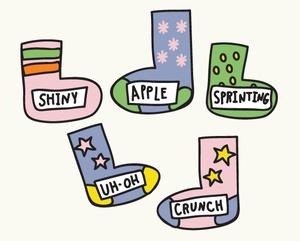
Write and Play Found Poetry
Help your child play with words and express herself to create found poetry.
Create a “My Favorite Toys” Book
Make a book about all of your child's favorite toys!

Trace Words on the Sidewalk
Help your child learn to spell her name or other words in this outdoor literacy activity.
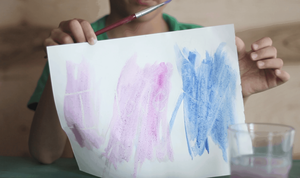
Write Secret Crayon Messages
15 min activityYour child will use the crayon resist painting technique to write secret messages.
Play and Learn Together With Children 6 to 8
Help your child practice their writing skills in a meaningful way by writing cards to the special people in their life. Ask your child what they think it means to appreciate someone or something. Brainstorm the reasons you appreciate friends and family, such as they’re helpful and creative or they’re kind to others. Include those ideas in the card. Or, ask your child to write about something from their imagination! Give them a prompt, like: If you could travel anywhere, where would you go and why? Then ask them to write and draw about it.
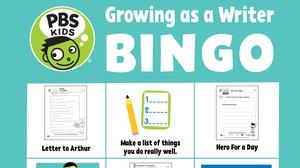
Learn Along Bingo for Ages 6-8: Growing as a Writer
Play and learn with this activity packet all about growing as a writer!
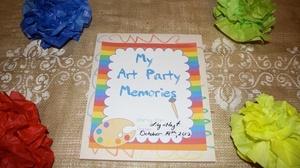
Memory Book
Create a fun keepsake for the birthday child to cherish for years to come!

Make Appreciation Cards
Help your child talk about appreciation by making cards for the special people in their life.
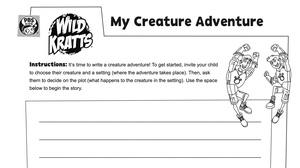
My Creature Adventure
It’s time to write a creature adventure story!
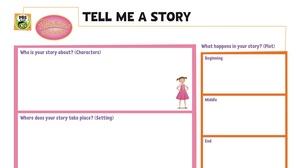
Tell Me a Story
Stretch your creative muscles and use this guide to tell your own story!

Make a The Very Hungry Book
After reading The Very Hungry Caterpillar, use this printable to make your own story!
Play and Learn By Myself
Scribbles and Ink: In and Out
Choose a story and draw your way through adventures with Scribbles and Ink.
Alaskan Adventure
Explore the Alaskan wilderness with Molly, her mom, and Nina. Take photos of amazing animals and record what you find in your notebook.
Storybook Builder
Your child can design his own storybook featuring favorite Sesame characters in this pick-your-own-adventure game.
Pinkcredible Story Maker
Make up a story starring Pinkalicious and her friends. In this online game, your child can create pictures using characters and props to tell a story that has a beginning, a middle and an end.
Story Emporium
It's story time! Join Ellie and the Wombats to create four different stories. See how many endings you can make.
Story Creator
Create your own stories using an interactive mad-libs style of play, with a little help from Xavier and crew!
Arthur's Tiny Tales
Arthur is writing stories about his friends. First create your own character to be part of the story and then help Arthur make a picture to go with the story.
Read More
Picture Books About Writers and Writing
Celebrate the art of writing in all its various forms with these ten books that will tickle your children’s funny bones and teach them some history too.

Five Tips for Hosting a Writing Club
After lots of trial and error, Jennifer Cooper has hands-on advice for cultivating a writing club for even the most reluctant young writers.

How to Create a Literate Home: Young Child and Kindergartener
While learning to play with the building blocks of language as a young child or kindergartener, your child can learn a lot from adults, as well as reading and writing materials.

Your Child’s a Poet, and Here’s How to Show It
There’s a really easy way to spice up your child’s reading and writing routine: poetry! Sprinkling poems into your usual mix can keep reading time fresh while boosting literacy skills.

9 Early Literacy Activities For Kids
Here are some reading and writing activities that take little paper or prep and can fill your home with letters, sounds and word fun.