
Grief During the Holidays: How Parents Can Help Children (And Themselves)


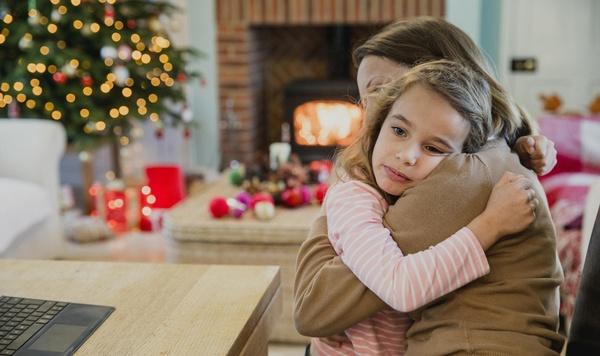
As parents, we feel a strong pull to make the holiday season a time of joy and celebration. But November and December can also bring “grief spikes.” Perhaps this is the first holiday season without a loved one. Or maybe we find ourselves missing someone who has been gone for years.
I recently spoke to Hope Edelman, a grief expert and author of The AfterGrief: Finding Your Way Along the Long Arc of Loss, about what she calls “holiday syndrome.” Because this is a time when families tend to gather and practice traditions, it is also “a time of year when we’re reminded about who’s not there.” As we enter these winter months, Edelman offered some advice for families experiencing grief. This advice can help a lot with the loss of a loved one.
Turn an absence into a presence
The sadness we may feel in the holiday season reminds us that “we're longing for a connection” said Edelman. So, one way that families can process these feelings is to look for creative ways to stay connected to those we have lost.
Turning someone's “absence into presence” can give kids a sense of comfort. Because holidays are a time of traditions, “one thing that parents can do for kids is to find a way to work the person who has died into the holiday celebrations.”
This might look like cooking one of grandma’s or grandpa’s special recipes. It could be lighting a candle in someone’s memory. It could also be telling stories about a loved one around the Thanksgiving table. It may also look like carrying on one of their favorite traditions. Or, (if those no longer fit) it might look like creating a new tradition in their honor. As Edelman said, “Rituals give kids a feeling that they belong to something larger than themselves.” One family I know has turned the November anniversary of their son’s passing into a community "day of kindness." As the mother describes it, “What was once the worst day of our lives has become a day of kindness, where we opt to spread light and love a little bit extra.”
Remembering loved ones and working them into the holiday season often makes us feel better "because we are not trying to suppress those feelings of love or longing or missing," said Edelman. "We're saying, 'Let's find a way to make [our loved one] part of the holidays.'"
Give children space to talk
One of my parenting mantras comes from Fred Rogers: "Anything human is mentionable, and anything mentionable can be manageable." The holidays can be a time to share family stories and to pull out pictures of loved ones. You can laugh over funny memories or watch old home movies. Edelman said that these activities can help children feel connected to those who have died. “One of the hardest things for a child, especially over time, is to lose someone and then not be able to talk about that person anymore. When the child can't talk about the person, then they're left trying to have a relationship with that person by themselves. Kids will talk pretty openly about people who've died if we create the space for them to do that.” When we encourage kids to share their memories, it “helps cement their connection to the person who's no longer here.”
Storytelling can also help parents model for children healthy ways to live with loss. I lost my dad a couple of years before my first child was born. When I have a “grief spike” of missing him, one way I work through those hard feelings is by telling my kids a story about Grandpa Jim. Over the years, they have heard about all the wonderful ways they are like him. They are similar to him in their curiosity and their love of chocolate. Also their fascination with stars and mythology, and their kindness. These stories give me an excuse to remember him. They encourage me to say his name and to help my children feel connected to a grandpa they never met.
Gather your village to help
It's important to remember that there will be different responses to grief in the same household. Edelman says “because if the child just lost a grandparent, that means one of the parents just lost a parent.” This is a good time to ask for help from friends, neighbors, or extended family. They can be an extra support person in your children’s lives. Edelman shared that kids need at least one adult who gives them “permission and space to talk about their feelings.” But, that person doesn’t have to be the parent, at least not right away.
Parents will “have their own grief to tend to,” she noted. She said “and they may feel really overwhelmed trying to be there for their children at a time when they have to meet their own grief needs. So, knowing that, they might be able to reach out to a close family friend or a member of the extended family and say, ‘Could you be a point person for this child for the foreseeable future? Can you be part of the team that I'm assembling for them, so I don't have to do it all myself?’"
Remember that children grieve differently than adults
Children may experience a full range of emotions in response to loss. A lot of this depends on their age and temperament. Very young children may not understand that death is permanent but rather experience loss as a change in routine. They might think “I used to visit grandma on Sunday and now we don’t do that.” As Edelman told me, younger children “live very much in the present” and they often “only dip into grief very briefly, and then they back away.” For example, they may have a short, intense outburst and then run off to play. But that doesn’t mean they are not grieving, said Edelman. “It just means that they can only handle grief in very small doses.”
As children work through these moments of grief, there are two key ways adults can support them. First, children need the comforting presence of a caring adult. Sometimes, said Edelman, kids will hold in emotions until they “know they have an emotionally available adult there to support them.” Second, they need models of how to self-regulate. So, when they are overwhelmed with strong feelings, they can begin to understand that their emotions are normal. Also, that emotions pass. They can develop tools to help them regulate their feelings when they have an emotional storm. When Edelman’s kids were young, she would talk it through with them in simple ways: “When something sad happens, it's okay to be sad. When I'm sad, I cry. It's okay for you to do that, too."
One of the messages Edelman has for parents is that there is no “right way” to grieve. And grief isn’t time-limited. So, if you find yourself experiencing an emotional spike this holiday season, “it doesn't mean that you got grief wrong — it means that you really loved that person and you really miss them.”
Finally Edelman, who has spent years researching the after-effects of childhood loss, offered these words of hope for parents worried about their children: “I want parents to know that a child can experience a loss — even a major one — when they're young and still have a beautiful, rich and fulfilling life as an adult. It will be something they carry with them forever. They will carry that memory forward, but that memory will often enrich their lives in ways that you can't even imagine now.”
Resources to Help Children Navigate Loss and Grief
- Talking With Preschoolers About the Death of a Pet
- From Daniel Tiger's Neighborhood: Blue Fish Is Dead (VIDEO)
- 7 Ways to Connect Kids to Their Family Heritage
- When Someone Your Child Loves Dies (From the Fred Rogers Center)
- Books for Young Kids about Grieving and Loss (From Zero to Three)
 Author: