
2023 WSMA State Honors Jazz Concert
Clip: 11/5/2023 | 54m 46sVideo has Closed Captions
High school jazz musicians from across the state perform at Madison’s Monona Terrace.
For over 50 years, the Wisconsin School Music Association (WSMA) State Honors Project has provided students from across Wisconsin the opportunity to rehearse and perform with nationally-recognized conductors in a professional setting. Recorded live on Oct. 27, 2023, this concert highlights the talents and dedication of these gifted performers.
Problems playing video? | Closed Captioning Feedback
Problems playing video? | Closed Captioning Feedback
WSMA State Honors Concerts is a local public television program presented by PBS Wisconsin
2023 WSMA State Honors Jazz Concert
Clip: 11/5/2023 | 54m 46sVideo has Closed Captions
For over 50 years, the Wisconsin School Music Association (WSMA) State Honors Project has provided students from across Wisconsin the opportunity to rehearse and perform with nationally-recognized conductors in a professional setting. Recorded live on Oct. 27, 2023, this concert highlights the talents and dedication of these gifted performers.
Problems playing video? | Closed Captioning Feedback
How to Watch WSMA State Honors Concerts
WSMA State Honors Concerts is available to stream on pbs.org and the free PBS App, available on iPhone, Apple TV, Android TV, Android smartphones, Amazon Fire TV, Amazon Fire Tablet, Roku, Samsung Smart TV, and Vizio.
Providing Support for PBS.org
Learn Moreabout PBS online sponsorship- And now it is my distinct privilege to introduce the 2023 WSMA High School State Honors Jazz Ensemble and their distinguished conductor, Johannes Wallmann.
[audience clapping] [audience clapping continues] - 1, 2, 3.
[lively jazz music]0 [lively jazz music continues] [lively jazz music continues] [lively jazz music continues] [lively jazz music continues] [lively jazz music continues] [lively jazz music continues] [lively jazz music continues] [lively jazz music continues] [lively jazz music continues] [lively jazz music continues] [lively jazz music continues] [lively jazz music continues] [lively jazz music continues] [lively jazz music continues] [lively jazz music continues] [lively jazz music continues] [lively jazz music continues] [lively jazz music continues] [lively jazz music continues] [lively jazz music continues] [lively jazz music continues] [lively jazz music continues] [lively jazz music continues] [lively jazz music continues] [lively jazz music continues] [lively jazz music continues] [lively jazz music continues] [lively jazz music continues] [lively jazz music continues] [lively jazz music continues] [gentle jazz music] [audience clapping] [lively jazz music] [lively jazz music continues] [lively jazz music continues] [lively jazz music continues] [lively jazz music continues] [lively jazz music continues] [lively jazz music continues] [lively jazz music continues] [lively jazz music continues] [lively jazz music continues] [lively jazz music continues] [audience applauding] [audience applauding continues] Thank you, and welcome.
That was the composition Soupbone by a bassist composer John Clayton.
And appropriately for a composition written by a bassist, we featured our bassist, Esme Olstadt, as well as trombonist Ian Mackey as soloists.
[audience clapping] I'm going to introduce parts of the band to you throughout, you know, throughout the concert.
You're pretty much going to hear all of them as soloists as well.
But speaking of, you know, trombones, and we started with the trombone solo.
They are very much the heart of the band, and I'd like to introduce them to you now from your left to your right, Ian Mackey, Eric Allen, Cory Stordahl, and Bryce Whitt.
[audience clapping] For today's concert I was hoping, and well, I did program music that is intended to showcase the vibrancy of today's big band and jazz scene.
The, you know, the writing for the bands, you know, is incredible.
There are incredible performers out there.
So all of today's music is written by living composers, building on the rich traditions of the big bands as well.
John Clayton is very active as co-leader of the Clayton-Hamilton big band in Los Angeles.
And we're going to continue with a piece by a Wisconsin composer.
This is Paul Dietrich's piece, Settle.
And Paul is very much inspired by Wisconsin.
And this piece was inspired by an extremely cold winter day.
And you know, you know what they're like here when things get very cold and very silent.
And you know, one of those days is coming up probably sooner than we wanted to, but now you have a soundtrack for it.
[gentle jazz music] [gentle jazz music continues] [gentle jazz music continues] [gentle jazz music continues] [gentle jazz music continues] [gentle jazz music continues] [gentle jazz music continues] [gentle jazz music continues] [gentle jazz music continues] [gentle jazz music continues][gentle jazz music continues] [gentle jazz music continues] [gentle jazz music continues] [gentle jazz music continues] [gentle jazz music continues] [gentle jazz music continues] [gentle jazz music continues] [gentle jazz music continues] [gentle jazz music continues] [gentle jazz music continues] [gentle jazz music continues] [gentle jazz music continues] [gentle jazz music continues] [gentle jazz music continues] [gentle jazz music continues] [gentle jazz music continues] [gentle jazz music continues] [lively jazz music] [lively jazz music continues] [lively jazz music continues] [lively jazz music continues] [lively jazz music continues] [lively jazz music continues] [gentle jazz music] [gentle jazz music continues] [gentle jazz music continues] [gentle jazz music continues] [gentle jazz music continues] [gentle jazz music continues] [gentle jazz music continues] [gentle jazz music continues] [gentle jazz music continues] [gentle jazz music continues] [gentle jazz music continues] [gentle jazz music continues] [audience applauding] [audience applauding continues] That was Jackson Range, alto saxophone.
[audience applauding] Next, we'd like to play for you a composition called Vernal Suite by Canadian composer Christine Jensen.
She recorded this in 2010 with her Montreal based band.
And this piece is a feature piece for her sister Ingrid Jensen, one of the great trumpet players of our time.
And there's so much good material in there for trumpet solos that we're actually going to feature 60% of our trumpet section as soloists on the, you're going to hear from, and I'll introduce the whole section to you right now.
From your left to your right, you're going to hear from Otto Gustafson on the first solo, Edward Jones III, James Prete, Noah Felix will be playing the second solo, and Kyle Mealey will be playing the third solo on this.
We're also going to get some help from Nathan Phillips on tenor saxophone.
And this is Vernal Suite.
[gentle jazz music] You pay, we have to pay him 50% more just for that.
[audience laughing] [gentle jazz music] [gentle jazz music continues] [gentle jazz music continues] [gentle jazz music continues] [gentle jazz music continues] [gentle jazz music continues] [lively jazz music] [lively jazz music continues] [lively jazz music continues] [lively jazz music continues] [lively jazz music continues] [lively jazz music continues] [lively jazz music continues] [lively jazz music continues] [lively jazz music continues] [lively jazz music continues] [lively jazz music continues] [lively jazz music continues] [lively jazz music continues] [lively jazz music continues] [lively jazz music continues] [lively jazz music continues] [lively jazz music continues] [lively jazz music continues] [lively jazz music continues] [lively jazz music continues] [lively jazz music continues] [lively jazz music continues] [lively jazz music continues] [gentle jazz music continues] [lively jazz music continues] [lively jazz music continues] [lively jazz music continues] [lively jazz music continues] [lively jazz music continues] [lively jazz music continues] [lively jazz music continues] [lively jazz music continues] [lively jazz music continues] [lively jazz music continues] [lively jazz music continues] [lively jazz music continues] [lively jazz music continues] [lively jazz music continues] [lively jazz music continues] [lively jazz music continues] [lively jazz music continues] [lively jazz music continues] [lively jazz music continues] [lively jazz music continues] [lively jazz music continues] [lively jazz music continues] [lively jazz music continues] [lively jazz music continues] [lively jazz music continues] [lively jazz music continues] [lively jazz music continues] [lively jazz music continues] [lively jazz music continues] [lively jazz music continues] [lively jazz music continues] [lively jazz music continues] [lively jazz music continues] [gentle jazz music] [gentle jazz music continues] [gentle jazz music continues] [gentle jazz music continues] [gentle jazz music continues] [audience applauding] [audience applauding continues] All right, next up, a piece by San Francisco based composer bassist Marcus Shelby entitled Black Ball Swing.
Shelby's music is frequently inspired by major events in Black American history, and this piece is from a suite of music that he wrote honoring different teams from the Negro Baseball Leagues, which were the result of segregation, but also a source of joy and celebration in the Black community.
And one of the most famous teams in the history of the Negro Baseball Leagues, where the Kansas City Monarchs, famously the team of Satchel Paige.
Of course, Kansas City was also a great jazz city and a important place in jazz history.
And the origin of not Count Basie himself, who famously came from Red Bank, New Jersey, but from, but the Count Basie Band, as well as Charlie Parker too, of course.
And in the tradition of the Count Basie Band, which oftentimes, especially in its early days, would make up quite a lot of their pieces on the bandstand.
They would perform every night and at various points the band would start playing a tune and the saxophones would just make up a new part and see what would fit.
Trombones might make up a part, see what would fit.
And if it sounded good, they'd keep it.
If it didn't, they didn't keep it.
And that's what we've done with this piece as well.
We've used Marcus Shelby's composition as a foundation, as the building block of this.
We're going to feature quite a few soloists on this and, 'cause everybody in this band can play.
And as well as the arrangement is augmented by contributions from all the different sections in the band, playing backgrounds or as I like to think of them, counterpoint to the soloists as well.
This is Black Ball Swing.
Oh, and I was going to introduce the saxophone section to you.
So from, I've been doing this from no wait, I'm gonna tell you about the saxophones in a moment, but I am going to tell you about the soloist on this.
You're going to hear from, from Jackson Omar on bari sax, Edward Jones III on trumpet, Bryce Whitt on bass trombone, James Mealey (James Prete) on trumpet, and Miles Wisdom on piano, and Elliot Meyer on drums.
[lively jazz music] [lively jazz music continues] [lively jazz music continues] [lively jazz music continues] [lively jazz music continues] [lively jazz music continues] [lively jazz music continues] [lively jazz music continues] [lively jazz music continues] [lively jazz music continues] [lively jazz music continues] [lively jazz music continues] [lively jazz music continues] [lively jazz music continues] [lively jazz music continues] [lively jazz music continues] [lively jazz music continues] [lively jazz music continues] [lively jazz music continues] [lively jazz music continues] [lively jazz music continues] [lively jazz music continues] [lively jazz music continues] [lively jazz music continues] [lively jazz music continues] [lively jazz music continues] [lively jazz music continues] [lively jazz music continues] [lively jazz music continues] [lively jazz music continues] [lively jazz music continues] [lively jazz music continues] [lively jazz music continues] [lively jazz music continues] [lively jazz music continues] [lively jazz music continues] [lively jazz music continues] [lively jazz music continues] [lively jazz music continues] [lively jazz music continues] [lively jazz music continues] [lively jazz music continues] [lively jazz music continues] [lively jazz music continues] [lively jazz music continues] [audience applauding] [audience applauding continues] And how about Esme Olstadt on that, our bassist.
If you play bass, you know.
[audience clapping] All right, I'd like to introduce the saxophones now, from your left to your right.
Andrew Wisniewski, - Wisniewski.
- Wisniewski, sorry.
Andrew Wisniewski, tenor saxophone.
Andrew Scott, alto.
Jackson Range, alto saxophone.
Nathan Phillips, tenor sax.
Jackson Omar, baritone, the saxophones.
[audience applauding] And last the rhythm section, but not least.
Piper Vetting on guitar.
[audience applauding] Yeah, there you go.
Miles Wisdom, piano.
[audience applauding] Esme Olstadt, both bases.
[audience applauding] Elliot Meyer on drums.
[audience applauding] And previously on drums, and on this piece on percussion, Oscar Vlcek.
[audience applauding] Now, a lot of thanks were already said at the beginning and acknowledgements were made and I don't want to repeat all of those.
I mean, I want to, but I also wanna keep the spotlight on the music here and the musicians.
But before we play our last tune, I just want to, you know, put one more round of applause for the parents that.
[audience clapping] I remember my parents driving me, you know, to band rehearsals at like, well, like hours, you know, like it seemed like hours before daylight to get to that zero hour rehearsal, and so on.
And I know at least one person here, to get to yesterday's rehearsal, their family left home at four in the morning to get to the rehearsal.
That then ended up being, I think 12 hours from start to finish.
We took some breaks, but it was about nine hours of rehearsal time.
And I know everybody here, like all the parents have made sacrifices like that.
And that's what enables these students to, you know, that and their own incredible work and talent enables this music to happen.
So thank you.
And of course, thank you to everybody else, the organizers, the sound crew, everybody.
It's such an honor to get to work with these great musicians and to have such amazing support and help from the section coaches and all my colleagues.
This last piece is a composition by New York based trombonist, Alan Ferber entitled The Compass.
[lively jazz music] [lively jazz music continues] [lively jazz music continues] [lively jazz music continues] [lively jazz music continues] [lively jazz music continues] [lively jazz music continues] [lively jazz music continues] [lively jazz music continues] [lively jazz music continues] [lively jazz music continues] [lively jazz music continues] [lively jazz music continues] [lively jazz music continues] [lively jazz music continues] [lively jazz music continues] [lively jazz music continues] [lively jazz music continues] [lively jazz music continues] [lively jazz music continues] [lively jazz music continues] [lively jazz music continues] [lively jazz music continues] [lively jazz music continues] [lively jazz music continues] [lively jazz music continues] [lively jazz music continues] [lively jazz music continues] [lively jazz music continues] [lively jazz music continues] [lively jazz music continues] [lively jazz music continues] [lively jazz music continues] [lively jazz music continues] [lively jazz music continues] [lively jazz music continues] [lively jazz music continues] [lively jazz music continues] [lively jazz music continues] [lively jazz music continues] [lively jazz music continues] [lively jazz music continues] [lively jazz music continues] [lively jazz music continues] [lively jazz music continues] [lively jazz music continues] [lively jazz music continues] [lively jazz music continues] [lively jazz music continues] [lively jazz music continues] [lively jazz music continues] [lively jazz music continues] [lively jazz music continues] [lively jazz music continues] [lively jazz music continues] [lively jazz music continues] [audience applauding] [audience applauding continues] [audience applauding continues] [audience applauding continues] [audience applauding continues]
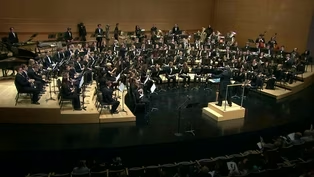
2023 WSMA State Honors Band Concert
Video has Closed Captions
Band students from across Wisconsin perform before a live audience. (43m 21s)
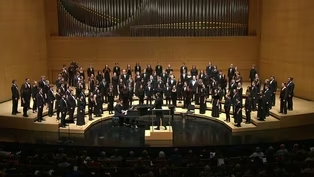
2023 WSMA State Honors Mixed Choir Concert
Video has Closed Captions
Choir students from across Wisconsin gather in Madison for a rewarding musical experience. (35m 39s)
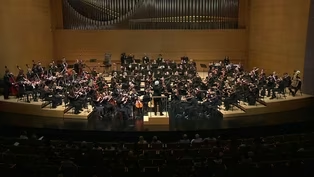
2023 WSMA State Honors Orchestra Concert
Video has Closed Captions
Orchestra students gather in Madison for an unforgettable musical experience. (51m 48s)
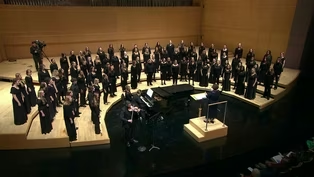
2023 WSMA State Honors Treble Choir Concert
Video has Closed Captions
Choir students from all corners of the state perform in Madison. (38m 15s)
Providing Support for PBS.org
Learn Moreabout PBS online sponsorship













Support for PBS provided by:
WSMA State Honors Concerts is a local public television program presented by PBS Wisconsin