Washington Grown
A Taste of Skagit
Season 13 Episode 1306 | 26m 46sVideo has Closed Captions
The Washington Grown team visits Skagit County, where innovation and tradition grow side by side.
The team visits Skagit County. At Dear Table Farm, farmers blend creativity with sustainability, while the WACD Plant Materials Center showcases science and stewardship in action. In Anacortes, we explore the region’s rich agricultural and maritime heritage and enjoy delicious bites—from Windy City Pie’s deep-dish perfection to sweet treats at Cloudview Kitchen.
Problems playing video? | Closed Captioning Feedback
Problems playing video? | Closed Captioning Feedback
Washington Grown is a local public television program presented by KSPS PBS
Washington Grown
A Taste of Skagit
Season 13 Episode 1306 | 26m 46sVideo has Closed Captions
The team visits Skagit County. At Dear Table Farm, farmers blend creativity with sustainability, while the WACD Plant Materials Center showcases science and stewardship in action. In Anacortes, we explore the region’s rich agricultural and maritime heritage and enjoy delicious bites—from Windy City Pie’s deep-dish perfection to sweet treats at Cloudview Kitchen.
Problems playing video? | Closed Captioning Feedback
How to Watch Washington Grown
Washington Grown is available to stream on pbs.org and the free PBS App, available on iPhone, Apple TV, Android TV, Android smartphones, Amazon Fire TV, Amazon Fire Tablet, Roku, Samsung Smart TV, and Vizio.
Providing Support for PBS.org
Learn Moreabout PBS online sponsorship- "Washington Grown" is made possible by funding from the Washington State Department of Agriculture and the USDA Specialty Crop Block Grant program, and by the Potato Farmers of Washington.
Learn why Washington is home to the world's most productive potato fields and farmers by visiting potatoes.com.
- Hi everyone, I'm Kristi Gorenson, and welcome to "Washington Grown."
Our state is known for its diverse ecosystems like prairies and wetlands, estuaries, rainforests, and of course, our marine waters.
In this episode, we're gonna be visiting Anacortes and some of the amazing farmlands nearby.
Tomás is visiting Dear Table Farm.
- They say you can drop a penny in the ground and grow a penny tree here because the soil is so wonderful.
- And I'm making Chicago-style deep-dish pizza at Windy City Pie in Seattle.
[Kristi babbles] - Right.
[Kristi giggling] [David laughing] - And I'm visiting a farm that's growing trees and shrubs for conservation projects.
You live and breathe plants.
- Pretty much.
- All this and more today on "Washington Grown."
[gentle bright music] Cooking with Kristi.
Sweet Pete.
- Jiminy gee willikers.
- Watch my bangs.
Go big or go home.
- Ah!
Right in my eye.
You made me a believer.
[both laughing] Oh, I am making a mess.
- Oh, Val, I love you.
- Heaven on a plate.
That's yummy.
- We're gonna get a to-go cup for these?
- Yeah.
[all laughing] - You keep talking, I'll keep eating.
[gentle bright music] [upbeat music] Here in Seattle, pizza is a treat.
But at Windy City Pie, they're not just serving up any pizza.
This is Chicago-style pizza.
But what exactly does that mean?
- I mean, it's definitely thicker.
It's hardy pizza.
- A layer of the sauce and then some of the toppings and then a little bit more sauce.
- It's cheesy.
On the outside, really crispy.
- It's our favorite pizza.
- Deep-dish Chicago-style, what does that mean exactly?
- Well, it means a lot of different things to a lot of different people.
- Owner David Lichterman was inspired by certain styles of deep-dish and tavern-style pizzas found in and around Chicago.
Using that love and the local bounty found in Washington, he created a menu that's unlike anything else found in Seattle.
- Even people from Chicago who aren't familiar with this style of deep-dish pizza, you know, it's like, "Cool, like, what is this?
You know, help me understand."
- It's both decadent and fresh.
- It's like something that the Midwest has that not a lot of other places have.
- Probably one of the better pizzas I've ever had in my life.
- It's always funny when little kids see a deep-dish pizza for the first time and they're like, "What, like, where's the cheese?"
And it's like, "Okay, okay."
- Yeah.
[both chuckles] It's in there.
- "It's on there."
Yeah.
- You're gonna love it.
- It's in there.
- Don't miss later in the show when David and I make the Windy City favorite deep dish, the Sweet Pete.
Sweet Pete sounds like something my mother would say.
Like if I did something wrong, "Sweet Pete!"
- Jiminy gee willikers.
[Kristi laughing] [gentle bright music] [singers vocalizing] [gentle music] - There's just something magical about the soil in northwest Washington.
You can grow just about anything.
Today I'm in Mount Vernon visiting Dear Table Farm, a small farm operation that is using this rich landscape to create a bounty of vegetables.
- The soil here is the best in the world.
- Yeah.
- So we're very fortunate to be in the Skagit Valley.
- Yeah, they say you can drop a penny in the ground and grow a penny tree here because the soil is so wonderful.
- Grace Lemley and Griffin Lehman are the owners of Dear Table Farm.
And while both worked in the Seattle ag tech sales industry, their shared dream of getting their hands dirty brought them together.
- So we were talking to farmers all day on the phone and we were just like, "Gosh, wouldn't it be great to be on the other side of that line?"
- We had a Word document that we would send each other inspiration, pictures of things that we like or farms that we like to talk to, and then yeah, we were like, "Let's leave and do this 'cause this is what we want to do."
- Together, Grace and Griffin have curated a vegetable paradise that is constantly adapting and growing to make fresh food more accessible to the community.
- We grow year-round, so a lot of that is like, you know, we need to have certain crops and certain varieties that are better in the winter and certain things that are great in 90 degrees too in the summer.
If we looked at our crop plan and added that up, it was like 96 different things- - Really?
- and like 100 and- - 70?
- 70 different varieties.
- At how much land?
- Six acres.
- You guys are packing it in.
- We want to show people that you don't have to rely on California or Mexico for your produce.
You can continue to eat seasonally all year round straight from Washington or the Valley.
- Grace and Griffin gave me a tour of the farm just to see a few of the many different varieties growing here at Dear Table.
- We have a bunch of strawberries, peppers, all different kinds, tomatillos, jalapeños.
We like to do three different plantings of zucchini.
And these are a new wax bean that we're growing this year, which are amazing, and they're called dragon's tongue.
I'm gonna get you one actually.
Look at that.
You've got to try one.
I mean, they're like juicy.
Like you just eat it raw, dip it in hummus.
- Those are really juicy.
- We sell 'em in a little boat.
We call it a bean boat.
One pound of them, and they've been like flying off the table at markets.
- Farmers are constantly facing new challenges in order to keep their crops productive and healthy.
For Grace and Griffin, it's no different even when they're farming with such nutrient-rich and magical soil.
- The soil is really great, but it has really great drainage, so it dries out very fast.
- Requires quite a lot of water.
- We're on shared irrigation 'cause we have limits here, so we can only water certain times of day for a certain amount of time.
And so we've tried just about every type of irrigation in the book, and it's just always a juggle.
- Yeah, that's probably the biggest pain point, I would say.
I mean that and land access, like this is lease land.
Finding land that's available to be farmed is really, really challenging here.
- But if you do it right, like you guys obviously are doing, you're maximizing your space- - We are.
- to the nth degree.
- We are.
[gentle bright music] [singers vocalizing] Hey, everybody.
Tomás here with my daughter Anna Lucia, and today we are at Brooks Memorial Park on Highway 97.
This is a park that I used to come to all the time as a kid with my parents, and one of the things we always had was pico de gallo.
Today we're using tomatoes, onions, and fresh jalapeños, cilantro and limes, canned jalapeños, and a special ingredient.
- First, we add our tomatoes, onions, cilantro, and fresh jalapeños.
- Yeah, that's good.
[both laughing] That's good.
You don't want it too hot.
Okay, all right.
Fun little trick here is to take a small can of jalapeños as well.
It adds a little bit more heat and some juice, so go ahead and put those guys in there.
Mm, look at that.
Whoo, you can already smell it.
My late cousin Eugene Perez was an incredible man.
He loved motor biking, and he loved cooking.
And one of the little tips that he showed me was to use Lawry's garlic salt.
That was kind of like his secret weapon.
All right, now once you got all these ingredients in there, we're gonna go ahead and just give that a mix.
- And finally, we add some lime juice.
Ooh.
[laughing] - Ah, there you go.
There you go.
Juice it.
There it is.
Ah!
Right in my eye.
That's good though.
I like limes, so it's all good.
Look at that.
Let's give it a try.
Ready?
- Mm-hmm.
- Oh, that does look beautiful.
It smells great.
[chips crunching] Oh man.
- That is so good.
- That is so good.
This is great.
- Yeah.
- I think we're gonna fuel up, we're gonna hit the trails, and we'll see you guys on our next adventure.
To learn how to make this recipe and many others, head on over to wagrown.com.
[gentle bright music] [singers vocalizing] - We all know that vegetables are good for us and a lot of them have high water content.
Can you name some of them?
I'll tell you after the break.
- Coming up, I'm making Chicago-style deep-dish pizza at Windy City Pie in Seattle.
Sweet Pete sounds like something my mother would say.
Like if I did something wrong, "Sweet Pete!"
- Jiminy gee willikers.
- Plus Val and Tomás are finding huge flavors in the small town of Soap Lake.
- Heaven on a plate.
- There it is.
[gentle bright music] [singers vocalizing] - Some of the vegetables with the highest water content are cucumbers, zucchini, lettuce, broccoli, and celery.
They're all 90% or more water.
[gentle cheerful music] - We're back at Windy City Pie in Seattle.
Hot and delicious pizzas come out of the kitchen, bringing that special Chicago deep-dish style with unique and fantastic flavors.
I sure hope you're hungry because you're not leaving this building unsatisfied.
- You can tell immediately when you eat this, just like the attention to detail that they put into the various, like recipes and just like the overall thoughtfulness.
- Nice amount of sweet and spicy, the whole package.
- I would much rather not make a pizza than make a bad one.
- Owner David Lichterman uses his inspirations of Chicago deep-pan and tavern-style pizzas to make his menu perfect, leaving guests satisfied and excited to come back.
- People were like, "We saw that you were in the area, and so we were looking for like an apartment.
We wanted to be near."
And it's just like, "Really?"
- "Yeah."
- That's awesome.
- It's really heartwarming.
At the end of the day, I just want to make food that people love, and hearing things like that just really- - Absolutely.
- really makes you smile.
- This really reminds me of like Chicago.
- It's both decadent and fresh.
- Probably one of the better pizzas I've ever had in my life.
- It's like something that the Midwest has that not a lot of other places have.
- We have a lot of people that are looking for a taste of home, but it's always been very important to me that our pizza be good in its own right.
If you've never had deep dish, or you have no association with Chicago, this place should still be good.
- Today David and I are going to make the Windy City favorite, the Sweet Pete.
- It's candied bacon.
It's pineapple, which I know is divisive, but trust me.
- Right.
- Our house ground sausage and hot giardiniera.
And that's a pickled vegetable mixture.
that's traditional in Italy, adopted by the Midwest.
- Oh my gosh.
- Yeah.
- Yeah, so unique than just, yeah.
- Yeah, pizza is a great canvas.
- Yeah, it really is.
- Yeah.
It's the makings of hot giardiniera, and that's... - Hot giardiniera.
- Yeah.
- Okay.
- So it means gardener in Italian.
- Okay.
- Or, I mean, I don't speak Italian.
- Are you a hot gardener?
- I am not.
- I am.
[David chuckles] No.
[both laughing] - I rely on other people for the gardening.
So this is basically a pickled vegetable mixture that traditional in Italy, kind of adopted by the Midwest and particularly Chicago, for hot Italian beef sandwiches, and it's great on pizza.
Spice just really rounds out our pizza in a great way.
People from the Midwest, from Chicago, get excited when they're like, "Who makes your hot giardiniera?"
I'm like, "We do."
- We start by dicing the veggies in a dicing machine.
Very efficient.
- Yes.
[Kristi laughing] - I love that.
[David chuckles] Next, the veggies sit in a salt brine overnight.
Then we pour vinegar, chopped garlic, olive oil, and a spice mixture into the veggies and mix it all up.
This looks delicious, and what a gorgeous way to showcase Washington veggies.
- Yeah.
On our deep dish pizzas, we put it on after the pizza cooks 'cause it like brings a brightness to it.
- Yeah.
The giardiniera is left to sit in the fridge for a couple of days.
Then it's time to assemble the Sweet Pete pizza.
Sweet Pete sounds like something my mother would say.
Like if I did something wrong, "Sweet Pete!"
- Jiminy gee willikers.
[Kristi laughing] - David preps the dough, then we add some cheese and pineapple.
So cheese first.
- Yes, cheese first.
And that gives a barrier between the dough and the toppings and the sauce.
Keeps it from getting soggy.
- Okay.
We add sauce, then some house ground sausage and candied bacon.
Then the pizza goes into the oven.
Holy cow.
- There we are.
The last thing that goes on is the hot giardiniera.
- Okay.
- You see little crispy bits on top.
That's the candied bacon.
And then crispy side, that's crispy cheese.
It's one of the things that defines this style of deep-dish pizza.
[gentle upbeat music] There we are.
- Oh, there we go.
- All right, that's for you.
- Oh yeah.
[Kristi babbles] - Right.
[Kristi giggling] [David laughing] - Spicy.
- Sweet.
- Creamy.
Some sweetness.
- Right.
- It's like a little everything.
- Yeah, exactly.
- And I really like the vegetables.
- It brings a brightness to it.
And it's not overpowering when it's combined with those other flavors.
- It's not.
I've never had Chicago-style deep-dish pie.
- Yeah, this is the deep-pan variety, which I think is like, it's the right level of a hefty meal.
- It's not gonna put you in a food coma.
- Ideally.
I mean, if you eat the whole thing, yes.
- Then maybe.
- Yes.
Then almost certainly.
- Yeah.
That was delicious.
To get recipes like this one specialized for the home chef, visit wagrown.com.
From rolling wheat fields to dense cranberry bogs, a Washington farm can look like many things.
But the farm I'm visiting today is growing things you might not consider as typical crops.
- So we've got a snowberry here, ponderosa pine, shore pine, grand fir, Doug fir.
- Welcome to the Washington Association of Conservation District's Plant Materials Center.
From baby trees to shrubs of all kinds, they specialize in growing native plants for use in conservation projects.
Director of Nursery Operations Tim Brown took me around and explained why they grow what they grow.
- We're a native plant nursery, and so we're naturally real high on people using native plants, whether it's for a restoration project or home landscaping.
They're plants that are adapted to our climate, and they don't need as much care and fuss.
A lot of the wildlife are adapted to browsing on the seeds and fruit that they produce.
Our biggest use of our plants would be for streamside restoration or riparian restoration to improve salmon spawning habitat.
It could be windbreaks.
It could be soil stabilization.
It could be fire rehabilitation.
It could be wildlife habitat improvement.
So all these things are grown from seed.
- Okay.
- And they will grow for one or two years out here.
Then they'll be harvested with literally bare root as opposed to potted plants.
- I see, okay.
- Yeah.
We grow over 70 species native to the Northwest, and we produce about two million plants a year.
So these are two-year-old conifer seedlings.
With bare root production, you got to wait until the tree is dormant before you lift them.
If we bare rooted them, lifted them right now, they'd die.
This winter, they'll be harvested and find their forever homes.
These little broadleaf plants are snowberries, and they're very popular in the restoration field.
For one, they're just really tough.
A lot of these restoration projects are being planted out in some pretty weedy areas.
And sometimes they'll do some maintenance and take care of 'em, but sometimes they're planted and people walk away and it's up to them to survive.
These are different species of willow.
- Okay.
- These will wind up being a three-foot-long stick.
- A stick?
- Yep, yep.
- Okay.
- Just a three-foot stick that come in bags of 100.
And you can stick the stick in the ground, and it'll root out and produce chutes and become a willow plant.
So if you have this big, long- - It's easy.
- stream you're trying to revegetate, you just plant it with sticks.
- Wow.
- It's easy.
- I had no idea.
I mean, everything looks so healthy.
- Yeah, just great, great soil, field check, sandy loam here.
Next April, we'll come in with a lot of chicken manure and work into the soil and plant barley as a cover crop.
And then the next year, we grow crop on it, and it grows just- - Wow, fantastic.
- great gardens.
- Yeah.
- Nothing likes chicken poop- - Yep, yep.
- to make your plants grow.
[Kristi laughs] - Our fall seed bed, which is that whole field, is about 14 miles, linear miles of these beds.
That's a lot of plants out there.
- That's a lot of plants.
- Yeah.
- You live and breathe plants.
- Pretty much.
- Coming up, Tomás and I are taking a tour of Anacortes in style.
- Race you.
[laughs] - He's gonna crash.
[laughs] [gentle bright music] [singers vocalizing] - With Washington's agricultural diversity, it's no surprise that you can find incredible food all over the state.
And today, we're in the small town of Soap Lake, where that diversity shines.
Welcome to Cloudview Kitchen.
- A lot of us are born and raised in this area.
- Co-owner Blayne Walsh and his partners wanted to create a space centered around good food.
And in a small community like Soap Lake, that's the perfect recipe for success.
- This town specifically was yearning for the community to have a space to come together again.
Just being around people and around, you know, a tactile, delicious thing to connect on, it was absolutely beautiful.
- Blayne brought out some mouth-watering pastries for me to try, starting with a special one with ham, Havarti cheese, and fresh asparagus grown from their own nearby farm.
- Cheers.
- Cheers indeed.
The pastry on its own is delicious.
- Yeah.
Yummy, huh?
- Nice and flaky.
Mixing in that wonderful asparagus just give it that nice little fresh pop of flavor.
- Absolutely.
Asparagus has such a unique flavor, so it can enhance a lot of those savory dishes, but it kind of makes it a little bit more exotic.
Isaac hand grew this, and so it makes it personal.
Then it makes it the whole experience different.
- Soap Lake, right here?
- Ah, I know.
- Who would've guessed?
- Represent!
[Tomás and Blayne laughing] - Exactly, man.
In my opinion, baked goods are best shared with a friend.
And I think Val would absolutely love these.
Cheers.
- Cheers.
- All right.
- Mm.
- No words needed.
All you got to do is listen- - Mm.
- and you know it's good.
- It's just does things to my tongue.
- Yeah.
- It's a great combination.
- But it's like a vacation in my mouth.
- Tell me what you think about that one.
- Shut the front door.
- I know.
- Makes you wanna holler.
- Pure Washington gold right there.
- Heaven on a plate.
- There it is.
[Val laughing] This is fantastic.
If you're looking for the pastry of your life, come to Cloudview right here in Soap Lake.
- You know it.
- I'm gonna eat a few more of these.
We'll see you guys later.
- Up in the northwest corner of the state, there's a special town with so much to offer.
Anacortes sits right on the water, and with farmland so close, it's the ideal spot for a great food scene.
- We can have fresh fruits, vegetables, and seafood, like, right at the door.
- Jesica Kiser is the president and CEO of the Anacortes Chamber of Commerce.
Whether it's the heat of the summer or the windy days of winter, it seems there's always something fun to do in Anacortes.
- In the summer, it's always popping 'cause it's beautiful and there's lots of things to do on the water, but we also have this huge arts festival in August.
During the off-season, we've got beer festivals, wine festivals.
There is stuff going on all the time.
- I love that.
- Yeah.
- Now Tomás and I are headed out to explore the town, and locals say the best way to do that is on an e-bike.
- What is an e-bike exactly?
- It's an electric-powered bike that has a pedal assist.
They make the hills disappear in front of your face.
The motor's in here.
- All right.
- So it's underneath you.
It gives you a lot of assistance.
- Fantastic.
No bell?
- There's a bell, right here.
[bell rigs] [both laughs] There you go.
- I think I'll pick up a couple or two, and Kristi and I are gonna go have some fun.
Hey.
- Are you ready to go?
- Are you ready to go?
- I am.
- I'm excited, man.
- Don't leave me in the dust.
- Oh, please.
It's been a long time since I've been on a bike, much less an e-bike.
Here we go.
Woop!
Nope, don't get that on tape.
- I don't know if I've ever ridden a bike in jeans before.
[Kristi and Tomás laughing] Our first stop was the downtown core to see what trouble we could stir up.
I love, like, historic towns like Anacortes.
- Well, it's just so cute.
- Yeah, they're really cute.
- Like they take some effort to really make the street appeal.
- I know.
- So fun.
- Tomás, I think you need a new shirt.
- You think?
Well, yeah, 'cause I've had these ones forever.
- I'm thinking... - Something like this just something really loud.
Oh, you palm trees.
- There we go.
- Is that's the one we're thinking?
- See?
Washington grown palm trees.
[Tomás laughing] That's like a dress on you, hon.
[both laughing] - Hey, check it out.
[solemn piano music] - Oh.
We are in Anacortes.
[Tomás laughing] I'll do the poetry.
You can play the... [gentle piano music] It's a lovely cloudy day.
[deep piano music] No storms in sight, though.
[Kristi laughing] - Just C chords.
- Next, we stopped at the beach to see an iconic landmark.
- The Lady of the Sea.
Dedicated to those who work and play in the sea and the family and friends who wait for them.
- I mean, a lot of people make their livelihood right here from this marina and someone's taken off with your yacht.
- I know.
I told them to wait.
[Kristi laughing] Race you.
[laughing] - He's gonna crash.
[laughs] - What do you think?
- That was great, wasn't it?
- This is a pretty neat.
- I know.
- I had no idea they gave that much assistance.
Like a couple pedals and it wants to take you.
- Yeah.
It's awesome.
Awesome way to tour.
- Yeah.
- It was.
I wish we didn't have to end it.
- I know.
We're gonna take these back now.
- We'll just have to go find another city to tear through.
- There we go.
- All right, let's do it.
[both laughing] [dramatic majestic music] - Spanning more than 150 miles, the Skagit River stands as one of Washington's most treasured natural resources.
In the valley where the mighty river meets the sea, farmers built a thriving community, turning it into one of the country's most remarkable regions for agriculture.
[gentle music] - What you're looking at is the Samish Delta, which is extraordinarily fertile.
The top 2% of soils in the world rest right there.
- The Skagit River Delta was originally a floodplain where tides would carry sea water up to 11 miles inland.
For centuries, coastal tribes have used its natural abundance, fishing its salmon-rich waters and gathering shellfish along the shores.
In the 1860s, settlers began diking the marshy flats.
In the process, they uncovered nearly 100,000 acres of some of the most fertile soil in the world.
- If it wasn't for the dikes that those old-timers put in, every tidal cycle, we would have water clear this far up.
And so they reclaimed this entire Skagit Valley and we were able to farm it.
- Settlers were drawn to the Skagit Valley by tales of mild weather and rich soil.
By the 1870s, communities like Mount Vernon emerged as major trading and transport hubs along the river.
Oats, hay, barley, and potatoes were early crops in the Skagit Valley.
Over time, the region also became a key center for commercial vegetable seed farming, starting with cabbage seed and expanding into Brussels sprouts, cauliflower, spinach, beet, and other vegetables.
Other agricultural industries also flourished in Skagit Valley.
By the early 1900s, you could find dairy and beef cattle almost anywhere in the area.
- My dad's father was a farmer, and back in those days, what he did was he had a few cows, everybody in those days had a few cows, and he grew a little bit of grain.
And they had a lot of horses, and they used the grain to feed the horses.
- Farming in the Skagit Valley did come with its fair share of challenges, including flooding.
There were several major floods before 1900, including one that washed away farmland and most of the town of Sauk City.
In 1921, the river ran dangerously high and broke through a levee at Burlington, destroying homes and barns and leading to the loss of many cattle.
After World War I, falling crop prices hit Skagit Valley farmers hard, but they persevered, helping to build one of the region's most productive farming communities.
[dramatic gentle music] Today, Skagit County is the top bulb-growing county in the United States.
About a thousand acres of bulb crops are planted each year, yielding about 20 million bulbs and about 75 million cut flowers.
The region's tulips are a major part of its floral identity.
There are a few factors that make the Skagit Valley an ideal place to grow flowers.
- Well, one of the main benefits is that we can grow for an extended period of time, and we can be growing year round depending on the crop that we have.
The other benefit is, particularly in Skagit, the soil here is a glacial soil.
It's full of minerals, it's world-renowned.
You have a certain makeup here that you can't find anywhere else.
- Apart from flowers, potato farming remains popular in the valley, with 95% of Washington's red potatoes coming from Skagit County.
Blueberries, blackberries, and Brussels sprouts also continue to expand their footprint in the region.
The farming legacy of the Skagit Valley stretches across generations, with its rich history paving the way for new farmers to build on tradition.
- We have farmers that are six generations deep, and we also have a very important and growing cluster of new farmers.
- Today, Skagit Valley farmers cultivate more than 90 different crops, making the valley a cornerstone of sustainable farming.
- The Skagit Valley is the last remaining agricultural valley in the Puget Sound region that has not been developed.
- Skagit County is the key provider of food for the Pacific Northwest and beyond.
- You just can't beat the beauty and the climate of Anacortes and Northwest Washington.
That's it for this episode of "Washington Grown."
We'll see you next time.
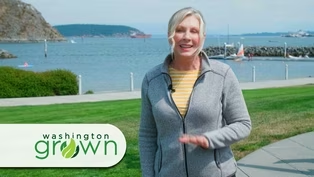
Video has Closed Captions
Preview: S13 Ep1306 | 30s | The Washington Grown team visits Skagit County, where innovation and tradition grow side by side. (30s)
Providing Support for PBS.org
Learn Moreabout PBS online sponsorship

- Food
Christopher Kimball’s Milk Street Television
Transform home cooking with the editors of Christopher Kimball’s Milk Street Magazine.






Support for PBS provided by:
Washington Grown is a local public television program presented by KSPS PBS